Course Introduction
"Sing unto Him a new song; play skillfully with a loud noise." - Psalm 33:3
This advanced course will equip you to:
Analyze complex music theoretically
Compose original pieces
Arrange music for various ensembles
Understand historical context and styles
Use your musical gifts to glorify Yahuah
Prerequisites: Basic music theory (scales, intervals, triads, rhythm, key signatures)
1 Advanced Scales & ModesThe Church Modes
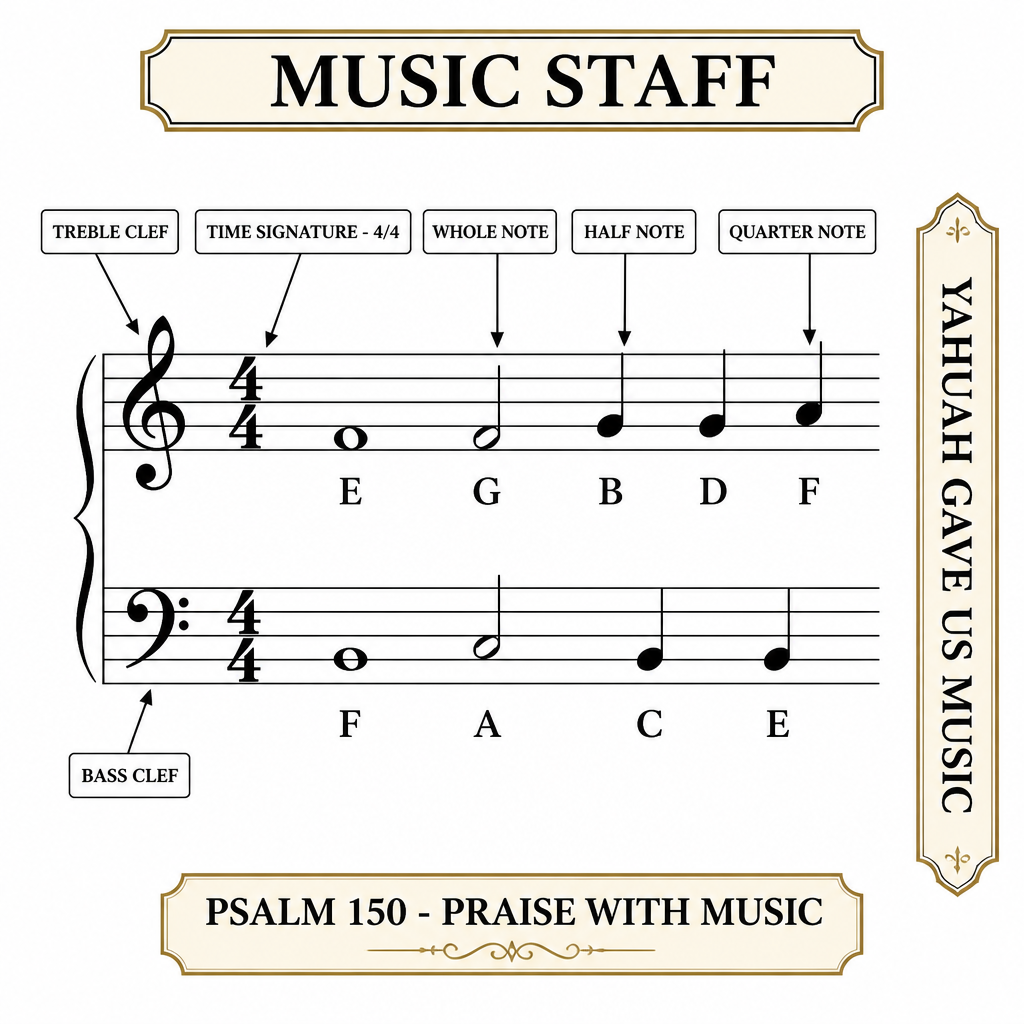
ADULT Music Staff
Modes are scales that use the same notes as major scales but start on different degrees, creating unique colors.
Mode
Pattern (from C)
Character
Use
Ionian (I) C-D-E-F-G-A-B-C Bright, happy Standard major Dorian (II) D-E-F-G-A-B-C-D Minor, jazzy Jazz, folk Phrygian (III) E-F-G-A-B-C-D-E Spanish, exotic Flamenco Lydian (IV) F-G-A-B-C-D-E-F Dreamy, bright Film scores Mixolydian (V) G-A-B-C-D-E-F-G Bluesy major Rock, blues Aeolian (VI) A-B-C-D-E-F-G-A Natural minor Standard minor Locrian (VII) B-C-D-E-F-G-A-B Dark, unstable Rarely used
Identifying Modes
Each mode has a characteristic interval that defines its sound:
Dorian: Raised 6th (compared to natural minor)Phrygian: Lowered 2ndLydian: Raised 4thMixolydian: Lowered 7th (compared to major)
Other Scales:
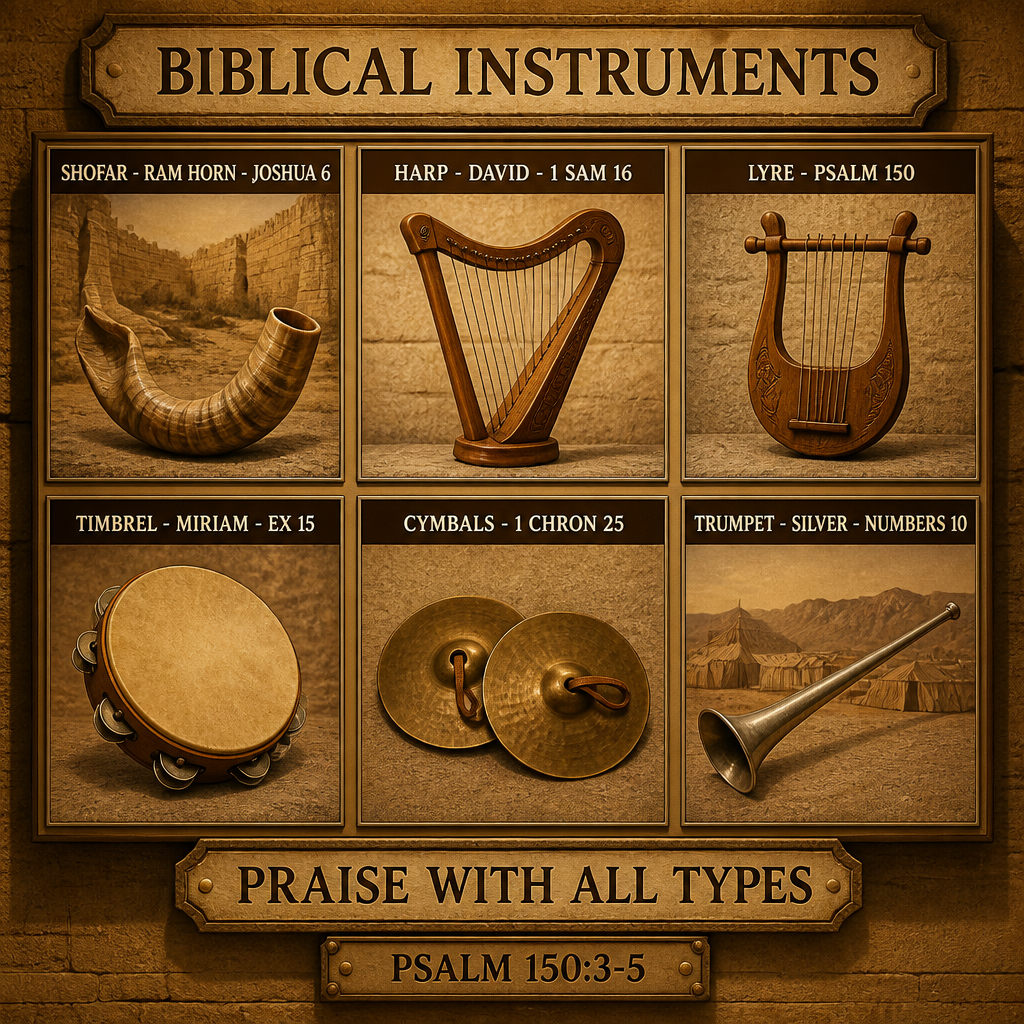
ADULT Music Biblical Instruments
Pentatonic Major: 1-2-3-5-6 (no 4 or 7)Pentatonic Minor: 1-b3-4-5-b7Blues Scale: Pentatonic minor + b5Whole Tone: All whole steps (dreamy, suspended)Chromatic: All half steps
Practice: Write these modes starting on G
G Dorian: G-A-
G Mixolydian: G-A-
2 Seventh Chords & ExtensionsBuilding Seventh Chords
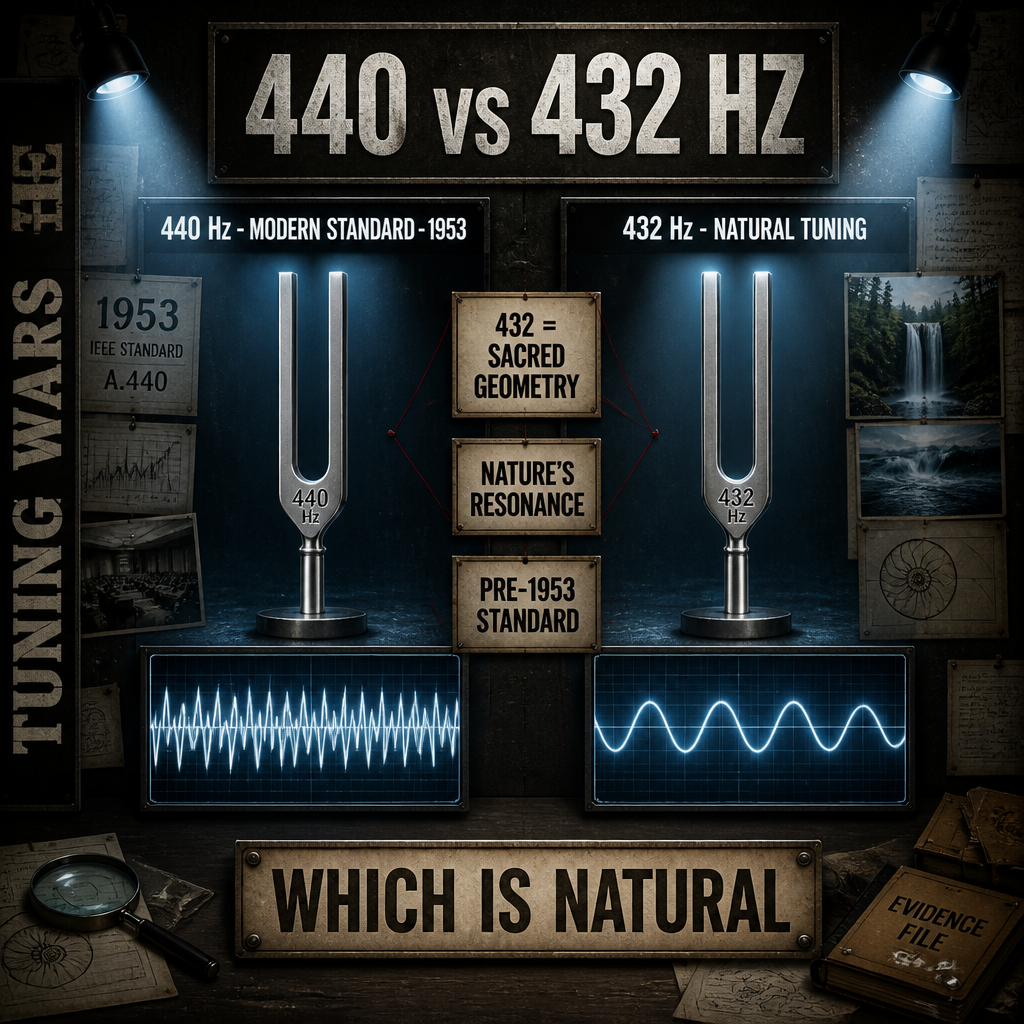
ADULT Music 440Hz
Add a seventh above the root to create richer harmony.
Type
Symbol
Construction
Example (C)
Major 7th Cmaj7, CΔ7 Major + M7 C-E-G-B Dominant 7th C7 Major + m7 C-E-G-Bb Minor 7th Cm7, C-7 Minor + m7 C-Eb-G-Bb Half-Diminished Cø7, Cm7b5 Dim + m7 C-Eb-Gb-Bb Fully Diminished Cdim7, C°7 Dim + dim7 C-Eb-Gb-Bbb(A) Minor-Major 7th CmM7 Minor + M7 C-Eb-G-B
Seventh Chords in Major Keys:
I - Imaj7 | ii - iim7 | iii - iiim7 | IV - IVmaj7 | V - V7 | vi - vim7 | vii - viiø7
In C: Cmaj7 - Dm7 - Em7 - Fmaj7 - G7 - Am7 - Bø7
Extensions (9ths, 11ths, 13ths):
Continue stacking thirds beyond the seventh:
9th: 1-3-5-7-9 (C9 = C-E-G-Bb-D)11th: 1-3-5-7-9-11 (often omit 3rd)13th: 1-3-5-7-9-11-13 (all notes of scale!)
Practice: Build These Chords
Gmaj7: G-
Am7: A-
D7: D-
3 Chord Progressions & AnalysisRoman Numeral Analysis
Analyze chords by their function within a key:
Uppercase = Major (I, IV, V)
Lowercase = Minor (ii, iii, vi)
° = Diminished (vii°)
+ = Augmented
Common Progressions:
Progression
In C Major
Genre/Use
I - IV - V - I C - F - G - C Rock, folk, hymns I - V - vi - IV C - G - Am - F Pop (the "4-chord song") ii - V - I Dm - G - C Jazz standard I - vi - IV - V C - Am - F - G 50s rock, doo-wop vi - IV - I - V Am - F - C - G Modern pop/worship I - IV - vi - V C - F - Am - G Contemporary
Functional Harmony
Chords have functions:
Tonic (T): I, vi - Home, stableSubdominant (S): IV, ii - Away from homeDominant (D): V, vii° - Wants to return home
Typical motion: T → S → D → T
Secondary Dominants:
Any chord can be "tonicized" by placing its V chord before it:
V/V = D7 in C (makes G feel like temporary "home")
Common: V/V, V/ii, V/vi
Analyze This Progression in C:
C - Am - Dm - G7 - C
Roman numerals:
4 Voice LeadingVoice leading is the art of moving individual notes (voices) smoothly from chord to chord.
Basic Rules:
Move by step when possible - Smooth motion sounds betterKeep common tones - If two chords share a note, keep it in the same voiceContrary motion - When bass moves up, upper voices move down (and vice versa)Avoid parallel fifths and octaves - Sounds hollowResolve tendency tones - Leading tone (7) → Tonic (1); Fa (4) → Mi (3)
SATB Writing
Four-part harmony uses four voices:
Soprano: Highest voice (C4-G5)Alto: Second highest (G3-D5)Tenor: Second lowest (C3-G4)Bass: Lowest (E2-C4)
Keep adjacent voices within an octave (except bass-tenor can be wider).
Chord Inversions:
Root position: Root in bass (C/C)First inversion: 3rd in bass (C/E)Second inversion: 5th in bass (C/G)
Use inversions for smoother bass lines!
5 Counterpoint BasicsCounterpoint is the art of combining independent melodic lines that work together harmonically.
Species Counterpoint (After Fux):
First Species: Note against note (1:1)Second Species: Two notes against one (2:1)Third Species: Four notes against one (4:1)Fourth Species: Syncopation, suspensionsFifth Species: Florid - combines all
First Species Rules
Begin and end on perfect consonance (unison, 5th, octave)
Use mostly imperfect consonances (3rds, 6ths)
Avoid parallel 5ths and octaves
Move by step primarily; leaps should be followed by step in opposite direction
Create contrary motion when possible
Imitation:
One voice "imitates" another at a delay:
Canon: Strict imitation throughoutFugue: Imitative entries with developmentRound: Simple canon at the unison
6 Form & AnalysisLarger Forms:
Form
Structure
Description
Sonata Form Exposition - Development - Recapitulation Classical symphonies, sonatas Theme & Variations A - A' - A'' - A''' etc. Theme transformed Rondo A-B-A-C-A or A-B-A-C-A-B-A Refrain returns Fugue Exposition - Episodes - Stretto Imitative polyphony Through-composed A-B-C-D... No repetition
Sonata Form in Detail
Exposition:
First theme in tonic key
Transition (modulates)
Second theme in new key (usually V or relative major)
Closing theme
Development: Themes fragmented, developed, modulations
Recapitulation: Both themes return in tonic key
Song Form Analysis:
Modern songs typically use:
Intro → Verse → Pre-Chorus → Chorus → Verse → Chorus → Bridge → Chorus → Outro
7 ModulationModulation is changing from one key to another within a piece.
Types of Modulation:
1. Pivot Chord (Common Chord)
Find a chord that exists in BOTH keys:
C major → G major: The chord Em is iii in C and vi in G
C - Am - Em - D - G
Em functions as the pivot.
2. Direct (Phrase) Modulation
Simply start the new key at a phrase boundary - no transition.
3. Sequential Modulation
A pattern repeats at different pitch levels, landing in a new key.
Closely Related Keys:
Keys that differ by one accidental are closely related:
Parallel major/minor (C ↔ Cm)
Relative major/minor (C ↔ Am)
One sharp more (C → G)
One flat more (C → F)
8 Composition Techniques
"Sing unto Yahuah a NEW song!" - Psalm 96:1
The Composition Process:
Inspiration: Prayer, Scripture, life experienceSketch: Melody idea, chord progression, rhythmDevelop: Extend, vary, harmonizeStructure: Organize into formRefine: Edit, improve, polishNotate: Write it down clearly
Melody Writing Tips
Use mostly stepwise motion with occasional leaps
After a leap, move by step in opposite direction
Create a clear high point (climax)
Use repetition and variation
Make phrases breathable (singable)
End phrases on stable tones (1, 3, 5)
Harmonic Rhythm
How often chords change affects energy:
Slow harmonic rhythm = calm, stable
Fast harmonic rhythm = energetic, driving
Vary harmonic rhythm for interest
Motific Development:
A motif is a short musical idea. Develop it by:
Repetition (exact)
Sequence (same pattern, different pitch)
Inversion (flip upside down)
Retrograde (backwards)
Augmentation (longer note values)
Diminution (shorter note values)
Fragmentation (use part of motif)
Composition Project
Write a 16-bar melody using these guidelines:
Key: G major
Time: 4/4
Form: A (4 bars) - A' (4 bars) - B (4 bars) - A (4 bars)
Include at least one leap and resolve it
End on the tonic
9 Arranging & OrchestrationArranging is adapting music for specific instruments or voices.
Considerations:
Range: Each instrument/voice has limitsTexture: Melody + accompaniment, polyphonic, homophonicVoicing: How to distribute chord tonesDoubling: Which notes to reinforceRegister: High, middle, or low - affects color
Worship Band Arrangement:
Typical Roles
Drums: Rhythm foundation, energyBass: Root motion, low endPiano/Keys: Harmony, rhythm, fillsAcoustic Guitar: Rhythm, textureElectric Guitar: Pads, leads, textureVocals: Melody, harmony parts
Arranging Tips:
Start simple, add layers
Don't have everyone play all the time
Create dynamics by adding/removing instruments
Let the melody be clear
Build to the climax, then release
10 Music & Worship
"Let the word of Messiah dwell in you richly in all wisdom; teaching and admonishing one another in psalms and hymns and spiritual songs, singing with grace in your hearts to Yahuah." - Colossians 3:16
Purposes of Worship Music:
Praise: Declaring Yahuah's attributesTeaching: Doctrine put to musicTestimony: Sharing what He has donePrayer: Musical conversation with YahuahWarfare: Advancing against the enemyUnity: Bringing believers together
Qualities of Good Worship Music
Theologically sound: Words must be trueSingable: Congregation can participateExcellent: Skillfully crafted and performedAccessible: Not too complexSpirit-led: Anointed, not just talented
Leading Worship:
Prepare thoroughly, then depend on the Spirit
Know the songs deeply
Watch and respond to the congregation
Point to Yahuah, not yourself
Create flow between songs
Be ready to change plans
Final Project: Write a Worship Song
Create an original worship song including:
At least 2 verses and a chorus
Scripture-based lyrics
Chord chart with Roman numeral analysis
Melody notation
Basic arrangement notes
"I will sing unto Yahuah as long as I live: I will sing praise to my Elohim while I have my being." - Psalm 104:33
Answer Key (Selected)
Unit 1:
G Dorian: G-A-Bb-C-D-E-F-G
G Mixolydian: G-A-B-C-D-E-F-G
Unit 2:
Gmaj7: G-B-D-F# | Am7: A-C-E-G | D7: D-F#-A-C
Unit 3:
C - Am - Dm - G7 - C = I - vi - ii - V7 - I
Truth Carriers Academy
Advanced Music Theory & Composition - Grades 9-12
"Sing unto Him a new song; play skillfully!" - Psalm 33:3