A Critical Analysis of American History Through Multiple Perspectives
Grade 11 | College Prep
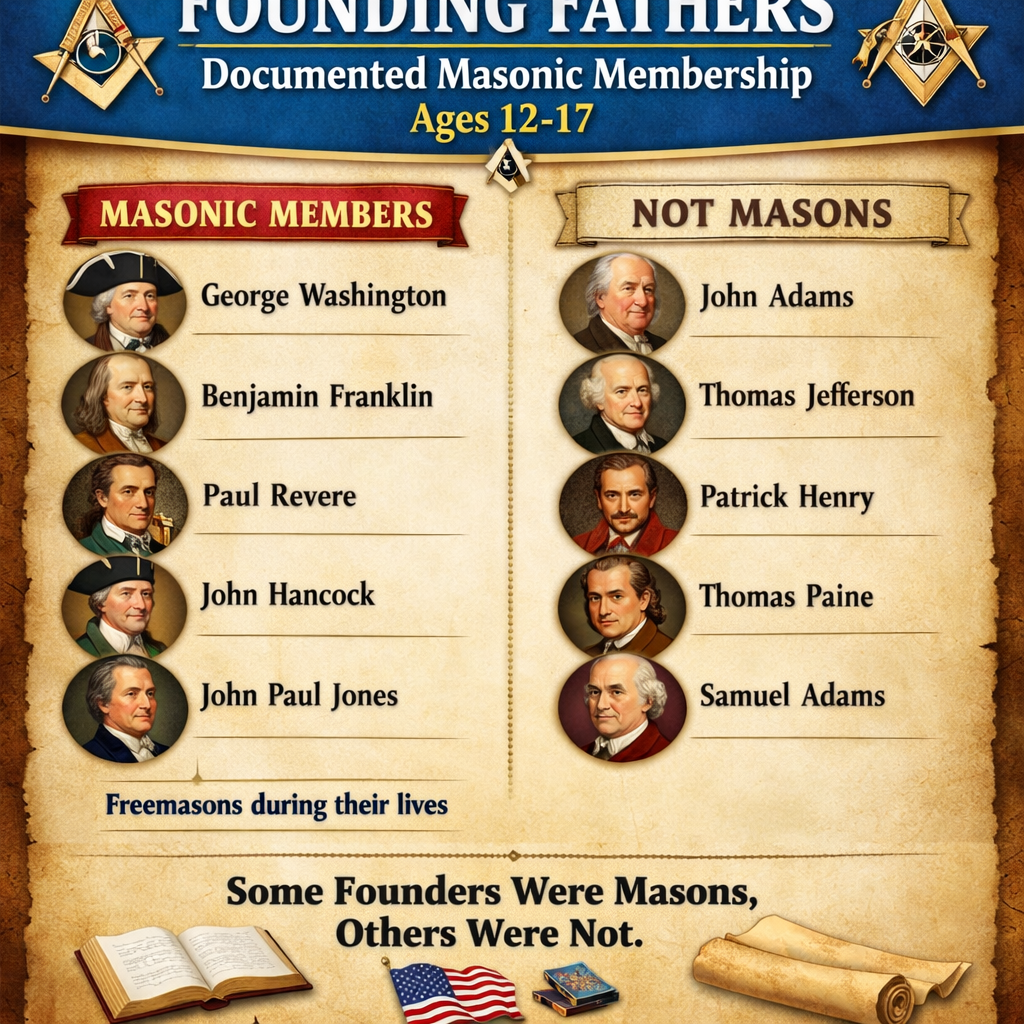
American founding history
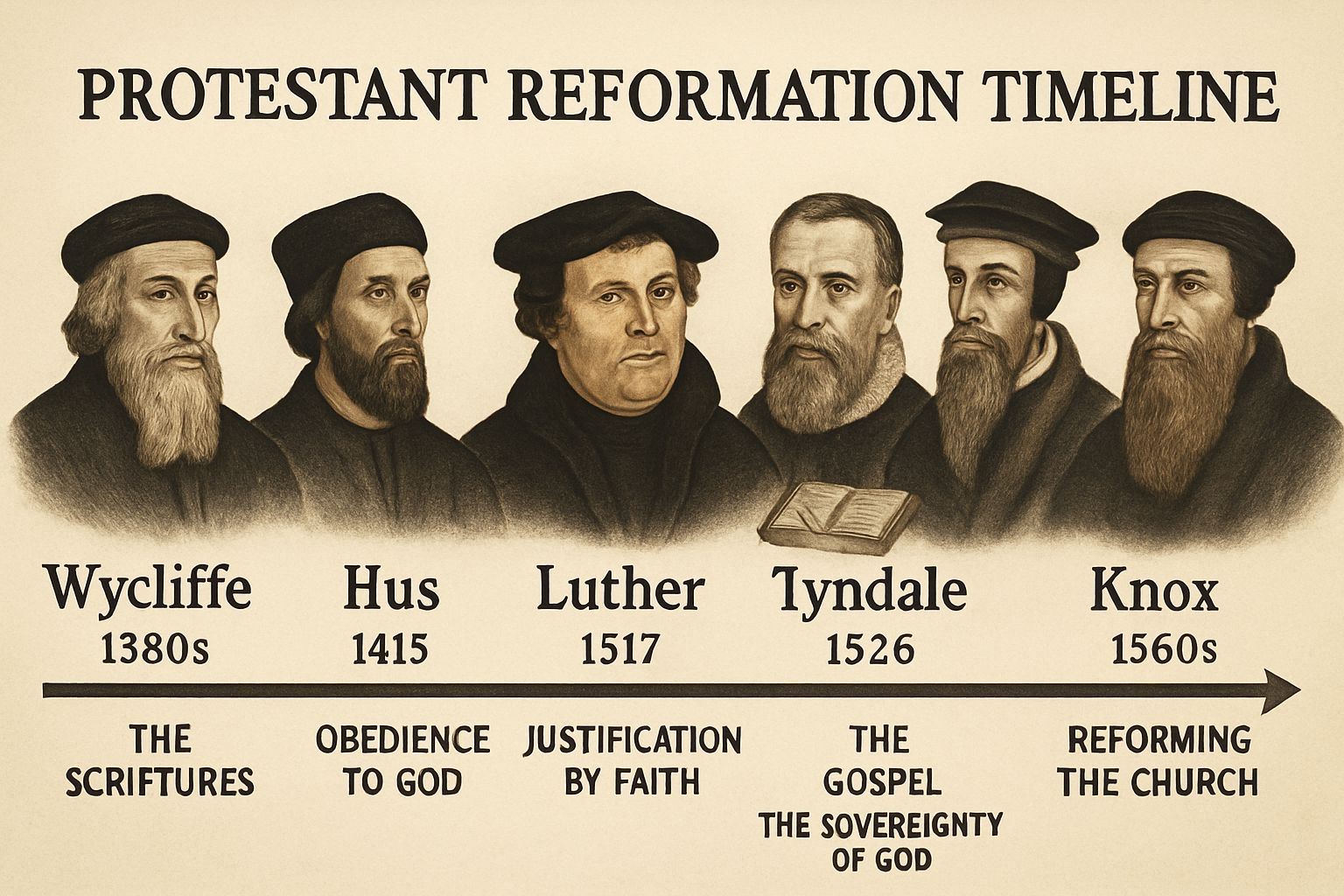
Historical timeline
Course Introduction
This advanced course moves beyond basic narrative history to examine American history through historiography - the study of how history is written and interpreted. You will analyze primary sources, compare competing historical narratives, and develop critical thinking skills essential for discerning truth in a world of competing claims.
We will examine both mainstream academic interpretations and alternative perspectives often excluded from standard curricula, always testing claims against Scripture and documented evidence.
Course Objectives
Analyze primary sources and evaluate their reliability and bias
Compare mainstream historical narratives with alternative interpretations
Understand how historical narratives are constructed and by whom
Apply biblical discernment to historical claims
Develop college-level research and writing skills
Recognize patterns of power, propaganda, and social control throughout history
Note: Your progress is automatically saved in your browser. This course includes substantial writing assignments - maintain a separate notebook for essays and research notes.
1
Historiography: Who Writes History?
Proverbs 18:17 - "He that is first in his own cause seemeth just; but his neighbour cometh and searcheth him."
Before studying American history, we must understand how history itself is constructed. Historiography is the study of how historical narratives are created, who creates them, and what biases they contain.
Understanding Historiography
Key Questions to Ask:
Who wrote this? - What was their background, education, and worldview?
When was it written? - How might the author's time period influence interpretation?
Who funded the research? - Foundations, governments, and publishers all have agendas
What sources were used? - Primary sources vs. secondary sources
What is omitted? - Sometimes what's left out is more revealing than what's included
Mainstream Academic View
Academic historians claim to pursue objectivity through the "scientific method" applied to history. They emphasize peer review, primary source analysis, and professional training. Major interpretive schools include:
Consensus historians (mid-20th century) - Emphasized shared American values
New Left/Social historians (1960s+) - Emphasized race, gender, class from the bottom up
Post-modernists - Question whether objective truth is even possible
Problems with "Objective" History
Foundation Funding: Rockefeller and Carnegie foundations heavily funded history departments and shaped what was taught (See "The Reece Committee," 1954)
Gatekeeping: Academic journals and publishers control which narratives get published
Self-censorship: Historians who challenge dominant narratives risk career destruction
Textbook Industry: A small number of publishers control most school textbooks
Biblical Approach to History
Scripture provides the framework for understanding history:
Yahuah is sovereign over history - He raises up and brings down nations (Daniel 2:21)
Human nature is consistent - The same sins and patterns repeat (Ecclesiastes 1:9)
Truth exists - Despite post-modernism, objective reality exists because Yahuah created it
Testimony matters - The Bible emphasizes multiple witnesses (Deuteronomy 19:15)
Vocabulary: Define These Terms
1. Historiography:
2. Primary Source:
3. Secondary Source:
4. Historical Bias:
Research Assignment
Research the Reece Committee (1953-1954), which investigated tax-exempt foundations' influence on American education. Answer:
Who was Norman Dodd and what did he discover?
What did the committee conclude about foundation influence on history?
Why do you think this investigation is rarely mentioned in textbooks?
Discussion Questions
If history is "written by the victors," how can we discover truth about the past?
Why might powerful entities want to control historical narratives?
How does Scripture help us evaluate historical claims?
2
Pre-Columbian America: Contested Origins
Genesis 10:32 - "These are the families of the sons of Noah, after their generations, in their nations: and by these were the nations divided in the earth after the flood."
Academic Consensus View
The mainstream academic view holds that all indigenous Americans descend from Asian populations who migrated across the Bering land bridge (Beringia) during the last Ice Age, approximately 15,000-20,000 years ago. DNA studies and archaeological evidence are cited to support this single-migration model, though some scholars now argue for multiple migration waves.
Alternative Evidence
Substantial evidence suggests pre-Columbian transoceanic contact that mainstream academia dismisses or ignores:
Los Lunas Decalogue Stone (New Mexico): Ancient Hebrew inscription of the Ten Commandments, dated by some to 500-1000 BC
Bat Creek Stone (Tennessee, 1889): Paleo-Hebrew inscription found in a burial mound by Smithsonian archaeologists
Tucson Lead Crosses: Roman-era Latin and Hebrew inscriptions found in Arizona
Newark Holy Stones (Ohio, 1860): Hebrew inscriptions including the Ten Commandments
Mound Builder Anomalies: 19th-century newspaper accounts of giant skeletal remains in mounds
Why Is This Evidence Dismissed?
Smithsonian Policy: The Smithsonian has been accused of suppressing evidence that contradicts established narratives
Career Risk: Academics who pursue "fringe" topics face ridicule and loss of funding
Native American Graves Protection Act (1990): Limits scientific study of many archaeological sites
Ideological Commitment: Isolated development narrative supports certain political positions
Biblical Framework
The Bible teaches that all humans descend from Noah's sons after the Flood (approximately 2348 BC using biblical chronology). After Babel's dispersion, peoples migrated across the earth. This framework suggests:
The timeline is much shorter than secular claims (4,300 years, not 15,000+)
Early post-Babel civilizations possessed advanced knowledge
Transoceanic navigation was possible from early times
Hebrew/Israelite presence in the Americas is plausible
Primary Source Analysis
"I have personally examined the Bat Creek Stone and believe the inscription to be genuine Paleo-Hebrew dating to the first or second century AD... The Smithsonian's dismissal was premature and unscientific."
- Dr. Cyrus Gordon, linguist, Brandeis University (1971)
Critical Analysis
1. What is the standard explanation for Native American origins?
2. Name two pieces of physical evidence suggesting pre-Columbian Hebrew presence:
3. According to biblical chronology, approximately how long ago was the Flood?
Essay Assignment (300-500 words)
Compare and contrast the mainstream "Bering land bridge" theory with the alternative evidence for pre-Columbian transoceanic contact. What are the strongest arguments on each side? Why might mainstream academia resist alternative explanations?
Discussion Questions
What might be the implications if Hebrew peoples did reach the Americas anciently?
How do we evaluate archaeological evidence when experts disagree?
Why might truth about ancient America be spiritually significant?
3
The Colonial Period: Competing Visions
Matthew 7:16-17 - "Ye shall know them by their fruits. Do men gather grapes of thorns, or figs of thistles? Even so every good tree bringeth forth good fruit; but a corrupt tree bringeth forth evil fruit."
The colonial period (1607-1776) was shaped by competing religious, economic, and political visions. Understanding these competing visions helps explain tensions that persist in American society.
Primary Source: John Winthrop's "City on a Hill" (1630)
"For we must consider that we shall be as a city upon a hill. The eyes of all people are upon us. So that if we shall deal falsely with our God in this work we have undertaken, and so cause Him to withdraw His present help from us, we shall be made a story and a by-word through the world."
- John Winthrop, "A Model of Christian Charity" (1630)
Standard Textbook Narrative
Colonial America developed three distinct regions (New England, Middle, Southern) with different economies and social structures. Key themes include:
Religious refugees seeking freedom (Pilgrims, Puritans, Quakers)
Development of representative government (House of Burgesses, town meetings)
Conflict with Native Americans over land
Growth of slavery, especially in Southern colonies
Hidden History: The Masonic Dimension
By the 1730s, Freemasonry had established lodges throughout the colonies. Many colonial leaders were Masons:
Benjamin Franklin: Grand Master of Pennsylvania, 1734
George Washington: Master of Alexandria Lodge
Paul Revere: Grand Master of Massachusetts
15 Presidents: Including Washington, Monroe, Jackson, Polk, Buchanan, Andrew Johnson, Garfield, McKinley, both Roosevelts, Taft, Harding, Truman, Ford
The significance of Masonic influence on American institutions is rarely discussed in standard histories.
The Slavery Contradiction
Colonial America's greatest moral failure was the institutionalization of chattel slavery:
By 1750, approximately 240,000 Africans were enslaved in the colonies
Slavery was legal in all 13 colonies
Many slaveholders professed Christianity
Economic interests corrupted both theology and law
Scripture condemned this: Exodus 21:16 prescribes death for kidnapping people for slavery. How did Christians justify what Scripture condemns?
Applying Biblical Discernment
We must evaluate colonial founders by their fruits, not just their words:
Were covenant documents (Mayflower Compact) genuine expressions of faith?
Did societies actually function according to biblical principles?
How do we explain sincere believers participating in systemic evil?
What warning does this provide for our own blind spots?
Colony/Region
Stated Purpose
Actual Practice
Plymouth (1620)
Religious freedom for Separatists
Relatively consistent with stated values
Massachusetts Bay (1630)
"City on a Hill" - Puritan society
Religious persecution (banished dissenters)
Virginia (1607)
Commercial venture
Developed slave economy
Pennsylvania (1681)
Religious liberty (Quakers)
Most tolerant colony; fair Native treatment initially
Document Analysis
1. In Winthrop's "City on a Hill" sermon, what does he warn will happen if the colony "deals falsely with God"?
2. How many enslaved Africans were in the colonies by 1750?
3. Name two Founding Fathers who were Freemasons:
Essay Assignment (400-600 words)
Analyze the contradiction between colonial religious ideals and the practice of slavery. How did professing Christians justify what Scripture condemns? What does this teach us about the human capacity for self-deception?
4
The American Revolution: Multiple Perspectives
Romans 13:1-2 - "Let every soul be subject unto the higher powers. For there is no power but of Elohim: the powers that be are ordained of Elohim. Whosoever therefore resisteth the power, resisteth the ordinance of Elohim..."
The American Revolution raises profound questions about the relationship between faith and political action. Was the Revolution justified from a biblical perspective? This lesson examines multiple viewpoints.
Standard Patriotic Narrative
Britain violated colonists' rights as Englishmen through taxation without representation, quartering of troops, and other abuses. The Declaration of Independence articulated natural rights philosophy: all men are created equal with unalienable rights to life, liberty, and the pursuit of happiness. The Revolution was a justified defense of liberty.
Theological Questions
The American Revolution was controversial among Christians at the time:
Romans 13:1-7 commands submission to governing authorities
1 Peter 2:13-17 instructs submission "for the Lord's sake"
Many clergy supported the Crown (Loyalist ministers)
Some Quakers and Mennonites refused to participate on biblical grounds
Patriots argued Britain violated its own laws, justifying resistance
Hidden History: Masonic and Illuminati Connections
The revolutionary period saw significant secret society activity:
Green Dragon Tavern: Boston Tea Party organized at this Masonic lodge headquarters
Illuminati Founded: Adam Weishaupt founded the Order of the Illuminati in Bavaria on May 1, 1776 (three months before the Declaration)
French Revolution Connection: Many Illuminati fled to France after the order was exposed in Bavaria; French Revolution followed similar patterns
George Washington's Letter (1798): Washington acknowledged Illuminati doctrines had spread to America
Primary Source: Washington on the Illuminati
"It was not my intention to doubt that, the Doctrines of the Illuminati, and principles of Jacobinism had not spread in the United States. On the contrary, no one is more truly satisfied of this fact than I am."
- George Washington, Letter to Rev. G.W. Snyder, October 24, 1798
Evaluating Revolutionary Claims
Key questions for biblical analysis:
Was Britain genuinely tyrannical? - Compared to other 18th-century governments, British rule was relatively mild
Was independence truly about liberty? - Slavery continued; many founders owned slaves
What were the spiritual foundations? - The Declaration appeals to "Nature's God" and "Creator" but not specifically to Yahuah or Scripture
What fruits resulted? - Examine what the Revolution ultimately produced
Critical Analysis
1. What do Romans 13:1-2 teach about submitting to authorities?
2. When was the Order of the Illuminati founded?
3. What did Washington acknowledge in his 1798 letter about Illuminati doctrines?
Essay Assignment (500-700 words)
Was the American Revolution biblically justified? Present arguments from both perspectives (Patriot and Loyalist), then explain your own conclusion with scriptural support.
5
The Constitution: Sacred Document or Masonic Compromise?
Psalm 127:1 - "Except Yahuah build the house, they labour in vain that build it: except Yahuah keep the city, the watchman waketh but in vain."
The U.S. Constitution is often called the world's greatest governing document. But what are its actual foundations? Is it a Christian document, an Enlightenment document, or something else?
Conservative Christian View
Many American Christians believe the Constitution was divinely inspired and based on biblical principles:
Separation of powers reflects Isaiah 33:22 (Judge, Lawgiver, King)
Many framers were Christian or at least influenced by Christianity
The document presupposes a moral people
It has protected religious liberty for over 230 years
Problems with the "Christian Nation" Claim
No mention of Yahuah or Yahusha: The Constitution never mentions God except "Year of our Lord" (dating convention)
Article VI: "No religious test shall ever be required" for office
Treaty of Tripoli (1797): "The government of the United States is not in any sense founded on the Christian religion" - ratified unanimously by Senate
Slavery protected: Three-Fifths Compromise, Fugitive Slave Clause, no immediate abolition
Hidden History: The Constitutional Convention
Secret proceedings: Windows nailed shut, delegates sworn to secrecy
Notes suppressed: Madison's notes not published until after his death (1836)
Masonic participation: At least 13 of the 39 signers were Freemasons
Franklin's proposal rejected: Ben Franklin proposed opening sessions with prayer; the motion was never voted on
Anti-Federalist warnings: Patrick Henry and others warned it created too much central power
Claim
Evidence For
Evidence Against
Christian Foundation
Colonial heritage; some framers were Christian
No mention of Christ; no religious test; Treaty of Tripoli
Masonic Influence
Many Mason signers; secrecy; symbols on Great Seal
Not all framers were Masons; document doesn't mention Masonry
Enlightenment Document
Locke, Montesquieu influence; social contract theory
Some biblical allusions; presupposes virtue
Primary Source: Benjamin Franklin at the Convention
"I have lived, Sir, a long time, and the longer I live, the more convincing proofs I see of this truth - that God governs in the affairs of men... I therefore beg leave to move - that henceforth prayers imploring the assistance of Heaven, and its blessings on our deliberations, be held in this Assembly every morning before we proceed to business."
- Benjamin Franklin, Constitutional Convention, June 28, 1787
Note: This motion was never voted on. The Convention continued without official prayer.
Document Analysis
1. Does the Constitution mention Yahuah or Yahusha by name?
2. What does Article VI say about religious tests for office?
3. What did the Treaty of Tripoli (1797) state about America's religious foundation?
4. How many of the 39 Constitution signers were Freemasons?
Essay Assignment (500-700 words)
Is the Constitution a "Christian document"? Evaluate the evidence on both sides and explain how believers should relate to this foundational American document.
6
Expansion, Slavery, and Civil War
Proverbs 14:34 - "Righteousness exalteth a nation: but sin is a reproach to any people."
The antebellum period reveals how national sin - tolerated and institutionalized - eventually brings judgment. Slavery was America's original sin, and the Civil War was its bitter fruit.
Standard Historical Interpretation
The Civil War (1861-1865) was fought primarily over slavery, with constitutional issues of states' rights as a secondary factor. The Union victory preserved the nation, ended slavery, and led to constitutional amendments (13th, 14th, 15th) extending rights to formerly enslaved people.
Biblical Analysis
American chattel slavery violated clear Scripture:
Exodus 21:16: "He that stealeth a man, and selleth him, or if he be found in his hand, he shall surely be put to death."
1 Timothy 1:10: Lists "menstealers" (slave traders) among the lawless
Galatians 3:28: "There is neither Jew nor Greek, there is neither bond nor free... for ye are all one in Messiah Yahusha."
The Civil War can be understood as divine judgment on a nation that tolerated grave sin. As Lincoln said in his Second Inaugural: "If God wills that [the war] continue until all the wealth piled by the bondsman's two hundred and fifty years of unrequited toil shall be sunk, and until every drop of blood drawn with the lash shall be paid by another drawn with the sword... 'the judgments of Yahuah are true and righteous altogether.'"
Hidden History
Banking Interests: Some historians argue the war also served to consolidate Northern banking power through the National Banking Acts (1863-64)
Lincoln's Complex Views: Lincoln initially offered to preserve slavery where it existed to save the Union; the Emancipation Proclamation only freed slaves in rebel territories
European Involvement: Rothschild banking interests reportedly backed both sides; Britain nearly entered on the Confederate side
Greenback Currency: Lincoln issued debt-free "greenbacks" to finance the war, bypassing private bankers - some believe this contributed to his assassination
Primary Source: Lincoln's Second Inaugural Address (1865)
"Fondly do we hope, fervently do we pray, that this mighty scourge of war may speedily pass away. Yet, if God wills that it continue until all the wealth piled by the bondsman's two hundred and fifty years of unrequited toil shall be sunk, and until every drop of blood drawn with the lash shall be paid by another drawn with the sword, as was said three thousand years ago, so still it must be said 'the judgments of the Lord are true and righteous altogether.'"
Critical Analysis
1. What does Exodus 21:16 prescribe as punishment for kidnapping people for slavery?
2. How many Americans died in the Civil War?
3. What did Lincoln say about the war potentially being divine judgment in his Second Inaugural?
Discussion Questions
How could Christians justify slavery when Scripture clearly condemns man-stealing?
What does the Civil War teach us about tolerating national sins?
What national sins today might invite judgment if not repented of?
7
The Gilded Age and Progressive Era
1 Timothy 6:10 - "For the love of money is the root of all evil: which while some coveted after, they have erred from the faith, and pierced themselves through with many sorrows."
The period from 1870 to 1920 transformed America from an agricultural republic into an industrial empire dominated by unprecedented concentrations of wealth and power.
Standard Narrative
Industrialization brought progress but also problems: monopolies, poor working conditions, child labor, political corruption. "Robber barons" like Rockefeller (oil), Carnegie (steel), and Morgan (banking) built vast empires. Progressive reformers responded with antitrust laws, labor protections, and democratic reforms (direct election of senators, women's suffrage).
Hidden History: The Foundation Agenda
The same industrialists who built vast fortunes also created foundations that shaped American institutions:
Rockefeller Foundation (1913): Funded medical education reform (Flexner Report), reshaping American medicine toward pharmaceutical-based treatment
General Education Board (Rockefeller, 1903): "In our dreams... people yield themselves with perfect docility to our molding hands."
Carnegie Foundation: Funded education research, library development, and think tanks
Council on Foreign Relations (1921): Elite foreign policy organization funded by Rockefeller, Morgan interests
Primary Source: General Education Board
"In our dream we have limitless resources, and the people yield themselves with perfect docility to our molding hand. The present educational conventions fade from our minds; and, unhampered by tradition, we work our own good will upon a grateful and responsive rural folk."
- Frederick Gates, Occasional Letter No. 1, General Education Board (1904)
Critical Dates
1910: Jekyll Island meeting - secret planning for Federal Reserve
1913: Federal Reserve Act creates central bank
1913: 16th Amendment (income tax) ratified
1913: 17th Amendment (direct election of senators)
1913: Rockefeller Foundation chartered
Note the concentration of major changes in 1913 - what was the significance of this year?
Analysis Questions
1. Who were the major industrialists of the Gilded Age? Name three:
2. What was the Jekyll Island meeting about?
3. What major institutional changes occurred in 1913? Name three:
Research Assignment
Research the Flexner Report (1910) and its impact on American medicine. Consider:
Who funded the report?
What medical schools were closed as a result?
How did this reshape American medicine toward pharmaceutical-based treatment?
What alternative approaches were marginalized?
8
The World Wars and Their Aftermath
James 4:1-2 - "From whence come wars and fightings among you? come they not hence, even of your lusts that war in your members? Ye lust, and have not: ye kill, and desire to have, and cannot obtain..."
The two World Wars transformed America from a constitutional republic into a global superpower with an interventionist foreign policy. They also accelerated concentrations of power that continue today.
Standard Narrative
WWI (US entry 1917): Germany's submarine warfare and the Zimmermann Telegram brought America into the "war to end all wars." WWII (US entry 1941): Japanese attack on Pearl Harbor ended isolationism. American industrial and military power proved decisive in both conflicts. The US emerged from WWII as the world's dominant power.
Hidden History: Manufactured Entry?
World War I:
The Lusitania was carrying ammunition - did Britain deliberately expose it to German attack?
J.P. Morgan and banking interests had loaned heavily to Britain - German victory would mean defaults
The Federal Reserve (created 1913) financed war loans
World War II:
The "McCollum Memo" (1940) outlined eight steps to provoke Japan into attacking
FDR knew Pearl Harbor was coming - intelligence intercepts prove foreknowledge
Pacific Fleet carriers were conveniently absent during the attack
War enabled vast expansion of federal power
Outcomes and Questions
League of Nations/United Nations: Global governance structures emerged from both wars
Federal Expansion: War justified income tax, surveillance, propaganda (Committee on Public Information)
Military-Industrial Complex: Eisenhower warned of this in his 1961 farewell address
Pattern Recognition: Crisis → public fear → expansion of government power → crisis becomes permanent
"In the councils of government, we must guard against the acquisition of unwarranted influence, whether sought or unsought, by the military-industrial complex. The potential for the disastrous rise of misplaced power exists and will persist."
Critical Analysis
1. What event triggered US entry into WWI?
2. What did the McCollum Memo outline?
3. What did Eisenhower warn about in his 1961 farewell address?
Essay Assignment (500-700 words)
Analyze the "problem-reaction-solution" pattern in American history using WWI or WWII as a case study. How does crisis enable expansion of power? What does Scripture say about deception and manipulation?
9
Cold War and the National Security State
2 Corinthians 11:14-15 - "And no marvel; for Satan himself is transformed into an angel of light. Therefore it is no great thing if his ministers also be transformed as the ministers of righteousness..."
The Cold War (1947-1991) created permanent institutions of secrecy and surveillance that remain today. The "national security state" fundamentally changed the relationship between government and citizens.
Standard Narrative
The Cold War was an ideological struggle between American capitalism/democracy and Soviet communism. The US pursued "containment" through NATO, foreign aid, covert operations, and military alliances. The Soviet collapse in 1991 vindicated American policy and proved the superiority of free-market democracy.
Hidden History: The Deep State Emerges
National Security Act (1947): Created the CIA, NSA, and National Security Council - agencies operating largely in secret
Operation Paperclip: Imported Nazi scientists into US military and intelligence programs
MK-Ultra: CIA mind control experiments on unwitting American citizens (documented)
Operation Mockingbird: CIA infiltration and control of major media outlets
COINTELPRO: FBI operations against American civil rights and political groups
JFK Assassination (1963): The Warren Commission narrative has been questioned by researchers, including the House Select Committee on Assassinations (1979)
Primary Source: Church Committee Findings (1975)
"The CIA has engaged in unlawful domestic intelligence activities, including mail opening, wiretapping, and break-ins... The FBI has engaged in a sophisticated vigilante operation aimed squarely at preventing the exercise of First Amendment rights of speech and association."
- Senate Select Committee (Church Committee), Final Report, 1976
Biblical Analysis
Scripture warns about:
Secret combinations: Groups that work in darkness to accumulate power
Deception at highest levels: "The whole world lies in the power of the wicked one" (1 John 5:19)
Testing spirits: "Beloved, believe not every spirit, but try the spirits" (1 John 4:1)
Truth suppression: "Who changed the truth of Elohim into a lie" (Romans 1:25)
Critical Analysis
1. What did the National Security Act of 1947 create? Name two agencies:
2. What was Operation Mockingbird?
3. What did the Church Committee (1975) reveal about CIA and FBI activities?
Research Assignment
Research one of the following documented programs:
MK-Ultra (CIA mind control)
Operation Mockingbird (media control)
COINTELPRO (domestic surveillance)
Operation Paperclip (Nazi recruitment)
Use declassified government documents where possible. How did these programs violate constitutional principles? What does this reveal about the gap between official narratives and reality?
10
Contemporary America and Prophetic Patterns
Matthew 24:4-5 - "And Yahusha answered and said unto them, Take heed that no man deceive you. For many shall come in my name, saying, I am Messiah; and shall deceive many."
Recent decades reveal accelerating patterns that many believers see as prophetically significant. This lesson examines contemporary history through a biblical lens.
Key Events
1971: Nixon ends gold standard - dollar becomes pure fiat currency
1973: Roe v. Wade legalizes abortion nationwide
2001: September 11 attacks → Patriot Act → surveillance state expansion
2008: Financial crisis → massive bank bailouts → wealth transfer
Researchers have documented a consistent pattern over decades:
Crisis → Fear → Power Transfer: Each major crisis results in expanded government and banking power
Global Governance: UN, WHO, WEF, IMF/World Bank - unelected entities gaining authority
Digital Control: Social credit systems, central bank digital currencies, biometric ID
Information Control: "Fact-checking," de-platforming, censorship of dissent
Prophetic Perspective
Many believers see current developments as preparation for the system described in Revelation 13:
Revelation 13:16-17: "And he causeth all, both small and great, rich and poor, free and bond, to receive a mark... that no man might buy or sell, save he that had the mark..."
Digital Currency: Programmable money that can be turned off for individuals
Global ID: Biometric identification systems being implemented worldwide
Social Control: China's social credit system as a model
While we don't claim to know exact timing, the infrastructure for a global control system is being built before our eyes.
Questions for Critical Thinkers
Why do crises consistently result in power centralization rather than decentralization?
Who benefits from fear-based policy making?
Why is questioning official narratives increasingly called "dangerous"?
What does it mean that solutions to global problems always seem to require global governance?
Final Analysis
1. What pattern do you observe in how crises are used in American history?
2. What does Revelation 13:16-17 describe?
3. What current technologies could enable such a system?
Final Essay (700-1000 words)
Having studied American history through multiple perspectives, write an essay addressing:
What patterns have you observed throughout American history?
How does understanding "hidden history" change your view of current events?
How should believers in Yahusha respond to the times we live in?
What does it mean to be "wise as serpents and harmless as doves" (Matthew 10:16) today?
Final Discussion
How do we maintain hope while being realistic about the times?
What is our responsibility as truth-seekers?
How do we prepare spiritually for whatever comes?
Answer Key
For instructor use - essay and discussion answers will vary
Lesson 1: Historiography
Historiography: The study of how history is written and interpreted
Primary Source: An original document or artifact from the time period being studied
Secondary Source: A later interpretation or analysis of primary sources
Historical Bias: The perspective or prejudice that influences how a historian interprets events
Lesson 2: Pre-Columbian America
Bering land bridge migration from Asia
Any two: Los Lunas Stone, Bat Creek Stone, Newark Holy Stones, Tucson Lead Crosses
Approximately 4,300 years
Lesson 3: Colonial Period
They will become "a story and by-word" - a cautionary tale
Approximately 240,000
Any two: Benjamin Franklin, George Washington, Paul Revere, John Hancock
Lesson 4: American Revolution
Submit to governing authorities because all authority is from Elohim
May 1, 1776
He acknowledged Illuminati doctrines had spread to the United States
Lesson 5: Constitution
No (only "Year of our Lord" dating convention)
No religious test shall ever be required as a qualification for office
"The government of the United States is not in any sense founded on the Christian religion"
At least 13
Lesson 6: Civil War
Death
Over 600,000 (approximately 620,000)
That the war may be divine judgment until "every drop of blood drawn with the lash shall be paid by another drawn with the sword"
Lesson 7: Gilded Age
Any three: Rockefeller, Carnegie, Morgan, Vanderbilt
Secret planning meeting for the Federal Reserve
Any three: Federal Reserve created, income tax (16th Amendment), direct election of senators (17th Amendment), Rockefeller Foundation chartered
Lesson 8: World Wars
German submarine warfare / Lusitania sinking / Zimmermann Telegram
Eight steps to provoke Japan into attacking
The military-industrial complex and its potential for "disastrous rise of misplaced power"
Lesson 9: Cold War
Any two: CIA, NSA, National Security Council
CIA program to infiltrate and control major media outlets
Unlawful domestic intelligence activities including surveillance, mail opening, and operations to prevent exercise of First Amendment rights
Lesson 10: Contemporary
Answers will vary - should identify crisis → power centralization pattern
A mark required to buy or sell
Digital currency, biometric ID, surveillance technology, social credit systems
Course Completion
You have completed the Advanced US History course. You are now equipped to:
Analyze historical narratives critically
Evaluate primary sources and recognize bias
Understand how power structures shape historical narratives
Apply biblical discernment to historical and current events
"And ye shall know the truth, and the truth shall make you free." - John 8:32