"And Yahuah Elohim planted a garden eastward in Eden; and there he put the man whom he had formed." - Genesis 2:8
Gardening: The First Calling
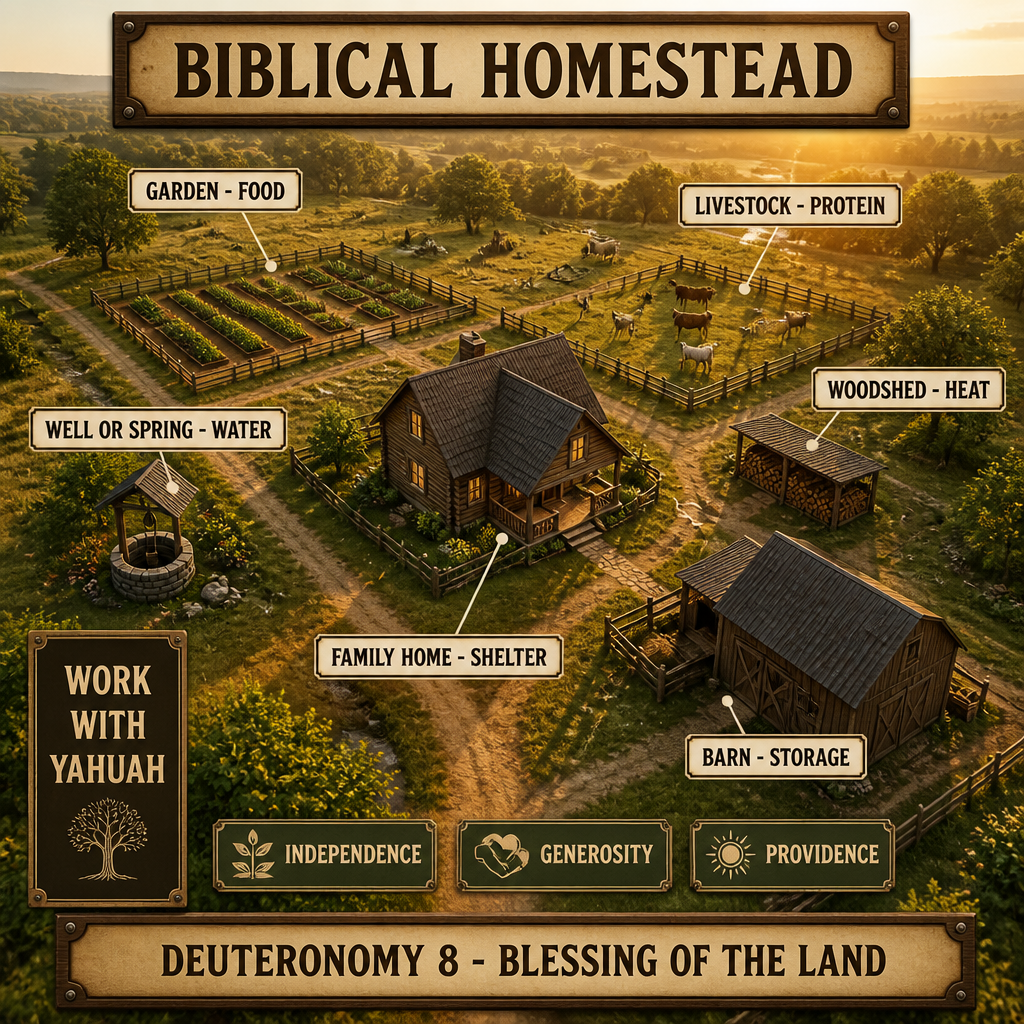
Yahuah placed Adam in a garden - not a city, not a factory, but a garden. Our first job was to tend the earth!
"Dress it and keep it" (Genesis 2:15) - Cultivate and guard
Every herb and tree was given for food (Genesis 1:29)
Working the ground is honorable labor
"And Elohim said, Behold, I have given you every herb bearing seed, which is upon the face of all the earth, and every tree, in the which is the fruit of a tree yielding seed; to you it shall be for meat." - Genesis 1:29
Why Grow Your Own Food?
Self-sufficiency: Less dependence on corrupt food systems
Health: Fresh, organic, nutrient-dense food
Savings: Lower food costs over time
Stewardship: Caring for Yahuah's creation
Preparedness: Food security in uncertain times
Teaching: Pass skills to the next generation
REFLECT - Questions
1. What was Adam's first job in the Garden of Eden?
2Getting Started: Planning Your Garden
RECEIVE - Learn About It!
ADULT SelfSuf Food Storage
Before You Plant
Assess your space: How much room do you have?
Consider sunlight: Most vegetables need 6-8 hours
Know your zone: USDA Hardiness Zone determines what grows
Start small: Better to succeed with less than fail with more
Garden Options by Space
Space
Options
Best For
Apartment
Container garden, windowsill herbs
Herbs, lettuce, tomatoes
Small yard
Raised beds (4x8 ft)
Salad garden, small variety
Medium yard
Multiple raised beds or in-ground
Full vegetable garden
Large property
Market garden, row planting
Food independence
Designing Your Garden
Tallest plants on north side: Don't shade shorter plants
Group by water needs: Thirsty plants together
Companion planting: Some plants help each other
Leave walking paths: You need to access everything
RESPOND - Apply It!
1. Sketch your available garden space. Note which direction is north and where shadows fall:
3Understanding Soil
RECEIVE - Learn About It!
ADULT SelfSuf Water
"And Yahuah Elohim formed man of the dust of the ground" - Genesis 2:7
We came from the soil - and our food grows from it!
Soil Composition
Minerals (45%): Sand, silt, clay
Organic matter (5%): Decomposed plants/animals
Water (25%): Dissolved nutrients
Air (25%): Oxygen for roots
Soil Types
Type
Feel
Drainage
Improvement
Sandy
Gritty
Too fast
Add compost
Clay
Sticky
Too slow
Add sand & compost
Loam
Crumbly
Just right
Maintain with compost
The Jar Test
Fill a jar 1/3 with garden soil
Add water to 2/3 full
Shake well and let settle 24 hours
Sand settles first (bottom), then silt, then clay (top)
Ideal: 40% sand, 40% silt, 20% clay
RESPOND - Apply It!
1. Do the jar test with your soil. What type of soil do you have?
Sand: % Silt: % Clay: %
Soil type:
4Composting: Black Gold
RECEIVE - Learn About It!
ADULT SelfSuf Livestock
What is Compost?
Compost is decomposed organic matter - nature's way of recycling. It's the best soil amendment you can make, and it's FREE!
The Recipe: Browns + Greens
Browns (Carbon)
Greens (Nitrogen)
Dead leaves
Grass clippings
Cardboard/paper
Kitchen scraps (vegetables)
Straw/hay
Coffee grounds
Wood chips
Fresh plant trimmings
Sawdust
Manure (herbivores only)
Ratio: 3 parts brown to 1 part green
Never Compost:
Meat, bones, or dairy (attracts pests)
Pet waste (disease)
Diseased plants
Weeds with seeds
Treated wood or paper
Simple Compost Methods
Pile: Just heap it up, turn occasionally (6-12 months)
Bin: Contained pile, easier to manage (3-6 months)
Rotate crops: Don't plant same family in same spot yearly
Companion Planting for Pest Control
Plant
Repels
Plant Near
Basil
Flies, mosquitoes
Tomatoes
Marigolds
Many insects, nematodes
Everything!
Garlic/Onion
Aphids, beetles
Roses, tomatoes
Nasturtiums
Aphids (trap crop)
Squash, cucumbers
Mint
Ants, aphids, flea beetles
Cabbage (in pots!)
Natural Pest Solutions
Hand-picking: Remove large pests by hand
Soap spray: 1 tbsp dish soap in 1 quart water (for soft-bodied insects)
Neem oil: Organic broad-spectrum pest control
Diatomaceous earth: Kills crawling insects
Beneficial insects: Ladybugs eat aphids, praying mantis eat many pests
REFLECT - Questions
1. Why is companion planting better than pesticides?
8Easy Vegetables to Grow
RECEIVE - Learn About It!
Beginner-Friendly Vegetables
Vegetable
Days to Harvest
Tips
Lettuce/Greens
30-45
Grows fast, tolerates shade
Radishes
25-30
Fastest vegetable!
Green Beans
50-60
Direct sow, easy care
Zucchini
50-60
Prolific producer (1-2 plants enough!)
Tomatoes
70-85
Start with transplants first year
Cucumbers
55-65
Need trellis or lots of space
Peppers
70-90
Start transplants indoors
Garlic
240 (fall plant)
Plant in fall, harvest summer
The "Pizza Garden"
A fun themed garden - grow ingredients for pizza!
Tomatoes (for sauce)
Peppers (toppings)
Onions
Basil & oregano
Garlic
RESPOND - Apply It!
1. Choose 3-5 vegetables to grow this season:
9Fruit & Berries
RECEIVE - Learn About It!
"And the earth brought forth grass, and herb yielding seed after his kind, and the tree yielding fruit, whose seed was in itself, after his kind: and Elohim saw that it was good." - Genesis 1:12
Easy Fruit for Beginners
Fruit
Time to Harvest
Space Needed
Strawberries
Year 2+
Small (containers OK)
Raspberries
Year 2+
Row or patch
Blueberries
Year 3+
Bushes, need 2+ for pollination
Grapes
Year 3+
Fence or arbor
Fig trees
Year 2-3
Container or ground
Apple/Pear trees
Year 3-5+
Large (dwarf varieties smaller)
Biblical Fruits
Scripture mentions many fruits - consider growing:
Grapes: Symbol of abundance (Numbers 13:23)
Figs: Associated with peace (1 Kings 4:25)
Pomegranates: Temple decorations (1 Kings 7:18)
Olives: Oil for light and anointing (Exodus 27:20)
Dates: Palm trees (Psalm 92:12)
RESPOND - Apply It!
1. What fruit would you like to grow? Research what it needs:
Fruit:
Sun needs:
Years to harvest:
10Herbs & Medicinal Plants
RECEIVE - Learn About It!
"And Yahuah Elohim made every tree grow that is pleasant to the sight, and good for food... the leaves of the tree were for the healing of the nations." - Genesis 2:9, Revelation 22:2
Easy Culinary Herbs
Herb
Use
Growing Notes
Basil
Italian dishes, pesto
Annual, loves heat
Mint
Tea, desserts
Perennial, SPREADS - use pot!
Rosemary
Meats, breads
Perennial, Mediterranean
Thyme
Soups, meats
Perennial, drought tolerant
Oregano
Pizza, Italian
Perennial, spreads
Parsley
Garnish, salads
Biennial
Chives
Salads, eggs
Perennial, easy
Medicinal Herbs to Consider
Lavender: Calming, sleep aid, antiseptic
Chamomile: Tea for relaxation, digestive aid
Echinacea: Immune support
Calendula: Skin healing, salves
Peppermint: Digestive, headaches
Aloe vera: Burns, skin care
RESPOND - Apply It!
1. Plan a small herb garden (even a windowsill!). List your herbs:
11Extending the Growing Season
RECEIVE - Learn About It!
Season Extension Methods
Method
Temperature Gain
Cost
Row covers
2-5°F
Low
Cold frames
10-20°F
Low-Medium
Hoop houses
15-25°F
Medium
Greenhouses
20-40°F+
High
Wall o' Water
10-15°F
Low
Succession Planting
Plant the same crop every 2-3 weeks for continuous harvest:
Lettuce every 2 weeks = salad all season
Beans every 3 weeks = beans into fall
Radishes every 10 days = constant supply
Fall/Winter Gardening
Many crops grow well in cool weather:
Kale, collards, spinach
Broccoli, cauliflower, Brussels sprouts
Carrots, beets, turnips
Garlic (plant in fall!)
RESPOND - Apply It!
1. Create a succession planting schedule:
Crop:
Planting dates:
12Harvest & Storage
RECEIVE - Learn About It!
"While the earth remaineth, seedtime and harvest... shall not cease." - Genesis 8:22
Harvesting Tips
Harvest in morning: After dew dries, before heat
Pick regularly: Many plants produce more when harvested
Don't wait too long: Overripe = tough/bitter
Use sharp tools: Clean cuts prevent disease
Storage Methods
Method
Best For
Duration
Root cellar/cool storage
Potatoes, carrots, apples
Months
Canning
Tomatoes, pickles, jams
1+ years
Freezing
Beans, berries, corn
6-12 months
Dehydrating
Herbs, tomatoes, fruit
1+ years
Fermenting
Cabbage, cucumbers
Months-years
Saving Seeds
Choose best plants (healthiest, best fruit)
Let fruit fully ripen (past eating stage)
Extract seeds, clean, and dry completely
Store in cool, dark, dry place
Label with variety and date!
Remember: Only heirloom/open-pollinated seeds will grow true!