Biblical Financial Freedom
Building Wealth Yahuah's Way: Breaking Free from the World's Debt System
Practical Skills SeriesHOW TO USE THIS WORKBOOK
This workbook uses the Truth Carriers Learning Method (6 Rs) for deep understanding and retention.
Read the teaching content.
Answer the questions.
Write from memory.
Teach someone else.
Day 1, 3, 7, 21, 60.
Apply in real life.
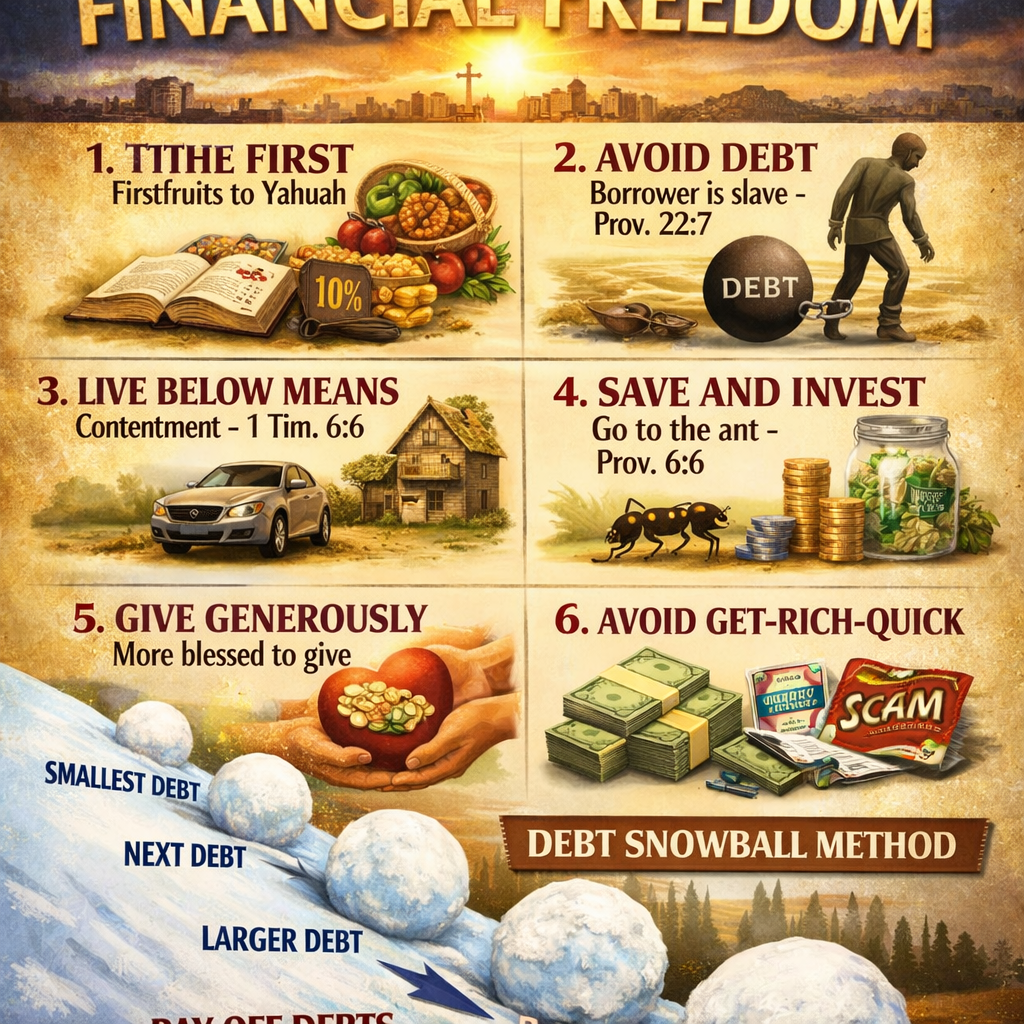
Yahuah's Blueprint for Financial Freedom
📚 Complete Study Guide
Review this comprehensive study guide before beginning the lessons. Understanding these foundational concepts will greatly enhance your learning experience.
Key Terms Glossary
- Usury (נֶשֶׁךְ - Neshek)
- Hebrew term meaning "bite" or "to take interest." Any interest charged on loans to fellow believers, strictly forbidden in Torah.
- Jubilee (יוֹבֵל - Yobel)
- The 50th year when all debts were cancelled, slaves freed, and land returned to original families. A picture of Yahusha's ultimate redemption.
- Ma'aser (מַעֲשֵׂר)
- Hebrew word for "tithe" meaning "tenth." The firstfruits portion belonging to Yahuah, given to support Levites, poor, widows, and orphans.
- Bikkurim (בִּכּוּרִים)
- Firstfruits offering - the first and best of one's harvest given to Yahuah, acknowledging Him as the source of all provision.
- Kesef (כֶּסֶף)
- Hebrew word for silver, and by extension "money." Biblical money was always precious metals with intrinsic value.
- Zahav (זָהָב)
- Hebrew word for gold. Used throughout Scripture as the standard of wealth and monetary exchange.
- Shemitah (שְׁמִטָּה)
- The seventh-year Sabbath rest for the land when debts were released and fields lay fallow. Economic reset every 7 years.
- Mammon (μαμωνᾶς)
- Aramaic term for wealth/riches personified as a false deity. Yahusha warned we cannot serve both Elohim and Mammon.
- Fiat Currency
- Government-issued money not backed by physical commodities. Latin "fiat" means "let it be done" - value by decree, not intrinsic worth.
- Sound Money
- Currency backed by or consisting of precious metals with intrinsic value that cannot be inflated or manipulated by governments.
- Central Banking
- Privately-owned banking system (like the Federal Reserve) that controls money supply, creates currency from nothing, and charges interest.
- Debt Slavery
- Modern bondage through consumer debt, mortgages, student loans, and credit cards - the borrower is servant to the lender (Proverbs 22:7).
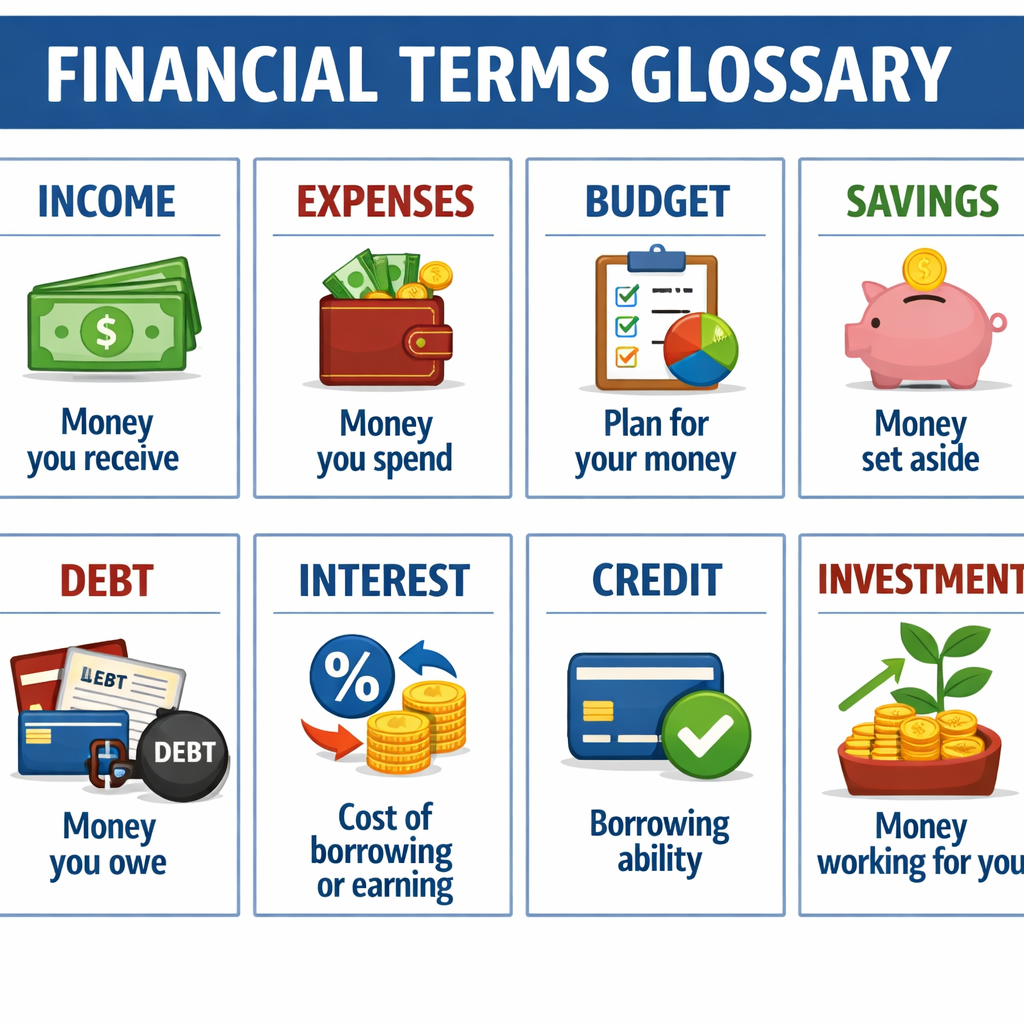
financial terms glossary
Hebrew Word Studies
Root: נשׁך (nashak) - "to bite, to strike with a sting"
Usage: Describes interest as something that "bites" the borrower - slowly consuming their wealth. Used in Exodus 22:25, Leviticus 25:36-37, Deuteronomy 23:19-20.
Insight: The very word Yahuah chose reveals His view of interest - it is predatory, harmful, and extractive. Like a serpent's bite, it may seem small but slowly poisons the victim.
Root: רבה (rabah) - "to increase, multiply"
Usage: Translated "increase" or "profit" - refers to gaining wealth through lending at interest. Prohibited alongside neshek in Leviticus 25:36.
Insight: Even if the interest seems "reasonable," gaining profit at the expense of a brother's misfortune violates Yahuah's command.
Root: Possibly from יבל (yabal) - "to bring, carry, lead"
Usage: The Jubilee year (Leviticus 25:8-17) - every 50th year proclaimed by the blast of a ram's horn (shofar).
Insight: The Jubilee pictures Yahusha's ministry - proclaiming liberty to captives, releasing prisoners from debt bondage. True financial freedom comes through HaMashiach.
Complete Scripture References
"If you lend money to any of My people who are poor among you, you shall not be like a moneylender to him; you shall not charge him interest [neshek]." — Exodus 22:25
"The rich rules over the poor, and the borrower is servant to the lender." — Proverbs 22:7
"Diverse weights are an abomination to Yahuah, and dishonest scales are not good." — Proverbs 20:23
"Honor Yahuah with your possessions, and with the firstfruits of all your increase; so your barns will be filled with plenty, and your vats will overflow with new wine." — Proverbs 3:9-10
"No one can serve two masters; for either he will hate the one and love the other, or else he will be loyal to the one and despise the other. You cannot serve Elohim and mammon." — Matthew 6:24
Historical Timeline: Money & Debt in Scripture
Yahuah establishes the principle of abundance - all needs provided, no lack, no debt, perfect provision.
Abraham pays 400 shekels of silver for Sarah's burial cave (Genesis 23:16) - first recorded real estate transaction using honest weights.
Yahuah establishes economic laws: usury forbidden, Sabbath year debt release, Jubilee, honest weights and measures, care for poor.
Silver as common as stones in Jerusalem (1 Kings 10:27). Wisdom on wealth: "Dishonest money dwindles away" (Proverbs 13:11).
"Your silver has become dross" (Isaiah 1:22) - prophetic warning against currency debasement, applicable to modern fiat currencies.
Cleanses Temple of money changers (Matthew 21:12-13). Teaches on mammon, stewardship, treasure in heaven. Proclaims Jubilee release (Luke 4:18-19).
Economic system disrupted. Early believers share possessions, cancel debts among themselves (Acts 2:44-45, 4:32-35).
Common Objections Answered
Answer: Yahuah's character doesn't change (Malachi 3:6). What was an "abomination" to Him then remains so today. The New Covenant doesn't abolish moral principles - it writes them on our hearts. Additionally, early church fathers unanimously condemned usury for the first 1,000+ years of Christianity. The acceptance of interest-charging came through compromise with the world's banking systems, not through biblical revelation.
Answer: The master in Matthew 25:27 is a harsh man who reaps where he doesn't sow - not a picture of Yahuah. He speaks according to the wicked servant's own accusation. The parable teaches faithful stewardship and multiplication through work, not endorsement of usury. Note: the servant could have "invested" with bankers (money changers) - this was the sinful worldly option, not the godly one.
Answer: This reveals how thoroughly we've been trained in Babylon's system. For thousands of years, civilizations functioned without predatory interest. Islamic banking today operates without usury. The current debt-based system enriches central bankers while impoverishing nations. Yahuah's ways work - we've simply never tried them collectively.
Answer: Abraham tithed before the Torah was given (Genesis 14:20). Tithing is a principle of honoring Yahuah with firstfruits that transcends dispensations. The New Covenant doesn't reduce our giving - it expands it! "Freely you have received, freely give" (Matthew 10:8). Most early believers gave far more than 10%.
Practical Application Guide
- Repent - Acknowledge participation in Babylon's debt system
- Stop borrowing - Make a covenant to take on no new debt
- Budget biblically - Live below your means, give first
- Attack debt aggressively - Use debt snowball method
- Build emergency fund - 3-6 months expenses in savings
- Convert to sound money - Begin acquiring silver/gold
- Become a lender, not borrower - Help others without usury
Learning Tips
- Complete one lesson per week for deep understanding and practical application
- Actually complete the worksheets with your real numbers - this is where transformation happens
- Discuss principles with your spouse/family - financial decisions affect everyone
- Start small - even saving $50/month or buying 1 oz of silver begins the journey
- Review and pray over each Scripture - let Yahuah speak to your specific situation
- Don't be discouraged by current debt - focus on direction, not perfection

Money Wisdom 01
Introduction
In the beginning, Yahuah created everything with purpose and order - including the concept of money and exchange. Long before paper currencies, central banks, or digital transactions, Scripture reveals Yahuah's design for honest money: precious metals with intrinsic value that cannot be manipulated by men.

Proverbs Wisdom
Financial Freedom Biblical
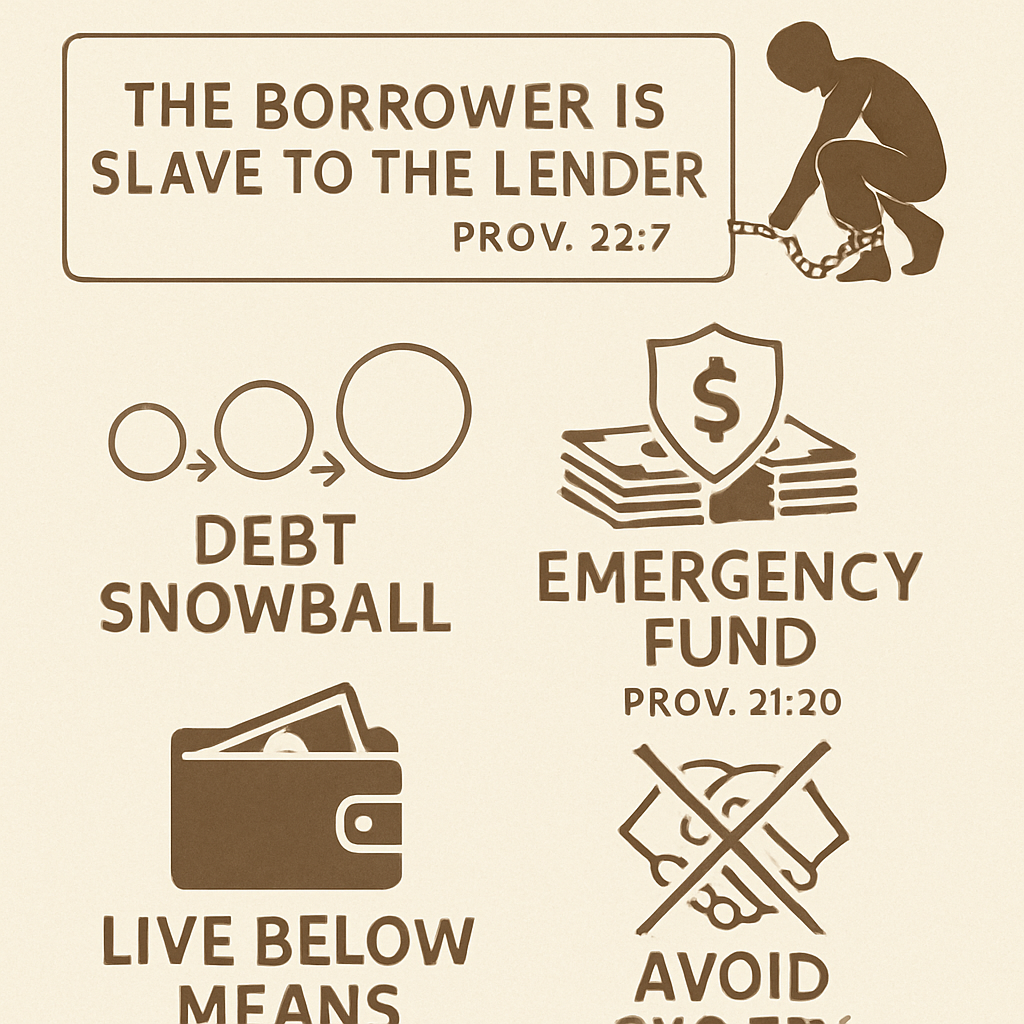
Debt Free Strategy
Biblical Money: What Scripture Reveals
Throughout Scripture, money is described in terms of precious metals - primarily silver (kesef) and gold (zahav). This wasn't coincidental or cultural - it reflected Yahuah's design for honest exchange:
Genesis 23:16 - Abraham weighs out 400 shekels of silver for Sarah's burial site - "currency of the merchants."
Genesis 37:28 - Joseph sold for 20 pieces of silver - actual silver, not paper promises.
Characteristics of Biblical Money
Yahuah's design for money includes these essential characteristics:
- Intrinsic Value: Precious metals have value in themselves, not by government decree
- Honest Weight: Cannot be inflated or debased without detection
- Durable: Gold and silver don't rust, rot, or decay over time
- Divisible: Can be divided into smaller units without losing value
- Portable: High value-to-weight ratio makes transportation practical
- Universally Recognized: Valued across all cultures throughout history
The Sin of Currency Debasement
When ancient rulers debased their currencies by mixing precious metals with base metals, the prophets pronounced judgment:
Isaiah directly connects currency debasement with corruption, theft, and rebellion against Yahuah. Debasing money IS theft - stealing purchasing power from those who earned it honestly.
Modern Fiat Currency: Rebellion Against Yahuah's Design
In 1971, the United States completely severed the dollar from gold, creating pure "fiat" currency - money by government decree with no intrinsic value. Since then:
- The dollar has lost over 98% of its purchasing power
- Inflation constantly steals from savers and wage earners
- Central banks create trillions from nothing, enriching the connected elite
- The average family requires two incomes to afford what one income provided in 1970
Lesson 1 Questions
1. According to Haggai 2:8, who owns all the silver and gold?
2. What Hebrew word means "silver" and is also used for "money" in Scripture?
3. TRUE or FALSE: According to Proverbs 11:1, using dishonest weights and measures is an abomination to Yahuah.
If false, explain the correction:
4. In Isaiah 1:22, the prophet declares "Your silver has become dross." What does this mean, and how does it apply to modern currency?
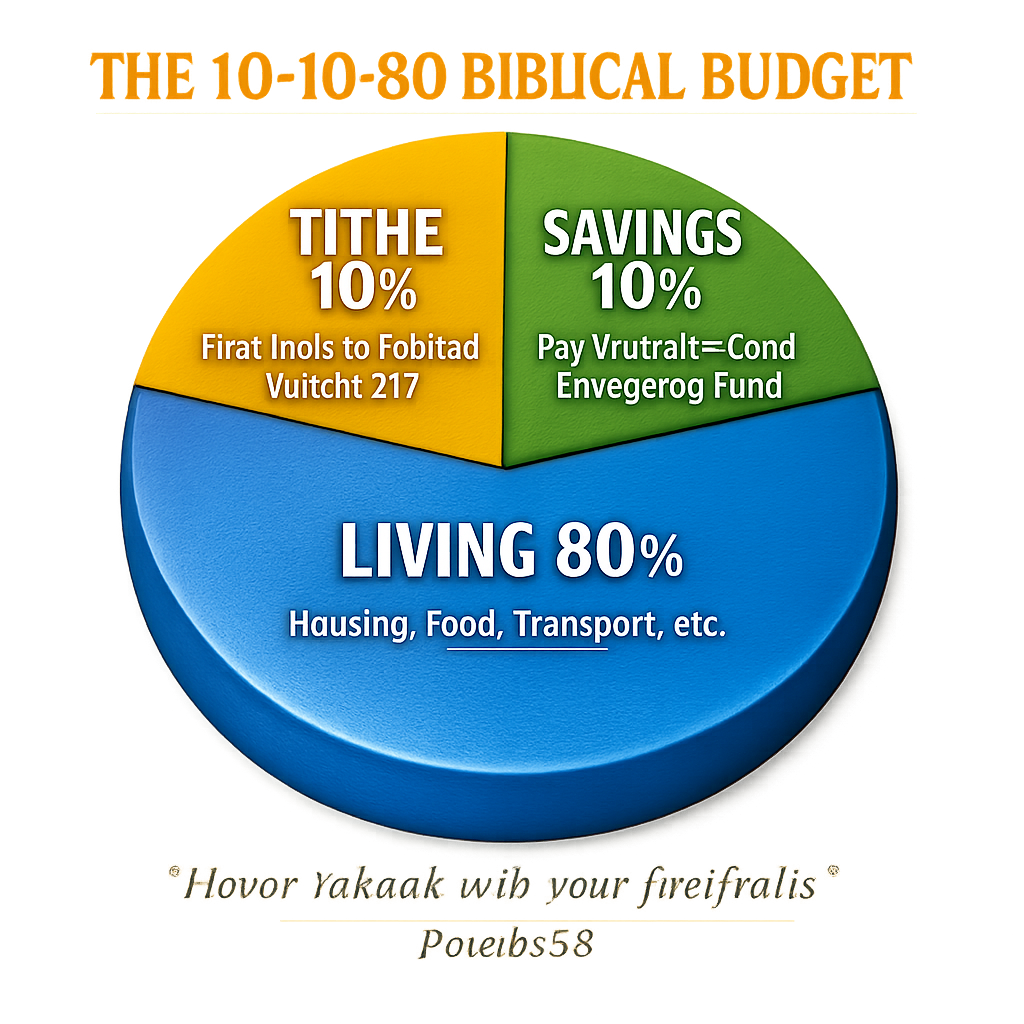
5. List three characteristics of biblical money (silver/gold) that fiat currency lacks:
Scripture Lookup Activity
Look up the following verses and summarize what each teaches about wealth, money, or possessions:
Proverbs 13:11
Ecclesiastes 5:10
Matthew 6:19-21
Application Scenario
Scenario: Your coworker says, "Why would anyone buy gold or silver? It doesn't pay interest like a savings account, and the stock market has better returns!" How would you respond using biblical principles?
Discussion Questions
1. Why do you think Yahuah designed money to be precious metals rather than paper or digital entries?
2. How does understanding that "the silver and gold are Mine" (Haggai 2:8) change your perspective on your own finances?
📖 SCRIPTURE MEMORY: Haggai 2:8
"'The silver is Mine, and the gold is Mine,' says Yahuah of hosts."
Write the verse from memory:
🧠 RECALL EXERCISE
Close this workbook. On a separate paper, write everything you remember from Lesson 1 without looking back. Include: the Hebrew words for silver and gold, why precious metals are biblical money, what happened in 1971, and key Scripture references.
After 5 minutes, reopen and check what you missed. Mark those items for extra review.
Items I need to review:
🗣️ TEACH-BACK CHALLENGE
Explain this lesson to someone this week. Topics to cover: Why Yahuah designed money as precious metals, the difference between biblical money and fiat currency, and how modern money creation is theft.
Person I taught:
Date:
One question they asked:
How I answered:
🎯 APPLICATION STEP
Knowledge without action is dead. Before the next lesson, complete ONE of the following:
What I did:
What happened/I learned:

Money Wisdom 02
Introduction
Few topics are as clearly addressed in Scripture yet as thoroughly ignored by modern believers as the prohibition against usury. Yahuah's commands against charging interest to fellow believers are repeated throughout Torah, reinforced by the Prophets, and upheld by the early church for over a millennium. Understanding why usury is forbidden unlocks one of the enemy's most powerful tools for economic bondage.
Pronunciation: NEH-shek
Meaning: From the root נשׁך (nashak) meaning "to bite" - specifically like a serpent's bite. Interest is described as something that bites, consumes, and poisons the borrower.
Key Insight: The very word Yahuah chose to describe interest reveals His assessment - it is predatory, harmful, and serpentine in nature.
Torah Commands Against Usury
Why Usury Is Forbidden
When someone needs to borrow, they're already in a vulnerable position. Charging interest profits from their difficulty rather than showing compassion.
"The rich rules over the poor, and the borrower is servant to the lender" (Proverbs 22:7). Interest compounds this bondage, making escape increasingly difficult.
"Love your neighbor as yourself" (Leviticus 19:18). Would you want someone profiting from your hardship? Interest-free lending is practical love in action.
Interest systematically transfers wealth from borrowers (often poor) to lenders (often wealthy), violating Yahuah's design for economic justice.
The Prophets on Usury
Notice how Yahuah groups usury with bloodshed, bribery, and extortion - it is not a minor economic matter but a serious moral offense.
Psalm 15 describes who may dwell in Yahuah's tabernacle - and refusing usury is one of the qualifications!
The Foreigner Exception
Deuteronomy 23:20 permits charging interest to foreigners. Understanding this requires context:
- Foreigners were typically merchants engaged in commercial transactions, not poor brethren in need
- Business loans for profit-making ventures differ from charitable loans to the struggling
- This protected Israel from exploitation by foreign merchants who charged interest
- The covenant community had special obligations to one another that didn't extend to all
Application today: Among believers, the prohibition stands. Commercial transactions with unbelievers may differ, but even then, our goal should be fair dealing, not exploitation.
Early Church Teaching
For the first 1,000+ years, the church unanimously condemned usury:
- Council of Nicaea (325 AD): Banned clergy from charging interest
- Council of Elvira (306 AD): Excommunicated laypeople who practiced usury
- Ambrose of Milan: "If anyone commits usury, he commits robbery and no longer has life"
- Augustine: "What worse theft is there than when a poor man is oppressed by usury?"
- Thomas Aquinas: Classified usury as a sin against justice
The acceptance of interest-charging came through the rise of medieval banking (often connected to powerful families and institutions) and compromise with worldly economic systems - not through biblical revelation.
Lesson 2 Questions
1. The Hebrew word "neshek" (usury/interest) comes from a root meaning:
2. According to Ezekiel 22:12, usury is grouped with which other sins?
3. TRUE or FALSE: The early church for the first 1,000+ years accepted interest-charging as normal Christian practice.
If false, explain:
4. Why does Yahuah forbid charging interest to fellow believers? List at least three reasons from the lesson:
5. According to Psalm 15:5, what is one characteristic of the person who may dwell in Yahuah's tabernacle?

Saving Money
Matching Exercise
Scripture Reference
Teaching (Write number)
Application Scenario
Scenario: A fellow believer in your congregation comes to you in need. They've lost their job and need $2,000 to cover rent and utilities for two months while they search for work. You have the money available. Based on what you've learned, how should you handle this situation?
Discussion Questions
1. Why do you think modern Christianity has largely abandoned the prohibition against usury? What influences led to this change?
2. How might our communities be different if believers practiced interest-free lending to one another?
📖 SCRIPTURE MEMORY: Proverbs 22:7
"The rich rules over the poor, and the borrower is servant to the lender."
Write the verse from memory:
🧠 RECALL EXERCISE
Close this workbook. On a separate paper, write everything you remember about usury: the Hebrew word "neshek" and its meaning, at least 3 Scripture references, why usury is forbidden, and what the early church taught.
After 5 minutes, reopen and check what you missed.
Items I need to review:
🗣️ TEACH-BACK CHALLENGE
Explain to someone why Yahuah forbids charging interest to fellow believers, using at least 2 Scripture references.
Person I taught:
Date:
One question they asked:
How I answered:
🎯 APPLICATION STEP
Knowledge without action is dead. Before the next lesson, complete ONE of the following:
What I did:
What happened/I learned:
Introduction
Yahuah built into His economic system regular "reset" mechanisms that prevented generational poverty, broke cycles of debt, and ensured land remained in families. These weren't mere suggestions - they were commands that, when followed, created economic justice impossible under any man-made system.
The Shemitah Year (7th Year Release)
- Every 7th year, all debts among Israelites were cancelled
- The land rested - no planting or harvesting
- Hebrew slaves were freed
- The people gathered to hear Torah read publicly
Imagine if this were practiced today: every 7 years, credit card debt - cancelled. Student loans - cancelled. Car loans - cancelled. Medical debt - cancelled. No debt could accumulate for more than 7 years!
The Jubilee Year (50th Year)
Pronunciation: yo-VEHL
Meaning: Possibly derived from the ram's horn (shofar) that announced it, or from a root meaning "to bring/carry" - bringing people back to their inheritance.
Proclamation: "Liberty throughout the land" - these words are inscribed on America's Liberty Bell, though the nation has never truly practiced Jubilee.
Jubilee Provisions
- All debts cancelled - Complete financial reset
- Land returned to original families - Prevented permanent land monopolies
- All Hebrew slaves freed - No perpetual bondage
- Land rested - Sabbath principle extended
- Liberty proclaimed - Shofar blast announced freedom
Economic Implications
The Jubilee created an economic system radically different from anything the world has known:
Yahusha & the Jubilee
When Yahusha began His ministry, He directly connected His mission to Jubilee:
The "acceptable year of Yahuah" is the Jubilee! Yahusha proclaimed ultimate spiritual Jubilee - release from the debt of sin, freedom from bondage to the enemy, and restoration of our inheritance in the Kingdom.
Why Israel Faced Judgment
"Then the land shall enjoy its sabbaths as long as it lies desolate and you are in your enemies' land; then the land shall rest and enjoy its sabbaths. As long as it lies desolate it shall rest—for the time it did not rest on your sabbaths when you dwelt in it." — Leviticus 26:34-35
The 70-year Babylonian captivity corresponded to 70 missed Sabbath years (490 years of disobedience). Yahuah takes His economic commands seriously!
Lesson 3 Questions
1. How often did the Shemitah (debt release) occur?
2. According to Leviticus 25:23, why couldn't land be sold permanently?
3. What three things were restored/released during the Jubilee year?
4. TRUE or FALSE: The 70-year Babylonian exile corresponded to Israel's failure to keep 70 Sabbath years.
5. How does Yahusha's proclamation in Luke 4:18-19 connect to the Jubilee?
Application Scenario
Scenario: Someone argues, "The Jubilee system would never work today - our economy is too complex. Besides, it would discourage lending if debts were just going to be cancelled." How would you respond?
Discussion Questions
1. How would modern society be different if Shemitah and Jubilee were practiced? What industries would be affected?
2. In what ways has Yahusha provided spiritual "Jubilee" for believers? How does this apply to your life?
📖 SCRIPTURE MEMORY: Leviticus 25:10
"And you shall consecrate the fiftieth year, and proclaim liberty throughout all the land to all its inhabitants. It shall be a Jubilee for you."
Money Wisdom 02
Write the verse from memory:
🧠 RECALL EXERCISE
Close this workbook. On a separate paper, write everything you remember about debt freedom: the Hebrew words for debt and forgiveness, the Sabbath Year and Jubilee cycles, how debt accumulation destroys families, and Yahuah's economic system.
After 5 minutes, reopen and check what you missed.
Items I need to review:
🗣️ TEACH-BACK CHALLENGE
Explain Yahuah's debt-free economy to someone: the 7-year release, the 50-year Jubilee, and why permanent debt was never part of His design.
Person I taught:
Date:
One question they asked:
How I answered:
🎯 APPLICATION STEP
Knowledge without action is dead. Before the next lesson, complete ONE of the following:
What I did:
What happened/I learned:
Introduction
Before there was Torah, before there was a temple, before there were Levites - there was tithing. Abraham gave a tenth to Melchizedek. Jacob promised a tenth to Yahuah. The principle of giving first to Yahuah is woven into the fabric of faithful living. This lesson explores biblical giving - what it is, what it isn't, and how it applies today.
Tithing Before Torah
After rescuing Lot, Abraham gave a tenth of everything to Melchizedek, priest of El Elyon (Most High). This predates the Torah by over 400 years, showing tithing is a principle, not merely a law.
Jacob promised, "Of all that You give me I will surely give a tenth to You." Again, this occurred before Sinai - tithing was understood as honoring Yahuah with increase.
Torah's Tithing System
The Torah established multiple tithes for different purposes:
- Levitical Tithe (Numbers 18:21-24) - Supported the Levites who had no land inheritance and served in the tabernacle/temple
- Festival Tithe (Deuteronomy 14:22-27) - Used by families to celebrate the annual feasts in Jerusalem
- Poor Tithe (Deuteronomy 14:28-29) - Every third year, stored locally to support Levites, strangers, orphans, and widows
Firstfruits (Bikkurim)
Meaning: "Firstfruits" - from בְּכוֹר (bekor) meaning "firstborn"
Principle: The FIRST and BEST belongs to Yahuah - not leftovers, not what's convenient, but the first portion of any increase.
Firstfruits was brought at Shavuot (Pentecost), acknowledging that ALL the harvest came from Yahuah. By giving first, the Israelite demonstrated faith that Yahuah would provide the rest.
Tithing in the New Covenant
Some argue tithing was "Old Testament" and doesn't apply today. Let's examine this:
"Woe to you, scribes and Pharisees, hypocrites! For you pay tithe of mint and anise and cummin, and have neglected the weightier matters of the Torah: justice and mercy and faith. These you ought to have done, without leaving the others undone." — Matthew 23:23
Notice: Yahusha didn't abolish tithing - He said they should tithe AND practice justice, mercy, and faith. "Without leaving the others undone."
The New Covenant doesn't reduce giving - it expands it! Early believers sold possessions and shared everything (Acts 2:44-45). They gave "beyond their ability" (2 Corinthians 8:3). If 10% was the floor, believers often gave far more.
Principles of Biblical Giving
- Give First - Not what's left over, but the firstfruits
- Give Proportionally - Percentage-based, not flat amount
- Give Cheerfully - Not from guilt or manipulation
- Give Purposefully - Know where your giving goes
- Give Generously - Beyond the minimum when possible
Where Should We Give?
- Support for teachers of the Word (1 Timothy 5:17-18, Galatians 6:6)
- Care for the poor, widows, orphans (James 1:27, 1 John 3:17)
- Help for believers in need (Acts 11:29, Romans 15:26)
- Support for traveling ministers (3 John 1:5-8)
- Building up the assembly (1 Corinthians 16:1-2)
Lesson 4 Questions
1. Who tithed to Melchizedek before the Torah was given?
2. According to Matthew 23:23, what did Yahusha say about tithing?
3. What is the meaning of "Bikkurim" (firstfruits)?
4. TRUE or FALSE: The New Covenant reduces giving requirements from 10% to whatever feels comfortable.
Explain your answer:
5. List three biblical priorities for where our giving should go:
Application Scenario
Scenario: A friend says, "I can't afford to tithe right now - I'm barely making ends meet. Once I get out of debt and make more money, then I'll start giving." How would you respond with grace and biblical wisdom?
Personal Giving Assessment
What percentage of your income do you currently give?
Do you give FIRST (before other expenses) or give what's LEFT OVER?
Where does your giving currently go? Is it aligned with biblical priorities?
What changes do you sense Yahuah calling you to make in your giving?
📖 SCRIPTURE MEMORY: Malachi 3:10
"Bring all the tithes into the storehouse, that there may be food in My house, and try Me now in this, says Yahuah of hosts, if I will not open for you the windows of heaven and pour out for you such blessing that there will not be room enough to receive it."
Write the verse from memory:
🧠 RECALL EXERCISE
Close this workbook. On a separate paper, write everything you remember about tithing and giving: the Hebrew word "ma'aser," the biblical purposes of the tithe, why we give FIRST not last, and the difference between tithes, offerings, and alms.
After 5 minutes, reopen and check what you missed.
Items I need to review:
🗣️ TEACH-BACK CHALLENGE
Explain to someone why giving is "firstfruits" not "leftovers," and the biblical priority order for giving (ministry, poor, family, community).
Person I taught:
Date:
One question they asked:
How I answered:
🎯 APPLICATION STEP
Knowledge without action is dead. Before the next lesson, complete ONE of the following:
What I did:
What happened/I learned:
Money Wisdom 01
Introduction
If you're in debt, you're not alone - the average American household carries over $100,000 in total debt. But "normal" isn't biblical. Scripture is clear: "The borrower is servant to the lender" (Proverbs 22:7). This lesson provides a practical, biblical strategy to break free from debt slavery and experience the financial liberty Yahuah intends for His people.
Understanding Your Bondage
Before attacking debt, you must understand its true nature:
- You must work to pay interest to your master (the lender)
- You cannot freely choose how to use your income
- You are legally bound to fulfill your obligations
- Default brings penalties, seizure, and damaged reputation
- The system is designed to keep you borrowing more
The Biblical Debt Elimination Plan
Acknowledge that taking on debt (except in genuine emergencies) was unwise. This isn't about guilt - it's about recognizing how we got here so we don't return. Commit to Yahuah that you will become debt-free.
Make a covenant - no new debt. Cut up credit cards (or freeze them in ice if you lack self-control). Don't finance vehicles. Don't take store credit offers. The borrowing stops TODAY.
Before attacking debt, save $1,000-2,000 for true emergencies. This prevents new borrowing when unexpected expenses arise. This is a buffer, not a fully-funded fund (that comes later).
Write down every debt - creditor, balance, minimum payment, interest rate. Seeing the full picture is humbling but necessary. Don't hide from the truth.
List debts from smallest to largest balance. Pay minimums on all except the smallest. Attack the smallest with every extra dollar. When it's paid, roll that payment to the next smallest. The "snowball" grows as each debt is eliminated.
Why smallest first instead of highest interest? Behavior change trumps mathematics. Quick wins build motivation and demonstrate Yahuah's faithfulness.
Temporarily sacrifice to accelerate freedom. Sell items you don't need. Take extra work. Reduce eating out, subscriptions, entertainment. This isn't permanent - it's war mode until debt is defeated.
When debt-free, fully fund your emergency reserve (3-6 months expenses), then begin building wealth to give generously and provide for family.
Debt Elimination Worksheet
List all your debts from smallest to largest balance:
| Creditor | Balance | Minimum Payment | Interest Rate |
|---|---|---|---|
| TOTAL DEBT | — |
Target Debt #1 (Smallest Balance):
Extra Amount You Can Pay Monthly:
Things You Can Sell to Accelerate Payoff:
Expenses You Can Cut Temporarily:
Ways to Increase Income:
Lesson 5 Questions
1. According to Proverbs 22:7, what is the relationship between borrower and lender?
2. What is the FIRST step in the Biblical Debt Elimination Plan?
3. The Debt Snowball method attacks debts in what order?
4. Why does the Debt Snowball use smallest balance first instead of highest interest rate?
5. What size emergency fund should you build BEFORE attacking debt aggressively?
Commitment Declaration
Write out your commitment to become debt-free. Include specific actions you will take starting this week:
📖 SCRIPTURE MEMORY: Romans 13:8
"Owe no one anything except to love one another, for he who loves another has fulfilled the Torah."
Write the verse from memory:
🧠 RECALL EXERCISE
Close this workbook. On a separate paper, write the 7 steps of the Biblical Debt Elimination Plan in order, plus the key principle behind the Debt Snowball method.
After 5 minutes, reopen and check what you missed.
Items I need to review:
🗣️ TEACH-BACK CHALLENGE
Explain the Debt Snowball method to someone, including why behavior change trumps mathematics in debt elimination.
Person I taught:
Date:
One question they asked:
How I answered:
🎯 APPLICATION STEP
Knowledge without action is dead. Before the next lesson, complete ONE of the following:
What I did:
What happened/I learned:
Introduction
Having established that silver and gold are Yahuah's design for honest money, this lesson provides practical guidance for acquiring precious metals. This isn't about "investing" or speculation - it's about converting paper promises (fiat currency) into real money with intrinsic value, as a hedge against economic instability and currency debasement.
Why Own Precious Metals?
An ounce of gold in 1920 bought a quality men's suit. An ounce of gold today still buys a quality men's suit. Meanwhile, $20 (what an ounce cost then) won't buy a good tie.
Banking crises, currency collapses, and economic disruptions have occurred throughout history. Metals have never gone to zero value.
Physical metals aren't tracked in databases or dependent on electronic systems. They can be stored, transported, and exchanged privately.
Owning silver and gold connects you to Yahuah's monetary design rather than man's corrupted systems.
Silver vs. Gold: Understanding the Difference
| Characteristic | Silver | Gold |
|---|---|---|
| Current Price (approx) | $25-35 per oz | $2,000-2,500 per oz |
| Entry Point | Very accessible | Requires more capital |
| Industrial Use | High (electronics, solar, medical) | Limited |
| Storage Space | More space needed | Very compact |
| Divisibility | Better for small transactions | Better for large value storage |
| Historical Ratio | Historically 15-16:1 (silver:gold), currently ~80:1 - silver potentially undervalued | |
What to Buy: Product Types
Silver Products
- American Silver Eagles - 1 oz, .999 silver, US Mint, high recognition, slight premium
- Canadian Maple Leafs - 1 oz, .9999 silver, excellent purity
- Generic Rounds - 1 oz private mint rounds, lower premiums, same silver content
- Constitutional/"Junk" Silver - Pre-1965 US dimes, quarters, half-dollars (90% silver) - recognizable, divisible
- Bars - 1 oz, 10 oz, 100 oz - lower premiums at larger sizes but less divisible
Gold Products
- American Gold Eagles - 1 oz, 1/2 oz, 1/4 oz, 1/10 oz - recognized worldwide
- Canadian Gold Maple Leafs - .9999 purity, excellent quality
- Gold Bars - Various sizes from 1 gram to 1 oz - lower premiums
- Fractional Gold - 1/10 oz coins more accessible but higher premium per ounce
- Numismatic (collector) coins - pay for rarity, not metal content
- "Proof" coins unless you understand the premium you're paying
- Paper gold/silver (ETFs, certificates) - you don't own physical metal
- Unverified dealers or too-good-to-be-true prices
- Buying on credit - defeats the purpose!
Where to Buy
- JM Bullion (jmbullion.com)
- SD Bullion (sdbullion.com)
- APMEX (apmex.com)
- Provident Metals (providentmetals.com)
- Monument Metals (monumentmetals.com)
Compare prices - premiums vary. Check for free shipping thresholds.
- Local coin shops - build relationship, no shipping, can verify in person
- Gun shows often have coin/bullion dealers
- Pawn shops (verify authenticity, negotiate price)
- Private sales (know your seller, verify authenticity)
Storage Considerations
- Quality safe (fire-rated, bolted down)
- Multiple hidden locations (don't put all in one place)
- Keep quiet about your holdings
- Document for insurance purposes (photos, receipts)
- Safe deposit box - convenient but accessible to bank/government
- Private vault storage - allocated, insured, but costs fees
- Trusted family member in different location
Getting Started: A Practical Plan
Monthly Amount to Allocate:
Start small - even $50-100/month builds over time
Financial Freedom Biblical
First Purchase Goal:
Preferred Dealer(s):
Storage Plan:
Long-term Goal:
Example: 100 oz silver + 1 oz gold within 2 years
Lesson 6 Questions
1. What is the PRIMARY reason for owning precious metals according to this lesson?
2. Which metal is recommended for beginners to start with, and why?
3. What is "constitutional" or "junk" silver?
4. List three things to AVOID when buying precious metals:
5. TRUE or FALSE: Paper gold/silver (ETFs, certificates) gives you ownership of physical metal.
📖 SCRIPTURE MEMORY: Proverbs 22:3
"A prudent man foresees evil and hides himself, but the simple pass on and are punished."
Write the verse from memory:
🧠 RECALL EXERCISE
Close this workbook. On a separate paper, write: the 4 reasons to own precious metals, the difference between silver and gold (advantages of each), what "constitutional silver" is, and 3 things to avoid when buying.
After 5 minutes, reopen and check what you missed.
Items I need to review:
🗣️ TEACH-BACK CHALLENGE
Explain to someone why physical precious metals are better than paper assets as a store of value, and how to start acquiring them on a budget.
Person I taught:
Date:
One question they asked:
How I answered:
🎯 APPLICATION STEP
Knowledge without action is dead. Before the next lesson, complete ONE of the following:
What I did:
What happened/I learned:
Introduction
True financial freedom extends beyond money to include provision of basic needs. A family that can grow food, preserve harvests, and reduce dependence on fragile supply chains has achieved a level of security that no bank balance can provide. This lesson introduces homesteading principles as an essential component of biblical financial wisdom.
The Biblical Foundation
From Eden onward, Yahuah placed humanity in relationship with the land:
Work with the land wasn't a curse - it was the original assignment. The curse added toil and thorns, but the calling to cultivate remained.
This wisdom prioritizes productive capacity (field/garden) before comfort (house). Modern thinking reverses this - we finance elaborate homes while having no ability to feed ourselves.
Why Food Security Matters
- Supply Chain Fragility: Most grocery stores have only 3 days of inventory. Any disruption (weather, transportation, economic) reveals how vulnerable we are.
- Food Quality Control: Growing your own ensures you know exactly what's in your food - no GMOs, pesticides, or questionable processing.
- Cost Savings: A productive garden can save hundreds or thousands annually on groceries.
- Teaching Opportunity: Children who grow food understand work, patience, provision, and Yahuah's creation in ways screens never teach.
- Community Building: Excess produce enables generosity to neighbors and builds relationships.
Getting Started: The Homestead Progression
- Herbs in windowsill pots (basil, cilantro, mint, rosemary)
- Tomatoes in 5-gallon buckets
- Lettuce in shallow containers
- Peppers, green onions in pots
Even apartment dwellers can start here!
- Raised beds or in-ground plots
- Tomatoes, peppers, squash, beans, cucumbers
- Leafy greens (lettuce, kale, spinach, chard)
- Root vegetables (carrots, beets, radishes, potatoes)
- Herbs and simple fruit (strawberries)
- Larger garden space (1,000+ sq ft)
- Backyard chickens for eggs
- Fruit trees and berry bushes
- Food preservation (canning, freezing, dehydrating)
- Composting for soil building
- 1+ acres of productive land
- Meat animals (goats, rabbits, chickens for meat)
- Dairy (goats or family cow)
- Larger orchard, extensive gardens
- Year-round food production/preservation
- Potential income from excess
Essential Food Preservation Skills
Homestead Planning Checklist
- I have at least 2 weeks of food stored for my family
- I have seeds saved or purchased for next growing season
- I have basic gardening tools (shovel, hoe, trowel, etc.)
- I know how to grow at least 5 different vegetables
- I have practiced at least one food preservation method
- I have non-electric water access or storage for 2+ weeks
- I have basic reference books on gardening/homesteading
- I know my USDA growing zone and last frost date
- I have or am developing relationships with local farmers
- I am actively reducing dependence on grocery stores
My Current Homestead Level:
My Next Steps (This Season):
Lesson 7 Questions
1. According to Genesis 2:15, what was Adam's assignment in the garden?
2. According to Proverbs 24:27, what should be prioritized before building your house?
3. List three benefits of growing your own food:
4. Which food preservation method requires a pressure canner for safety?
5. Why is food security considered part of biblical financial freedom?
Discussion Questions
1. What barriers (real or perceived) have prevented you from growing more of your own food?
2. How might your family benefit spiritually and relationally from homesteading activities?
📖 SCRIPTURE MEMORY: Proverbs 12:11
"He who tills his land will be satisfied with bread, but he who follows frivolity is devoid of understanding."
Write the verse from memory:
🧠 RECALL EXERCISE
Close this workbook. On a separate paper, write: the biblical foundation for working the land, the homesteading priority levels (5 to start), 4 food preservation methods, and why food security is part of financial freedom.
After 5 minutes, reopen and check what you missed.
Items I need to review:
Debt Free Strategy
🗣️ TEACH-BACK CHALLENGE
Explain to someone how homesteading and food production connect to biblical financial wisdom, using Proverbs 12:11 and 24:27 as foundation.
Person I taught:
Date:
One question they asked:
How I answered:
🎯 APPLICATION STEP
Knowledge without action is dead. Before the next lesson, complete ONE of the following:
What I did:
What happened/I learned:
Introduction
All the financial wisdom in the world means nothing if we become hoarders rather than conduits of Yahuah's blessing. The ultimate purpose of wealth is not accumulation but generosity - using what we've been given to bless others and advance the Kingdom. This final lesson addresses the heart behind biblical finances: we are stewards, not owners, and generosity is the evidence that mammon hasn't captured our hearts.
Yahuah's Ownership, Our Stewardship
- "The earth is Yahuah's, and all its fullness" (Psalm 24:1)
- "The silver is Mine, and the gold is Mine" (Haggai 2:8)
- "Every beast of the forest is Mine, and the cattle on a thousand hills" (Psalm 50:10)
We don't own anything - we manage what belongs to our King. This perspective transforms our relationship with money from "mine to keep" to "His to steward."
The Mammon Test
Mammon isn't just money - it's money as a master, a false god demanding loyalty, sacrifice, and worship. The test of whether mammon rules us is simple: Can we give it away joyfully?
- Anxiety about finances despite having enough
- Giving feels painful rather than joyful
- Defining security by bank balance rather than Yahuah's promises
- Working excessive hours for more while neglecting family/faith
- Inability to be generous spontaneously
- Comparing yourself to others' material possessions
The Blessings of Generosity
These aren't "prosperity gospel" promises of getting rich through giving. Rather, they describe a spiritual principle: generosity opens channels of blessing that hoarding closes. The generous person experiences Yahuah's provision in ways the stingy never know.
Practical Ways to Give
Firstfruits to Yahuah's work - determine a percentage and give it first, not last. Support those who teach and minister.
When you see a need, meet it. Buy a meal, pay someone's bill, give cash to a struggling family. Let the Ruach prompt you.
When a brother needs help, lend without interest. Better yet, give if you can - "do not expect repayment" (Luke 6:35).
Open your home. Share meals. Generosity isn't always money - it's resources, time, and space.
Share these financial principles with others. Help someone create a budget, get out of debt, or start a garden. Give knowledge, not just money.
"A good man leaves an inheritance to his children's children" (Proverbs 13:22). Generosity extends beyond our lifetime through what we pass on.
The Heart Check
The word "cheerful" is hilaros in Greek - from which we get "hilarious." Yahuah desires joyful, even exuberant giving - not reluctant obligation. If giving feels like extraction rather than expression, we need heart work more than budget work.
Building a Legacy of Generosity
Current Giving (Honest Assessment):
Heart Check - How does giving feel to you?
Spontaneous Generosity Goal:
Keep a specific amount set aside for spontaneous giving when you encounter needs
Who in Your Life Needs Help Right Now?
Non-Financial Ways to Be Generous:
Legacy Vision - What do you want to leave behind?
Lesson 8 Questions
1. According to 1 Timothy 6:17-19, what should the rich do with their wealth?
2. What is the key test to determine if mammon has a hold on your heart?
3. The Greek word for "cheerful" giver (hilaros) means:
4. TRUE or FALSE: According to Proverbs 13:22, a good man leaves an inheritance to his children's children.
5. List three practical ways to practice generosity beyond regular tithing:
Final Application
Course Summary: Write a one-paragraph summary of what you've learned in this workbook and how it will change your approach to finances:
Discussion Questions
1. How has your view of money and wealth changed through this study?
2. What is one specific act of generosity you will do this week as a result of this lesson?
📖 SCRIPTURE MEMORY: Matthew 6:24
"No one can serve two masters; for either he will hate the one and love the other, or else he will be loyal to the one and despise the other. You cannot serve Elohim and mammon."
Write the verse from memory:
🧠 RECALL EXERCISE
Close this workbook. On a separate paper, write: what mammon is, the signs that mammon may have a hold on us, the difference between ownership and stewardship, the levels of generosity, and the ultimate purpose of wealth.
After 5 minutes, reopen and check what you missed.
Items I need to review:
🗣️ TEACH-BACK CHALLENGE
Explain to someone the biblical difference between being an owner vs. a steward of wealth, and why generosity is the ultimate test of whether mammon rules us.
Person I taught:
Date:
One question they asked:
How I answered:
🎯 APPLICATION STEP
Knowledge without action is dead. Complete this final workbook by doing ONE of the following this week:
What I did:
What happened/I learned:
Monthly Budget Worksheet
Use this worksheet to track your income and expenses. The goal is to give every dollar a purpose before the month begins - this is called a "zero-based budget."
| Source | Amount |
|---|---|
| Primary Income (after taxes) | |
| Spouse Income (if applicable) | |
| Side Income/Business | |
| Other Income | |
| TOTAL INCOME |
| Category | Budgeted |
|---|---|
| Tithe/Firstfruits (10%+) | |
| Additional Giving/Charity | |
| TOTAL GIVING |
| Category | Budgeted |
|---|---|
| Emergency Fund | |
| Precious Metals | |
| Other Savings Goals | |
| TOTAL SAVINGS |
| Category | Budgeted |
|---|---|
| Mortgage/Rent | |
| Property Taxes | |
| Home Insurance | |
| Utilities (Electric, Gas, Water) | |
| Maintenance/Repairs | |
| TOTAL HOUSING |
| Category | Budgeted |
|---|---|
| Car Payment (goal: $0) | |
| Gas/Fuel | |
| Auto Insurance | |
| Maintenance/Repairs | |
| TOTAL TRANSPORTATION |
| Category | Budgeted |
|---|---|
| Groceries | |
| Eating Out (minimize!) | |
| TOTAL FOOD |
| Category | Budgeted |
|---|---|
| Credit Cards | |
| Student Loans | |
| Medical Debt | |
| Other Debt | |
| TOTAL DEBT PAYMENTS |
| Category | Budgeted |
|---|---|
| Health Insurance | |
| Phone/Internet | |
| Clothing | |
| Personal/Household | |
| Entertainment/Recreation | |
| Subscriptions | |
| Miscellaneous | |
| TOTAL OTHER |
| Total Income | |
| Total Expenses | |
| REMAINING (should = $0) |
In a zero-based budget, every dollar is assigned a purpose. If you have money left over, assign it to savings, debt, or giving until it equals $0.
SPACED REVIEW TRACKER
Review at these intervals for maximum retention:
| Lesson | Done | D1 | D3 | D7 | D21 | D60 |
|---|---|---|---|---|---|---|
| 1. Biblical Foundations | ||||||
| 2. Debt Slavery | ||||||
| 3. Federal Reserve | ||||||
| 4. Torah Economics | ||||||
| 5. Debt Freedom | ||||||
| 6. Generational Wealth | ||||||
| 7. End-Times Economy | ||||||
| 8. Action Plan |
Complete Answer Key
For instructors and self-checking. Review after completing each lesson.
Lesson 1: Silver & Gold - Yahuah's Design for Money
Haggai 2:8 states clearly that all silver and gold belong to Yahuah - we are merely stewards of His resources.
Kesef (כֶּסֶף) is the Hebrew word for silver, and by extension "money" throughout Scripture. Zahav means gold, Neshek means usury/interest, and Mammon is an Aramaic word for wealth personified.
Proverbs 11:1 explicitly states "A false balance is an abomination to Yahuah, but a just weight is His delight." This applies directly to honest money and measurement.
Isaiah declares that Israel's silver has become "dross" - impure, mixed with base metals. This refers to currency debasement (mixing precious metals with worthless ones), which was connected to corruption and rebellion. Modern application: Fiat currency is entirely "dross" - having no precious metal content at all. Central banks create money from nothing, constantly debasing purchasing power through inflation. Isaiah's warning applies even more severely today.
1) Intrinsic Value - silver/gold have inherent worth; fiat has none. 2) Cannot be inflated/debased without detection - paper money can be printed infinitely. 3) Durable - metals don't decay; paper currency loses value over time. (Also acceptable: Universally recognized, Honest weight/measure, Created by Yahuah not governments)
Lesson 2: Usury Forbidden - The Bite of Interest
Neshek comes from the root nashak meaning "to bite" - revealing that interest consumes and poisons the borrower like a serpent's bite.
Ezekiel 22:12 groups usury with taking bribes, shedding blood, and extortion - showing how seriously Yahuah views interest-charging.
The early church UNANIMOUSLY condemned usury for over 1,000 years. Councils at Nicaea, Elvira, and numerous church fathers (Ambrose, Augustine, Aquinas) all prohibited it. Acceptance of interest came through compromise with banking systems, not biblical revelation.
1) It exploits misfortune - profiting from another's difficulty. 2) It creates debt slavery - the borrower becomes servant to lender. 3) It violates the command to love - extracting from rather than helping a brother. 4) It redistributes wealth upward - systematically transferring from poor to rich.
According to Psalm 15:5, one who may dwell in Yahuah's tabernacle "does not put out his money at usury." Refusing to charge interest to brothers is a qualification for dwelling in Yahuah's presence!
A = 4 (Proverbs 22:7 - borrower servant to lender); B = 1 (Exodus 22:25 - don't be like moneylender to poor); C = 3 (Deuteronomy 23:19-20 - foreigners vs brothers); D = 5 (Ezekiel 22:12 - usury with bloodshed); E = 2 (Leviticus 25:36-37 - fear Elohim, let brother live)
Lesson 3: Shemitah & Jubilee
The Shemitah occurred every seventh year when debts among Israelites were released (Deuteronomy 15:1-2).
Leviticus 25:23 - "The land shall not be sold permanently, for the land is Mine; for you are strangers and sojourners with Me." All land ultimately belongs to Yahuah; we are only stewards.
1) All debts were cancelled (complete financial reset). 2) Land was returned to original families (preventing permanent land monopolies). 3) Hebrew slaves were freed (liberty proclaimed throughout the land).
Leviticus 26:34-35 and 2 Chronicles 36:21 confirm the 70-year exile corresponded to unpaid Sabbath years - 490 years of failing to keep Shemitah/Sabbath years for the land.
In Luke 4:18-19, Yahusha quotes Isaiah 61 about proclaiming "the acceptable year of Yahuah" - the Jubilee. He was announcing spiritual Jubilee: release from the debt of sin, freedom from bondage to the enemy, and restoration of our inheritance in the Kingdom. HaMashiach IS our ultimate Jubilee.
Lesson 4: Tithe & Firstfruits
Genesis 14:18-20 records Abraham giving a tenth to Melchizedek, priest of El Elyon - over 400 years before the Torah was given.
Matthew 23:23 - Yahusha said "These you ought to have done, without leaving the others undone" - tithing AND the weightier matters. He did not abolish tithing.
Bikkurim means "firstfruits" - from bekor (firstborn). It's the principle of giving the FIRST and BEST to Yahuah, not leftovers. By giving first, we demonstrate faith that Yahuah will provide the rest. It acknowledges Him as the source of all provision.
The New Covenant doesn't reduce giving - it EXPANDS it! Early believers sold possessions and shared everything (Acts 2:44-45), gave "beyond their ability" (2 Corinthians 8:3). The 10% tithe was a floor, not a ceiling. New Covenant generosity often exceeded 10%.
1) Support for teachers of the Word (1 Timothy 5:17-18, Galatians 6:6). 2) Care for poor, widows, orphans (James 1:27). 3) Help for believers in need (Acts 11:29). Also acceptable: Support for traveling ministers, building up the assembly.
Lesson 5: The Debt Elimination Strategy
Proverbs 22:7 clearly states this relationship - debt creates a form of servitude/slavery to the creditor.
The first step is spiritual - acknowledging that taking on debt (except genuine emergencies) was unwise, and committing to Yahuah to become debt-free.
The Debt Snowball attacks smallest balances first, regardless of interest rate, to build momentum and motivation through quick wins.
Behavior change trumps mathematics. Quick wins build motivation, create momentum, and demonstrate Yahuah's faithfulness. Paying off small debts quickly keeps you engaged and encouraged, making it more likely you'll complete the process.
Build a small emergency fund BEFORE attacking debt aggressively. This prevents new borrowing when unexpected expenses arise. The full 3-6 month fund comes AFTER debt elimination.
Lesson 6: Precious Metals Buying Guide
The primary purpose is not speculation or getting rich, but preserving purchasing power and having insurance against economic instability and currency debasement.
Silver is recommended because: 1) Very accessible entry point ($25-35/oz vs $2000+/oz for gold). 2) Better for small transactions due to divisibility. 3) Strong fundamentals with high industrial use. 4) Potentially undervalued relative to historical gold:silver ratio.
"Constitutional" or "junk" silver refers to pre-1965 US dimes, quarters, and half-dollars which contain 90% silver. They're called "junk" only because they have no numismatic (collector) value - but they have real silver value and are highly recognizable.
1) Numismatic (collector) coins - pay premiums for rarity, not metal. 2) Paper gold/silver (ETFs, certificates) - no physical ownership. 3) Buying on credit - defeats the purpose of sound money! Also: unverified dealers, too-good-to-be-true prices, proof coins without understanding premiums.
Paper gold/silver (ETFs, certificates) does NOT give you ownership of physical metal. You own a paper claim that may or may not be backed by actual metal. In a crisis, paper claims may become worthless while physical metal retains value.
Lesson 7: Food Security & Homesteading
Genesis 2:15 - Adam was placed in Eden "to tend and keep it." Work with the land was the original assignment, not a result of the curse.
"Prepare your outside work, make it fit for yourself in the field; and afterward build your house." Productive capacity (field/garden) should be prioritized before comfort (house). This is opposite of modern thinking where we finance elaborate homes while having no ability to feed ourselves.
1) Food quality control - no GMOs, pesticides, or questionable processing. 2) Cost savings - productive gardens save hundreds annually. 3) Supply chain independence - not vulnerable to disruptions. Also acceptable: Teaching opportunity for children, community building through sharing excess, connection to Yahuah's creation.
Low-acid foods (vegetables, meats, soups) require pressure canning for safety - the higher temperatures are necessary to kill harmful bacteria. Water bath canning is only safe for high-acid foods like tomatoes, pickles, and fruits.
True financial freedom includes provision of basic needs beyond just money. A family that can grow food, preserve harvests, and reduce dependence on fragile supply chains has security that no bank balance can provide. Food independence reduces monthly expenses and provides insurance against economic disruption.
Lesson 8: Generosity & Giving
1 Timothy 6:17-19 commands the rich to use their wealth for good, not merely accumulation - being rich in good works and ready to give.
The test of whether mammon rules us is simple: Can we give it away joyfully? If giving feels painful rather than joyful, if we're anxious about finances despite having enough, or if we define security by bank balance rather than Yahuah's promises - mammon may have a hold on our hearts.
The Greek word "hilaros" (from which we get "hilarious") means joyful and exuberant. Yahuah desires giving that overflows with joy, not reluctant obligation.
Proverbs 13:22 states "A good man leaves an inheritance to his children's children." Generosity extends beyond our lifetime through what we pass on to future generations.
1) Spontaneous generosity - meeting needs as you encounter them. 2) Interest-free lending to brothers in need. 3) Hospitality - opening your home, sharing meals. Also acceptable: Teaching/empowering others with knowledge, leaving an inheritance, giving time and skills.