Christian Homesteading & Self-Sufficiency
Practical Skills for Families | Truth Carriers Academy
Practical Skills Series - Family Edition
Family Name:
Date Started:
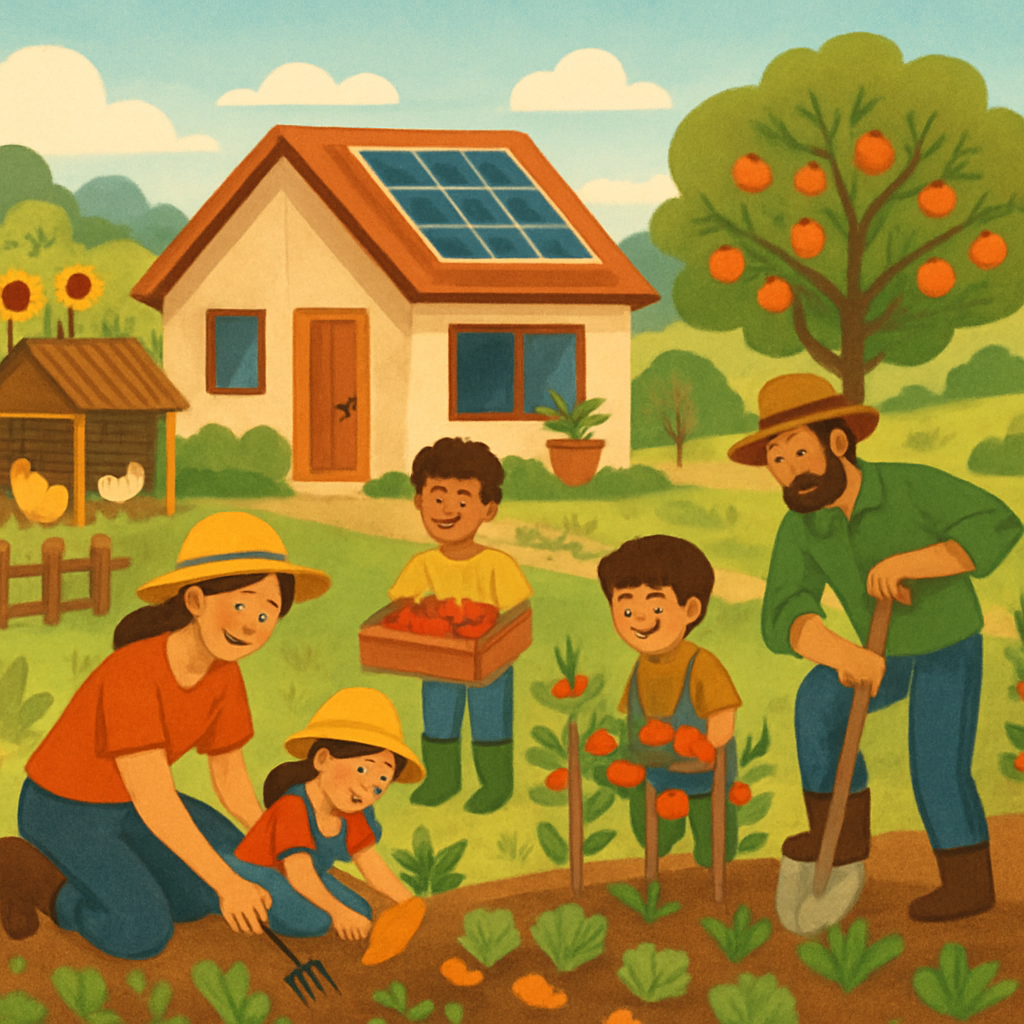
Living self-sufficiently
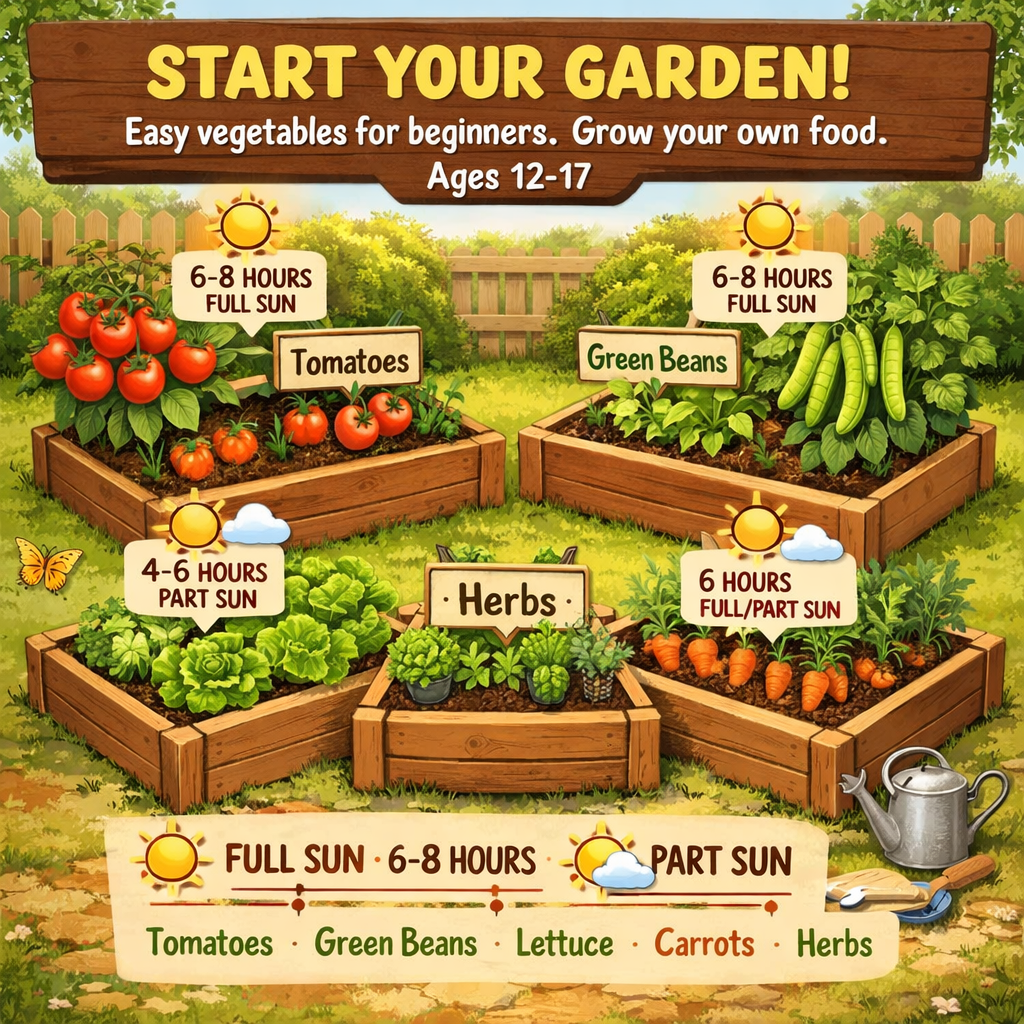
Starting a garden
HOW TO USE - Truth Carriers Learning Method (6 Rs)
RECEIVE (read), REFLECT (answer), RECALL (close book, write from memory), RECITE (teach someone), REVIEW (spaced repetition), RESPOND (apply).
"That ye may eat the labour of thine hands: happy shalt thou be, and it shall be well with thee." — Psalm 128:2
Living self-sufficiently
Starting a garden
"Then Yahuah Elohim took the man and put him in the garden of Eden to tend and keep it."
About This Workbook
This workbook equips families with practical knowledge to pursue self-sufficiency while grounding every skill in biblical wisdom. Whether you have a small suburban lot or a rural homestead, these fundamentals will help your family grow food, develop essential skills, and steward Yahuah's creation faithfully.
What You Will Learn:
- Biblical foundation for work and stewardship
- Practical gardening, composting, and seed saving
- Food preservation methods (canning, fermenting, dehydrating)
- Animal husbandry basics (chickens, goats, bees, rabbits)
- Self-sufficiency skills and emergency preparedness
- Building community through bartering and cooperation
Audience: Families (adults and teens)
Study Time: 12-24 weeks (1-2 lessons per week)
Table of Contents
- Study Guide (Glossary, Key Scriptures, Resources)
- Biblical Foundation for Homesteading
- Starting Your First Garden
- Companion Planting & Natural Pest Control
- Composting - Free Fertilizer
- Seed Saving & Heirloom Varieties
- Food Preservation Methods
- Backyard Chickens
- Rabbits, Goats & Bees
- Food Production Economics
- Self-Sufficiency Skills
- Emergency Preparedness
- Building Community & Bartering
Lesson Images
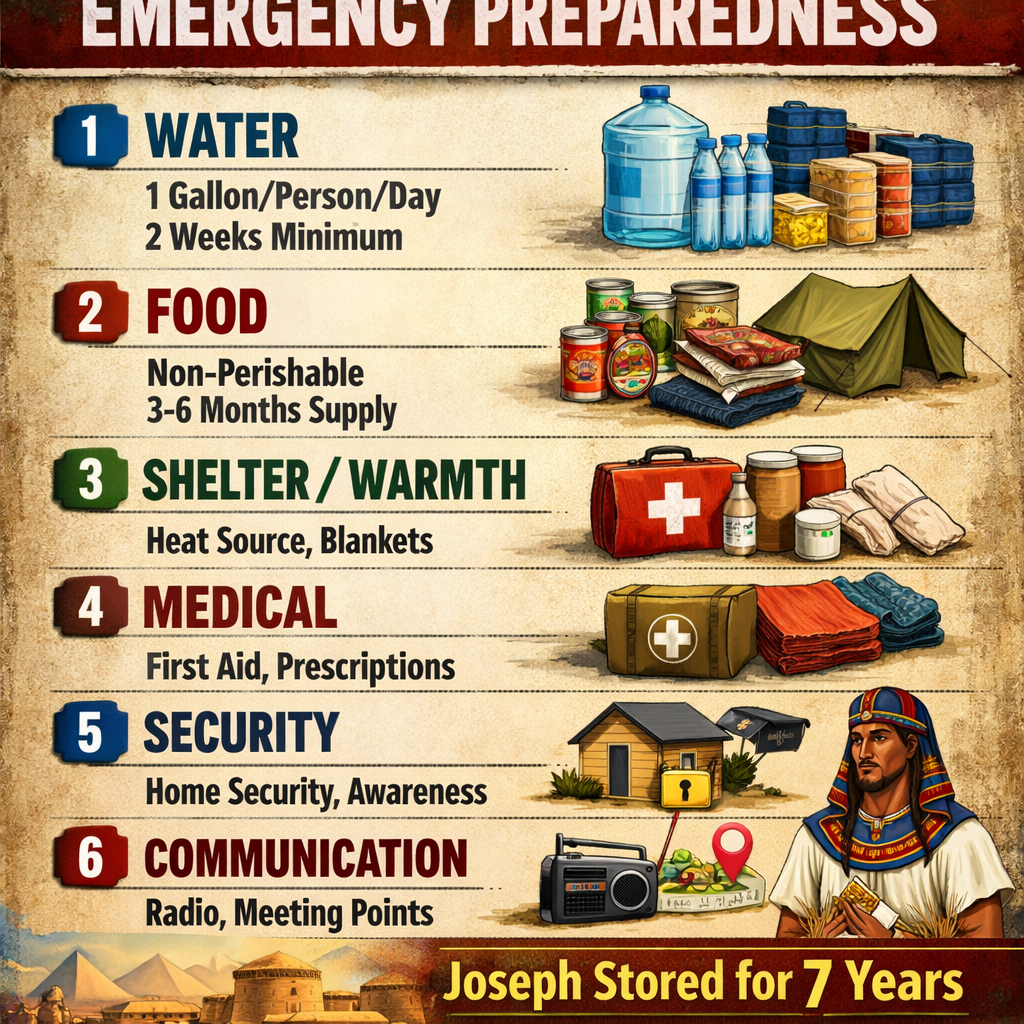
Emergency Preparedness
Homestead Self Sufficiency
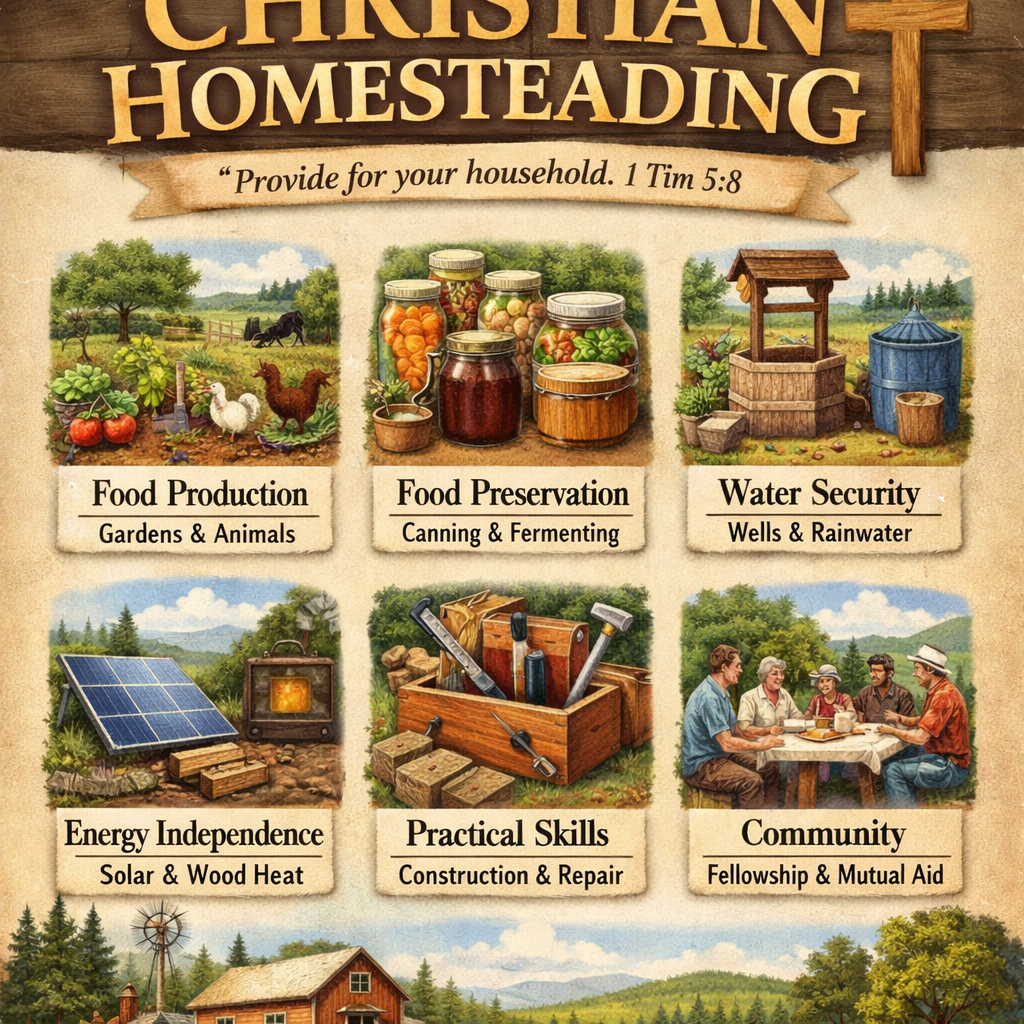
Homesteading Overview
Study Guide
Use this section as a reference throughout your homesteading journey.
Key Scriptures for Biblical Homesteading
| Theme | Scripture | Principle |
|---|---|---|
| Work as Worship | Genesis 2:15 | Yahuah gave Adam work BEFORE sin - cultivation is holy |
| Stewardship | Leviticus 25:23 | The land belongs to Yahuah; we are tenants |
| Provision | 1 Timothy 5:8 | Providing for family is a spiritual obligation |
| Animal Care | Proverbs 12:10 | Righteous people care properly for their animals |
| Preparedness | Proverbs 27:12 | The prudent foresee danger and prepare |
| Diligence | Proverbs 6:6-8 | Learn from the ant - store in summer for winter |
| Community | Galatians 6:2 | Bear one another's burdens |
| Generosity | Leviticus 19:9-10 | Leave gleanings for the poor |
| Work Ethic | Colossians 3:23-24 | Work heartily as for Yahuah |
| Enjoyment | Ecclesiastes 3:13 | Enjoying labor's fruit is Elohim's gift |
Hebrew Word Studies
Abad (עָבַד) - "to serve, cultivate, work" - Strong's H5647
Used in Genesis 2:15. Our work in the garden is SERVICE to Yahuah.
Shamar (שָׁמַר) - "to keep, guard, protect, preserve" - Strong's H8104
Same word used in "Yahuah bless you and KEEP you" (Numbers 6:24). We guard the land as Yahuah guards us.
Adamah (אֲדָמָה) - "ground, land, earth" - Strong's H127
Related to "Adam" (man). We were formed FROM the earth and work WITH the earth.
Glossary of Homesteading Terms
| Term | Definition |
|---|---|
| Heirloom Seeds | Open-pollinated varieties 50+ years old that breed true |
| Hybrid (F1) | First-generation cross between two varieties; won't breed true |
| Companion Planting | Growing plants together for mutual benefit |
| Nitrogen Fixing | Legumes adding nitrogen to soil via root bacteria |
| Browns (Composting) | Carbon-rich materials: dry leaves, straw, cardboard |
| Greens (Composting) | Nitrogen-rich materials: food scraps, fresh grass |
| Vermicomposting | Composting using red wiggler worms |
| Water Bath Canning | Preserving high-acid foods at 212°F |
| Pressure Canning | Preserving low-acid foods at 240°F |
| Fermentation | Preserving food using beneficial bacteria/salt |
| Hardiness Zone | USDA climate zones determining what plants survive |
| Roost | Perch where chickens sleep |
| Hardware Cloth | 1/2" wire mesh for predator-proofing (NOT chicken wire) |
| Varroa Mites | Parasites causing 90%+ of bee colony deaths |
| Langstroth Hive | Standard modular beehive design |
| Cold Process Soap | Soap made with lye without external heat |
| Gleaning | Biblical practice of leaving harvest for the poor |
| Bartering | Trading goods/services without money |
Quick Reference: Planting Zones
Find Your Zone: Visit planthardiness.ars.usda.gov
Zone 3-4: Very short season (90-120 days)
Zone 5-6: Moderate season (140-170 days)
Zone 7-8: Long season (180-210 days)
Zone 9-10: Year-round growing possible
Quick Reference: The Three Sisters
| Plant | Provides | Receives |
|---|---|---|
| Corn | Climbing structure for beans | Nitrogen from beans |
| Beans | Nitrogen to soil | Vertical support |
| Squash | Ground cover, weed suppression | Protection from pests |
Critical Safety Reminders
- Low-acid foods MUST be pressure canned (240°F) - not water bath
- Always follow USDA-approved canning recipes exactly
- When in doubt, throw it out - botulism is deadly
- ALWAYS pour LYE into water (never reverse - explosion risk)
- Wear goggles and long gloves
- Work in ventilated area
- Goats need COPPER - never use sheep minerals
- Rabbits are heat sensitive - provide shade in summer
- Use hardware cloth, NOT chicken wire for coops
Recommended Resources
Books:
- Seed to Seed by Suzanne Ashworth (seed saving)
- Storey's Guides (chickens, goats, rabbits)
- The Art of Fermentation by Sandor Katz
- Ball Complete Book of Home Preserving
- The Backyard Beekeeper by Kim Flottum
Seed Sources:
- Seed Savers Exchange (seedsavers.org)
- Baker Creek Heirloom Seeds
- Southern Exposure Seed Exchange
Free Help:
- County Cooperative Extension offices (soil testing, advice)
- Master Gardener programs
- USDA Plant Hardiness Zone Map
Year-at-a-Glance Homesteading Calendar
| Season | Garden Tasks | Preservation | Animals |
|---|---|---|---|
| Winter | Plan garden, order seeds, start indoor seedlings (late) | Use stored food, inventory | Maintain coops, check waterers for freezing |
| Spring | Prepare beds, plant cool crops, transplant seedlings | Use last of preserved foods | Order chicks, bee packages; birth season for goats |
| Summer | Succession planting, pest control, watering | Peak canning/preserving season! | Monitor heat stress, peak egg production |
| Fall | Plant garlic, harvest, prepare beds for winter | Root cellar storage, final canning | Prepare winter shelter, harvest honey (leaving 60+ lbs) |
Self-Assessment: Where Do You Start?
Check your current situation:
- I have outdoor space (even a small balcony counts)
- I can commit 1-2 hours weekly to homesteading
- My local laws allow chickens or small livestock
- I have $200-500 to invest in startup
- I have someone to care for animals when I travel
- My family is on board with this journey
Based on your situation, the best starting point is:
- Limited space/time: Container gardening, herbs, microgreens
- More space, new to homesteading: Small raised bed garden (4x4)
- Some experience, ready for animals: Backyard chickens (4-6 hens)
- Rural property: Larger garden + small livestock
"Yahuah, You placed Adam in the garden to work and keep it. Teach us to be faithful stewards of the land and animals You provide. Give us wisdom to depend on You, not on Babylon's systems. May our labor honor You and provide for our families. In Yahusha's name, amein."
Lesson 1: Biblical Foundation for Homesteading
Note: Adam was given work BEFORE sin entered the world. Work is Yahuah's original design, not the curse.
Work is Yahuah's Original Design
The Hebrew words in Genesis 2:15 are significant:
- Abad (עָבַד) = "to serve/cultivate"
- Shamar (שָׁמַר) = "to guard/protect" — the same word used in "Yahuah bless you and keep you" (Numbers 6:24)
Source: Strong's Hebrew Concordance H5647 (abad), H8104 (shamar)
"Be diligent to know the state of your flocks, and attend to your herds; for riches are not forever... The lambs will provide your clothing, and the goats the price of a field; you shall have enough goats' milk for your food."
Key Scriptures for Homesteaders
| Scripture | Principle |
|---|---|
| 1 Timothy 5:8 | "If anyone does not provide for his own... he has denied the faith" |
| Colossians 3:23-24 | "Whatever you do, work at it with all your heart, as working for Yahuah" |
| Proverbs 12:10 | "A righteous man regards the life of his animal" |
| Ecclesiastes 3:13 | "That everyone should eat and drink and enjoy the good of all his labor—it is the gift of Elohim" |
| Leviticus 25:23 | "The land must not be sold permanently, because the land is mine and you are but tenants" |
Self-Sufficiency vs. Independence from Yahuah
The Proverbs 31 Woman
This portrait of wisdom describes a woman who:
- Considers a field and buys it (v.16) — real estate investment
- Plants a vineyard from her earnings — food production
- Selects wool and flax (v.13) — textile arts
- Makes linen garments and sells them (v.24) — commerce
Source: Proverbs 31:10-31
Multiple Choice
1. What was Adam's role in the Garden of Eden according to Genesis 2:15?
2. What does biblical "self-sufficiency" actually mean?
3. Which woman in Scripture demonstrates gardening, commerce, and textile skills?
Fill-in-the-Blank Questions
1. The Hebrew word "abad" means to or cultivate.
2. Adam was given work sin entered the world.
3. 1 Timothy 5:8 says if anyone does not for his own, he has denied the faith.
4. Proverbs 12:10 says a righteous man regards the life of his .
5. The Hebrew word "shamar" means to or protect.
6. Colossians 3:23 says to work as for , not for men.
7. Leviticus 25:23 says the land belongs to .
True or False
Short Answer Questions
1. What is the difference between depending on Yahuah through homesteading versus depending on "Babylon's systems"? Give examples.
2. List three skills the Proverbs 31 woman demonstrates that relate to homesteading.
Discussion Question (Family)
Discuss: How does our family currently depend on worldly systems? What is one area we could become more self-sufficient in this year?
📖 SCRIPTURE MEMORY: Colossians 3:23
"Whatever you do, work at it with all your heart, as working for Yahuah, not for men."
Write the verse from memory:
📝 RECALL EXERCISE
Close this workbook. On a separate paper, write everything you remember from Lesson 1: the Hebrew words abad and shamar, key Scriptures, and what biblical self-sufficiency means.
After 5 minutes, reopen and check what you missed. Mark those items for extra review.
Items I need to review:
🗣 TEACH-BACK CHALLENGE
Explain Lesson 1 to a family member or friend. Cover: (1) Why work was given before sin, (2) What abad and shamar mean, (3) The Proverbs 31 woman's skills.
Person I taught:
Date:
One question they asked:
🎯 APPLICATION STEP
Knowledge without action is dead. This week, complete ONE of the following:
- Take a walk around your property and identify potential garden/homestead space
- Research your local zoning laws for chickens or small livestock
- Have a family discussion: What does self-sufficiency look like for us?
- Read Proverbs 31:10-31 together as a family
- Other:
What I/we did:
Lesson 2: Starting Your First Garden
Basic Requirements
- Sunlight: 6-8 hours of direct sun daily (most vegetables); 4-6 hours for leafy greens
- Water: Approximately 1 inch per week
- Soil: Test through cooperative extension ($15-30); ideal pH 6.0-6.8
- Location: Near water source, away from black walnut trees (release chemicals harmful to vegetables)
Source: University of Maryland Extension; USDA Plant Hardiness Zone Map
Beginner Garden Size
Raised beds: Fill with 50/50 mix of compost and topsoil. Use untreated cedar or redwood (rot-resistant). Avoid pressure-treated wood.
12 Beginner-Friendly Vegetables
| Vegetable | Days to Harvest | Expected Yield | Difficulty |
|---|---|---|---|
| Lettuce | 30-45 | 4-6 harvests/plant | Very Easy |
| Radishes | 24-35 | 25-35 per row foot | Very Easy |
| Green Beans | 50-65 | 4-8 lbs per 10 ft | Easy |
| Zucchini | 45-55 | 6-10 lbs per plant | Easy |
| Tomatoes | 60-85 | 10-15 lbs per plant | Moderate |
| Cucumbers | 50-70 | 15-20 per plant | Easy |
| Peppers | 60-90 | 5-10 per plant | Moderate |
| Peas | 55-70 | 2-3 lbs per 10 ft | Easy |
| Garlic | 8-9 months | 6-10 heads per sq ft | Very Easy |
| Basil | 30-60 | Continuous | Easy |
| Kale | 55-75 | 2-3 lbs per plant | Easy |
| Turnips | 30-60 | 10-15 per row foot | Easy |
Source: Old Farmer's Almanac; Vegetable Gardener's Bible by Ed Smith
Fill-in-the-Blank Questions
1. Most vegetables need -8 hours of direct sunlight daily.
2. Vegetables need approximately inch(es) of water per week.
3. A good beginner raised bed size is x4 feet.
4. are the fastest vegetable to harvest (24-35 days).
5. One zucchini plant can yield -10 lbs of produce.
6. Soil tests can be done through cooperative extension for $-30.
7. The ideal soil pH for most vegetables is -6.8.
True or False
Garden Planning Exercise
Plan a 4x4 raised bed garden. List what you will plant in each section and why:
Short Answer
Why should you avoid planting near black walnut trees?
Discussion Question
What vegetables does your family eat most often? Which of those could you grow at home?
📖 SCRIPTURE MEMORY: Genesis 1:29
"And Elohim said, 'See, I have given you every herb that yields seed which is on the face of all the earth, and every tree whose fruit yields seed; to you it shall be for food.'"
📝 RECALL EXERCISE
Close this workbook. Write everything you remember about: sunlight requirements, soil pH, container size for tomatoes, and beginner-friendly vegetables.
Items I need to review:
🗣 TEACH-BACK CHALLENGE
Teach someone how to start a basic vegetable garden. Cover: sunlight, water, soil, and 3 easy vegetables to grow.
Person I taught:
Date:
🎯 APPLICATION STEP
This week, complete ONE of the following:
- Get a soil test from your county extension office
- Build or buy one raised bed (4x4 or 4x8)
- Start seeds indoors in recycled containers
- Plant one container vegetable (tomato, pepper, or lettuce)
What I/we did:
Lesson 3: Companion Planting & Natural Pest Control
The Three Sisters
- Corn provides structure for beans to climb
- Beans fix nitrogen in soil that feeds corn
- Squash leaves shade ground to suppress weeds and retain moisture
Source: Iroquois agricultural tradition; Cornell University Extension
Companion Planting Guide
| Plant | Good Companions | Keep Apart |
|---|---|---|
| Tomatoes | Basil, Carrots, Marigolds, Onions | Corn, Potatoes, Cabbage |
| Beans | Corn, Cucumbers, Squash, Peas | Onions, Garlic, Peppers |
| Carrots | Onions, Rosemary, Tomatoes, Sage | Dill, Parsnips |
| Peppers | Basil, Onions, Spinach | Beans, Broccoli |
| Cucumbers | Beans, Corn, Radishes, Sunflowers | Potatoes, Sage |
Source: Farmers' Almanac Companion Planting Guide; University of Florida Extension
Natural Pest Control
2.5 tbsp liquid dish soap + 2.5 tbsp vegetable oil + 1 gallon water
Spray directly on soft-bodied insects (aphids, mites, whiteflies) every 5-7 days.
1-2 tbsp cold-pressed neem oil + 1 tsp liquid soap + 1 gallon water
Disrupts feeding and kills eggs of 200+ insect species. Apply early morning or evening to protect pollinators.
Source: National Gardening Association; Organic Pest Control Guide
Beneficial Insects
| Insect | Eats | Attract With |
|---|---|---|
| Ladybugs | Aphids, mites, whiteflies | Dill, fennel, yarrow |
| Lacewings | Aphids, caterpillars | Cosmos, goldenrod |
| Praying Mantis | General predator | Marigolds, dill |
Fill-in-the-Blank Questions
1. The Three Sisters are corn, beans, and .
2. Beans fix in the soil.
3. Tomatoes should be planted WITH basil but AWAY from .
4. are beneficial insects that eat aphids.
5. Neem oil disrupts feeding and kills of insects.
6. Apply neem oil spray in early or evening to protect pollinators.
7. Marigolds help repel pests and attract insects.
True or False
Short Answer
Write the recipe for homemade insecticidal soap spray:
Explain why the Three Sisters work well together:
Discussion Question
How does natural pest control reflect good stewardship of Yahuah's creation compared to chemical pesticides?
📖 SCRIPTURE MEMORY: Leviticus 19:19
"You shall not sow your field with mixed seed."
Note: This teaches intentionality in planting - companion planting follows Yahuah's design of complementary relationships.
📝 RECALL EXERCISE
Close this workbook. Write from memory: (1) The Three Sisters and what each provides, (2) Three natural pest deterrents, (3) Bad companion pairs to avoid.
🗣 TEACH-BACK CHALLENGE
Explain the Three Sisters planting method to someone and why it works.
Person I taught:
🎯 APPLICATION STEP
- Plant basil near your tomatoes
- Plan a Three Sisters garden bed for next season
- Make garlic spray for natural pest control
- Attract beneficial insects by planting flowers near vegetables
Lesson 4: Composting - Free Fertilizer
The Magic Ratio: 3:1 Browns to Greens
| Browns (Carbon) | Greens (Nitrogen) |
|---|---|
| Dry leaves | Vegetable scraps |
| Straw | Fresh grass clippings |
| Shredded cardboard | Coffee grounds |
| Wood chips | Fresh garden waste |
| Pine needles | Chicken manure |
For every bucket of kitchen scraps, add 2-4 buckets of dried leaves. Source: University of Georgia Cooperative Extension
Composting Methods
| Method | Time | Effort | Best For |
|---|---|---|---|
| Hot Composting | 4-8 weeks | High (turn regularly, 130-160°F) | Fast results |
| Cold Composting | 6-24 months | Minimal (just add materials) | Busy families |
| Vermicomposting | 3-6 months | Moderate | Indoor/apartment |
Vermicomposting (Worm Composting)
- 1 pound of worms per square foot of bin surface
- Worms eat half their body weight daily
- Produces nutrient-dense castings for houseplants and seedlings
Source: Cornell Composting; The Complete Compost Gardening Guide
Multiple Choice
1. Which composting method is best for busy families with minimal time?
2. What type of worms are used for vermicomposting?
Fill-in-the-Blank Questions
1. The ideal compost ratio is :1 browns to greens.
2. Hot composting finishes in -8 weeks.
3. Cold composting takes -24 months.
4. wiggler worms are used for vermicomposting.
5. Coffee grounds are considered (nitrogen-rich).
6. Hot compost piles reach temperatures of -160°F.
7. Red wiggler worms eat their body weight daily.
True or False
Short Answer
List 3 brown materials and 3 green materials for composting:
Discussion Question
How does composting demonstrate the biblical principle of stewardship and nothing going to waste?
📖 SCRIPTURE MEMORY: John 6:12
"When they were filled, He said to His disciples, 'Gather up the fragments that remain, so that nothing is lost.'"
📝 RECALL EXERCISE
Write from memory: The 3:1 ratio, three "browns," three "greens," and what NOT to compost.
🗣 TEACH-BACK CHALLENGE
Teach someone the basics of composting: the ratio, what goes in, and the different methods.
Person I taught:
🎯 APPLICATION STEP
- Start a simple compost pile or bin
- Begin collecting kitchen scraps in a countertop container
- Research vermicomposting (worm bins) for indoor composting
- Turn an existing compost pile
Lesson 5: Seed Saving & Heirloom Varieties
Understanding Seed Types
| Type | Description | Can You Save Seeds? |
|---|---|---|
| Heirloom | Open-pollinated, 50+ years old, breeds true | YES - Save these! |
| Hybrid (F1) | Controlled cross for specific traits | NO - Offspring won't match parent |
| GMO | Genetically engineered in lab | Not available to home gardeners |
Source: Seed Savers Exchange; Baker Creek Heirloom Seeds
Easy Seeds to Save
| Crop | Method |
|---|---|
| Beans/Peas | Let pods dry on plant until brown/rattling, shell and store |
| Tomatoes | Ferment seeds 2-3 days in water, rinse, dry on coffee filter 2 weeks |
| Lettuce | Let plant bolt, collect seeds from dried flowers |
| Peppers | Scrape seeds from fully ripe peppers, dry completely |
Source: Seed to Seed by Suzanne Ashworth
Seed Storage Requirements
- Cool location (40-50°F)
- Dry environment
- Dark storage
- Airtight containers
- Silica gel packets added
- Labeled with date and variety
Most vegetable seeds remain viable 2-5 years when properly stored.
Recommended Seed Sources
- Seed Savers Exchange (seedsavers.org)
- Baker Creek Heirloom Seeds
- Southern Exposure Seed Exchange
- Johnny's Selected Seeds
Fill-in-the-Blank Questions
1. seeds are open-pollinated and breed true.
2. Hybrid seeds will NOT produce offspring that match the plant.
3. Tomato seeds should be for 2-3 days before drying.
4. Seeds should be stored at -50°F.
5. Heirloom varieties are typically + years old.
6. Let bean pods dry on the plant until before harvesting seeds.
7. Properly stored seeds remain viable for -5 years.
True or False
Short Answer
Explain the difference between heirloom and hybrid seeds:
Discussion Question
Why is seed saving an important skill for long-term self-sufficiency? What happens if you can only buy hybrid seeds?
📖 SCRIPTURE MEMORY: Genesis 1:11
"Then Elohim said, 'Let the earth bring forth grass, the herb that yields seed, and the fruit tree that yields fruit according to its kind, whose seed is in itself.'"
📝 RECALL EXERCISE
Write from memory: Heirloom vs Hybrid vs GMO, how to save tomato seeds, and why seed saving matters.
🗣 TEACH-BACK CHALLENGE
Explain seed types to someone: Why heirlooms breed true and hybrids don't.
Person I taught:
🎯 APPLICATION STEP
- Order heirloom seeds from Seed Savers Exchange or Baker Creek
- Save seeds from one vegetable this season (tomato, pepper, or bean)
- Research seed libraries in your area
- Label and store your saved seeds properly
Lesson 6: Food Preservation Methods
Five Preservation Methods
| Method | Best For | Key Requirements | Shelf Life |
|---|---|---|---|
| Water Bath Canning | High-acid foods (tomatoes, pickles, jams) | 212°F, jars covered by 1-2" | 1-2 years |
| Pressure Canning | Low-acid foods (vegetables, meats) | 240°F, 11-15 PSI | 1-2 years |
| Dehydrating | Herbs, fruits, jerky | Remove 90-95% moisture | 4-12 months |
| Fermenting | Sauerkraut, pickles, kimchi | Salt brine (2-3%), anaerobic | 4-18 months |
| Root Cellaring | Potatoes, carrots, squash | 32-40°F, 85-95% humidity | 2-9 months |
Source: USDA Complete Guide to Home Canning; Ball Complete Book of Home Preserving
Low-acid foods (vegetables, meat) MUST be pressure canned at 240°F. Water bath canning (212°F) will NOT kill Clostridium botulinum spores. Follow USDA-approved recipes exactly! Dial gauges must be tested annually at extension offices.
Basic Sauerkraut Recipe
- Shred 5 lbs cabbage
- Mix with 3 tbsp pickling salt (2-3% by weight)
- Massage until juices release
- Pack into clean container, vegetables MUST be submerged
- Weight down, cover with cloth
- Ferment at 70-75°F for 3-4 weeks
Safety: Normal signs include bubbling and white foam. Problematic signs: fuzzy mold or rotten smell—discard if these appear.
Source: The Art of Fermentation by Sandor Katz
Fill-in-the-Blank Questions
1. Water bath canning is ONLY safe for -acid foods.
2. Pressure canning reaches °F to kill botulism spores.
3. Dehydrating removes -95% of moisture.
4. Fermented vegetables must be kept under the brine.
5. Root cellars maintain -40°F temperature.
6. Sauerkraut ferments at -75°F for 3-4 weeks.
7. Pressure canning requires -15 PSI.
True or False
Short Answer
Why must low-acid foods be pressure canned instead of water bath canned?
Discussion Question
How did our ancestors preserve food before modern refrigeration? Which methods would be most practical for your family?
📖 SCRIPTURE MEMORY: Proverbs 6:6-8
"Go to the ant, you sluggard! Consider her ways and be wise, which, having no captain, overseer or ruler, provides her supplies in the summer, and gathers her food in the harvest."
📝 RECALL EXERCISE
Write: Five preservation methods with their best uses, and the critical botulism safety rule.
🗣 TEACH-BACK CHALLENGE
Teach someone the difference between water bath and pressure canning, and why it matters for safety.
Person I taught:
🎯 APPLICATION STEP
- Make a batch of sauerkraut or pickles
- Can something using proper USDA-approved methods
- Dehydrate herbs or fruit
- Take a canning class at your extension office
Lesson 7: Backyard Chickens
Why Chickens First?
- Minimal space required (3-5 sq ft indoors per bird)
- Eggs within 5-6 months of hatching
- Pest control (eat bugs) and fertilizer (manure)
- Great for teaching children responsibility
Beginner Breeds
| Breed | Eggs/Year | Temperament | Cold Hardy? |
|---|---|---|---|
| Rhode Island Red | 200-280 | Hardy, independent | Yes |
| Buff Orpington | 200-280 | Docile, family-friendly | Yes |
| Wyandotte | 200-240 | Calm, great temperament | Excellent |
| Plymouth Rock | 200-280 | Friendly, curious | Yes |
Source: Storey's Guide to Raising Chickens by Gail Damerow
Startup Costs
| Item | Cost Range |
|---|---|
| Coop (DIY or purchased) | $200-800 |
| 6 chicks | $30-60 |
| Feeder and waterer | $30-50 |
| Monthly feed (6 hens) | $20-40 |
A hen eats approximately 3 lbs of feed per week. A 50-lb bag ($15-25) feeds 6 hens for about a month.
Coop Requirements
- 3-5 sq ft per bird indoors, 8-10 sq ft outdoor run
- One nest box per 4-5 hens
- 8-12 inches roost space per bird
- Predator-proof: 1/2-inch hardware cloth (NOT chicken wire)
- Good ventilation without drafts
Expect 5-6 eggs per week per hen during peak production (years 1-3).
Multiple Choice
1. Why is hardware cloth better than chicken wire for coops?
2. Which chicken breed is BEST for beginners with young children?
3. What benefits do chickens provide besides eggs?
Fill-in-the-Blank Questions
1. Chickens need -5 square feet per bird indoors.
2. Hens typically lay -6 eggs per week during peak production.
3. Use cloth, NOT chicken wire, for predator protection.
4. One nest box is needed per -5 hens.
5. The Orpington breed is known for being docile and family-friendly.
6. Chicks begin laying eggs at -6 months old.
7. A hen eats approximately lbs of feed per week.
True or False
Short Answer
Why is hardware cloth better than chicken wire for coops?
Discussion Question
How does Proverbs 12:10 ("A righteous man regards the life of his animal") apply to caring for chickens?
📖 SCRIPTURE MEMORY: Proverbs 12:10
"A righteous man regards the life of his animal, but the tender mercies of the wicked are cruel."
📝 RECALL EXERCISE
Write: Coop requirements, egg production rates, common predators, and why hardware cloth not chicken wire.
🗣 TEACH-BACK CHALLENGE
Teach someone the basics of chicken care: shelter, food, water, and how many eggs to expect.
Person I taught:
🎯 APPLICATION STEP
- Research your local ordinances for keeping chickens
- Visit a local farm or friend who keeps chickens
- Build or buy a coop for 4-6 hens
- Order chicks from a hatchery or feed store
Lesson 8: Rabbits, Goats & Bees
Meat Rabbits
| Aspect | Details |
|---|---|
| Best Breeds | New Zealand White, Californian |
| Meat Yield | 5-6 lbs per rabbit in 8-12 weeks |
| One trio (1 buck, 2 does) | Can produce 100+ lbs meat/year |
| Housing | All wire hutches for sanitation; cold hardy but heat sensitive |
Source: Storey's Guide to Raising Rabbits
Dairy Goats
| Breed | Size | Milk/Day | Butterfat |
|---|---|---|---|
| Nigerian Dwarf | 50-75 lbs | 1-2 quarts | 6-10% (highest) |
| Nubian | 130-175 lbs | 1-1.5 gallons | 4-5% |
| Saanen | 135-175 lbs | 1-2 gallons | 3-4% |
- Minimum 200 sq ft outdoor area per goat
- Dry, draft-free shelter
- Quality hay (2-4 lbs daily per goat)
- MUST be milked every 12 hours
- Secure 4-5 foot fencing (they're escape artists!)
- Goat-specific loose minerals (never sheep minerals—goats need copper)
Source: Storey's Guide to Raising Dairy Goats
Beekeeping
| Aspect | Details |
|---|---|
| Startup Cost | $200-500 (hive + bees + equipment) |
| Honey Yield | 50-100 lbs per hive annually |
| Time Required | 1-2 hours monthly during active season |
| Best for Beginners | Langstroth hive (standardized parts) |
Source: The Backyard Beekeeper by Kim Flottum
Fill-in-the-Blank Questions
1. One rabbit breeding trio can produce + lbs of meat per year.
2. Dwarf goats have the highest butterfat content (6-10%).
3. Dairy goats must be milked every hours.
4. A healthy beehive can produce -100 pounds of honey per year.
5. mites are the leading cause of colony death.
6. Goats need secure fencing at least -5 feet tall.
7. The hive is best for beginner beekeepers.
True or False
Short Answer
Why must goats NOT use sheep minerals?
Discussion Question
Which animal (rabbits, goats, or bees) would be most practical for your family's situation and why?
📖 SCRIPTURE MEMORY: Proverbs 27:27
"You shall have enough goats' milk for your food, for the food of your household, and the nourishment of your maidservants."
📝 RECALL EXERCISE
Write key facts about each animal: rabbit production rate, goat mineral needs, and how much honey to leave bees.
🗣 TEACH-BACK CHALLENGE
Explain one animal (rabbits, goats, or bees) in detail to someone interested in homesteading.
Person I taught:
🎯 APPLICATION STEP
- Visit a local beekeeper or rabbit/goat farm
- Read one of the Storey's Guides (chickens, goats, or rabbits)
- Research your local regulations for livestock
- Attend a local beekeeping class
Lesson 9: Food Production Economics
Realistic Expectations
- 80% produce 25% or less of their food in first two years
- Achieving 25%+ by year 5 puts you ahead of most
- Only 10% ever reach 75%+ self-sufficiency
- 100% is virtually impossible (salt, sugar, coffee, grains, oils)
Source: Mother Earth News Homesteader Survey
Garden Economics
| Factor | Amount |
|---|---|
| Startup costs (10x10 garden) | $200-500 |
| Annual costs (seeds, amendments) | $100-200 |
| Expected harvest value | $500-1,200 (year 2+) |
| Break-even timeline | Year 2-3 |
One tomato plant ($4) can yield 20+ lbs of fruit ($60+ value). Source: Investopedia Garden Cost Analysis
Chicken Economics
| Factor | Store Eggs | Backyard Eggs |
|---|---|---|
| Cost per egg | $0.18-0.40+ | $0.08-0.19 after startup |
| Initial investment | None | $500-750 |
| Monthly feed (6 hens) | None | $20-40 |
| Payback period | N/A | 18-24 months |
Fill-in-the-Blank Questions
1. % of homesteaders produce 25% or less of their food in years 1-2.
2. The break-even timeline for a garden is typically year -3.
3. Backyard egg payback period is about -24 months.
4. Only % of homesteaders ever reach 75%+ self-sufficiency.
5. A garden's expected harvest value is $-1,200 in year 2+.
6. One tomato plant can yield + lbs of fruit.
7. % self-sufficiency is virtually impossible.
True or False
Cost-Benefit Calculator
Calculate your potential savings:
| Item | Startup Cost | Annual Value | Years to Break Even |
|---|---|---|---|
| Garden (10x10 ft) | $ | $ | |
| Chickens (6 hens) | $ | $ |
Discussion Question
Why is the "real value" of homesteading more than just financial? List at least 3 non-financial benefits.
📖 SCRIPTURE MEMORY: Ecclesiastes 3:13
"That everyone should eat and drink and enjoy the good of all his labor—it is the gift of Elohim."
📝 RECALL EXERCISE
Write: Expected yields, startup costs, and the hidden values of homesteading beyond money.
🗣 TEACH-BACK CHALLENGE
Explain to someone why homesteading is valuable even if it doesn't "save money."
Person I taught:
🎯 APPLICATION STEP
- Calculate the true cost vs value of one homesteading activity
- Keep a log of produce harvested for one season
- Compare store prices to homegrown for 5 vegetables
- List 5 non-financial benefits your family has experienced
Lesson 10: Self-Sufficiency Skills
Soap Making (Cold Process)
- Always wear goggles and long gloves
- ALWAYS pour lye into water (never water into lye—explosion risk!)
- Work in ventilated area
- Lye is caustic—causes severe burns
Source: School of Natural Skincare Safety Guide
Candle Making
- Soy wax: Melt to 185°F, add scent, cool to 135°F, pour into jars with centered wicks
- Beeswax: Harder to work with but beautiful natural option
- Tallow: Rendered animal fat (traditional method)
Source: CandleScience Beginner's Guide
Basic Carpentry
Essential hand tools: Tape measure, combination square, crosscut saw, hammer, screwdrivers, clamps
Beginner projects: Raised beds, chicken coops, shelving
Key principle: Measure twice, cut once. The saw blade removes material (kerf).
Water Purification
| Method | How To | Kills |
|---|---|---|
| Boiling | Rolling boil 1 min (3 min at altitude) | All biologicals |
| Bleach | 8 drops per gallon, wait 30 min | Bacteria, some viruses |
| Filtration | 0.2-0.3 micron filter | Bacteria, parasites (not viruses) |
Source: EPA Water Purification Guidelines
Basic Sewing
- Running stitch: Basting, temporary hold
- Backstitch: Strong seams
- Whipstitch: Hems and patches
Fill-in-the-Blank Questions
1. When making soap, always pour into water, never the reverse.
2. Water should be boiled for minute(s) to purify (at sea level).
3. Use drops of bleach per gallon of water.
4. Soy wax should be heated to °F before adding scent.
5. The stitch is the strongest for seams.
6. At high altitude, boil water for minutes.
7. Filters should be 0.2- microns to remove bacteria.
True or False
Discussion Question
Which self-sufficiency skill would be most valuable for your family to learn first? Why?
📖 SCRIPTURE MEMORY: Proverbs 31:13
"She seeks wool and flax, and willingly works with her hands."
📝 RECALL EXERCISE
Write: The lye safety rule, basic candle making steps, and 3 herbal remedies with their uses.
🗣 TEACH-BACK CHALLENGE
Demonstrate one skill (soap, candles, or herbal remedy) to a family member.
Person I taught:
🎯 APPLICATION STEP
- Make a batch of cold-process soap (with proper safety gear!)
- Make beeswax candles or soy candles
- Create an herbal remedy (salve, tincture, or tea blend)
- Learn basic sewing repairs
Lesson 11: Emergency Preparedness
"A prudent man foresees evil and hides himself; the simple pass on and are punished."
"Go to the ant, you sluggard! Consider her ways and be wise, which, having no captain, overseer or ruler, provides her supplies in the summer, and gathers her food in the harvest."
3-Month Food Storage
| Category | Items | Quantity (per person) |
|---|---|---|
| Grains | Rice, oats, wheat | 50-75 lbs |
| Legumes | Beans, lentils | 25-40 lbs |
| Sweeteners | Honey (lasts forever!) | 5-10 lbs |
| Fats | Coconut oil, olive oil | 3-5 quarts |
| Salt | Iodized and canning salt | 5-10 lbs |
Water Storage
90 days: 90 gallons per person (or reliable filtration system)
Storage: Food-grade containers, away from sunlight, replace every 6 months
Preparedness vs. Hoarding
- Joseph (Genesis 41): Stored grain for 7 years to save nations from famine—wise stewardship
- The Rich Fool (Luke 12): Built bigger barns only for himself and forgot Yahuah—hoarding
Key distinction: Preparedness is saving to survive AND share. Hoarding is saving out of fear or greed.
Skills Inventory Checklist
What can you make/fix/grow WITHOUT stores?
- Start a fire without matches
- Purify water
- Grow food from seed
- Preserve food (canning/drying)
- Basic first aid
- Mend clothing
- Basic carpentry
- Animal husbandry
Fill-in-the-Blank Questions
1. Store gallon of water per person per day.
2. Proverbs 27:12 says a man foresees evil and hides himself.
3. never expires and is an excellent emergency sweetener.
4. Water in storage containers should be replaced every months.
5. stored grain for 7 years to save nations from famine.
6. Proverbs 6:6-8 tells us to consider the and be wise.
7. For 90 days, each person needs gallons of water.
True or False
Discussion Question
How can we prepare for emergencies while trusting in Yahuah and avoiding the sin of hoarding? What's the difference in heart attitude?
📖 SCRIPTURE MEMORY: Proverbs 27:12
"A prudent man foresees evil and hides himself, but the simple pass on and are punished."
📝 RECALL EXERCISE
Write: Water storage amount, the Rule of Threes, 5 shelf-stable foods, and first aid kit essentials.
🗣 TEACH-BACK CHALLENGE
Walk your family through your emergency plan and supplies. Identify gaps together.
Date of family meeting:
🎯 APPLICATION STEP
- Store 2 weeks of water (1 gallon/person/day)
- Build a 72-hour emergency kit
- Create a family emergency communication plan
- Stock 3 months of shelf-stable food
Lesson 12: Building Community & Bartering
"Now all who believed were together, and had all things in common, and sold their possessions and goods, and divided them among all, as anyone had need."
"Bear one another's burdens, and so fulfill the Torah of Messiah."
No Man Is an Island
True self-sufficiency is a myth. We need community for:
- Skill trading (your eggs for neighbor's welding)
- Bulk purchasing co-ops (split 50 lb bags)
- Knowledge sharing and mentorship
- Emergency mutual aid
What Can You Trade?
| Goods | Services |
|---|---|
| Eggs | Repair skills |
| Seasonal produce | Childcare |
| Preserved foods | Teaching/tutoring |
| Handmade soaps/candles | Animal care |
| Baked goods | Garden help |
| Honey | Transportation |
Finding Networks
- Local farmers market bulletin boards
- Church communities
- Facebook homesteading groups
- NextDoor
- Time banks (community currency programs)
Source: IRS Publication on Bartering; Wolters Kluwer Tax Guide
The Gleaning Principle
"When you reap the harvest of your land, you shall not wholly reap the corners of your field... You shall leave them for the poor and for the stranger."
Ruth gleaned in Boaz's fields—a system that preserved dignity through work rather than handouts.
Fill-in-the-Blank Questions
1. Acts 2 describes believers who had all things in .
2. Galatians 6:2 tells us to bear one another's .
3. True self-sufficiency requires for skill sharing and mutual aid.
4. Bulk purchasing help split large quantities to save money.
5. Leviticus 19:9-10 commands leaving for the poor.
6. gleaned in Boaz's fields.
7. The IRS considers bartering to be taxable .
True or False
Personal Action Plan
What skills do you have to share? What skills do you need?
Who in your community could you connect with for mutual support?
Discussion Question
How does the early church model in Acts 2 challenge our modern ideas of independence? How can your family live this out practically?
📖 SCRIPTURE MEMORY: Galatians 6:2
"Bear one another's burdens, and so fulfill the Torah of Messiah."
📝 RECALL EXERCISE
Write: The Acts 2 community model, 3 ways to barter, and how gleaning preserved dignity.
🗣 TEACH-BACK CHALLENGE
Share the vision of community self-sufficiency with another family. Discuss potential partnerships.
Family we connected with:
🎯 FINAL APPLICATION - COMPLETE THE JOURNEY
- Organize a skill-sharing day with neighbors
- Start or join a local homesteading group
- Barter something you produced for something you need
- Leave gleanings for those in need (Leviticus 19:9-10)
- Plan an Acts 2-style community meal or resource sharing event
Our family's biggest takeaway from this workbook:
SPACED REVIEW TRACKER
| Lesson | Done | D1 | D3 | D7 | D21 | D60 |
|---|---|---|---|---|---|---|
| 1. Biblical Foundation | ||||||
| 2. Starting a Garden | ||||||
| 3. Raising Animals | ||||||
| 4. Food Preservation | ||||||
| 5. Water Security | ||||||
| 6. Energy Independence | ||||||
| 7. Natural Building | ||||||
| 8. Traditional Skills | ||||||
| 9. Natural Medicine | ||||||
| 10. Financial Wisdom | ||||||
| 11. Emergency Prep | ||||||
| 12. Community Building |
Answer Key
Lesson 1: Biblical Foundation
Multiple Choice: 1. B 2. C 3. B
Fill-in-Blank: 1. serve 2. before 3. provide 4. animal 5. guard 6. Yahuah 7. Yahuah
True/False: 1. FALSE (work existed before sin) 2. FALSE (she bought fields, sold goods) 3. FALSE (we depend on Yahuah, not Babylon) 4. TRUE 5. TRUE
Lesson 2: Starting Your Garden
Fill-in-Blank: 1. 6 2. 1 3. 4 4. Radishes 5. 6 6. 15 7. 6.0
True/False: 1. FALSE (4-6 hours for leafy greens) 2. FALSE (chemicals may leach) 3. TRUE 4. FALSE (start small) 5. FALSE (start as transplants)
Lesson 3: Companion Planting
Fill-in-Blank: 1. squash 2. nitrogen 3. corn/potatoes/cabbage 4. Ladybugs 5. eggs 6. morning 7. beneficial
True/False: 1. FALSE 2. FALSE 3. TRUE 4. FALSE 5. FALSE (morning/evening)
Lesson 4: Composting
Multiple Choice: 1. B 2. B
Fill-in-Blank: 1. 3 2. 4 3. 6 4. Red 5. greens 6. 130 7. half
True/False: 1. FALSE (browns) 2. TRUE 3. FALSE (works indoors) 4. TRUE 5. FALSE (greens)
Lesson 5: Seed Saving
Fill-in-Blank: 1. Heirloom 2. parent 3. fermented 4. 40 5. 50 6. brown/rattling 7. 2
True/False: 1. FALSE 2. FALSE 3. TRUE 4. TRUE 5. FALSE (need fermentation)
Lesson 6: Food Preservation
Fill-in-Blank: 1. high 2. 240 3. 90 4. submerged 5. 32 6. 70 7. 11
True/False: 1. FALSE (must pressure can) 2. FALSE (needs 240°F) 3. TRUE 4. TRUE 5. FALSE (normal sign)
Lesson 7: Chickens
Multiple Choice: 1. B 2. B 3. D
Fill-in-Blank: 1. 3 2. 5 3. hardware 4. 4 5. Buff 6. 5 7. 3
True/False: 1. FALSE 2. TRUE 3. FALSE (1 per 4-5 hens) 4. TRUE 5. FALSE (decreases with age)
Lesson 8: Rabbits, Goats & Bees
Fill-in-Blank: 1. 100 2. Nigerian 3. 12 4. 50 5. Varroa 6. 4 7. Langstroth
True/False: 1. FALSE (need copper) 2. TRUE 3. FALSE (1-2 hours monthly) 4. FALSE (highest butterfat, not volume) 5. FALSE (leave 60-80 lbs)
Lesson 9: Economics
Fill-in-Blank: 1. 80 2. 2 3. 18 4. 10 5. 500 6. 20 7. 100
True/False: 1. FALSE 2. FALSE (cheaper long-term) 3. FALSE (quality, skills, etc.) 4. TRUE 5. FALSE
Lesson 10: Skills
Fill-in-Blank: 1. lye 2. 1 3. 8 4. 185 5. backstitch 6. 3 7. 0.3
True/False: 1. FALSE (lye into water) 2. FALSE (not viruses) 3. FALSE (soy easier) 4. TRUE 5. TRUE
Lesson 11: Emergency Preparedness
Fill-in-Blank: 1. 1 2. prudent 3. Honey 4. 6 5. Joseph 6. ant 7. 90
True/False: 1. FALSE 2. TRUE 3. FALSE (bad example) 4. TRUE 5. FALSE (replace every 6 months)
Lesson 12: Community
Fill-in-Blank: 1. common 2. burdens 3. community 4. co-ops 5. gleanings/corners 6. Ruth 7. income
True/False: 1. FALSE 2. FALSE (legal but taxable) 3. TRUE 4. TRUE 5. TRUE