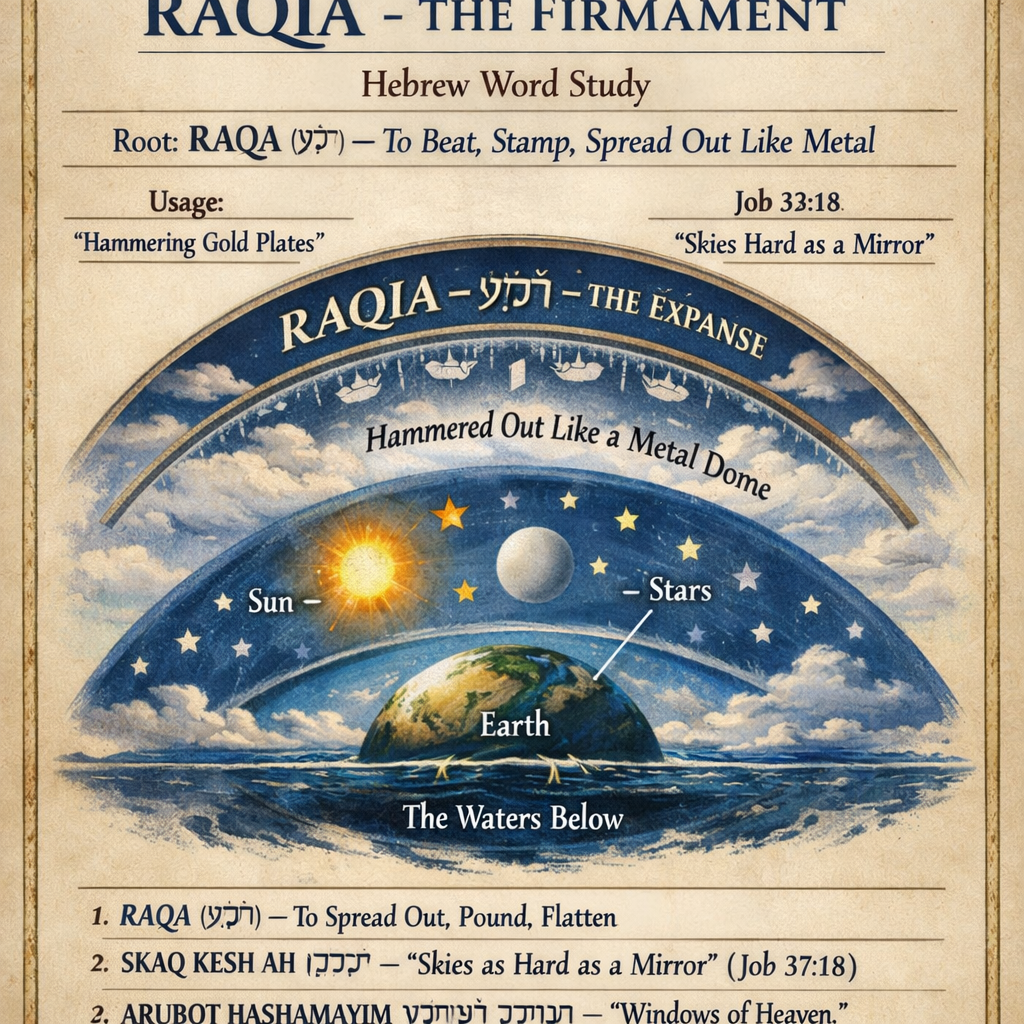
THE SACRED NAMES
The Torah is Yahuah's instructions!
The Ten Commandments!
A Scripture-Based Study of Yahuah and Yahusha
Truth Carriers Education System
Adult Workbook — 10 Lessons
"That men may know that thou, whose name alone is YHWH,
art the most high over all the earth."
— Psalm 83:18
straightisthegate.com | messiah2027.com
Educational Purpose Statement: This workbook is provided for educational and personal study purposes. All Scripture quotations use the restored sacred names. Citations are provided for factual claims. Readers are encouraged to verify all information through personal study and prayer. Truth Carriers Ministry encourages discernment, not blind acceptance.
HOW TO USE THIS WORKBOOK
The Truth Carriers Learning Method — 6 Rs
This workbook uses the 6 Rs Learning Method designed for deep understanding and long-term retention. Each lesson includes all six components:
1. RECEIVE
Read the teaching content carefully. Take notes. Look up Scripture references.
2. REFLECT
Complete all exercises: fill-in-blank, multiple choice, true/false, matching, discussion.
3. RECALL
Close the workbook and write everything you remember. Check what you missed.
4. RECITE
Teach the lesson to someone else. Explaining deepens understanding.
5. REVIEW
Use the Spaced Review Tracker. Review at Day 1, 3, 7, 21, and 60.
6. RESPOND
Apply what you learned. Knowledge without action is incomplete.
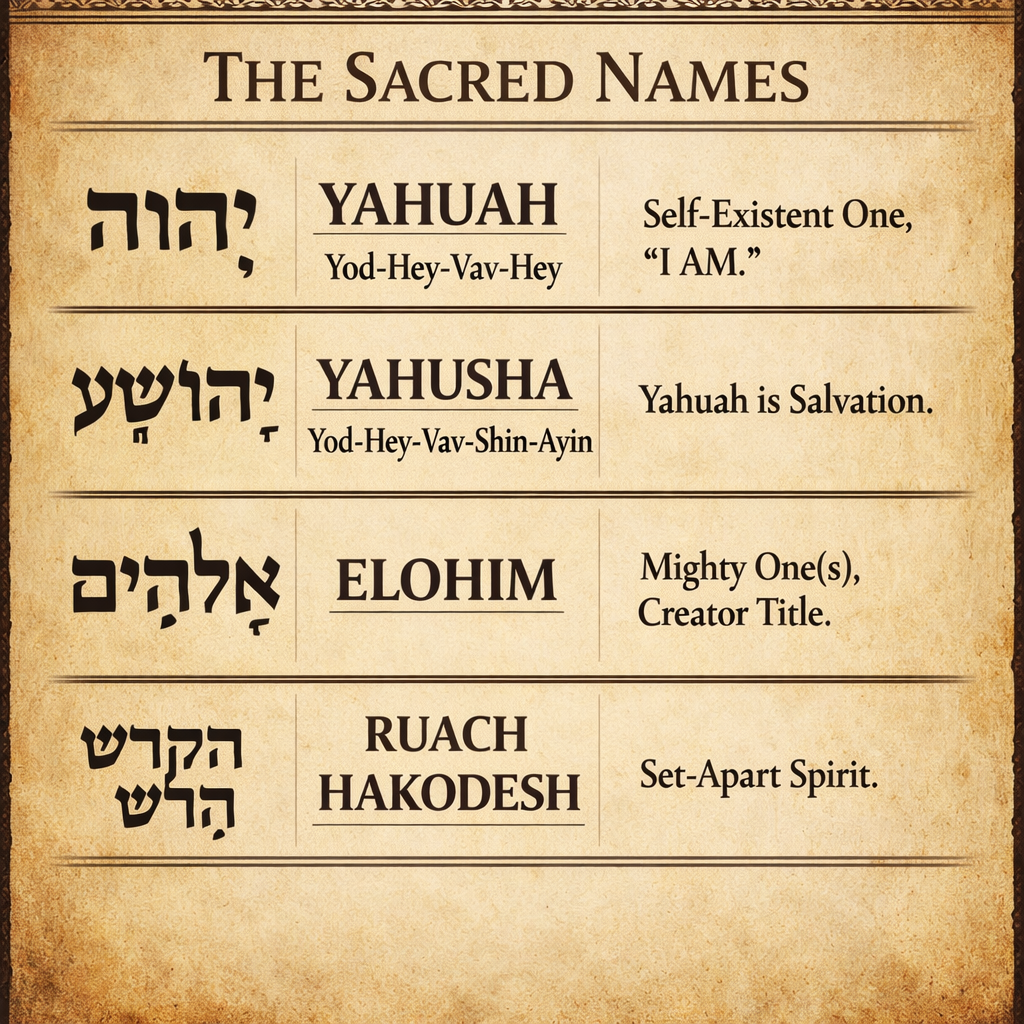
Tetragrammaton Analysis
Why This Method Works:
Research shows that passive reading leads to only 10-20% retention. Active recall, teaching others, and spaced repetition can increase retention to 80-90%. Don't just read—engage!
SCRIPTURE FOUNDATION
Exodus 3:15 — "This is my name forever, and this is my memorial unto all generations."
Psalm 83:18 — "That men may know that thou, whose name alone is YHWH, art the most high over all the earth."
Joel 2:32 — "Whosoever shall call on the name of YHWH shall be delivered."
Proverbs 30:4 — "What is his name, and what is his son's name, if thou canst tell?"
Matthew 1:21 — "Thou shalt call his name YESHUA: for he shall save his people from their sins."
KEY TERMS GLOSSARY
| Term | Strong's # | Definition |
|---|
| YHWH (יהוה) | H3068 | The Tetragrammaton; the four-letter divine name |
| Yahuah | — | Reconstructed pronunciation of YHWH based on theophoric evidence |
| Yeshua (יֵשׁוּעַ) | H3442 | "YHWH is salvation" — the Messiah's Hebrew name |
| Elohim (אֱלֹהִים) | H430 | "Mighty Ones" — plural of majesty for the Creator |
| Adonai (אֲדֹנָי) | H136 | "My Lord(s)" — emphatic title used for Yahuah |
| Tetragrammaton | — | Greek for "four letters" — refers to YHWH |
| Theophoric | — | Names containing a divine element (e.g., Eliyahu) |
| Shem (שֵׁם) | H8034 | Name, reputation, character, memorial |
COURSE OVERVIEW
The divine name YHWH (יהוה) appears approximately 6,828 times in the Hebrew Scriptures, making it the most frequently occurring name for the Almighty—yet most English translations replace it with "LORD." This 10-lesson course examines the linguistic, historical, and scriptural evidence for the sacred names, distinguishing carefully between documented scholarship and speculation.
Course Objectives:
- Understand the meaning and significance of the Tetragrammaton (YHWH)
- Examine evidence for pronunciation (Yahweh vs. Yahuah)
- Trace the history of name substitution
- Study the original Hebrew name of the Messiah
- Distinguish documented facts from unsupported claims
Lesson 1 Why Names Matter in Scripture
Opening Scripture — Exodus 3:15
"And Elohim said moreover unto Moses, Thus shalt thou say unto the children of Israel, YHWH Elohim of your fathers... hath sent me unto you: this is my name forever, and this is my memorial unto all generations."
Sacred Names Hebrew Chart
RECEIVE: Teaching Content
In the ancient world, names were far more than labels—they revealed identity, character, authority, and destiny. When Yahuah revealed His name to Moses at the burning bush, He wasn't simply providing a way to address Him; He was disclosing His very nature and establishing covenant relationship with His people.
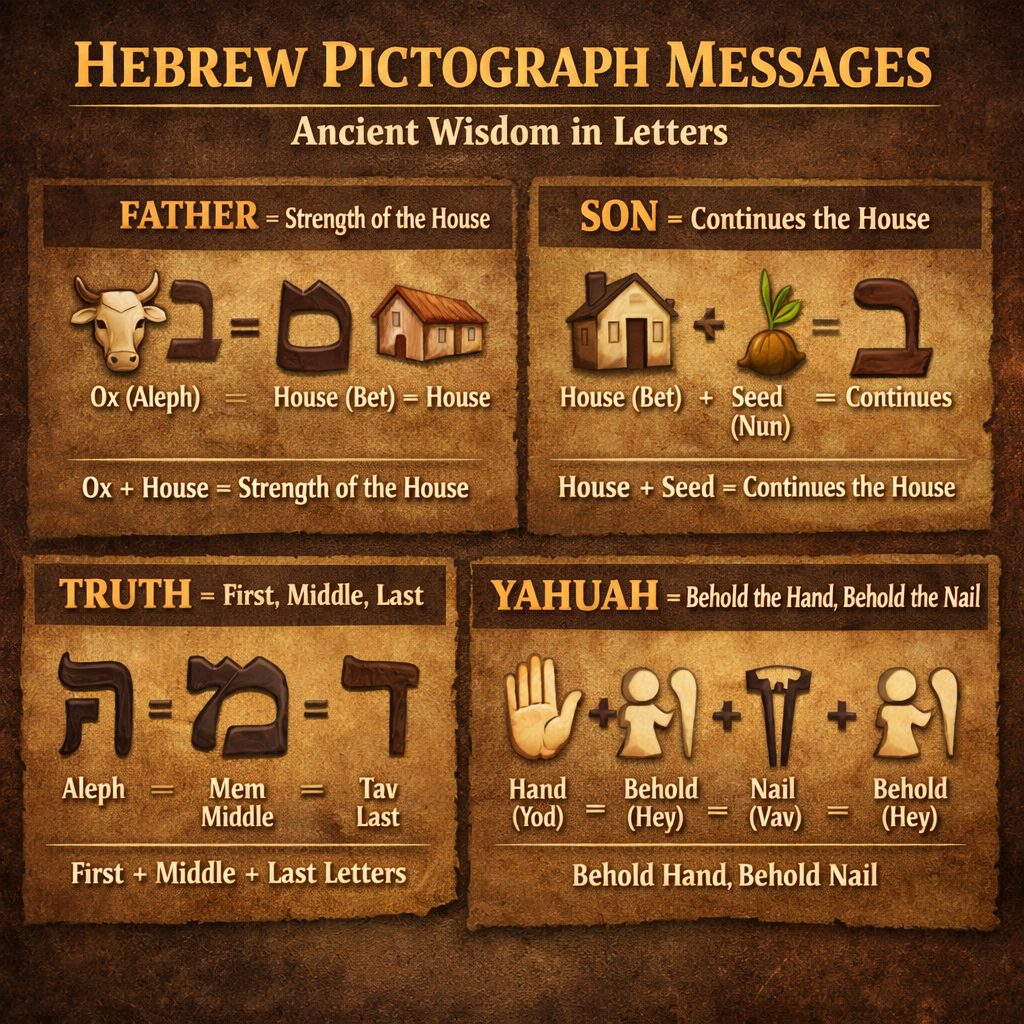
Hebrew Pictograph Messages
The Hebrew concept of shem (שֵׁם, "name") encompasses reputation, character, and memorial. When we read "the name of YHWH" in Scripture, we're reading about His revealed character, His authority, and His covenant faithfulness. This is why the third commandment prohibits bearing His name "in vain"—not merely speaking it carelessly, but representing Him falsely.
The divine name appears approximately 6,828 times in the Hebrew Scriptures according to the Biblia Hebraica Stuttgartensia (BHS), the standard scholarly Hebrew Bible text. This makes it the most frequently occurring name for the Almighty—yet most English translations substitute "LORD" (in capital letters) for the actual name.
Why does this matter? Consider these truths:
- Isaiah 42:8 — "I am YHWH: that is my name: and my glory will I not give to another"
- Psalm 83:18 — "That men may know that thou, whose name alone is YHWH, art the most high over all the earth"
- Joel 2:32 — "Whosoever shall call on the name of YHWH shall be delivered"
The name reveals the person. When we know someone's name, we have a personal relationship—not just formal acknowledgment. Yahuah didn't give us a title; He gave us His name, and declared it would be His memorial "unto all generations."
Key Terms
Shem (שֵׁם) — H8034 — Name, reputation, character, memorial
YHWH (יהוה) — H3068 — The Tetragrammaton, the four-letter divine name
Tetragrammaton — From Greek "four letters" — refers to the four Hebrew consonants
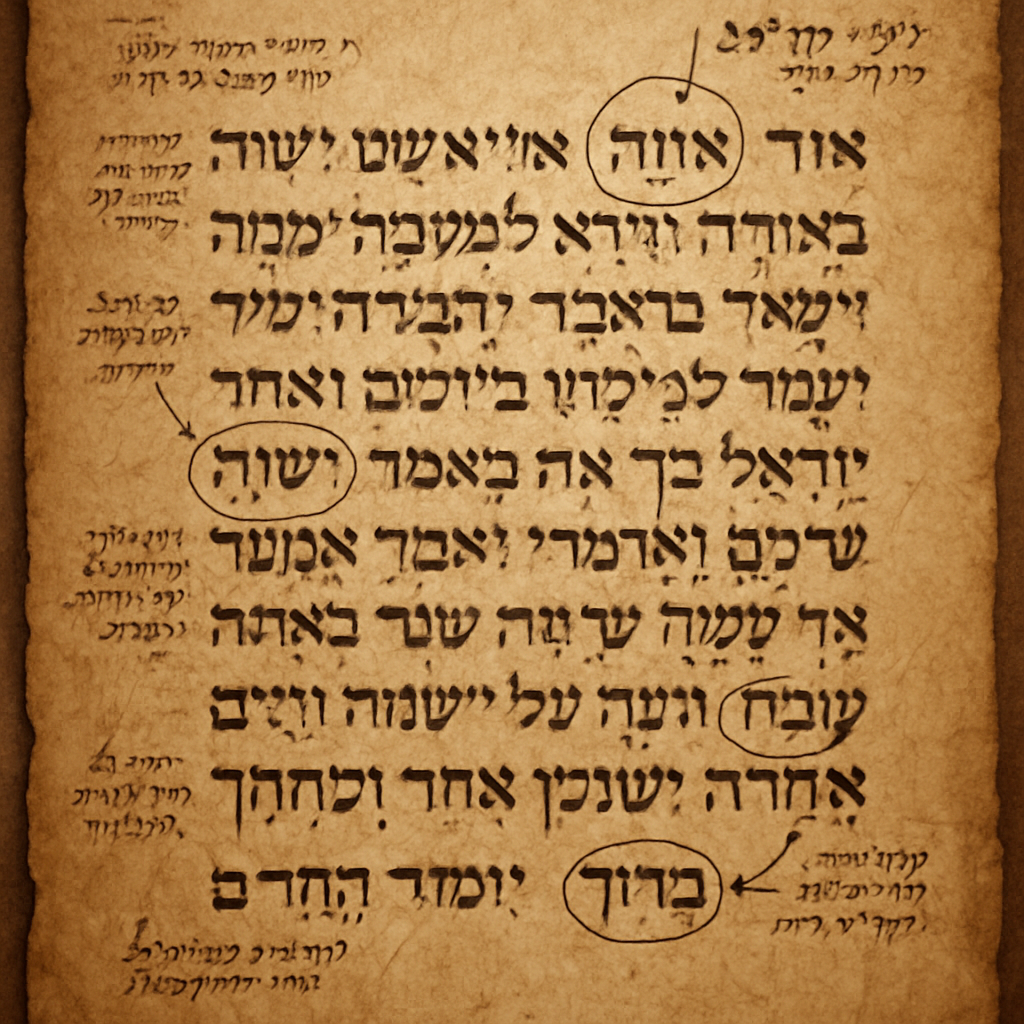
Hebrew Manuscript Study
REFLECT: Exercises
Multiple Choice
1. How many times does YHWH appear in the Hebrew Scriptures?
○ A) About 1,000 times
○ B) About 6,828 times
○ C) About 3,500 times
○ D) About 10,000 times
2. The Hebrew word "shem" encompasses all of the following EXCEPT:
○ A) Name
○ B) Reputation
○ C) Location
○ D) Character
3. According to Exodus 3:15, Yahuah's name is to endure:
○ A) Until the Messiah comes
○ B) Until the Temple is destroyed
○ C) Forever, unto all generations
○ D) Only during the Old Covenant
Lesson 2 The Tetragrammaton — The Divine Name
Opening Scripture — Exodus 3:14
"And Elohim said unto Moses, I AM THAT I AM: and he said, Thus shalt thou say unto the children of Israel, I AM hath sent me unto you."
RECEIVE: Teaching Content
The Tetragrammaton consists of four Hebrew consonants written right-to-left: יהוה. These four letters—Yod, Hey, Waw, Hey—form the most sacred name in the Hebrew Bible.
י ה ו ה
Yod - Hey - Waw - Hey
| Hebrew |
Letter Name |
Transliteration |
Description |
| י |
Yod (Yodh) |
Y |
10th letter; smallest letter; consonant /y/ |
| ה |
Hey (He) |
H |
5th letter; indicates breath/aspiration |
| ו |
Waw (Vav) |
W/V |
6th letter; originally /w/, later /v/ in modern Hebrew |
| ה |
Hey (He) |
H |
Final letter (repeated) |
The Meaning Revealed in Exodus 3:14-15
When Moses asked for the divine name, Yahuah responded with one of the most profound statements in all of Scripture:
אֶהְיֶה אֲשֶׁר אֶהְיֶה
Ehyeh Asher Ehyeh
"I AM WHO I AM" / "I WILL BE WHAT I WILL BE"
The name YHWH is connected to the Hebrew root היה (h-y-h, "to be"). The name represents a third-person form ("He is/will be") corresponding to the first-person אֶהְיֶה (Ehyeh, "I am/will be"). This reveals:
- "He who is" — emphasizing eternal self-existence
- "He who causes to be" — emphasizing creative power
- "He will be what He will be" — emphasizing ongoing revelation
Caution on Pictographic Meanings: Some teach that the Paleo-Hebrew pictographs spell out "Behold the hand, behold the nail." While devotionally interesting, modern linguists (including Dr. Michael Heiser) strongly caution against this methodology. By the time Hebrew developed as an alphabetic script, letters represented sounds, not pictographic meanings.
Key Terms
Ehyeh (אֶהְיֶה) — H1961 — "I am" / "I will be" — first person form of the verb "to be"
Hayah (היה) — H1961 — The Hebrew verb "to be, become, exist"
Asher (אֲשֶׁר) — H834 — Relative pronoun: "who, which, that"
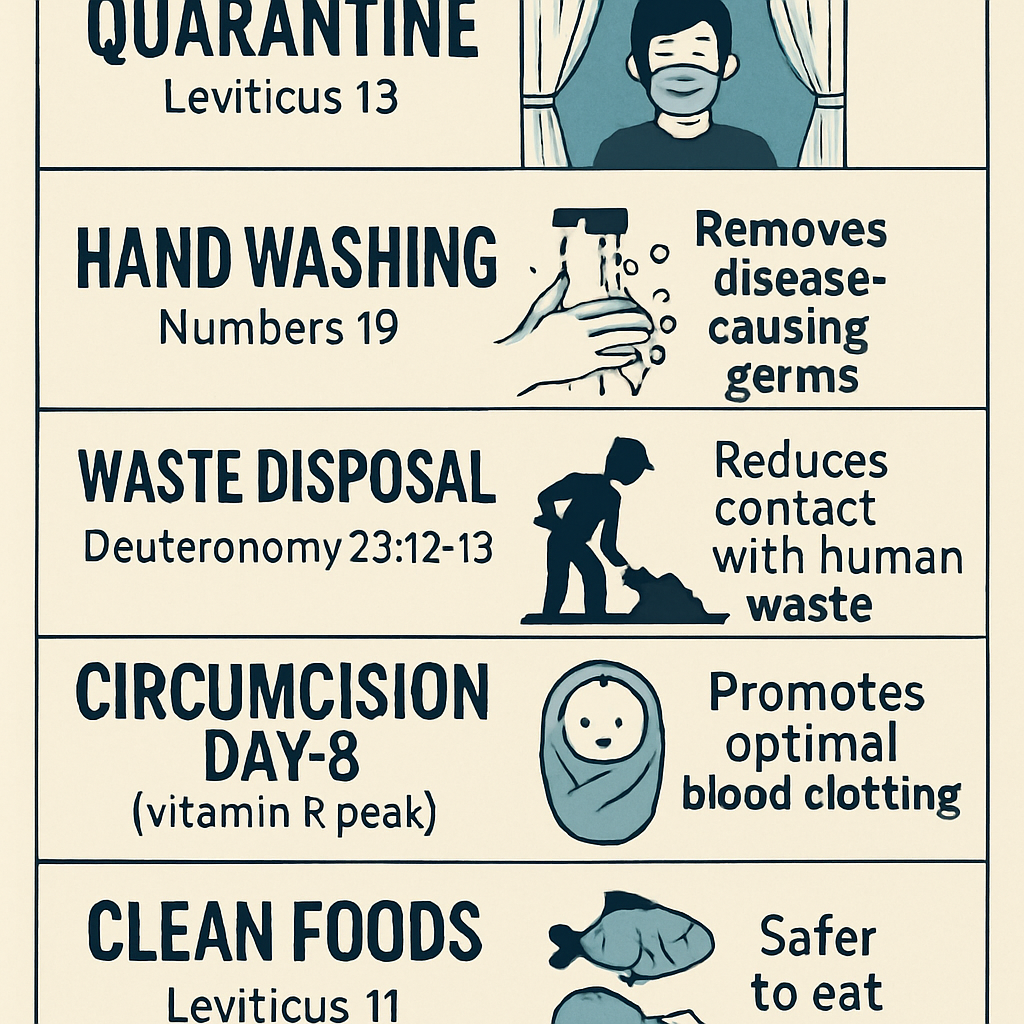
Biblical Health Laws
REFLECT: Exercises
Multiple Choice
1. The Hebrew letter Waw (ו) was originally pronounced as:
○ A) /v/ as in "victory"
○ B) /w/ as in "water"
○ C) /u/ as in "put"
○ D) /b/ as in "book"
2. The name YHWH is connected to which Hebrew root?
○ A) אמר (amar) — to speak
○ B) היה (hayah) — to be
○ C) ברא (bara) — to create
○ D) קדש (qadash) — to be holy
3. "Ehyeh Asher Ehyeh" can be translated as all of the following EXCEPT:
○ A) I AM WHO I AM
○ B) I WILL BE WHAT I WILL BE
○ C) I WAS WHO I WAS
○ D) I AM THE EXISTING ONE
Lesson 3 Pronunciation Evidence — Yahweh vs. Yahuah
Opening Scripture — Psalm 68:4
"Sing unto Elohim, sing praises to his name: extol him that rideth upon the heavens by his name YAH, and rejoice before him."
RECEIVE: Teaching Content
How was the divine name originally pronounced? The Masoretes (6th-10th century CE) developed vowel points called nikkudot. Critical evidence: The Dead Sea Scrolls (c. 150 BCE – 70 CE) contain no vowel points, proving the system was invented later.
Evidence Supporting "Yahuah": Theophoric names preserve syllables—Eliyahu ("My God is Yahu"), Yeshayahu ("Yahu is salvation"). The suffix -yahu (יָהוּ) suggests the name included "Yahu."
Evidence Supporting "Yahweh": Greek transliterations from Clement of Alexandria (Ἰαοὺε/Iaoue), Theodoret (Ἰαβέ/Iabe), and Epiphanius (Ἰάβε/Iabe) point to "Yahweh." Modern scholarly consensus strongly favors this pronunciation.
Why "Jehovah" is Problematic: It combines YHWH consonants with Adonai vowels—a hybrid never meant to be pronounced.
Key Terms
Nikkudot — Hebrew vowel points added by Masoretes (6th-10th century CE)
Qere Perpetuum — "Perpetual reading" — a permanent substitution note
Theophoric — Names containing a divine element (from Greek "god-bearing")
REFLECT: Exercises
Multiple Choice
1. The Masoretes worked during which centuries?
○ A) 1st-3rd century CE ○ B) 6th-10th century CE ○ C) 12th-15th century CE ○ D) Before 500 BCE
2. Theophoric names are:
○ A) Names without meaning ○ B) Names containing a divine element ○ C) Greek names ○ D) Modern inventions
3. "Jehovah" originated from:
○ A) Ancient Hebrew pronunciation ○ B) Greek manuscripts ○ C) Combining YHWH consonants with Adonai vowels ○ D) The Septuagint
📖 SCRIPTURE MEMORY: Psalm 68:4
"Sing unto Elohim, sing praises to his name: extol him that rideth upon the heavens by his name YAH, and rejoice before him."
☐ Day 1 ☐ Day 2 ☐ Day 3 ☐ Day 7 ☐ Day 21
Lesson 4 The History of Name Substitution
Content covers: 3rd century BCE cessation, Adonai/HaShem substitutes, Septuagint Kyrios, English "LORD" tradition, Jeremiah 23:27 warning.
Memory Verse: Psalm 83:18
Lesson 5 The Messiah's Hebrew Name — Yeshua
Content covers: Yehoshua/Yeshua forms, archaeological evidence (71 ossuaries), meaning "YHWH is salvation," Matthew 1:21 wordplay, Numbers 13:16.
Memory Verse: Matthew 1:21
Lesson 6 From Yeshua to Jesus — The Linguistic Journey
Content covers: Greek Ἰησοῦς, linguistic limitations (no "sh" sound), letter J invention (16th-17th century), Septuagint precedent, Acts 4:12.
Memory Verse: Acts 4:12
Lesson 7 Titles vs. Names — Elohim, Adonai, El Shaddai
Content covers: Elohim (H430), El compound names (Shaddai, Elyon, Olam), Adonai vs. Adoni, difference between personal names and titles.
Memory Verse: Genesis 17:1
Lesson 8 Theophoric Names — Names Containing the Divine Element
Content covers: -Yahu/-Yah suffixes (127 names), Yeho-/Yo- prefixes (29 names), archaeological evidence (Murashu documents, Elephantine papyri).
Memory Verse: 1 Kings 18:36
Lesson 9 Pagan Origin Claims — Facts vs. Speculation
Content covers: "God" etymology (Proto-Germanic *guthan, NOT Hebrew Gad), "Lord" etymology (Old English hlafweard), "Jesus/Zeus" claim debunked, folk etymology dangers.
Memory Verse: Proverbs 18:15
Lesson 10 Practical Application — Using the Sacred Names
Content covers: What evidence supports, balanced approach, grace toward others, avoiding division, practical suggestions, Zechariah 14:9 promise.
Memory Verse: Zechariah 14:9
COMPLETE ANSWER KEY
Lesson 1: Why Names Matter
Fill in the Blanks: 1) 6,828 2) shem (שֵׁם) 3) LORD 4) four letters 5) generations
Sacred Names Hebrew Chart

Yahuahs Instructions 01
Multiple Choice: 1) B 2) C 3) C
True/False: 1) False — consonants, not vowels 2) True 3) False — also prohibits bearing/representing falsely
Lesson 2: The Tetragrammaton
Fill in the Blanks: 1) four 2) Waw (or Vav) 3) be (or exist) 4) AM, AM 5) existence

Yahuahs Instructions 02
Multiple Choice: 1) B 2) B 3) C
True/False: 1) False — they caution against it 2) True 3) False — four letters
Lesson 3: Pronunciation Evidence
Fill in the Blanks: 1) nikkudot 2) no 3) yahu 4) Yahweh 5) hybrid

Yahuahs Instructions 03

Following Torah 03
Multiple Choice: 1) B 2) B 3) C
True/False: 1) False — no vowel points in DSS 2) True 3) False — scholarly consensus, not absolute certainty
Lesson 4: History of Substitution
Fill in the Blanks: 1) 3rd (third) 2) Adonai 3) HaShem 4) Kyrios 5) forget

Yahuahs Instructions 04

Following Torah 04
Lesson 5: The Messiah's Name
Fill in the Blanks: 1) Yeshua 2) Joshua 3) save (or deliver) 4) 71 5) Hoshea

Following Torah 05
Lesson 6: Yeshua to Jesus
Fill in the Blanks: 1) Ἰησοῦς (Iēsous) 2) sh 3) centuries (or 200+ years) 4) 16th (or 1500s) 5) Iesus
Lesson 7: Titles vs Names
Fill in the Blanks: 1) Elohim 2) Almighty 3) Adonai 4) name 5) High
Lesson 8: Theophoric Names
Fill in the Blanks: 1) YAHU 2) YAHU 3) 127 4) Given 5) theophoric
Lesson 9: Pagan Origin Claims
Fill in the Blanks: 1) guthan 2) loaves (or bread) 3) Zeus 4) 200+ 5) folk
Lesson 10: Practical Application
Fill in the Blanks: 1) salvation 2) Greek 3) Kyrios 4) one 5) facts (or evidence)
📅 SPACED REVIEW TRACKER
Instructions: After completing each lesson, review it at these intervals. Check off each review when completed. Research shows spaced repetition dramatically improves long-term retention.
| Lesson |
Completed |
Day 1 |
Day 3 |
Day 7 |
Day 21 |
Day 60 |
| 1. Why Names Matter | ___/___ | ☐ | ☐ | ☐ | ☐ | ☐ |
| 2. The Tetragrammaton | ___/___ | ☐ | ☐ | ☐ | ☐ | ☐ |
| 3. Pronunciation Evidence | ___/___ | ☐ | ☐ | ☐ | ☐ | ☐ |
| 4. History of Substitution | ___/___ | ☐ | ☐ | ☐ | ☐ | ☐ |
| 5. The Messiah's Name | ___/___ | ☐ | ☐ | ☐ | ☐ | ☐ |
| 6. Yeshua to Jesus | ___/___ | ☐ | ☐ | ☐ | ☐ | ☐ |
| 7. Titles vs Names | ___/___ | ☐ | ☐ | ☐ | ☐ | ☐ |
| 8. Theophoric Names | ___/___ | ☐ | ☐ | ☐ | ☐ | ☐ |
| 9. Pagan Origin Claims | ___/___ | ☐ | ☐ | ☐ | ☐ | ☐ |
| 10. Practical Application | ___/___ | ☐ | ☐ | ☐ | ☐ | ☐ |
Review Method: Read your recall notes, recite key points aloud, check answer key for any forgotten items. Each review should take 5-10 minutes.
ADDITIONAL RESOURCES
Primary Sources Cited
- Biblia Hebraica Stuttgartensia (BHS) — Standard scholarly Hebrew Bible
- Dead Sea Scrolls — c. 150 BCE – 70 CE
- Septuagint (LXX) — 3rd-2nd century BCE Greek translation
- Elephantine Papyri — 5th-4th century BCE
- Tal Ilan, Lexicon of Jewish Names in Late Antiquity (2002)
Further Study
- Strong's Exhaustive Concordance — Hebrew/Greek word studies
- Etymonline.com — English word etymology
- Dr. Michael Heiser's work on the Divine Council and Hebrew studies
- Dr. Michael L. Brown's work on Messianic Jewish scholarship
Scripture Reading Plan
Read through these passages using a translation that restores the sacred names:
- Exodus 3:1-15 — The revelation of the Name
- Exodus 20:1-7 — The third commandment
- Psalm 83 — "Whose name alone is YHWH"
- Isaiah 42:8 — "I am YHWH: that is my name"
- Joel 2:28-32 — Calling on the Name
- Matthew 1:18-25 — The naming of Yeshua
- Acts 4:1-12 — No other name
CLOSING PRAYER
"Yahuah, our Heavenly Father, we thank You for revealing Your name to us. Help us to honor Your name, to speak it with reverence, and to bear it faithfully before the world. May we know You not just by titles, but by the personal, covenant name You declared would be Your memorial unto all generations. In the name of Yeshua, our Savior, whose name means 'Yahuah is salvation.' Amen."
ABOUT TRUTH CARRIERS MINISTRY
Truth Carriers Ministry is dedicated to equipping the set-apart ones with biblical truth, suppressed history, and practical discernment. Our goal is not information transfer but genuine transformation.
straightisthegate.com | messiah2027.com
"That men may know that thou, whose name alone is YHWH,
art the most high over all the earth." — Psalm 83:18