Christian Foundations of America
Primary Source Verification | Truth Carriers Academy
Student Name:
Date Started:
HOW TO USE - Truth Carriers Learning Method (6 Rs)
RECEIVE (read), REFLECT (answer), RECALL (close book, write from memory), RECITE (teach someone), REVIEW (spaced repetition), RESPOND (apply).
"Blessed is the nation whose Elohim is Yahuah." — Psalm 33:12
This workbook presents PRIMARY SOURCES and lets facts speak. We acknowledge:
- American CULTURE was largely Christian (75% church affiliation)
- The FEDERAL GOVERNMENT structure was deliberately secular (no religious test, no established church)
- Founders ranged from evangelical Christians to Deists
- We debunk fabricated quotes on BOTH sides
In this workbook, historical quotes preserve the original language (using "God," "Lord," "Jesus Christ" as written by the Founders). This is authentic documentation. However, when referring to the Almighty in our own commentary, we use the sacred names Yahuah (יהוה - the Father), Yahusha (the Son), and Elohim (Mighty One). The Founders, influenced by Christianity's compromised translations, used substitute titles instead of the sacred name revealed in Exodus 3:14-15. We honor both historical accuracy and biblical truth.
Table of Contents
- The Founding Documents - What They Actually Say
- George Washington - Verified vs. Fabricated Quotes
- The Founders' Actual Beliefs (Primary Sources Only)
- State Constitutions - Religious Tests Required
- The Great Awakening's Political Influence
- Christianity's Role in Revolution
- Religious Demographics in 1776
- Myth vs. Reality - Both Sides Examined
Lesson 1: The Founding Documents - What They Actually Say
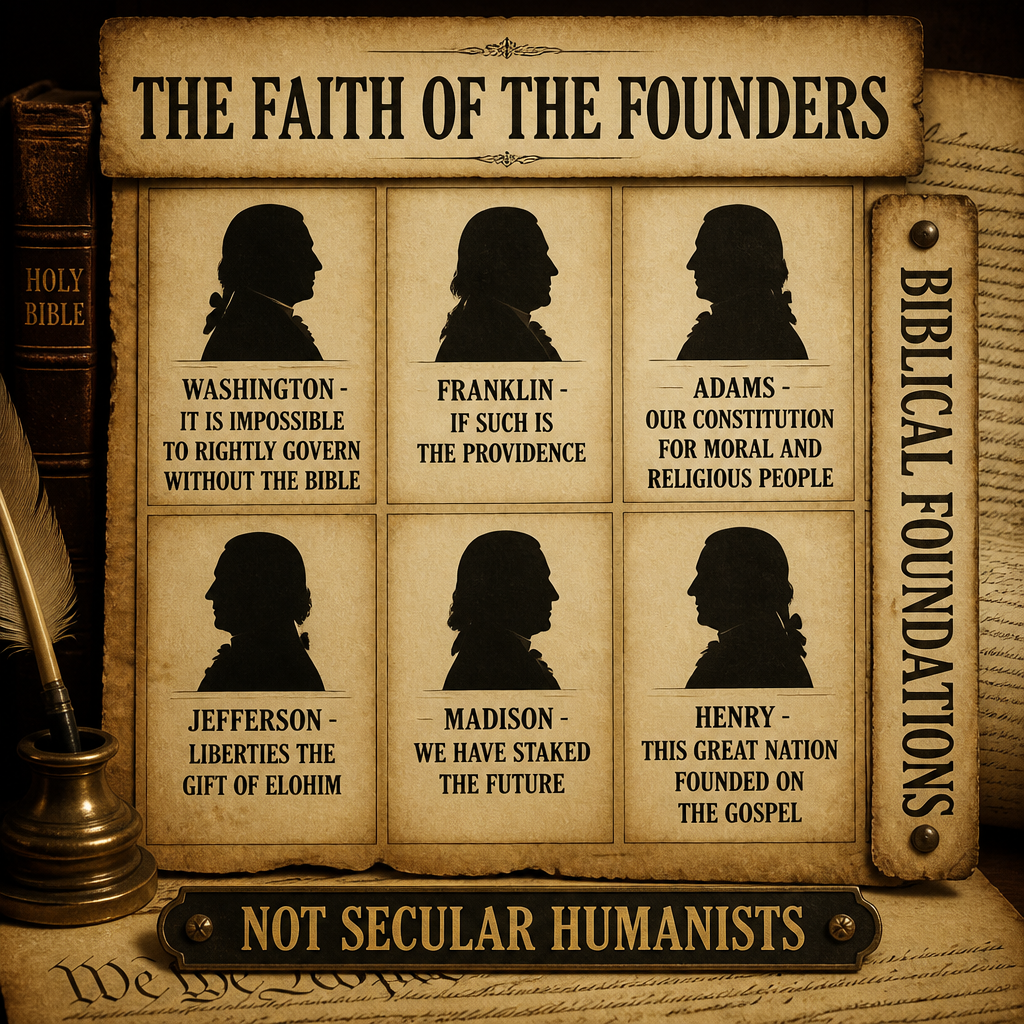
ADULT Found Founders Quotes
Declaration of Independence - Four God References
The Declaration of Independence (July 4, 1776) contains precisely four references to a divine being:
"...the separate and equal station to which the Laws of Nature and of Nature's God entitle them..."
"...that all men are created equal, that they are endowed by their Creator with certain unalienable Rights..."
"...appealing to the Supreme Judge of the world for the rectitude of our intentions..."
"...with a firm reliance on the protection of divine Providence, we mutually pledge to each other our Lives, our Fortunes and our sacred Honor."
The Constitution's Notable Silence on God
The U.S. Constitution (September 17, 1787) contains NO reference to God, Jesus Christ, or Christianity in its operative text.
"...but no religious Test shall ever be required as a Qualification to any Office or public Trust under the United States." [U.S. Constitution, Article VI]
Revolutionary context: When the Constitution was ratified, nine of thirteen states still required religious tests for office. The federal prohibition set a new standard.
First Amendment Religion Clauses
"Congress shall make no law respecting an establishment of religion, or prohibiting the free exercise thereof..." [Bill of Rights, First Amendment]
Critical context: The First Amendment originally applied ONLY to the federal government. Massachusetts maintained its Congregationalist establishment until 1833—the last state to disestablish.
Fill-in-the-Blank Questions
1. The Declaration of Independence contains exactly references to a divine being.
2. The U.S. Constitution contains references to God or Jesus Christ.
3. Article VI states that no religious shall ever be required for office.
4. When the Constitution was ratified, of thirteen states still required religious tests.
5. The last state to disestablish its church was in 1833.
True or False
Primary Source Exercise
Read the Declaration of Independence and list the four references to a divine being:
📖 SCRIPTURE MEMORY: Psalm 33:12
"Blessed is the nation whose Elohim is Yahuah; and the people whom he hath chosen for his own inheritance."
📝 RECALL EXERCISE
Close this workbook. Write from memory: (1) The four divine references in the Declaration, (2) What the Constitution says about God, (3) What Article VI, Clause 3 prohibits.
🗣 TEACH-BACK CHALLENGE
Explain to someone the difference between the Declaration's God references and the Constitution's silence on religion.
Person I taught:
🎯 APPLICATION STEP
Lesson 2: George Washington - Verified vs. Fabricated Quotes
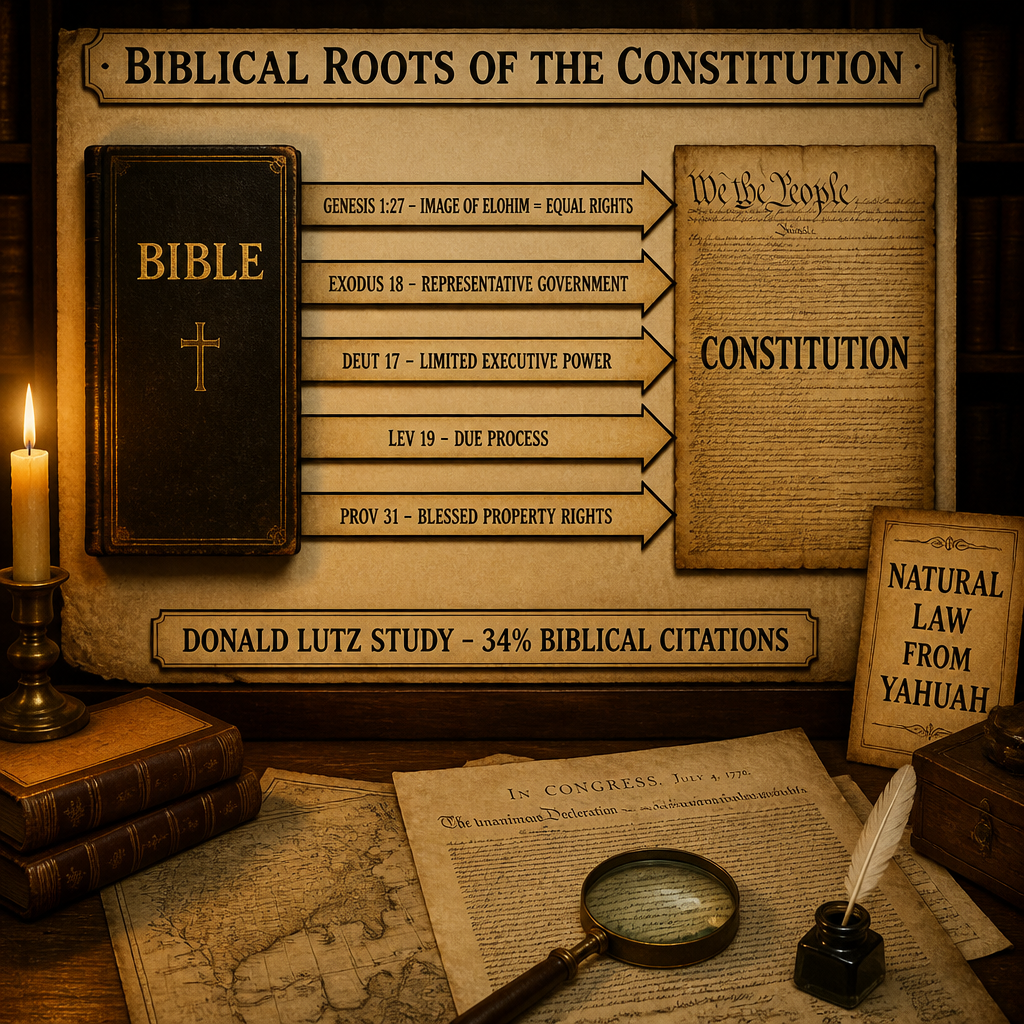
ADULT Found Constitution Bible Refs
VERIFIED Quotes (With Primary Source Citations)
"Of all the dispositions and habits which lead to political prosperity, Religion and morality are indispensable supports... let us with caution indulge the supposition, that morality can be maintained without religion." [Founders Online, National Archives]
The U.S. government "gives to bigotry no sanction, to persecution no assistance." [Founders Online, National Archives]
Washington acknowledged "the providence of Almighty God" and called for thanks for "civil and religious liberty." [Founders Online, National Archives]
FABRICATED Quote - DO NOT USE
Source Check: Mount Vernon's official website lists this as a "spurious quotation."
Fact Check: PolitiFact ruled FALSE: "no evidence he ever said this."
Origin: First appeared decades after Washington's death without documentation.
DO NOT ATTRIBUTE THIS QUOTE TO WASHINGTON.
Washington's Religious Practice - What Records Show
| Fact | Evidence |
|---|---|
| Served as vestryman | Truro Parish (1762-1784), attended 23 of 35 vestry meetings |
| Church attendance | Diaries show approximately once monthly |
| Did not take communion | Multiple witnesses confirm he left before communion after the Revolution |
| Never mentioned "Jesus Christ" by name | Not found in verified writings |
| Used deistic terms | "Providence," "Grand Architect," "Supreme Being" |
Fill-in-the-Blank Questions
1. Washington said "Religion and are indispensable supports" in his Farewell Address.
2. The quote "impossible to rightly govern without God and the Bible" is listed as by Mount Vernon.
3. Washington left church before after the Revolutionary War.
4. Washington used terms like "Providence" and "Grand " for God.
5. Historians classify Washington as a "theistic " or "warm Deist."
Quote Verification Exercise
For each quote, identify if VERIFIED or FABRICATED:
Discussion Question
Why is it important to verify quotes before using them, even when they support our beliefs?
📖 SCRIPTURE MEMORY: Proverbs 12:22
"Lying lips are abomination to Yahuah: but they that deal truly are his delight."
📝 RECALL EXERCISE
Close this workbook. Write from memory: (1) Washington's verified quote about religion and morality, (2) The fabricated "Bible" quote, (3) Evidence that Washington may not have been orthodox.
🗣 TEACH-BACK CHALLENGE
Explain to someone why the "impossible to govern without God and Bible" quote should NOT be attributed to Washington.
Person I taught:
🎯 APPLICATION STEP
Lesson 3: The Founders' Actual Beliefs (Primary Sources Only)
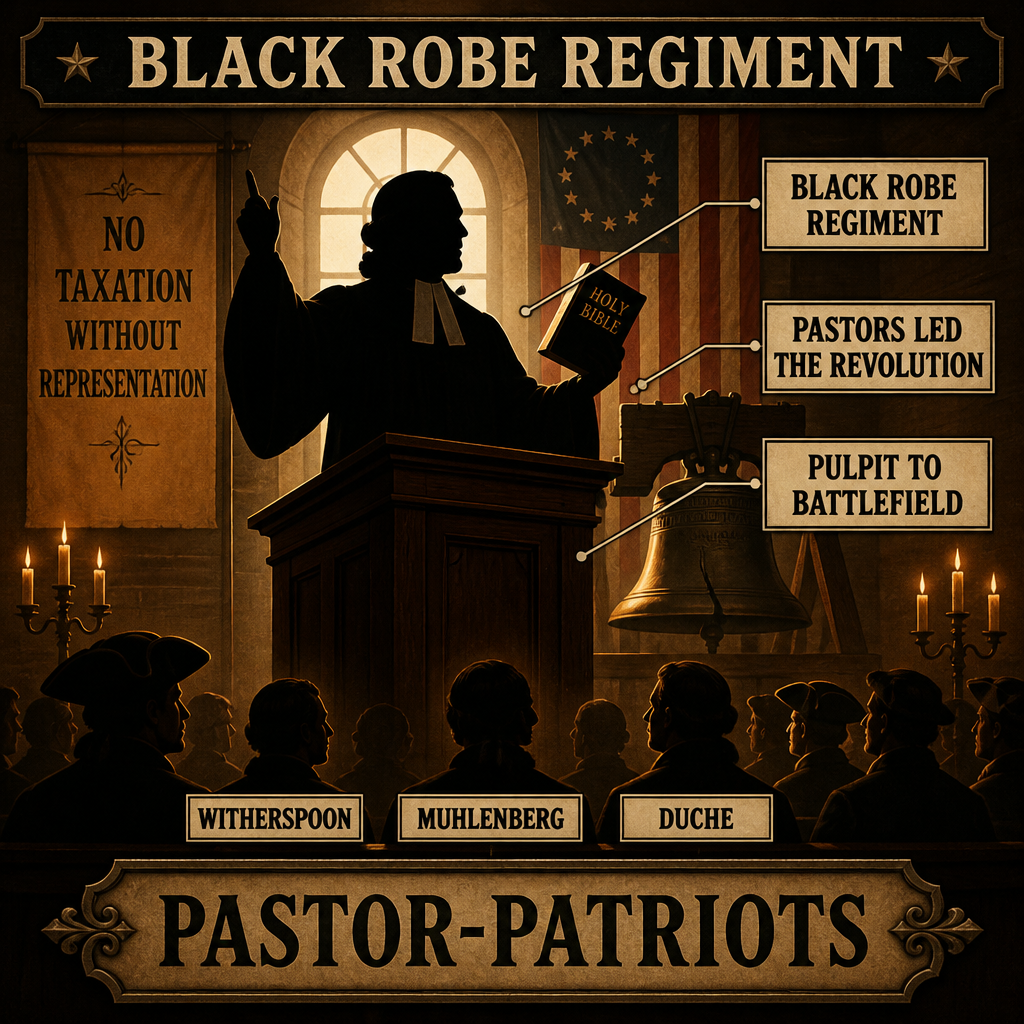
ADULT Found Black Robe
John Adams - Unitarian Who Valued Religion
"Our Constitution was made only for a moral and religious People. It is wholly inadequate to the government of any other." [Founders Online, National Archives]
Adams' beliefs: Raised Congregationalist, rejected Calvinist doctrines and the Trinity, became a Unitarian. Called himself "a church going animal."
Thomas Jefferson - Creator of the "Jefferson Bible"
"Fix reason firmly in her seat... Question with boldness even the existence of a god; because, if there be one, he must more approve of the homage of reason, than that of blindfolded fear." [Founders Online, National Archives]
Jefferson used razor and glue to extract moral teachings from the Gospels, removing all miracles, the virgin birth, and the resurrection. It ends with Jesus's burial—no resurrection. [Smithsonian National Museum of American History]
Benjamin Franklin - Believed in Providence, Doubted Christ's Divinity
"I believe in one God, creator of the universe... As to Jesus of Nazareth... I have... some Doubts as to his Divinity: tho' it is a Question I do not dogmatise upon." [Founders Online, National Archives]
Franklin never wrote this about beer. The actual quote referenced wine: "Behold the rain which descends from heaven upon our vineyards..."
Patrick Henry - An Actual Orthodox Christian
"This is all the Inheritance I can give to my dear family, The religion of Christ can give them one which will make them rich indeed." [Red Hill Patrick Henry Memorial]
This quote does NOT appear anywhere in Henry's recorded writings. First appeared in 1956 without citation.
Founders' Beliefs Summary
| Founder | Classification | Key Evidence |
|---|---|---|
| George Washington | Theistic Rationalist | Avoided communion, used deistic terms |
| John Adams | Unitarian | Rejected Trinity, valued religion for society |
| Thomas Jefferson | Deist | Jefferson Bible removed miracles |
| Benjamin Franklin | Deist/Theist | Doubted Christ's divinity |
| Patrick Henry | Orthodox Christian | Explicit faith statements in will |
| Samuel Adams | Orthodox Christian | Devout Congregationalist |
Fill-in-the-Blank Questions
1. John Adams said our Constitution was made only for a moral and people.
2. Jefferson created the "Jefferson " by removing miracles from the Gospels.
3. Franklin wrote that he had "some " about Christ's divinity.
4. Patrick Henry's will stated that the religion of could make his family rich.
5. John Adams became a , rejecting the Trinity.
Discussion Question
How should Christians respond to the fact that some founders held unorthodox religious views? Does this affect how we should view America's founding?
📖 SCRIPTURE MEMORY: 2 Timothy 2:15
"Study to shew thyself approved unto Elohim, a workman that needeth not to be ashamed, rightly dividing the word of truth."
📝 RECALL EXERCISE
Close this workbook. Write from memory: (1) Adams' verified quote about moral and religious people, (2) What Jefferson did to the Gospels, (3) Which founders were orthodox Christians.
🗣 TEACH-BACK CHALLENGE
Explain to someone the range of religious beliefs among the Founders, from Deist to orthodox Christian.
Person I taught:
🎯 APPLICATION STEP
Lesson 4: State Constitutions - Religious Tests Required
While the federal Constitution prohibited religious tests, original STATE constitutions tell a very different story.
Delaware (1776) - Trinitarian Oath Required
Pennsylvania (1776) - Scripture Belief Required
Massachusetts (1780) - Christian Declaration Required
North Carolina (1776) - Protestants Only
When Were These Requirements Removed?
| State | Original Requirement | Year Removed |
|---|---|---|
| Pennsylvania | Belief in Scripture | 1790 |
| Delaware | Trinitarian oath | 1792 |
| North Carolina | Protestant requirement | 1789 (changed to "Christian") |
| Massachusetts | Christian declaration | 1833 |
| Maryland | Belief in God | 1961 (Supreme Court) |
Fill-in-the-Blank Questions
1. Delaware required a oath (belief in Father, Son, Holy Ghost).
2. North Carolina originally limited office to only.
3. Massachusetts was the last state to disestablish its church in .
4. Maryland's requirement wasn't removed until the struck it down in 1961.
5. The federal government was by design, while states maintained religious tests.
True or False
Discussion Question
Why do you think the federal government prohibited religious tests while states maintained them? What might this tell us about the founders' intentions?
📖 SCRIPTURE MEMORY: James 2:12
"So speak ye, and so do, as they that shall be judged by the law of liberty."
📝 RECALL EXERCISE
Close this workbook. Write from memory: (1) What Delaware's Trinitarian oath required, (2) Which states had Protestant-only requirements, (3) When the last state religious requirement was removed.
🗣 TEACH-BACK CHALLENGE
Explain to someone the difference between federal and state approaches to religion in early America.
Person I taught:
🎯 APPLICATION STEP
Lesson 5: The Great Awakening's Political Influence
What Was the Great Awakening?
The Great Awakening (1730s-1740s) was a massive religious revival that swept through the American colonies. Key preachers:
- Jonathan Edwards - "Sinners in the Hands of an Angry God"
- George Whitefield - Preached to crowds of 80,000+ colonists
- Harry Hosier ("Black Harry") - Black preacher who influenced thousands
Political Effects of the Awakening
| Effect | How It Influenced Revolution |
|---|---|
| Individual liberty emphasis | Personal relationship with God led to questioning traditional authority |
| Questioning of authority | If church hierarchy could be questioned, so could political hierarchy |
| Unity across colonies | Shared religious experience created inter-colonial bonds |
| Common man empowerment | Gospel preached to all classes equally |
Sermon as Political Tool
This sermon argued that armed resistance against tyranny was justified. It helped shape the colonial mindset that would later support revolution. [Historical sermon records]
Fill-in-the-Blank Questions
1. The Great Awakening occurred during the s and 1740s.
2. George preached to crowds of 80,000+ colonists.
3. The Awakening emphasized individual with God.
4. Harry Hosier, called "Black Harry," was a preacher who influenced thousands.
5. The Awakening created across the colonies through shared religious experience.
Short Answer
How did questioning religious authority help prepare colonists to question political authority?
📖 SCRIPTURE MEMORY: John 8:36
"If the Son therefore shall make you free, ye shall be free indeed."
📝 RECALL EXERCISE
Close this workbook. Write from memory: (1) The three main Great Awakening preachers, (2) How the Awakening prepared colonists for Revolution, (3) The dates of the Great Awakening.
🗣 TEACH-BACK CHALLENGE
Explain to someone how the Great Awakening influenced the American Revolution.
Person I taught:
🎯 APPLICATION STEP
Lesson 6: Christianity's Role in Revolution
The "Black Regiment"
British called colonial clergy the "Black Regiment" because preachers wore black robes and were influential supporters of revolution. They:
- Preached "election day sermons" promoting resistance theology
- Debated Romans 13 - when to obey government vs. resist tyrants
- Connected biblical freedom to political freedom
Declaration's Theology
Rights come from the Creator—not from the king. This was a revolutionary concept that legitimized resistance against George III.
Colonial Support for Revolution
| Group | Approximate Support |
|---|---|
| Patriots (supported revolution) | ~40-45% |
| Loyalists (opposed revolution) | ~15-20% |
| Neutral/undecided | ~35-45% |
Note: About 2/3 of colonists who took a position supported revolution. Church attendance correlated with higher patriot support.
Fill-in-the-Blank Questions
1. British called colonial clergy the " Regiment."
2. Clergy debated 13 about when to obey or resist government.
3. The Declaration claims rights come from the , not the king.
4. About % of colonists were Patriots who supported revolution.
5. Election day promoted resistance theology.
Discussion Question
When is resistance to government justified according to biblical principles? How did colonists answer this question?
📖 SCRIPTURE MEMORY: Acts 5:29
"Then Peter and the other apostles answered and said, We ought to obey Elohim rather than men."
📝 RECALL EXERCISE
Close this workbook. Write from memory: (1) Why clergy were called the "Black Regiment," (2) What Romans 13 debate was about, (3) Percentages of Patriots vs. Loyalists.
🗣 TEACH-BACK CHALLENGE
Explain to someone how colonial preachers used the Bible to justify revolution against tyranny.
Person I taught:
🎯 APPLICATION STEP
Lesson 7: Religious Demographics in 1776
Church Affiliation in Colonial America
Denominational Breakdown
| Denomination | Percentage |
|---|---|
| Congregationalist | ~20% |
| Presbyterian | ~19% |
| Baptist | ~17% |
| Anglican/Episcopal | ~16% |
| Other (Quaker, Lutheran, Reformed, etc.) | ~28% |
Regional Variations
| Region | Church Affiliation | Dominant Tradition |
|---|---|---|
| New England | ~85%+ | Congregationalist (Puritan legacy) |
| Middle Colonies | ~65% | Religious diversity |
| Southern Colonies | ~60% | Anglican (often nominal) |
Fill-in-the-Blank Questions
1. Approximately % of the colonial population was affiliated with churches.
2. The largest denomination was at about 20%.
3. New England had the highest church affiliation at %+.
4. The Southern colonies were dominated by the church.
5. Church affiliation does not necessarily equal personal .
True or False
📖 SCRIPTURE MEMORY: Matthew 7:14
"Because strait is the gate, and narrow is the way, which leadeth unto life, and few there be that find it."
📝 RECALL EXERCISE
Close this workbook. Write from memory: (1) The percentage of church affiliation in 1776, (2) The four largest denominations, (3) The difference between church affiliation and salvation.
🗣 TEACH-BACK CHALLENGE
Explain to someone the religious demographics of colonial America and what they do/don't prove.
Person I taught:
🎯 APPLICATION STEP
Lesson 8: Myth vs. Reality - Both Sides Examined
Myth 1: "America Was Founded as a Christian Nation"
But: The FEDERAL GOVERNMENT was explicitly secular—no religious tests, no established church, no mention of Christ in the Constitution.
Myth 2: "The Founders Were All Deists or Atheists"
But: Others (Patrick Henry, Samuel Adams, John Jay) were orthodox Christians. The founders were religiously DIVERSE.
Myth 3: "Treaty of Tripoli Doesn't Count"
"As the government of the United States of America is not in any sense founded on the Christian Religion..." [Ratified unanimously by Senate, signed by President Adams]
Both perspectives have merit: The treaty was ratified without objection, but it was addressing a specific diplomatic purpose.
The Balanced Conclusion
| Claim | Accurate Assessment |
|---|---|
| American culture was Christian | TRUE - 75% church affiliation, Christian values dominant |
| Federal government was secular | TRUE - No religious tests, no establishment |
| All founders were Christians | FALSE - Range from orthodox to Deist |
| All founders were Deists | FALSE - Many were orthodox Christians |
| State governments were secular | FALSE - Many had religious establishments |
Fill-in-the-Blank Questions
1. American CULTURE was largely , but the federal government was secular.
2. The Treaty of Tripoli says America was "not in any sense founded on the Religion."
3. The founders were religiously , ranging from orthodox to Deist.
4. State governments often had religious unlike the federal government.
5. The phrase "separation of church and state" comes from Jefferson's , not the Constitution.
Final Discussion
After studying the primary sources, how would YOU describe America's religious founding? What nuances are important to include?
📖 SCRIPTURE MEMORY: John 8:32
"And ye shall know the truth, and the truth shall make you free."
📝 RECALL EXERCISE
Close this workbook. Write from memory: (1) The balanced assessment of "Christian nation" claim, (2) What the Treaty of Tripoli says, (3) Three verified vs. fabricated facts about the Founders.
🗣 TEACH-BACK CHALLENGE
Explain to someone the nuanced truth about America's religious founding—avoiding both extremes.
Person I taught:
🎯 APPLICATION STEP
SPACED REVIEW TRACKER
| Lesson | Done | D1 | D3 | D7 | D21 | D60 |
|---|---|---|---|---|---|---|
| 1. Founding Documents | ||||||
| 2. Founders' Beliefs | ||||||
| 3. Colonial Charters | ||||||
| 4. Education History | ||||||
| 5. First Amendment | ||||||
| 6. Court Decisions | ||||||
| 7. Revivals Impact | ||||||
| 8. Church & State |
Answer Key
Lesson 1
Fill-in-the-Blank: 1. four 2. zero/no 3. test 4. nine 5. Massachusetts
True/False: 1. False 2. False
Lesson 2
Fill-in-the-Blank: 1. morality 2. spurious/fabricated 3. communion 4. Architect 5. rationalist
Quote Verification: 1. Verified 2. Fabricated
Lesson 3
Fill-in-the-Blank: 1. religious 2. Bible 3. Doubts 4. Christ 5. Unitarian
Lesson 4
Fill-in-the-Blank: 1. Trinitarian 2. Protestants 3. 1833 4. Supreme Court 5. secular
True/False: 1. False 2. True
Lesson 5
Fill-in-the-Blank: 1. 1730 2. Whitefield 3. relationship 4. Black 5. unity
Lesson 6
Fill-in-the-Blank: 1. Black 2. Romans 3. Creator 4. 40-45 5. sermons
Lesson 7
Fill-in-the-Blank: 1. 75 2. Congregationalist 3. 85 4. Anglican 5. salvation
True/False: 1. False 2. True
Lesson 8
Fill-in-the-Blank: 1. Christian 2. Christian 3. diverse 4. establishments 5. letter