TRUTH CARRIERS EDUCATION SYSTEM True Science Series - Adult/Teen Level
2 Peter 3:5-6
"For this they willingly are ignorant of, that by the word of Elohim the heavens were of old, and the earth standing out of the water and in the water: Whereby the world that then was, being overflowed with water, perished."
INTRODUCTION
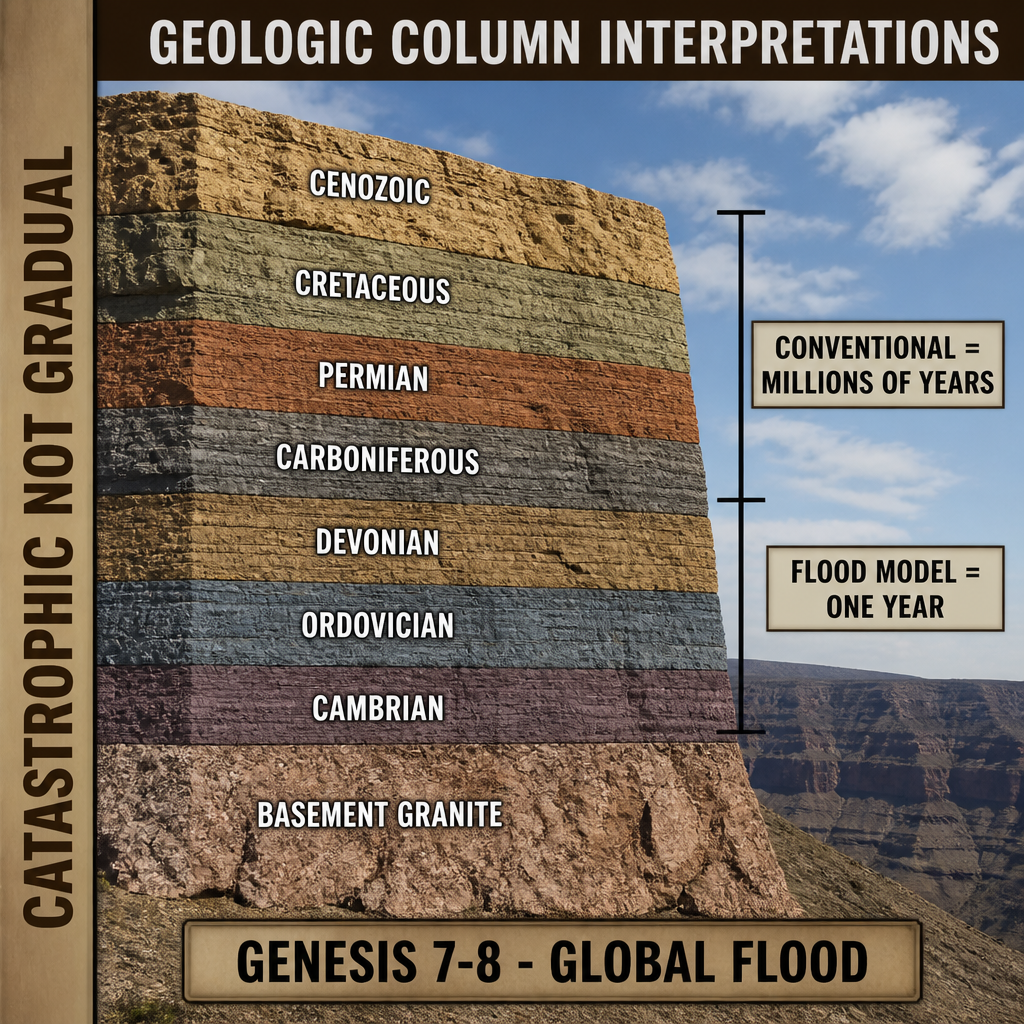
Modern geology is built on uniformitarianism—the assumption that "the present is the key to the past" and that geological processes have always occurred at the same slow rates we observe today.
But what if the evidence actually points to catastrophism—rapid, large-scale geological events?
This workbook examines:
Evidence for the global flood described in Genesis
Problems with uniformitarian assumptions
The fossil record and what it really shows
Dating method limitations
Mainstream admissions about catastrophism
Examine the evidence. Think critically. Let the rocks speak.
HOW TO USE THIS WORKBOOK
The Truth Carriers Learning Method - 6 Rs
This workbook uses the 6 Rs Learning Method for deep understanding and long-term retention:
1. RECEIVE Read the geological evidence. Study the scientific data.
2. REFLECT Complete fill-in-blanks, multiple choice, and discussion questions.
3. RECALL Close the book and write key evidences from memory.
4. RECITE Teach these scientific facts to someone else.
5. REVIEW Use the spaced review tracker. Review at Day 1, 3, 7, 21, 60.
6. RESPOND Apply this knowledge in conversations about origins.
LESSON 1: UNIFORMITARIANISM VS. CATASTROPHISM
ADULT Flood Stratigraphy
Uniformitarianism Defined
The principle that " is the key to the past."
Originated with James Hutton (1790s) and popularized by Charles in his 1830s work Principles of Geology.
THE ASSUMPTION
Geological processes have always occurred at the same slow, gradual rates we observe today—over millions and billions of years.
Catastrophism Defined
The principle that Earth's features were largely shaped by sudden, -scale catastrophic events.
The Historical Shift
Before Lyell, most geologists accepted catastrophism and the biblical flood. Lyell deliberately sought to "free the science from "—his words.
Charles Lyell (letter to George Scrope, 1830):
"I am trying to free the science from speculators... I trust I shall make my sketch of the progress of geology popular."
Modern Shift: Neo-Catastrophism
Mainstream geology now acknowledges that sudden events DID shape Earth's history—asteroid impacts, mega-floods, volcanic catastrophes.
Derek Ager (geologist, The New Catastrophism, 1993):
"The history of any one part of the earth, like the life of a soldier, consists of long periods of and short periods of terror."
Multiple Choice
1. Uniformitarianism assumes:
○ A) Catastrophic events shaped Earth ○ B) Present processes explain the past at slow rates ○ C) The flood is scientific ○ D) Rapid changes occurred
2. Charles Lyell's stated goal was to:
○ A) Prove the Bible ○ B) Free geology from Moses ○ C) Study catastrophes ○ D) Support creation science
3. Neo-catastrophism acknowledges:
○ A) Only slow processes ○ B) Sudden catastrophic events in Earth history ○ C) No major floods ○ D) Millions of years only
True or False
1. Uniformitarianism has always been the dominant view in geology. ○ True ○ False - Correction:
2. Modern mainstream geology still rejects all catastrophism. ○ True ○ False - Correction:
RECALL EXERCISE
Close this workbook. Write from memory:
Definition of uniformitarianism
Who popularized it and why
What neo-catastrophism acknowledges
TEACH-BACK CHALLENGE
Explain the difference between uniformitarianism and catastrophism to someone.
Person taught: Date:
SCRIPTURE MEMORY: 2 Peter 3:5-6
"...the world that then was, being overflowed with water, perished."
LESSON 2: THE GRAND CANYON - EVIDENCE OF CATASTROPHE
ADULT Flood Mt St Helens
The Standard Story
According to uniformitarianism, the Colorado River slowly carved the Grand Canyon over of years.
The Problems
Problem #1: Flat Layer Contacts
If millions of years passed between rock layers, we would expect significant between them. Instead, the layers lie flat against each other with minimal erosion.
Problem #2: Bent Rock Layers
Rock layers in the Grand Canyon are bent and folded without . This indicates they were still soft and pliable when bent—not hardened over millions of years.
Problem #3: Marine Fossils Throughout
The Canyon contains marine fossils at multiple levels, indicating the area was covered by repeatedly.
Problem #4: The Missing Colorado River Delta
If the river carved the Canyon over millions of years, where is all the sediment? The that should exist isn't there.
ALTERNATIVE: RAPID FORMATION
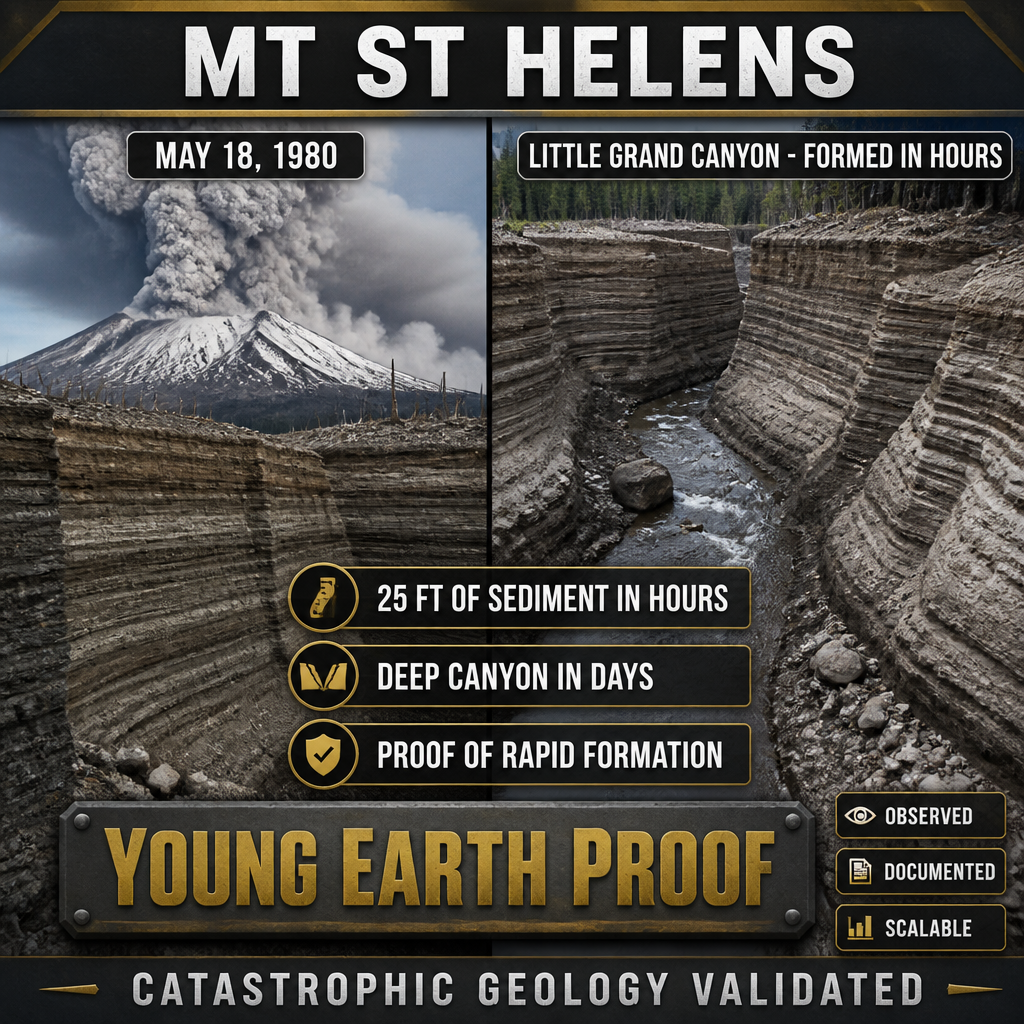
The layers could have been deposited rapidly during a global flood, then carved quickly as floodwaters receded—similar to how canyons formed after Mount St. Helens.
Multiple Choice
1. Flat contacts between rock layers suggest:
○ A) Millions of years between layers ○ B) Rapid sequential deposition ○ C) Slow erosion ○ D) Nothing significant
2. Bent rock layers without fracturing indicate:
○ A) The rock was hard when bent ○ B) The rock was soft when bent ○ C) Millions of years passed ○ D) No bending occurred
RECALL
Write four problems with the slow-formation story of the Grand Canyon.
APPLICATION
LESSON 3: MOUNT ST. HELENS - A MODERN LABORATORY
ADULT Flood Polystrate Detail
The 1980 Eruption
Mount St. Helens provided a real-time laboratory for observing rapid geological processes.
Canyon Formation
In just (hours to days), the eruption carved canyons up to 600 feet deep through solid rock—processes that uniformitarians said required millions of years.
Rapid Layer Deposition
Pyroclastic flows deposited feet of finely laminated layers in just hours. These layers look identical to "ancient" rock formations said to have taken millions of years.
Spirit Lake Log Mats
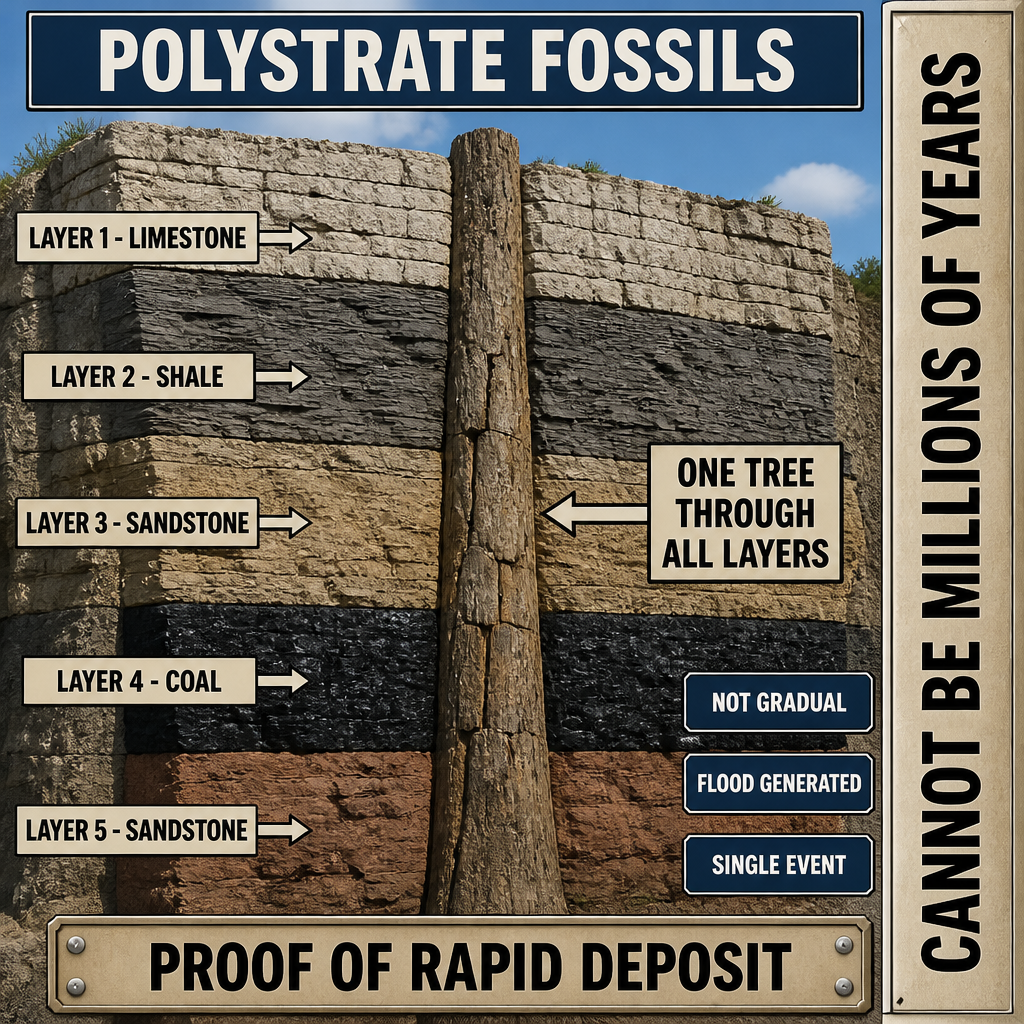
Floating log mats in Spirit Lake eventually waterlogged and sank, creating upright "forests" of buried logs—exactly like the "polystrate fossils" found in formations.
Rapid Petrification
Wood and organic material began (turning to stone) in just years, not the millions of years typically claimed necessary.
Lesson from Mount St. Helens:
"What we observed in days is what geologists have said required millions of years. The present rate is NOT always the key to the past."
Multiple Choice
1. Mount St. Helens carved 600-foot canyons in:
○ A) Millions of years ○ B) Thousands of years ○ C) Hours to days ○ D) Decades
2. The Spirit Lake log mats demonstrate how:
○ A) Trees grow underwater ○ B) Polystrate fossils can form rapidly ○ C) Slow processes work ○ D) Nothing geological
3. Petrification at Mount St. Helens began in:
○ A) Millions of years ○ B) Thousands of years ○ C) Just years ○ D) Centuries
RECALL
Write: What Mount St. Helens demonstrated about rapid canyon formation, layer deposition, and petrification.
TEACH-BACK
Explain to someone why Mount St. Helens is important evidence against uniformitarianism.
Person taught: Date:
LESSON 4: MARINE FOSSILS ON MOUNTAINTOPS
ADULT Flood Distribution
The Evidence
Marine fossils—seashells, fish, coral—are found on the highest mountains on Earth.
Location
Altitude
Fossils Found
Mount Everest (Himalayas)
29,032 ft
Ammonites, nautiloids, marine shells
Andes Mountains
Up to 22,000 ft
Brachiopods, marine fossils
Rocky Mountains
Various
Marine invertebrates
Alps
Various
Marine fossils throughout
Two Explanations
Explanation 1: Plate Tectonics (Mainstream)
The ocean floor was uplifted over of years as tectonic plates collided.
Explanation 2: Global Flood
A global flood covered the entire Earth, depositing marine fossils everywhere. Mountains rose and ocean basins sank the flood (Psalm 104:6-8).
Psalm 104:6-8
"You covered it with the deep as with a garment: the waters stood above the mountains. At your rebuke they fled... The mountains rose, the valleys sank down to the place which you did establish for them."
Key Question
Both explanations acknowledge that oceans once covered these areas. The debate is over —gradual over millions of years, or rapid during a catastrophe?
Multiple Choice
1. Marine fossils are found:
○ A) Only at sea level ○ B) On the highest mountains ○ C) Only in oceans ○ D) Nowhere significant
2. Both explanations agree that:
○ A) No water ever covered mountains ○ B) Water once covered these areas ○ C) Mountains were always dry ○ D) Fossils don't exist
RECALL
Write: Evidence for marine fossils on mountains and two explanations for them.
LESSON 5: THE FOSSIL RECORD - RAPID BURIAL
What Fossilization Requires
For a creature to become a fossil, it must be:
Buried rapidly - before or scavengers destroy it
Buried deeply - under significant sediment
Mineralized - minerals replace organic material
Mass Fossil Graveyards
Around the world, we find mass graveyards of fossilized animals—jumbled together, often in contorted positions suggesting violent, death and burial.
Location
What's Found
Implication
Dinosaur National Monument (USA)
Jumbled dinosaur bones
Rapid burial event
Ashfall Fossil Beds (Nebraska)
Complete rhinos in death poses
Catastrophic burial
Chile Whale Graveyard
Multiple whale skeletons
Rapid mass death
Mazon Creek (Illinois)
Mixed marine/land species
Catastrophic mixing
Polystrate Fossils
"Polystrate" fossils are trees or organisms that pass through rock layers—layers supposedly separated by millions of years.
These fossils prove the layers were deposited , not over vast ages.
Fossils Showing Rapid Burial
Fish fossilized in the act of other fish
Ichthyosaurs fossilized while giving birth
Creatures with soft tissue preserved
Multiple Choice
1. Fossilization requires:
○ A) Slow burial over time ○ B) Rapid burial ○ C) No burial ○ D) Only water
2. Polystrate fossils prove:
○ A) Slow deposition over millions of years ○ B) Rapid deposition of multiple layers ○ C) Nothing significant ○ D) Evolution
3. Fish fossilized eating other fish show:
○ A) Slow processes ○ B) Instant catastrophic burial ○ C) Normal death ○ D) No burial
RECALL
Write: Requirements for fossilization. What polystrate fossils prove.
APPLICATION
LESSON 6: DINOSAUR SOFT TISSUE - A YOUNG EARTH?
Mary Schweitzer's Discovery (2005)
Paleontologist Mary Schweitzer discovered tissue in a T-rex femur supposedly 68 million years old.
Mary Schweitzer:
"It was exactly like looking at a slice of modern bone."
What Was Found
Blood vessels still
Red blood cells
Connective tissue
Collagen protein
The Problem
All known chemistry indicates that soft tissue, proteins, and DNA cannot survive for of years—even under ideal conditions.
Subsequent Discoveries
Since 2005, soft tissue has been found in multiple dinosaur specimens:
Hadrosaur specimens
Triceratops horns
Multiple T-rex specimens
Carbon-14 in Dinosaur Bones
Carbon-14 has a half-life of ~5,730 years. After ~100,000 years, it should be completely .
Yet C-14 has been detected in dinosaur bones—bones supposedly 65+ million years old.
THE QUESTION
If dinosaurs really died 65+ million years ago, how do soft tissue and C-14 still exist?
These findings are consistent with dinosaurs dying thousands, not millions, of years ago—during the global flood.
Multiple Choice
1. Mary Schweitzer found in dinosaur bones:
○ A) Only mineralized fossils ○ B) Soft tissue and blood vessels ○ C) Nothing unusual ○ D) Only bones
2. Carbon-14 should be completely gone after:
○ A) 1,000 years ○ B) ~100,000 years ○ C) 1 million years ○ D) Never
3. Finding C-14 in dinosaur bones suggests:
○ A) They are billions of years old ○ B) They are much younger than claimed ○ C) Nothing significant ○ D) Dinosaurs never existed
RECALL
Write: What Mary Schweitzer found. Why soft tissue and C-14 are problems for millions of years.
TEACH-BACK
Explain the dinosaur soft tissue discovery and its implications to someone.
Person taught: Date:
LESSON 7: PROBLEMS WITH RADIOMETRIC DATING
Three Critical Assumptions
All radiometric dating methods rely on three assumptions:
Initial Conditions Known: We must know how much parent/daughter isotope was present at the .
Closed System: No parent or daughter isotope has been added or over time.
Constant Decay Rate: The decay rate has remained throughout history.
Documented Dating Failures
Sample
Known Age
Radiometric Date
Mount St. Helens rocks (1980 eruption)
~10 years
2.8 million years
Living mollusk shells
Living
2,300 years old
Hawaiian lava (1801 eruption)
~200 years
1.4-22 million years
The RATE Project
The RATE (Radioisotopes and the Age of The Earth) project found:
Helium Diffusion: Helium in zircons indicates an age of ~ years, not billions
Radiohalos: Evidence of rapid radioactive decay
Carbon-14: Found in diamonds and coal supposedly millions of years old
KEY POINT
Radiometric dating is not as reliable as often presented. When the assumptions are wrong, the dates are wrong.
Multiple Choice
1. Radiometric dating assumes:
○ A) Only one assumption ○ B) Three critical assumptions ○ C) No assumptions ○ D) Four assumptions
2. Mount St. Helens rocks (10 years old) dated at:
○ A) 10 years ○ B) 1,000 years ○ C) 2.8 million years ○ D) 10 million years
RECALL
Write the three assumptions of radiometric dating and one documented dating failure.
LESSON 8: THE HYDROPLATE THEORY
Overview
Developed by Dr. Walt Brown, the Hydroplate Theory proposes a mechanism for the global flood.
Pre-Flood Earth
The theory proposes that before the flood, there was a layer of subterranean trapped beneath a granite crust—approximately 10 miles deep.
The Rupture
When the crust ruptured along what is now the mid-oceanic ridges, this water erupted violently, causing:
Global flooding
Rapid continental movement (hydroplates sliding)
Mountain formation through plate
Ocean trench formation
Evidence Cited
Mid-Atlantic Ridge runs 40,000+ miles around the globe
Ocean trenches at the leading edges of continents
Mountains concentrated in specific zones
Undersea found throughout the ocean floors
Genesis 7:11
"...the same day were all the fountains of the great deep broken up, and the windows of heaven were opened."
Multiple Choice
1. The Hydroplate Theory proposes:
○ A) Slow continental drift ○ B) Subterranean water causing rapid flood ○ C) No flood occurred ○ D) Local flooding only
2. "Fountains of the great deep" refers to:
○ A) Rain only ○ B) Subterranean water sources ○ C) Rivers ○ D) Lakes
RECALL
Write: Basic premise of the Hydroplate Theory and what "fountains of the great deep" might mean.
LESSON 9: THE POST-FLOOD ICE AGE
Conditions Needed for an Ice Age
An ice age requires two seemingly contradictory conditions:
Warm oceans - to evaporate massive amounts of water
Cool continents - for snow to accumulate without melting
The Flood Model Explanation
After a global flood:
Oceans would be from volcanic activity and water from the "great deep"
Volcanic ash in the atmosphere would block sunlight, the continents
Massive evaporation would produce extreme snowfall
Evidence: Flash-Frozen Mammoths
Woolly mammoths have been found in Siberia with:
Undigested in their stomachs
Fresh meat preserved
Evidence of extremely rapid freezing (estimated <10 hours)
This suggests a sudden, catastrophic climate change—not gradual cooling over thousands of years.
Post-Flood Ice Age Duration
Creation models estimate the ice age lasted approximately -700 years after the flood—not millions of years.
Multiple Choice
1. An ice age requires:
○ A) Cold oceans only ○ B) Warm oceans and cool continents ○ C) No water ○ D) Hot continents
2. Flash-frozen mammoths suggest:
○ A) Gradual climate change ○ B) Sudden catastrophic freezing ○ C) No climate change ○ D) Warm conditions
RECALL
Write: How a global flood could cause an ice age. Evidence from flash-frozen mammoths.
LESSON 10: SEDIMENTARY ROCK COVERAGE
The Facts
Approximately % of Earth's continental surfaces are covered by sedimentary rock.
Sedimentary rock forms from sediment deposited by .
Global Sedimentary Layers
The same sedimentary formations are found across multiple continents:
Coconino Sandstone (North America)
Similar formations in Europe, Africa, Australia
Marine fossils in layers on every continent
What This Indicates
The worldwide distribution of sedimentary rock suggests a event—not localized flooding over millions of years.
THE PATTERN
If the flood described in Genesis was real and global:
We would expect sedimentary rock everywhere - we find it
We would expect marine fossils worldwide - we find them
We would expect similar layers across continents - we find them
Multiple Choice
1. Approximately what percentage of continents are covered by sedimentary rock?
○ A) 10% ○ B) 25% ○ C) 50% ○ D) 73%+
2. Similar sedimentary layers across continents suggest:
○ A) Local floods only ○ B) A global water event ○ C) No flooding ever ○ D) Nothing significant
RECALL
Write: How much of Earth is covered by sedimentary rock. What this indicates about Earth's history.
LESSON 11: MAINSTREAM ADMISSIONS
Quotes from Secular Scientists
Derek Ager (geologist, 1993):
"Catastrophism is back in ."
Stephen Jay Gould (Harvard, 1984):
"Uniformitarianism... has been stretched to the ."
David Raup (University of Chicago):
"A large number of well-trained scientists outside of evolutionary biology... have unfortunately gotten the idea that the fossil record is far more than it is."
If catastrophes are now accepted as shaping Earth's features, why is the flood—the largest recorded catastrophe—still rejected?
Multiple Choice
1. Derek Ager acknowledged that:
○ A) Uniformitarianism is proven ○ B) Catastrophism is back in vogue ○ C) No catastrophes occurred ○ D) Slow processes only
2. Neo-catastrophism accepts:
○ A) Only slow processes ○ B) Rapid catastrophic events in Earth history ○ C) No major events ○ D) Millions of years only
RECALL
Write: Two quotes from secular scientists admitting problems with uniformitarianism.
TEACH-BACK
Share with someone what mainstream scientists now admit about catastrophism.
Person taught: Date:
LESSON 12: THE BIBLICAL ACCOUNT
Genesis 6-8 Summary
The flood account describes:
Duration: 40 days of rain + months of flooding = approximately year total
Extent: Covered all the mountains
Purpose: Judgment on a world filled with violence and corruption
Salvation: Noah, his family, and representatives of all animals
Genesis 7:19-20
"And the waters prevailed exceedingly upon the earth; and all the high hills, that were under the whole heaven, were covered. Fifteen cubits upward did the waters prevail; and the mountains were covered."
Worldwide Flood Traditions
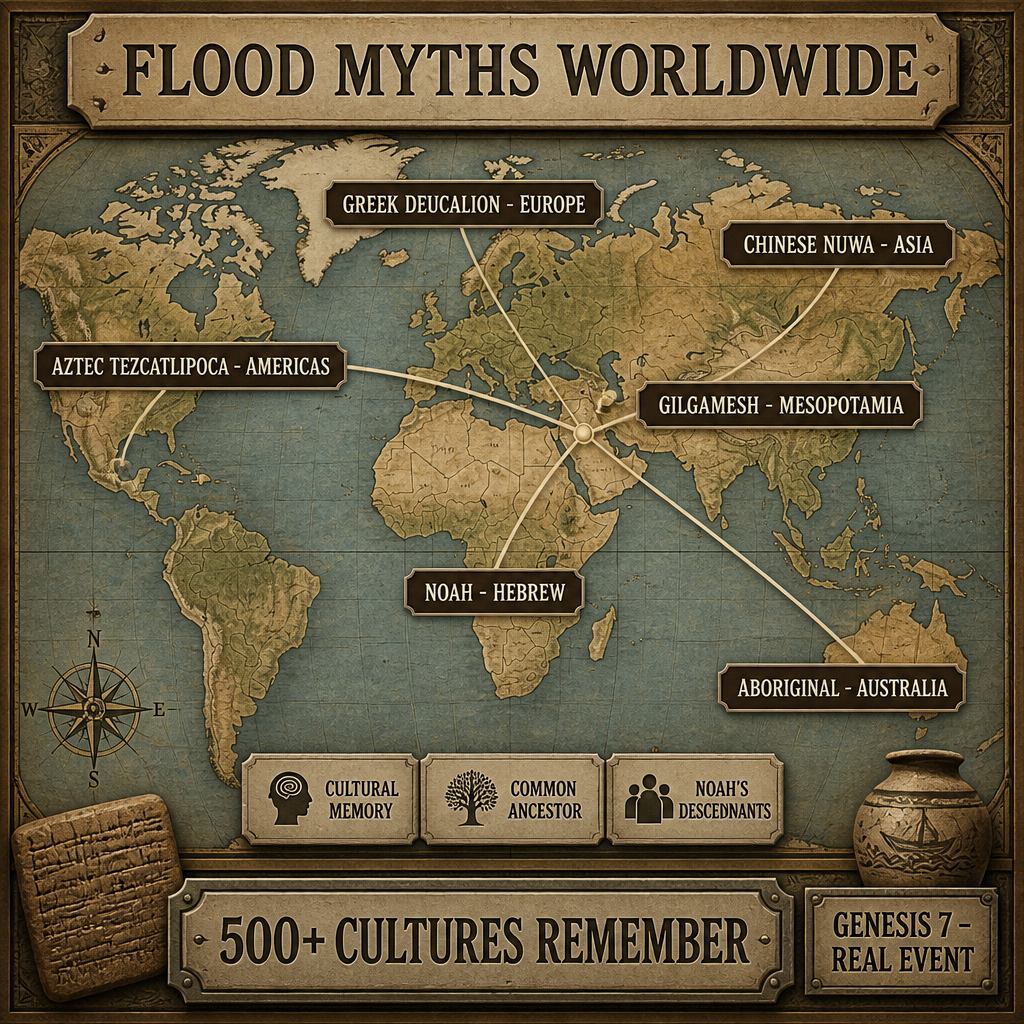
Over ancient cultures worldwide have flood traditions—from China to Native America to Mesopotamia to India.
Common elements include:
Global destruction by water
A righteous man warned beforehand
A vessel for survival
Animals saved
Landing on a mountain
Yahusha's Testimony
Matthew 24:37-39
"But as the days of Noah were, so shall also the coming of the Son of man be. For as in the days that were before the flood they were eating and drinking, marrying and giving in marriage, until the day that Noah entered into the ark, and knew not until the flood came, and took them all away..."
Yahusha spoke of the flood as a historical event—not a myth or allegory.
Multiple Choice
1. The Genesis flood lasted approximately:
○ A) 40 days ○ B) 6 months ○ C) 1 year ○ D) 10 years
2. Approximately how many cultures have flood traditions?
○ A) 5 ○ B) 25 ○ C) 100 ○ D) 200+
3. Yahusha spoke of Noah's flood as:
○ A) A myth ○ B) An allegory ○ C) A real historical event ○ D) A local flood
RECALL
Write: Duration and extent of the biblical flood. Common elements in worldwide flood traditions.
SCRIPTURE MEMORY: Genesis 7:19
"And the waters prevailed exceedingly upon the earth; and all the high hills, that were under the whole heaven, were covered."
APPLICATION
SPACED REVIEW TRACKER
Instructions: After completing each lesson, review at these intervals for long-term retention.
Lesson
Done
Day 1
Day 3
Day 7
Day 21
Day 60
1. Uniformitarianism vs. Catastrophism
___
☐
☐
☐
☐
☐
2. Grand Canyon Evidence
___
☐
☐
☐
☐
☐
3. Mount St. Helens
___
☐
☐
☐
☐
☐
4. Marine Fossils on Mountains
___
☐
☐
☐
☐
☐
5. Fossil Record
___
☐
☐
☐
☐
☐
6. Dinosaur Soft Tissue
___
☐
☐
☐
☐
☐
7. Radiometric Dating Problems
___
☐
☐
☐
☐
☐
8. Hydroplate Theory
___
☐
☐
☐
☐
☐
9. Post-Flood Ice Age
___
☐
☐
☐
☐
☐
10. Sedimentary Rock Coverage
___
☐
☐
☐
☐
☐
11. Mainstream Admissions
___
☐
☐
☐
☐
☐
12. Biblical Account
___
☐
☐
☐
☐
☐
"The world that then was, being overflowed with water, perished." - 2 Peter 3:6