TRUTH CARRIERS EDUCATION SYSTEM Torah Foundations Series - Adult/Teen Level (Ages 14+)
ABOUT THIS WORKBOOK
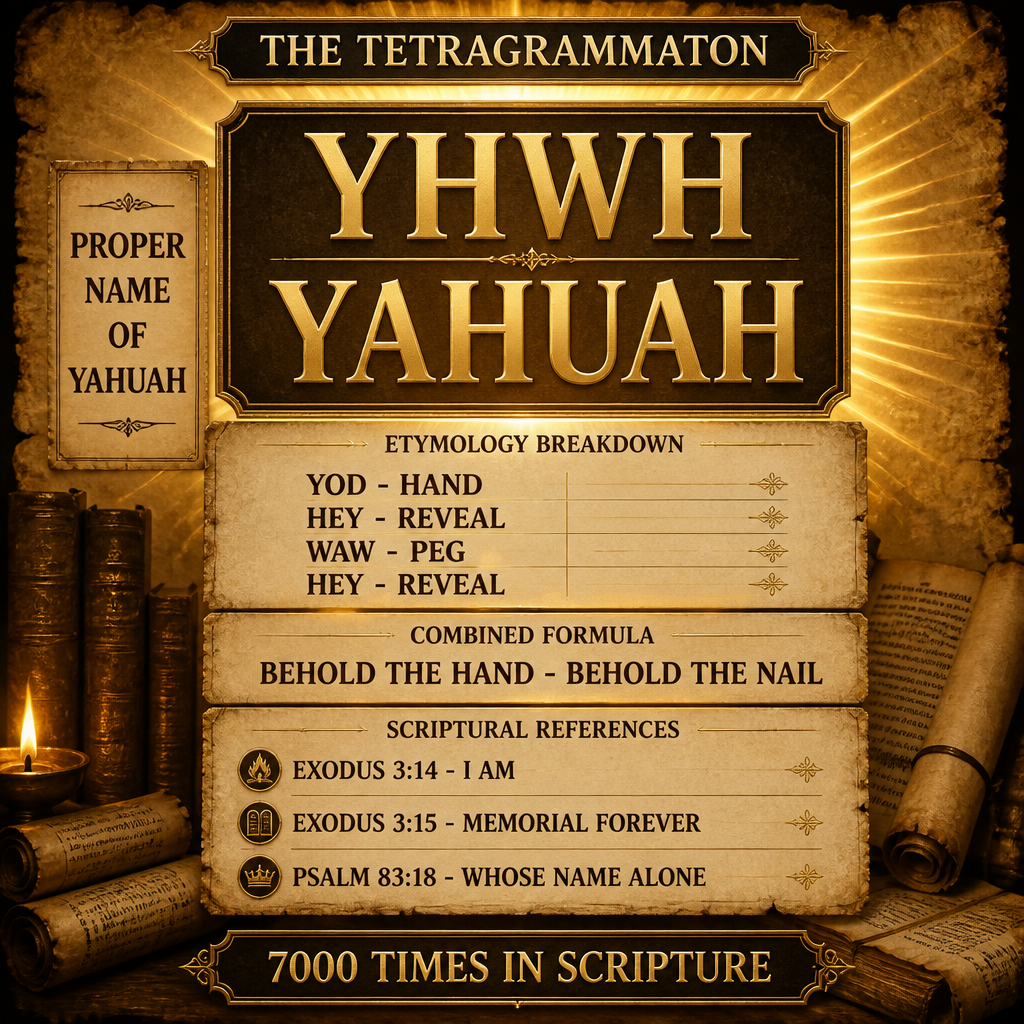
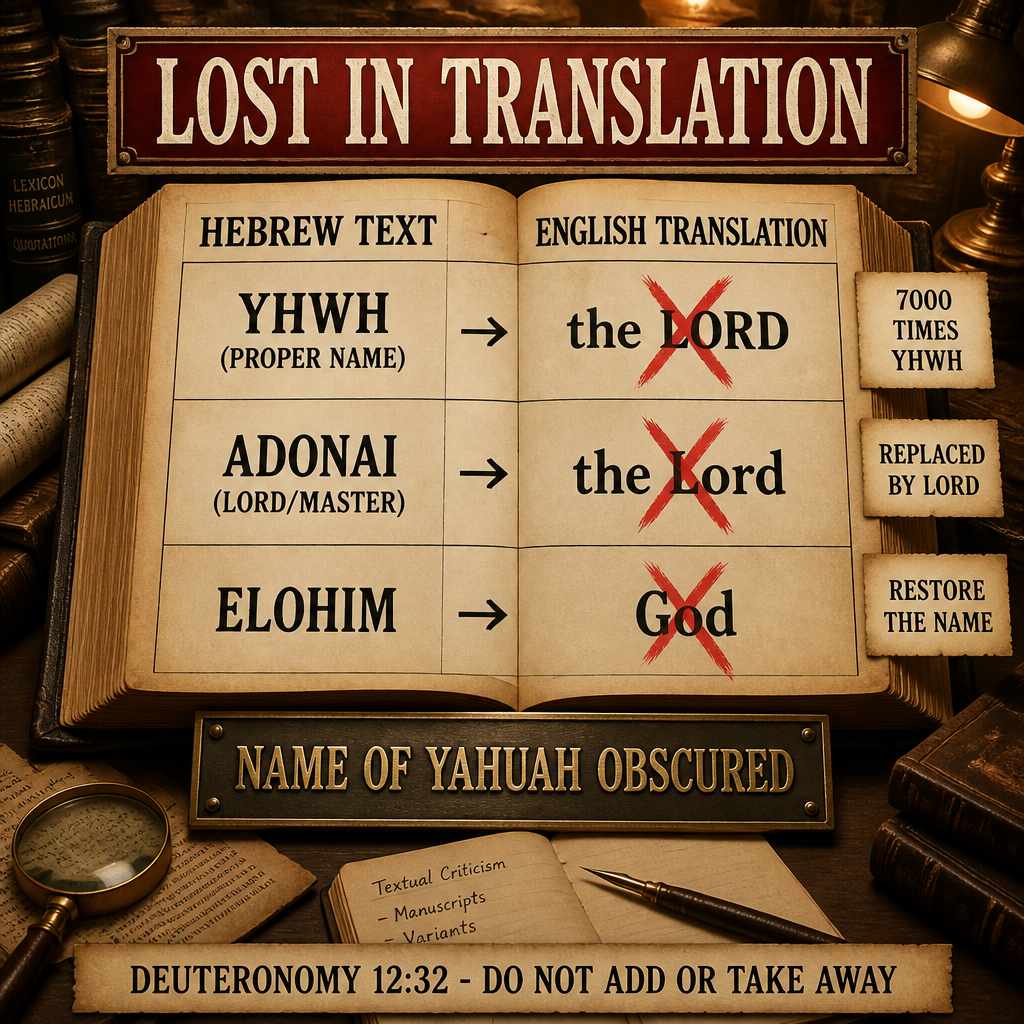
The divine name YHWH (יהוה) appears 6,828 times in the Hebrew Scriptures—the most frequently occurring name for Elohim. Yet most English translations replace it with "LORD."
This workbook examines:
The linguistic and historical evidence for the sacred names
How YHWH became "Yahweh," "Yahuah," or "Jehovah"
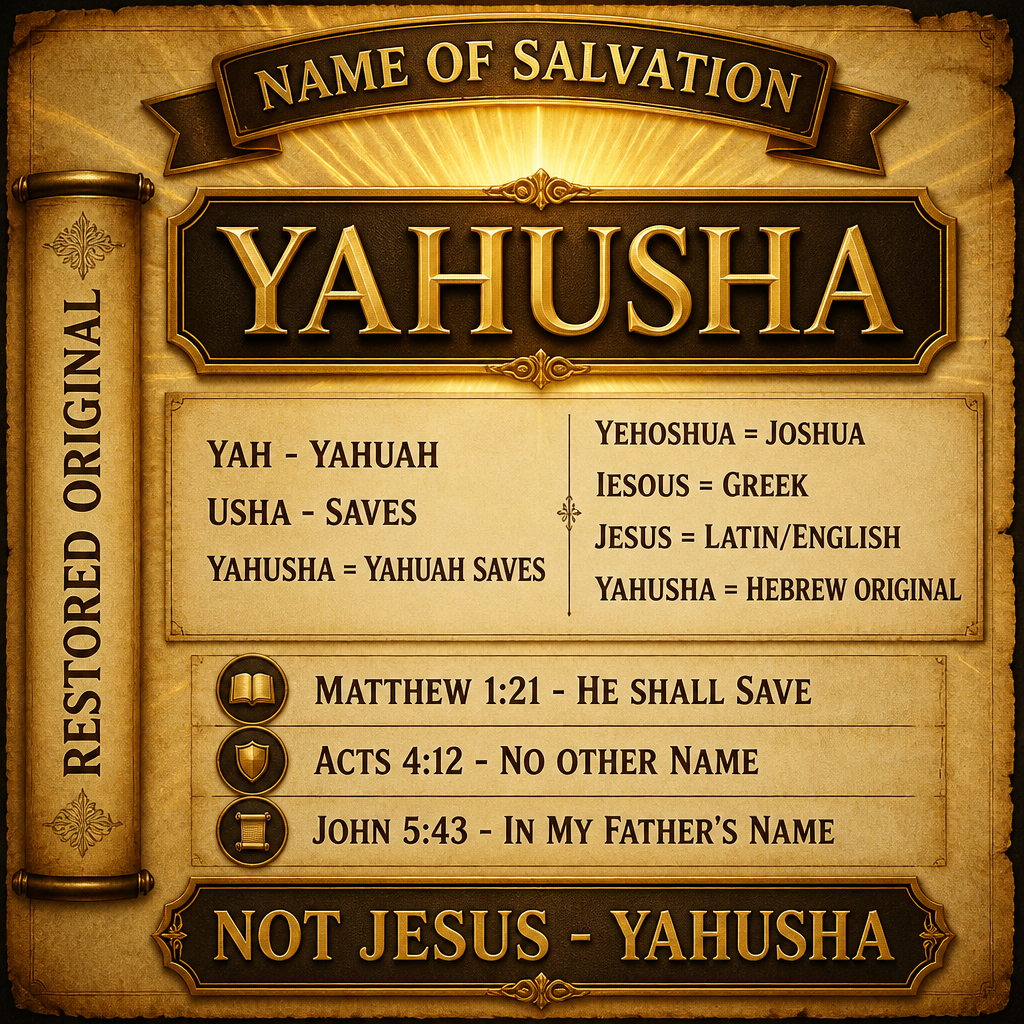
How Yeshua became "Jesus" (and why it matters—or doesn't)
Lesson 2: Pronunciation Evidence (Yahweh vs. Yahuah)
Lesson 3: History of Name Substitution
Lesson 4: The Name of the Son (Yeshua/Jesus)
Lesson 5: Scripture References on the Name
Lesson 6: Theophoric Names (127+ Examples)
Lesson 7: Objections Answered
Lesson 8: Pagan Origin Claims—DEBUNKED
KEY TERMS
Hebrew/Greek
English
Meaning
יהוה (YHWH)
The Tetragrammaton
Four-letter divine name
אֶהְיֶה (Ehyeh)
I AM
"I am" or "I will be"
אֲדֹנָי (Adonai)
Lord/Master
Jewish substitute for YHWH
יֵשׁוּעַ (Yeshua)
Salvation
"YHWH saves"
Ἰησοῦς (Iēsous)
Jesus (Greek)
Greek form of Yeshua
HOW TO USE THIS WORKBOOK
The Truth Carriers Learning Method — 6 Rs
This workbook uses the 6 Rs Learning Method designed for deep understanding and long-term retention:
1. RECEIVE Read the teaching content carefully. Take notes. Look up Scripture references.
2. REFLECT Complete multiple choice, true/false, fill-in-blanks, and discussion questions.
3. RECALL Close the book and write everything you remember. Check what you missed.
4. RECITE Teach what you learned to someone else. Teaching deepens understanding.
5. REVIEW Use the spaced review tracker. Review at Day 1, 3, 7, 21, and 60.
6. RESPOND Apply what you learned. Do something with this knowledge this week.
LESSON 1: THE TETRAGRAMMATON (YHWH)
ADULT SN Tetragrammaton
Scripture Reading
Exodus 3:14-15
"Elohim said to Moses, 'I AM WHO I AM.' This is what you are to say to the Israelites: I AM has sent me to you. YHWH, the Elohim of your fathers—the Elohim of Abraham, Isaac and Jacob—has sent me to you. This is my name forever, the name you shall call me from generation to generation."
Core Teaching
The Four Hebrew Letters
The Tetragrammaton (Greek: "four letters") consists of four Hebrew consonants written right-to-left:
Hebrew
Letter Name
Sound
י
Yod
Y
ה
Hey
H (breath)
ו
Waw (Vav)
W/V
ה
Hey
H (repeated)
The Name:יהוה (YHWH) appears 6,828 times in the Hebrew Bible.
The Meaning of YHWH
When Moses asked Elohim's name, He answered: אֶהְיֶה אֲשֶׁר אֶהְיֶה (Ehyeh Asher Ehyeh) = "I AM WHO I AM"
Hebrew root: היה (hayah) = "to be"
YHWH is the third-person form: "He is" or "He will be"
Fill-in-the-Blank Questions
1. The Tetragrammaton consists of Hebrew letters.
2. YHWH appears times in the Hebrew Bible.
3. YHWH is connected to the Hebrew root , meaning "to be."
4. In Exodus 3:14, Elohim says "I WHO I AM."
5. Exodus 3:15 says "This is my name ."
Discussion Questions
1. Why did Elohim reveal His name to Moses at this specific moment?
2. What does "I AM WHO I AM" tell us about Elohim's character?
Multiple Choice
1. How many letters are in the Tetragrammaton?
○ A) 3 ○ B) 4 ○ C) 5 ○ D) 6
2. YHWH appears approximately how many times in Scripture?
○ A) 1,000 ○ B) 3,500 ○ C) 6,828 ○ D) 10,000
3. "Ehyeh Asher Ehyeh" means:
○ A) Lord of Lords ○ B) I AM WHO I AM ○ C) King of Kings ○ D) The Almighty
True or False
1. The Tetragrammaton has 5 Hebrew letters. ○ True ○ False — Correction:
2. Exodus 3:15 says the Name is "forever." ○ True ○ False — Correction:
RECALL EXERCISE
Close this workbook. Write: The 4 Hebrew letters. How many times YHWH appears. What "Ehyeh Asher Ehyeh" means.
TEACH-BACK CHALLENGE
Explain the Tetragrammaton to someone who has never heard of it.
Person: Date:
Question:
SCRIPTURE MEMORY: Exodus 3:15
"This is my name forever, the name you shall call me from generation to generation."
Write:
APPLICATION STEP
What I did:
LESSON 2: PRONUNCIATION EVIDENCE
ADULT SN Yahusha Etymology
Core Teaching
The Challenge
Ancient Hebrew was written with consonants only—no vowels! The pronunciation was passed down orally until eventually lost.
Two Main Candidates:
"Yahweh" — Scholarly consensus
"Yahuah" — Alternative based on theophoric names
Evidence Supporting "Yahuah"
Theophoric Name Suffixes: Biblical names show the suffix -yahu (יָהוּ):
Eliyahu = "My God is Yahu"
Yeshayahu = "Yahu is salvation"
Zechariyahu = "Yahu remembers"
Evidence Supporting "Yahweh"
Samaritan Tradition: Church fathers report Samaritans pronounced it as Ἰαβε (Iabe/Yabe) = "Yahweh"
Modern Scholarly Consensus: Favors "Yahweh" based on Greek transliterations.
Why "Jehovah" Is Wrong
"Jehovah" is a hybrid mistake—combining YHWH consonants with Adonai vowels. First appeared c. 1100 CE.
Fill-in-the-Blank Questions
1. The Masoretes developed vowel points in the -10th centuries CE.
2. Theophoric names show the suffix .
3. The scholarly consensus favors as the pronunciation.
4. "Jehovah" is a form created by mistake.
True or False
1. Ancient Hebrew had vowel points like modern Hebrew.
2. Theophoric names preserve syllables of YHWH.
3. "Jehovah" was the original pronunciation.
4. Modern scholars favor "Yahweh" as most probable.
Multiple Choice
1. The suffix "-yahu" in names like Eliyahu supports which pronunciation?
○ A) Jehovah ○ B) Yahuah ○ C) LORD ○ D) Adonai
2. The scholarly consensus favors:
○ A) Jehovah ○ B) Yahuah ○ C) Yahweh ○ D) LORD
3. "Jehovah" first appeared around:
○ A) 500 BCE ○ B) 33 AD ○ C) 1100 CE ○ D) 1930
True or False (6Rs)
1. We can be 100% certain of the original pronunciation. ○ True ○ False — Correction:
2. The short form "Yah" is virtually certain. ○ True ○ False — Correction:
RECALL EXERCISE
Close this workbook. Write: Evidence for Yahweh. Evidence for Yahuah. Why Jehovah is wrong.
TEACH-BACK CHALLENGE
Explain the pronunciation debate to someone.
Person: Date:
SCRIPTURE MEMORY: Psalm 83:18
"That they may know that You, whose name alone is YHWH, are the Most High over all the earth."
APPLICATION STEP
What I did:
LESSON 3: HISTORY OF NAME SUBSTITUTION
ADULT SN Lord Substitution
Jeremiah 23:27 "They think... my people will forget my name, just as their ancestors forgot my name through Baal."
Core Teaching
Timeline: Jews largely stopped pronouncing YHWH by the 3rd century BCE. The High Priest continued on Yom Kippur until 70 CE.