Welcome to Biblical Self-Sufficiency
Scripture records humanity's original calling: "The LORD God took the man and put him in the Garden of Eden to work it and take care of it" (Genesis 2:15). This workbook equips you with practical knowledge to pursue self-sufficiency while grounding every skill in biblical wisdom. Whether you have a quarter-acre suburban lot or a rural homestead, these fundamentals will help your family grow food, develop essential skills, and steward Yahuah's creation faithfully.
The 6Rs Learning Framework
Lesson 1: Biblical Foundation for Self-Sufficiency
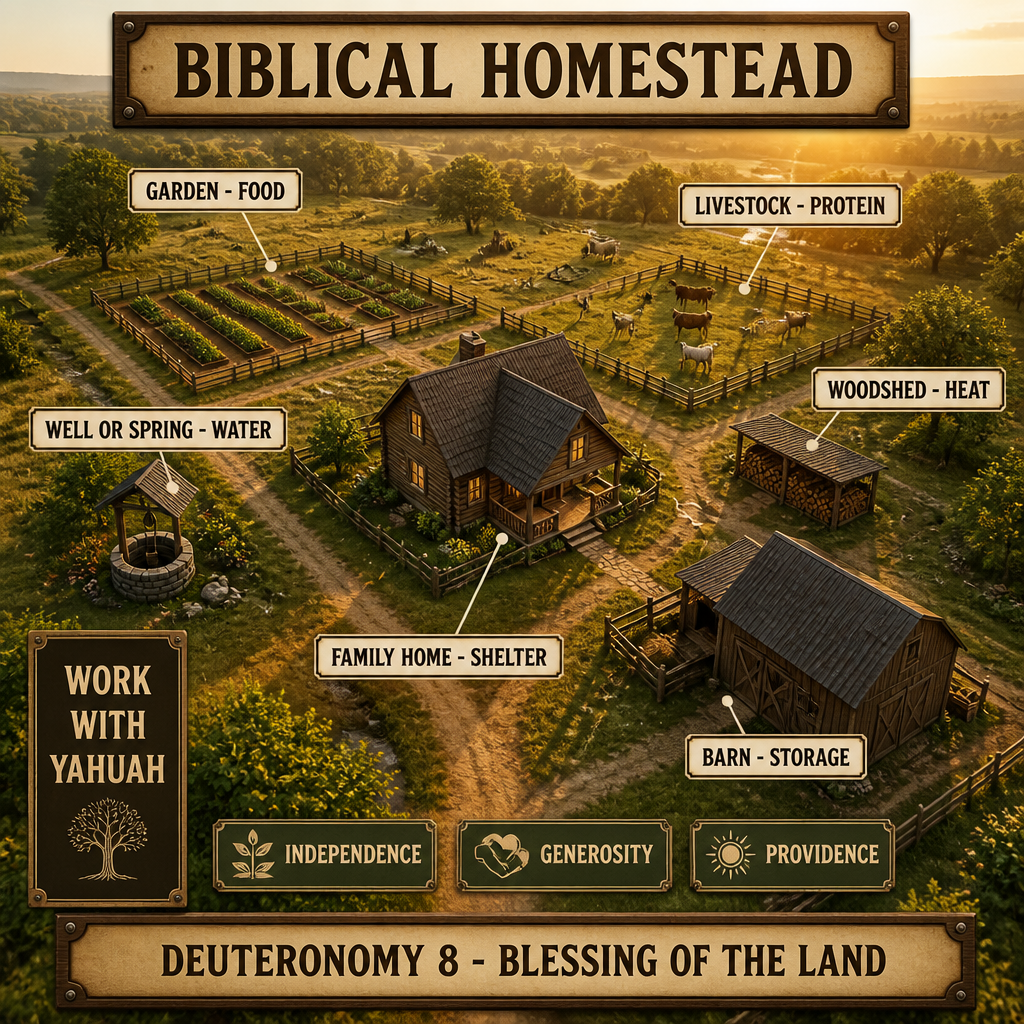
ADULT SelfSuf Homestead
Understanding Work as Worship and Stewardship as Sacred Calling
RECEIVE: The Biblical Mandate
Many people mistakenly believe that work is part of the curse from the Fall. However, Scripture reveals that work was part of Yahuah's original good design for humanity. Genesis 2:15 places Adam in the garden "to work it and take care of it" before sin enters the world. The Hebrew word abad means "to serve/cultivate," and shamar means "to guard/protect"—the same word used in "The LORD bless you and keep you." The curse affected work's difficulty, not its existence.
"Whatever you do, work at it with all your heart, as working for the Lord, not for human masters, since you know that you will receive an inheritance from the Lord as a reward. It is the Lord Christ you are serving."
This transforms every homestead task into worship. Feeding chickens, weeding gardens, and preserving harvests become acts of service to Yahusha Himself. Ecclesiastes 3:13 promises that finding "satisfaction in all their toil—this is the gift of God." The ache of tired muscles after honest labor carries divine blessing.
Proverbs 12:10 connects righteousness to animal care: "The righteous care for the needs of their animals." How we treat creatures under our care reflects our character and honors the Creator. Leviticus 25:2-7 commands land Sabbaths—letting fields lie fallow every seventh year, a principle that applies today through crop rotation, soil conservation, and composting.
REFLECT: Personal Application
Consider These Questions
- How does understanding work as worship change your perspective on daily chores?
- In what ways might your family already be practicing stewardship of Yahuah's creation?
- What does it mean to have "dominion" that mirrors how Yahuah would rule?
RECALL: Fill in the Blanks
RECITE: Memory Verse
Memorize This Week
"Whatever you do, work at it with all your heart, as working for the Lord, not for human masters."
— Colossians 3:23
REVIEW: Multiple Choice & True/False
1. Work was introduced to humanity as:
2. The Hebrew word radah (dominion) means:
3. The curse from the Fall created work; it did not exist before.
4. Leviticus 25:2-7 commands land Sabbaths where fields lie fallow every seventh year.
RESPOND: Practical Application
This Week's Activity
Self-Assessment: Create a list of daily tasks you perform. Beside each, write how this task could be viewed as "working for the Lord." Choose one mundane task this week and consciously offer it as worship while you complete it. Journal about how this perspective shift affects your attitude.
Lesson 2: Gardening Fundamentals
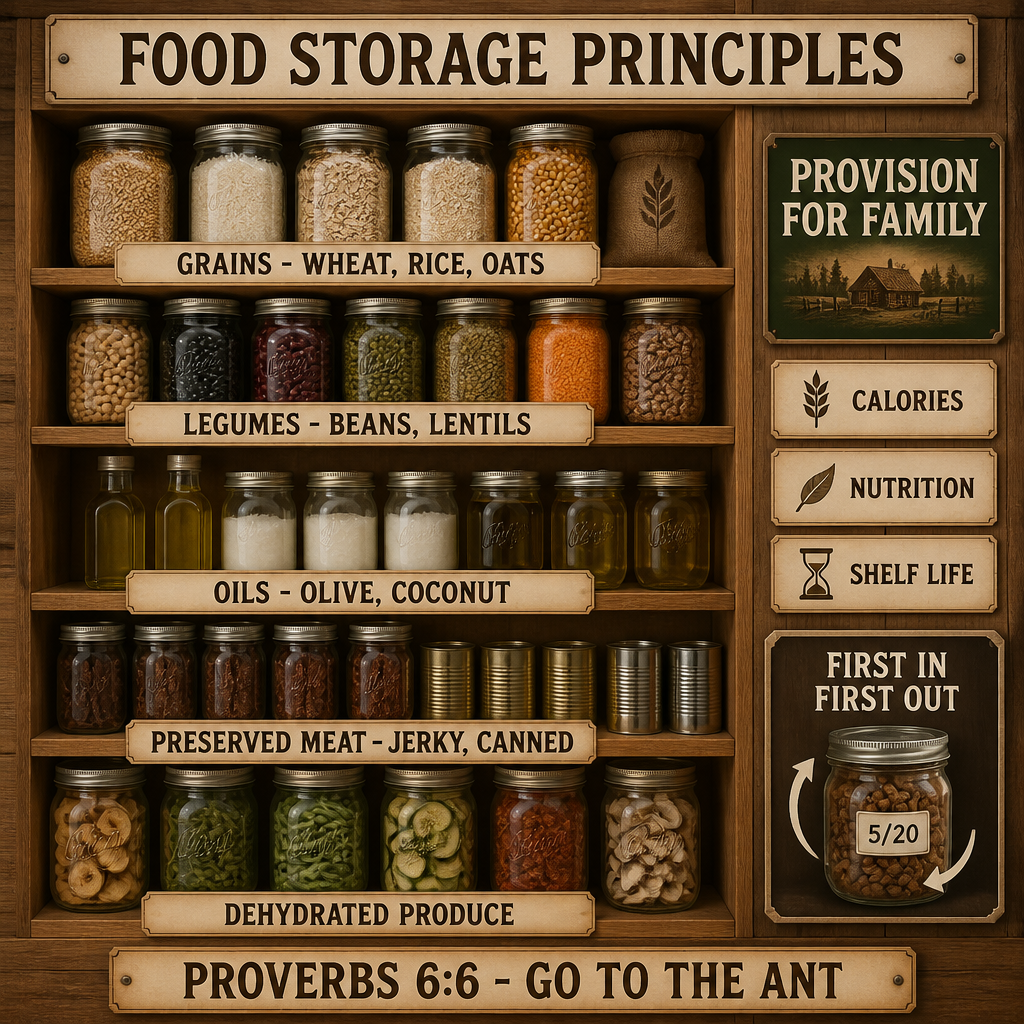
ADULT SelfSuf Food Storage
Sunlight, Soil, and Strategy for Your First Garden
RECEIVE: Starting Your First Garden
The foundation of any homestead begins in the garden. Most vegetables require 6-8 hours of direct sunlight daily, though leafy greens like lettuce and spinach can tolerate 4-6 hours. Choose a location near a water source (vegetables need approximately 1 inch of water weekly), away from black walnut trees whose roots release chemicals harmful to vegetables, and in well-drained soil where water doesn't puddle after rain.
Container gardening works excellently for apartment dwellers, though you'll need at least 12-inch pots for lettuce and 5-gallon containers for tomatoes.
Understanding Seed Types
Heirloom seeds are open-pollinated varieties at least 50 years old, passed down through generations. They "breed true"—offspring are identical to the parent plant—making them ideal for seed saving.
Hybrid seeds (F1) result from controlled crosses between two parent varieties, bred for specific traits like disease resistance or higher yields. Seeds from hybrids won't breed true; offspring revert unpredictably to parent characteristics.
GMO seeds are created through genetic engineering in laboratories and are not available to home gardeners—they're sold only to commercial farms.
REFLECT: Personal Application
Consider These Questions
- What space do you have available for gardening (yard, patio, windowsill)?
- Which location gets the most sunlight throughout the day?
- How does growing your own food connect to biblical stewardship?
RECALL: Fill in the Blanks
RECITE: Memory Verse
Memorize This Week
"The LORD God took the man and put him in the Garden of Eden to work it and take care of it."
— Genesis 2:15
REVIEW: Multiple Choice & True/False
1. Which type of seed should you choose for long-term seed saving?
2. Why should you avoid planting vegetables near black walnut trees?
3. Leafy greens like lettuce require more sunlight than tomatoes.
4. Raised beds offer better drainage and easier weed control than in-ground gardens.
RESPOND: Practical Application
This Week's Activity
Site Survey: Walk your property and identify potential garden locations. Note: (1) Hours of sunlight throughout the day, (2) Proximity to water source, (3) Drainage—does water puddle after rain? (4) Distance from large trees. Draw a simple map and choose your best location.
Lesson 3: Beginner Vegetables and Companion Planting
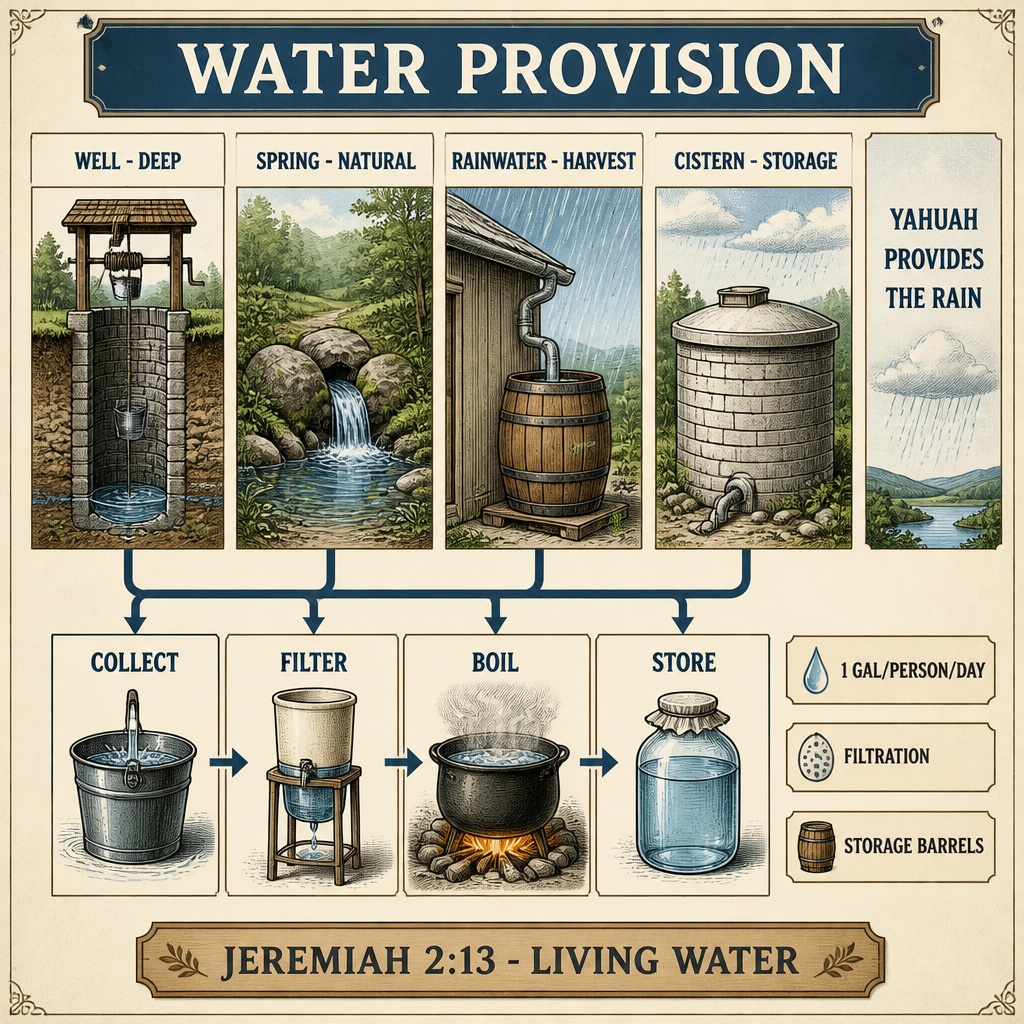
ADULT SelfSuf Water
Easy Crops That Forgive Mistakes and Plant Partnerships
RECEIVE: Twelve Forgiving Vegetables
New gardeners should start with crops that offer the best success rates and forgive beginner mistakes. These vegetables provide reliable harvests even when growing conditions aren't perfect.
| Vegetable | Why It's Easy | Days to Harvest |
|---|---|---|
| Lettuce | Fast-growing, cut-and-come-again, tolerates shade | 30-45 |
| Radishes | Fastest harvest, few pests, perfect for children | 24-35 |
| Green Beans | High germination, prolific producers | 50-65 |
| Zucchini | One plant feeds a family | 45-55 |
| Tomatoes | America's favorite; dramatic flavor improvement | 60-85 |
| Peas | Cold-tolerant, improve soil with nitrogen | 55-70 |
| Garlic | Plant in fall, virtually maintenance-free | 8-9 months |
| Kale | Extremely nutritious, sweetens after frost | 55-75 |
Companion Planting: Nature's Partnership
Companion planting means growing different plants together for mutual benefit. The Three Sisters—corn, beans, and squash planted together—represents the most famous example: corn provides a structure for beans to climb, beans fix nitrogen in the soil that feeds the corn, and squash leaves shade the ground to suppress weeds.
- Tomatoes + Basil: Basil repels aphids, hornworms, and whiteflies
- Carrots + Onions: Each repels the other's primary pest
- Marigolds + Any vegetable: Repel aphids, nematodes, and whiteflies while attracting beneficial insects
REFLECT: Personal Application
Consider These Questions
- Which vegetables does your family eat most often that could be grown at home?
- How does the "Three Sisters" method reflect Yahuah's design for interdependence?
- What companion planting combinations would work best for your planned garden?
RECALL: Fill in the Blanks
RECITE: Memory Verse
Memorize This Week
"The wise store up choice food and olive oil, but fools gulp theirs down."
— Proverbs 21:20
REVIEW: Multiple Choice & True/False
1. In the Three Sisters method, what role do the beans play?
2. Which flower is known as a universal companion for vegetables?
3. Garlic takes only 2-3 months to grow from planting to harvest.
4. Beans and onions make excellent companion plants.
RESPOND: Practical Application
This Week's Activity
Garden Planning: On graph paper, design a small garden layout. Include at least 3 vegetables from the beginner list and incorporate at least one companion planting combination. Plan for tall plants on the north side so they don't shade shorter plants.
Lesson 4: Natural Pest Control and Composting
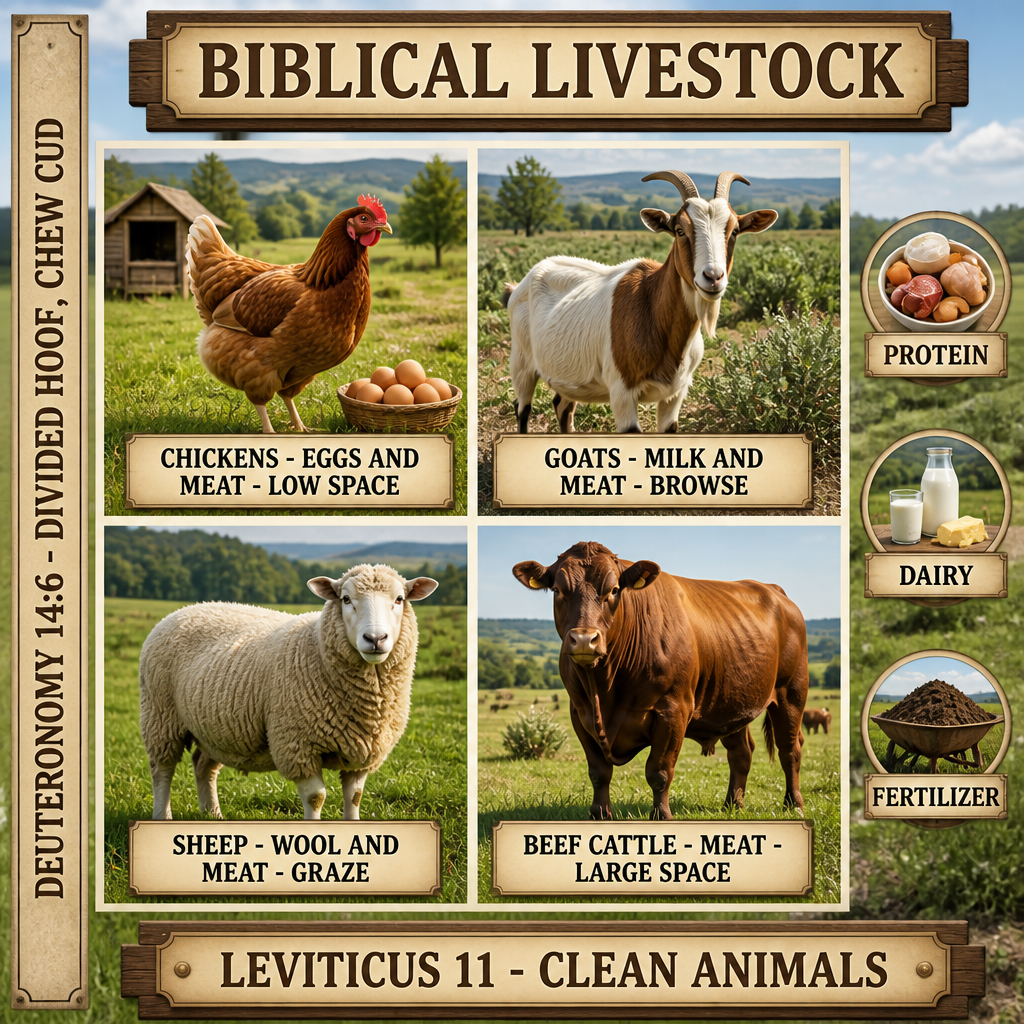
ADULT SelfSuf Livestock
Building a Garden Ecosystem and Transforming Waste into Gold
RECEIVE: Natural Pest Management
A healthy garden ecosystem provides its own pest management. Ladybugs consume aphids, mites, and whiteflies; attract them with dill, fennel, and yarrow. Lacewings control aphids and caterpillars; draw them with cosmos and goldenrod. Create a "mini-insectary" by planting nectar-rich flowers near your vegetables.
- Insecticidal Soap Spray: Mix 2.5 tablespoons liquid dish soap, 2.5 tablespoons vegetable oil, and 1 gallon water. Spray directly on soft-bodied insects every 5-7 days.
- Neem Oil Spray: Combine 1-2 tablespoons cold-pressed neem oil, 1 teaspoon liquid soap, and 1 gallon water. Disrupts feeding and kills eggs of over 200 insect species—apply early morning or evening to protect pollinators.
Physical barriers work remarkably well: floating row covers prevent flying pests from reaching plants, copper tape deters slugs and snails, and beer traps (shallow containers buried at soil level) attract and drown slugs.
Composting: Transforming Waste into Garden Gold
Composting is controlled decomposition that turns organic matter into nutrient-rich soil amendment. The process requires carbon (browns), nitrogen (greens), water, and oxygen.
| Browns (Carbon) | Greens (Nitrogen) |
|---|---|
| Dry leaves, straw, shredded cardboard | Vegetable scraps, fresh grass clippings |
| Wood chips, pine needles | Coffee grounds, fresh garden waste |
The ideal ratio is 3:1 browns to greens by volume. For every bucket of kitchen scraps, add 2-4 buckets of dried leaves.
Vermicomposting (worm composting) works indoors year-round. Start with 1 pound of red wiggler worms per square foot of bin surface. They'll consume half their body weight daily, producing nutrient-dense castings perfect for houseplants and seedlings.
RECALL: Fill in the Blanks
RECITE: Memory Verse
Memorize This Week
"Go to the ant, you sluggard; consider its ways and be wise! It has no commander, no overseer or ruler, yet it stores its provisions in summer."
— Proverbs 6:6-8
REVIEW: Multiple Choice & True/False
1. What is the proper ratio of browns to greens in composting?
2. Which beneficial insect is attracted by planting dill and yarrow?
3. Cold composting is faster than hot composting.
4. Neem oil can disrupt feeding and kill eggs of over 200 insect species.
RESPOND: Practical Application
This Week's Activity
Start a Compost System: Choose a composting method appropriate for your space—a simple pile, a commercial bin, or a worm bin for indoor use. Begin collecting kitchen scraps (no meat or dairy) and brown materials. Track what you add for two weeks.
Lesson 5: Food Preservation - Canning Fundamentals
Water Bath and Pressure Canning for Food Security
RECEIVE: The Foundation of Food Security
The ability to preserve your harvest extends the growing season year-round and reduces grocery dependence. Each preservation method suits different foods and situations.
Water Bath Canning: For High-Acid Foods
Water bath canning heats sealed jars in boiling water (212°F) and works only for high-acid foods with pH of 4.6 or lower: most fruits, jams and jellies, pickles, relishes, and tomatoes (with added acid—2 tablespoons lemon juice per quart).
Basic Process: Fill hot jars with prepared food, leave proper headspace (typically ½ inch), remove air bubbles, wipe rims clean, apply lids fingertip-tight, and process in boiling water for the time specified in your tested recipe. Allow jars to cool undisturbed 12-24 hours, then check seals—lids should be concave and not flex.
Pressure Canning: Essential for Low-Acid Foods
Pressure canning reaches 240°F—the only temperature that destroys Clostridium botulinum spores that cause potentially fatal botulism. This method is mandatory for vegetables, meats, poultry, soups, and mixed foods.
"They should collect all the food of these good years that are coming and store up the grain under the authority of Pharaoh... This food should be held in reserve for the country, to be used during the seven years of famine."
RECALL: Fill in the Blanks
RECITE: Memory Verse
Memorize This Week
"In the house of the wise are stores of choice food and oil, but a foolish man devours all he has."
— Proverbs 21:20
REVIEW: Multiple Choice & True/False
1. Which method is required for canning vegetables safely?
2. At what temperature does botulism-causing bacteria die?
3. An Instant Pot can be used as a pressure canner for safe food preservation.
4. Jams and jellies can be safely processed using water bath canning.
RESPOND: Practical Application
This Week's Activity
Canning Research: Visit the National Center for Home Food Preservation (nchfp.uga.edu). Find and print a tested recipe for water bath canning (pickles or jam are good starters). List all equipment you would need and price it out. If you already have equipment, try your first batch!
Lesson 6: Fermentation and Other Preservation Methods
Dehydrating, Fermenting, and Root Cellaring
RECEIVE: Beyond Canning
Dehydrating: Removing Moisture
Removing moisture below 10-20% prevents bacterial, yeast, and mold growth. Electric dehydrators offer the best control ($40-60 for budget models, $150-300 premium). Temperatures vary by food:
| Food Type | Temperature |
|---|---|
| Herbs | 95-115°F |
| Vegetables | 125-135°F |
| Fruits | 135°F |
| Jerky (with meat precooked to 160°F) | 160°F |
Fermentation: Harnessing Beneficial Bacteria
Lacto-fermentation creates an acidic environment (pH 3.4-4.1) that prevents pathogen growth while producing probiotics that support gut health. This ancient preservation method requires minimal equipment and no electricity.
Root Cellaring: No Processing Required
Root cellaring uses the earth's natural cooling and humidity to store vegetables for months without electricity or processing. Ideal conditions are 32-40°F with 85-95% humidity for most root vegetables.
Best storage crops: Potatoes (4-6 months), carrots packed in moist sand (4-6 months), winter squash in slightly warmer, drier conditions (4-6 months), onions and garlic cured and stored in mesh bags (4-6 months).
RECALL: Fill in the Blanks
RECITE: Memory Verse
Memorize This Week
"She is like the merchant ships, bringing her food from afar. She gets up while it is still night; she provides food for her family."
— Proverbs 31:14-15
REVIEW: Multiple Choice & True/False
1. What makes lacto-fermentation safe for food preservation?
2. How long can potatoes be stored in a proper root cellar?
3. Fuzzy mold on fermenting vegetables is a normal sign of healthy fermentation.
4. Herbs should be dehydrated at lower temperatures than fruits.
RESPOND: Practical Application
This Week's Activity
Try Your First Ferment: Make a small batch of sauerkraut or fermented pickles. Start with just one quart. Document the process with photos and notes on what you observe each day during fermentation.
Lesson 7: Raising Backyard Chickens
The Ideal First Livestock for Beginners
RECEIVE: Getting Started with Chickens
Chickens require minimal space (3-5 square feet indoors, 8-10 square feet outdoors per bird), provide eggs within 5-6 months, offer pest control and fertilizer, and teach children animal responsibility.
- Rhode Island Reds: Hardy, 200-280 eggs/year
- Orpingtons: Docile, excellent for families
- Wyandottes: Great temperament, cold-hardy
Coop Essentials
Build or buy a coop with these features:
- Predator-proof construction using ½-inch hardware cloth (not chicken wire)
- Good ventilation without drafts
- One nest box per 4-5 hens
- 8-12 inches roost space per bird
- Easy cleaning access
Daily Routine (15-30 minutes)
Open coop in morning, provide fresh water, check feed, collect eggs twice daily, lock coop at dusk. Expect 5-6 eggs per week per hen during peak production years.
"The righteous care for the needs of their animals, but the kindest acts of the wicked are cruel."
RECALL: Fill in the Blanks
RECITE: Memory Verse
Memorize This Week
"The righteous care for the needs of their animals, but the kindest acts of the wicked are cruel."
— Proverbs 12:10
REVIEW: Multiple Choice & True/False
1. Why should you use hardware cloth instead of chicken wire?
2. How much outdoor space does each chicken need?
3. New hens begin laying eggs immediately upon purchase.
4. The daily chicken care routine takes 15-30 minutes.
RESPOND: Practical Application
This Week's Activity
Chicken Feasibility Study: (1) Check local ordinances for chicken-keeping rules in your area. (2) Identify a location for a coop on your property. (3) Calculate startup costs including coop, feeders, waterers, and 6 pullets. (4) Research local feed store prices. Create a one-page plan.
Lesson 8: Goats and Beekeeping
Expanding Your Homestead with Dairy Goats and Honey Bees
RECEIVE: Beyond Chickens
Dairy Goats
Goats require more space (minimum 20 square feet shelter plus 200 square feet pasture per goat) and secure fencing—they're notorious escape artists. Nigerian Dwarf goats are ideal for beginners with limited space: they weigh 50-75 pounds, produce 1-2 quarts of milk daily with the highest butterfat content (6-10%), and can breed year-round.
- Secure 4-5 foot fencing (cattle panels with electric offset work well)
- Three-sided shelter that's dry and draft-free
- Quality hay (2-4 pounds daily per goat)
- Goat-specific loose minerals (never sheep minerals—goats need copper)
Beekeeping
Bees require minimal space (2-3 square feet per hive) and time (1-2 hours monthly during active season). A healthy hive can produce 50+ pounds of honey annually while dramatically increasing your garden yields through pollination.
The Langstroth hive is best for beginners—standardized parts, maximum support resources, and easy honey extraction. Acquire bees through package bees ($130-180, shipped via mail) or nucleus colonies ($150-250, pickup only but faster establishment).
RECALL: Fill in the Blanks
RECITE: Memory Verse
Memorize This Week
"Be sure you know the condition of your flocks, give careful attention to your herds; for riches do not endure forever."
— Proverbs 27:23-24
REVIEW: Multiple Choice & True/False
1. Why are Nigerian Dwarf goats ideal for small-scale homesteads?
2. What is the main benefit of starting with two beehives instead of one?
3. Sheep minerals can safely be given to goats.
4. Beekeeping requires several hours of work each day.
RESPOND: Practical Application
This Week's Activity
Research Project: Contact your local beekeeping association (most offer free mentorship) or visit a local goat farm. Interview a beekeeper or goat owner about their experience: startup costs, time commitment, biggest challenges, and best advice for beginners.
Lesson 9: Essential Homestead Skills
First Aid, Fire-Starting, Water Purification, and Basic Repairs
RECEIVE: Core Survival Skills
First Aid Knowledge
Build a comprehensive first aid kit including: absorbent compress dressings, adhesive bandages, antibiotic ointment, antiseptic wipes, triangular bandages, breathing barrier, instant cold compress, non-latex gloves, and emergency blanket. Add homestead-specific items: blood-stop powder, SAM splint, and eye wash solution.
Water Purification
Boiling is the most reliable field method—bring water to a rolling boil for 1 minute (3 minutes above 6,500 feet elevation). This kills all pathogens but cannot remove chemical contamination.
Chemical treatment: Unscented liquid household bleach (5-9% sodium hypochlorite)—add 2 drops per quart of clear water, 4 drops for cloudy water, wait 30 minutes.
Store emergency water: 1 gallon per person per day minimum, in sealed food-grade containers, away from sunlight and chemicals, replaced every 6 months.
Fire-Starting Skills
Ferro rod technique: Position the rod close to your tinder bundle, hold striker stationary over tinder, pull the rod back toward you with firm pressure. Ferro rods produce sparks up to 5,500°F—direct them into fine, dry tinder.
"The prudent see danger and take refuge, but the simple keep going and pay the penalty."
RECALL: Fill in the Blanks
RECITE: Memory Verse
Memorize This Week
"The prudent see danger and take refuge, but the simple keep going and pay the penalty."
— Proverbs 22:3
REVIEW: Multiple Choice & True/False
1. What is the most reliable field method for water purification?
2. At higher elevations (above 6,500 feet), how long should water be boiled?
3. Boiling water removes chemical contamination.
4. CPR can be adequately learned through reading alone without formal certification.
RESPOND: Practical Application
This Week's Activity
Build Your First Aid Kit: Inventory any first aid supplies you currently have. Create a shopping list for missing items. Research and register for a local CPR/First Aid certification class through the Red Cross or local hospital.
Lesson 10: Financial Self-Sufficiency and Community
Realistic Expectations, Side Income, and Biblical Generosity
RECEIVE: Realistic Expectations
Based on surveys of nearly 1,000 homesteaders: 80% produce 25% or less of their food in their first two years. Achieving 25%+ by year 5 places you ahead of most homesteaders. Only 10% ever reach 75%+ self-sufficiency, and 100% is virtually impossible—even experienced homesteaders still buy salt, sugar, grains, coffee, oils, and specialty items.
- Basic gardening tools and seeds: $100-200
- Soil improvement/compost bin: $50-100
- Basic canning supplies: $50-100
- 6 laying hens with coop: $200-400 (or build from salvaged materials)
Side Income Opportunities
Selling eggs: Rural areas command $3-4.50 per dozen; suburban/urban markets $5-8 per dozen. Colored eggs (blue, green) and pastured-raised eggs fetch premium prices.
Farmers markets: Research local markets and application deadlines. Vendor fees typically run $10-50 per market day.
Teaching workshops: Cheese-making, soap-making, food preservation, and beekeeping classes command $50-100 per person. Your expertise becomes valuable as you develop skills.
Biblical Generosity
"When you reap the harvest of your land, do not reap to the very edges of your field or gather the gleanings of your harvest. Leave them for the poor and the foreigner."
Acts 2:44-45 describes early believers who "had everything in common" and "gave to anyone who had need"—not forced redistribution but voluntary, Spirit-led generosity. The abundance of a homestead—extra eggs, surplus vegetables, preserved foods, gathering space—creates natural opportunities for generosity and hospitality.
RECALL: Fill in the Blanks
RECITE: Memory Verse
Memorize This Week
"Carry each other's burdens, and in this way you will fulfill the law of Christ."
— Galatians 6:2
REVIEW: Multiple Choice & True/False
1. What percentage of homesteaders achieve 75%+ food self-sufficiency?
2. According to Leviticus 19, what were farmers commanded to do?
3. 100% food self-sufficiency is a realistic goal for most homesteaders.
4. Preparation and stockpiling should be done out of fear for the future.
RESPOND: Practical Application
This Week's Activity
Generosity Plan: Make a list of what your household could share with others: time, skills, surplus food, hospitality. Identify one neighbor or family member you could bless this week. Plan and execute one act of homestead-based generosity.
ANSWER KEY
Lesson 1: Biblical Foundation
Fill in the Blanks: 1. serve/cultivate, guard/protect 2. before 3. Lord 4. Yahuah/God 5. righteous 6. (none for this lesson)
Multiple Choice: 1. B 2. B
True/False: 3. False 4. True
Lesson 2: Gardening Fundamentals
Fill in the Blanks: 1. 6-8 2. 1 3. 6.0 4. compost 5. Heirloom 6. 5
Multiple Choice: 1. C 2. B
True/False: 3. False 4. True
Lesson 3: Vegetables and Companion Planting
Fill in the Blanks: 1. fastest 2. squash 3. nitrogen 4. Basil 5. sweetens 6. Fennel
Multiple Choice: 1. B 2. C
True/False: 3. False (8-9 months) 4. False (they should be separated)
Lesson 4: Pest Control and Composting
Fill in the Blanks: 1. Ladybugs 2. pollinators 3. 3 4. 130 5. Copper 6. half
Multiple Choice: 1. C 2. B
True/False: 3. False 4. True
Lesson 5: Canning Fundamentals
Fill in the Blanks: 1. 4.6 2. 240 3. 2 4. 12-24 5. annually 6. concave
Multiple Choice: 1. B 2. C
True/False: 3. False 4. True
Lesson 6: Other Preservation Methods
Fill in the Blanks: 1. 10 2. probiotics 3. 2 4. 32 5. 160 6. 70
Multiple Choice: 1. B 2. C
True/False: 3. False 4. True
Lesson 7: Raising Chickens
Fill in the Blanks: 1. 3 2. hardware 3. 4 4. 5 5. 3 6. Rhode
Multiple Choice: 1. B 2. C
True/False: 3. False (5-6 months) 4. True
Lesson 8: Goats and Beekeeping
Fill in the Blanks: 1. 6 2. 200 3. sheep 4. 50 5. Varroa 6. 6
Multiple Choice: 1. B 2. B
True/False: 3. False 4. False (1-2 hours monthly)
Lesson 9: Essential Skills
Fill in the Blanks: 1. 1 2. 2 3. 1 4. 5,500 5. 6 6. consciousness
Multiple Choice: 1. C 2. C
True/False: 3. False 4. False
Lesson 10: Financial Self-Sufficiency
Fill in the Blanks: 1. 80 2. 10 3. 5 4. gleanings 5. 50 6. 500
Multiple Choice: 1. C 2. B
True/False: 3. False 4. False
Lesson Completion Tracker
Truth Carriers Education System
Biblical Self-Sufficiency: A Complete Guide to Homesteading
"Whatever you do, work at it with all your heart, as working for the Lord." — Colossians 3:23