TRUTH CARRIERS EDUCATION SYSTEM Torah Foundations Series - Adult/Teen Level (Ages 14+)
ABOUT THIS WORKBOOK
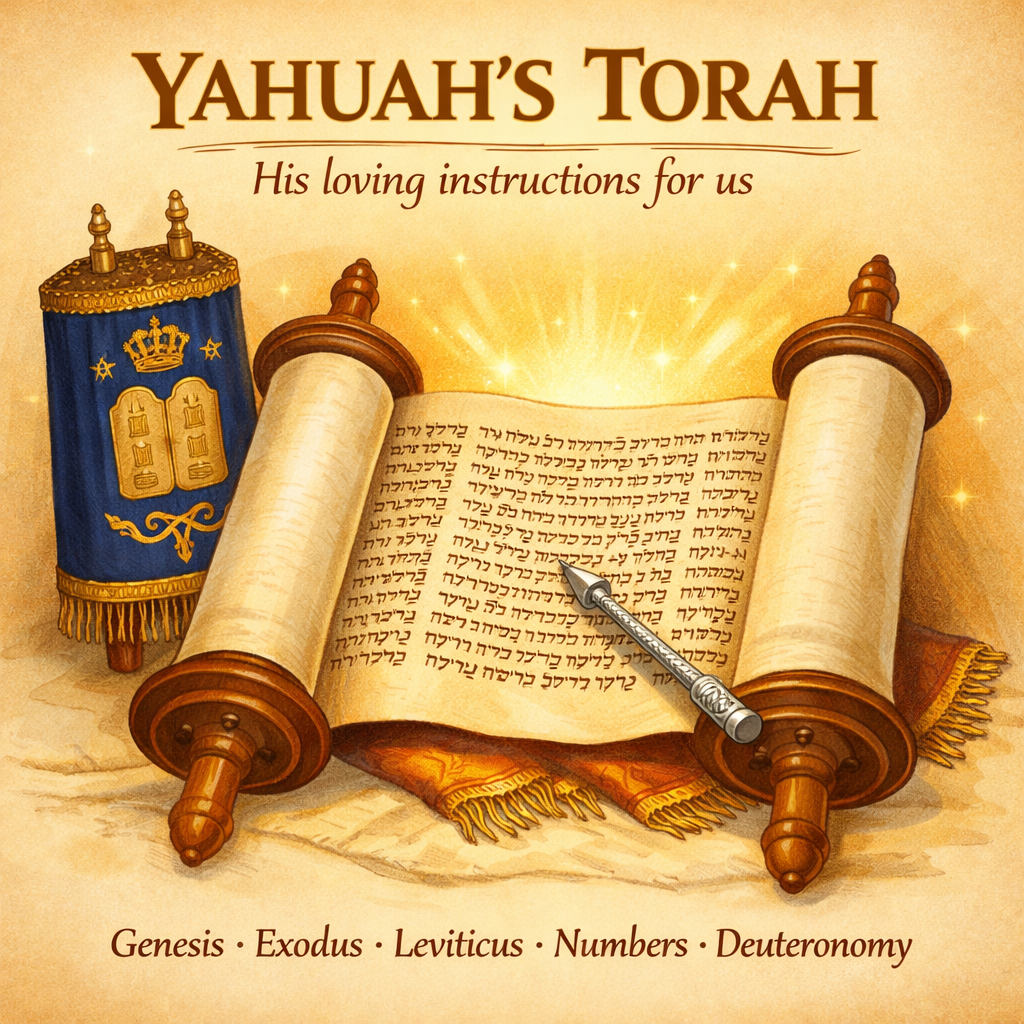
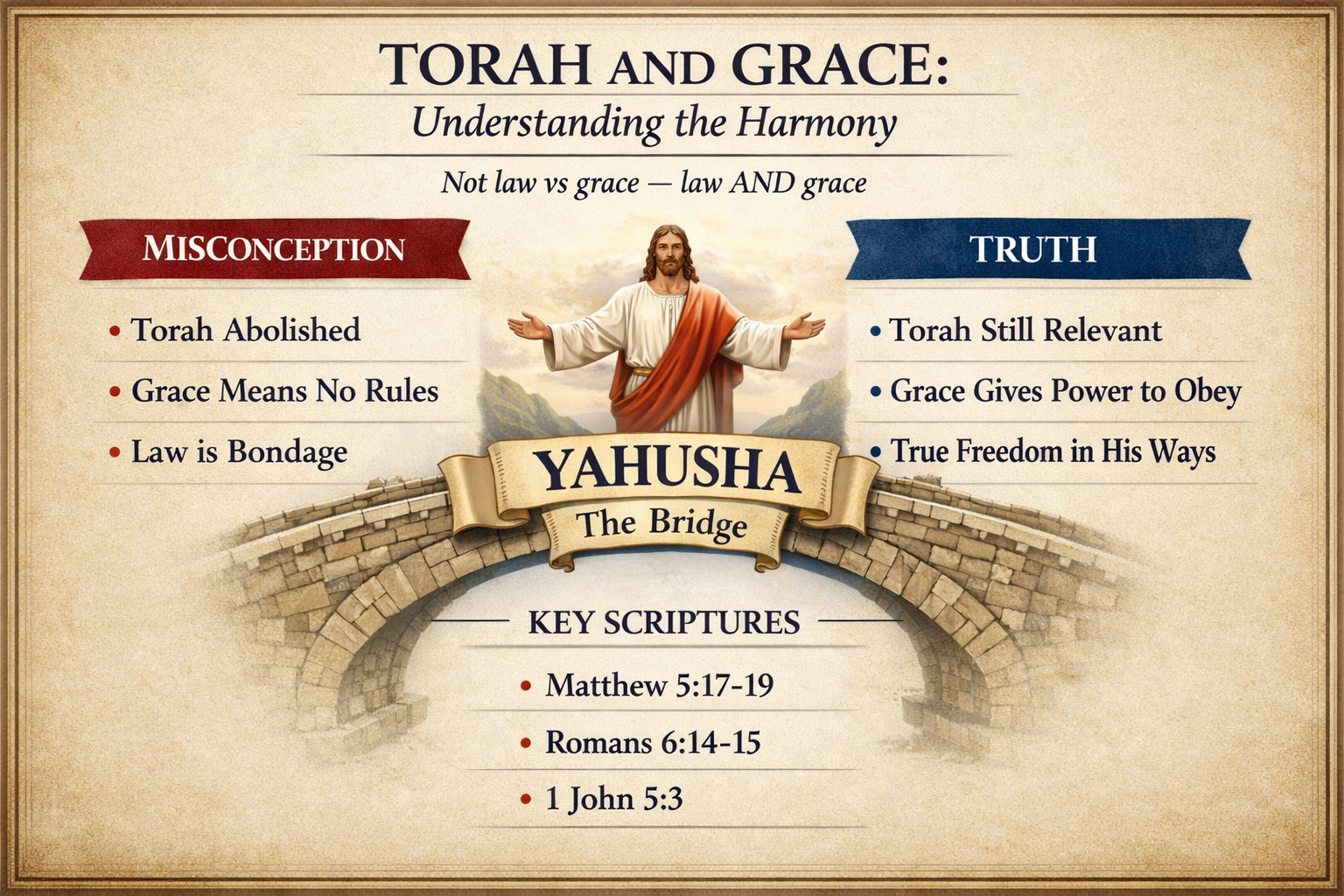
The relationship between Torah and Grace stands as one of Scripture's most misunderstood topics, yet careful examination of the Hebrew and Greek texts reveals profound harmony rather than contradiction.
Central Thesis: Torah (תּוֹרָה) means "instruction" rather than mere "law," and the New Covenant promises this instruction written on hearts, not abolished.
What You Will Learn:
The Hebrew meaning of "Torah" (יָרָה = to point the way, like an arrow)
What Yahusha REALLY said about Torah (Matthew 5:17-19 in Greek)
What was "nailed to the cross" (Colossians 2:14 - the debt certificate, not Torah)
Romans properly understood (not under condemnation, but still delighting in Torah)
Galatians in context (the heresy was salvation by works, not obedience from love)
The New Covenant = Torah INTERNALIZED (Hebrews 8, Jeremiah 31)
James on faith and works (perfect law of liberty)
1 John's definition: Sin IS lawlessness (ἀνομία)
Approach: Comprehensive Scripture analysis with original Hebrew and Greek word studies using Strong's numbers, lexicons, and contextual evidence.
Audience: Teens and adults (ages 14+) seeking deep biblical understanding
Study Time: 10 weeks (one lesson per week)
TABLE OF CONTENTS
Lesson 1: What Torah Actually Means
Lesson 2: Yahusha on Torah (Matthew 5:17-19)
Lesson 3: What Was "Nailed to the Cross" (Colossians 2:14)
Lesson 4: The Dividing Wall (Ephesians 2:15)
Lesson 5: Romans Properly Understood
Lesson 6: Galatians - Context Is Key
Lesson 7: The New Covenant (Hebrews 8)
Lesson 8: James on Faith and Works
Lesson 9: First John on Keeping Commandments
Lesson 10: Living in Grace-Empowered Obedience
Answer Key
KEY HEBREW & GREEK TERMS
Term
Language
Transliteration
Strong's
Meaning
תּוֹרָה
Hebrew
Torah
H8451
Instruction, teaching, direction
יָרָה
Hebrew
Yarah
H3384
To throw, shoot, point out, teach
חָטָא
Hebrew
Chatta
H2398
To miss the mark, sin
καταλύω
Greek
kataluō
G2647
To abolish, destroy, tear down
πληρόω
Greek
plēroō
G4137
To fulfill, complete, fill to the brim
ἀνομία
Greek
anomia
G458
Lawlessness, Torah-lessness
χειρόγραφον
Greek
cheirographon
G5498
Handwritten IOU, debt certificate
HOW TO USE THIS WORKBOOK
The Truth Carriers Learning Method — 6 Rs
This workbook uses the 6 Rs Learning Method designed for deep understanding and long-term retention. Each lesson includes all six components:
1. RECEIVE Read the teaching content carefully. Take notes. Look up Scripture references.
2. REFLECT Complete multiple choice, true/false, fill-in-blanks, and discussion questions.
3. RECALL Close the book and write everything you remember. Check what you missed.
4. RECITE Teach what you learned to someone else. Teaching deepens understanding.
5. REVIEW Use the spaced review tracker. Review at Day 1, 3, 7, 21, and 60.
6. RESPOND Apply what you learned. Do something with this knowledge this week.
For Best Results:
Complete one lesson per sitting, or break into smaller segments
Look up every Scripture reference in your own Bible
Don't skip the teach-back challenge — teaching is the highest form of learning
Use the spaced review tracker faithfully
Write your insights and questions in the margins
LESSON 1: WHAT TORAH ACTUALLY MEANS
Scripture Reading
Psalm 19:7-10
"The law of Yahuah is perfect, converting the soul; The testimony of Yahuah is sure, making wise the simple; The statutes of Yahuah are right, rejoicing the heart; The commandment of Yahuah is pure, enlightening the eyes; The fear of Yahuah is clean, enduring forever; The judgments of Yahuah are true and righteous altogether. More to be desired are they than gold, yea, than much fine gold; Sweeter also than honey and the honeycomb."
Core Teaching
The Hebrew Root Reveals Torah's True Nature
The Hebrew word תּוֹרָה (Torah) derives from the root יָרָה (yarah), Strong's H3384.
"to point out" (as aiming a finger in a direction)
"to teach, instruct, direct"
This etymology transforms our understanding: Torah functions as divine guidance pointing toward a target, not merely legal restrictions.
A moreh (מוֹרֶה), meaning "teacher," literally describes "one who throws from the hand"—either an archer shooting arrows or a teacher pointing students toward the right direction.
The Connection to Sin
This directly connects to the Hebrew word for sin, חַטָּאָה (chatta'ah), from the root חָטָא (chatta), which literally means "to miss the mark."
Torah
Sin
יָרָה (yarah) - to point, to aim
חָטָא (chatta) - to miss the mark
Shows the right direction
Misses that direction
Like an arrow hitting the target
Like an arrow missing the target
Torah Is MORE Than Legal Statutes
The Pentateuch (first five books) demonstrates Torah's breadth. Torah contains far more than legal statutes:
Creation narrative (Genesis 1-2)
Covenant promises (Abraham, Isaac, Jacob)
Genealogies
Wisdom teaching
Prophetic instruction
Proverbs 1:8 - "My son, hear the instruction of your father, and do not forsake the Torah of your mother"
(Clearly instruction, not legislation)
Proverbs 31:26 - "She opens her mouth with wisdom, and on her tongue is the Torah of kindness"
(Teaching, not statute)
Critical Point: When English Bibles render Torah as "law," readers often miss that Elohim presents Himself as a loving Father instructing His children in wisdom, not a harsh legislator imposing arbitrary rules.
Scripture's Glowing Descriptions of Torah
Psalm 19:7-11 uses six Hebrew descriptors:
Verse
Hebrew Term
Meaning
v.7
תָּמִים (tamiym)
Complete, whole, without blemish
v.7
נֶאֱמָן (ne'eman)
Faithful, reliable, enduring
v.8
יָשָׁר (yashar)
Straight, upright, morally correct
v.8
בַּר (bar)
Clean, clear, pure
v.9
טָהוֹר (tahor)
Ceremonially and morally clean, bright
v.9
אֱמֶת (emet)
Faithful, trustworthy, true
Psalm 119 - The Torah Love Letter
176 verses - Scripture's longest chapter
An elaborate acrostic poem using eight Hebrew synonyms for Elohim's Word:
Torah (instruction)
Edut (testimonies)
Pikkudim (precepts)
Chuqqim (statutes)
Mitzvot (commandments)
Mishpatim (judgments)
Davar (word)
Imrah (promise)
Key verses:
Psalm 119:97 - "Oh, how I LOVE Your Torah! It is my meditation all the day"
Psalm 119:165 - "Great shalom have those who love Your Torah, and nothing causes them to stumble"
Psalm 119:105 - "Your word is a lamp to my feet and a light to my path"
Fill-in-the-Blank Questions
1.
The Hebrew word Torah (תּוֹרָה) comes from the root which means to point or .
2.
The Hebrew word for sin, חָטָא (chatta), literally means to the mark.
3.
A moreh (teacher) literally means "one who from the hand."
4.
Proverbs 1:8 speaks of the " of your mother," showing Torah means instruction, not just legislation.
5.
Psalm 19:10 says Torah is sweeter than and more desired than .
6.
Psalm 119 is Scripture's longest chapter with verses.
7.
Psalm 119:97 says "Oh, how I Your Torah!"
8.
Those who love Torah have great (Psalm 119:165).
True or False
Discussion Questions
1. How does understanding Torah as "instruction" rather than "law" change your perspective on obedience? Does it feel different to follow instruction from a loving Father versus obeying legal demands from a judge?
2. If Torah shows the right direction and sin means "missing the mark," what does this teach us about the purpose of Elohim's commands? Are they arbitrary restrictions or loving guidance?
3. Psalm 119:97 says "Oh, how I LOVE Your Torah!" Can you honestly say you love Torah? If not, what might be hindering that love? How can we grow to delight in Yahuah's instruction?
Scripture Memory
Psalm 119:105 - "Your word is a lamp to my feet and a light to my path."
Multiple Choice (6Rs Addition)
1. Torah (תּוֹרָה) primarily means:
○ A) Harsh legal code ○ B) Instruction/teaching ○ C) Punishment ○ D) Old Testament only
2. The Hebrew word for sin (חָטָא) literally means:
○ A) Evil thoughts ○ B) Breaking rules ○ C) To miss the mark ○ D) Disobedience
3. Psalm 119 has how many verses?
○ A) 50 ○ B) 100 ○ C) 150 ○ D) 176
True or False (6Rs Addition)
1. Torah is best translated as "law" rather than "instruction." ○ True ○ False — Correction:
2. The psalmist describes Torah as sweeter than honey. ○ True ○ False — Correction:
3. A moreh (teacher) literally means "one who throws from the hand." ○ True ○ False — Correction:
RECALL EXERCISE
Close this workbook. Write: What does Torah mean? What does the root yarah mean? What does sin (chatta) mean? How does Psalm 119 describe Torah?
Items I need to review:
TEACH-BACK CHALLENGE
Explain to someone why Torah means "instruction" not just "law."
Person I taught: Date:
Question they asked:
How I answered:
SCRIPTURE MEMORY: Psalm 119:105
"Your word is a lamp to my feet and a light to my path."
Write from memory:
APPLICATION STEP
Before the next lesson, complete ONE:
What I did:
What happened:
LESSON 2: YAHUSHA ON TORAH (Matthew 5:17-19)
Scripture Reading
Matthew 5:17-19
"Do not think that I came to destroy the Law or the Prophets. I did not come to destroy but to fulfill. For assuredly, I say to you, till heaven and earth pass away, one jot or one tittle will by no means pass from the law till all is fulfilled. Whoever therefore breaks one of the least of these commandments, and teaches men so, shall be called least in the kingdom of heaven; but whoever does and teaches them, he shall be called great in the kingdom of heaven."
Core Teaching
Yahusha's Definitive Statement
"Do not think that I came to abolish (καταλύω/kataluō) the Law or the Prophets; I did not come to abolish but to fulfill (πληρόω/plēroō)."
First-Century Context: 4 Maccabees 5:33 uses kataluō for "abolishing" Torah by eating unclean food.
Yahusha emphatically did NOT come to demolish Torah.
Greek Word Study: FULFILL
πληρόω (plēroō) - Strong's G4137
Meaning: "to make full, fill up, fill to the brim; to complete, bring to realization, accomplish"
Matthew uses plēroō sixteen times, most commonly for literal accomplishment of prophecy:
Matthew 1:22 - "that it might be fulfilled which was spoken"
Matthew 2:15 - "that it might be fulfilled which was spoken"
Matthew 4:14 - "that it might be fulfilled which was spoken"
Yahusha contrasts fulfilling with abolishing - He came to fill Torah to the fullest, complete its purpose, and demonstrate perfect obedience, not cancel its authority.
Down to the Smallest Detail
"Until heaven and earth pass away, not one JOT (ἰῶτα/iota) or one TITTLE (κεραία/keraia) shall pass from the Law."
Term
Hebrew Letter
Meaning
Jot (iota)
י (Yod)
Smallest Hebrew letter, resembling an apostrophe
Tittle (keraia)
"little horn"
Tiny stroke or crown distinguishing similar letters
Scribal Tradition: A Torah scroll was considered invalid if even one tittle was missing.
Yahusha affirms complete divine inspiration down to the smallest detail.
The Sobering Warning - Matthew 7:21-23
"Not everyone who says to Me, 'Lord, Lord,' shall enter the kingdom of heaven, but he who does the will of My Father in heaven. Many will say to Me in that day, 'Lord, Lord, have we not prophesied in Your name, cast out demons in Your name, and done many wonders in Your name?' And then I will declare to them, 'I never knew you; depart from Me, you who practice lawlessness!'"
Critical Warning: On judgment day, people who call Yahusha "Lord," prophesy, cast out demons, and perform miracles in His name, but practice anomia (living without Torah), will hear "I never knew you."
This same word anomia describes the end-times "man of lawlessness" (2 Thessalonians 2:3, 7-8).
Love and Obedience Connected
John 14:15 - "If you love Me, keep (τηρέω/tēreō) My commandments (ἐντολάς/entolas)."
This echoes the Torah pattern:
Deuteronomy 6:5-6 - Love Yahuah, keep His words on your heart
Deuteronomy 11:1, 13, 22 - Love Him and keep His commandments
Fill-in-the-Blank Questions
1.
The Greek word kataluō (G2647) means to , demolish, or destroy.
2.
The Greek word plēroō (G4137) means to or complete.
3.
Yahusha said not one (יוֹד) or shall pass from the law.
4.
The jot represents the smallest Hebrew letter called .
5.
In Matthew 7:23, Yahusha warns against practicing (anomia).
6.
Anomia literally means -lessness.
7.
John 14:15 says "If you Me, keep My commandments."
8.
Matthew uses plēroō times, mostly for fulfilled prophecy.
True or False
Discussion Questions
1. If Yahusha came to "fulfill" Torah (complete it, fill it to the fullest), does that mean Torah is now abolished? Or does it mean He demonstrated what perfect Torah-keeping looks like?
2. Yahusha warned that those who practice "anomia" (lawlessness) will be rejected, even if they prophesy and do miracles in His name. What does this teach us about the importance of obedience?
3. Have you heard teaching that says "Jesus abolished the law"? How does Matthew 5:17-19 directly contradict that teaching? What might motivate someone to teach abolition when Yahusha explicitly said He did NOT come to abolish?
Scripture Memory
Matthew 5:17 - "Do not think that I came to destroy the Law or the Prophets. I did not come to destroy but to fulfill."
Multiple Choice (6Rs Addition)
1. In Matthew 5:17, kataluō (G2647) means:
○ A) To complete ○ B) To fulfill ○ C) To abolish/destroy ○ D) To establish
2. In Matthew 5:17, plēroō (G4137) means:
○ A) To abolish ○ B) To destroy ○ C) To fulfill/complete ○ D) To ignore
3. Anomia (G458) means:
○ A) Great faith ○ B) Lawlessness/Torah-lessness ○ C) Strong belief ○ D) Perfect obedience
True or False (6Rs Addition)
1. Yahusha said He came to abolish the Law and Prophets. ○ True ○ False — Correction:
2. A "jot" refers to the smallest Hebrew letter (Yod). ○ True ○ False — Correction:
3. Those practicing anomia while calling Yahusha "Lord" will be accepted. ○ True ○ False — Correction:
RECALL EXERCISE
Close this workbook. Write: What does kataluō mean? What does plēroō mean? What did Yahusha say about jots and tittles? What is anomia?
Items I need to review:
TEACH-BACK CHALLENGE
Explain to someone what Yahusha actually said about Torah in Matthew 5:17-19.
Person I taught: Date:
Question they asked:
How I answered:
SCRIPTURE MEMORY: Matthew 5:17
"Do not think that I came to destroy the Law or the Prophets. I did not come to destroy but to fulfill."
Write from memory:
APPLICATION STEP
Before the next lesson, complete ONE:
What I did:
What happened:
📅 SPACED REVIEW TRACKER
Instructions: After completing each lesson, return to review it at these intervals for maximum long-term retention. Check the box when you've completed each review.
Lesson
Completed
Day 1
Day 3
Day 7
Day 21
Day 60
1. What Torah Actually Means
___/___/___
☐
☐
☐
☐
☐
2. Yahusha on Torah
___/___/___
☐
☐
☐
☐
☐
3. Nailed to the Cross
___/___/___
☐
☐
☐
☐
☐
4. The Dividing Wall
___/___/___
☐
☐
☐
☐
☐
5. Romans Properly Understood
___/___/___
☐
☐
☐
☐
☐
6. Galatians - Context Is Key
___/___/___
☐
☐
☐
☐
☐
7. The New Covenant
___/___/___
☐
☐
☐
☐
☐
8. James on Faith and Works
___/___/___
☐
☐
☐
☐
☐
9. First John on Commandments
___/___/___
☐
☐
☐
☐
☐
10. Grace-Empowered Obedience
___/___/___
☐
☐
☐
☐
☐
Why Spaced Repetition Works
Studies show that reviewing material at increasing intervals dramatically improves long-term retention. Without review, we forget 80% within a month. With spaced review, retention can exceed 90%.
"Precept upon precept, precept upon precept; line upon line, line upon line; here a little, and there a little." — Isaiah 28:10
ANSWER KEY
LESSON 1: WHAT TORAH ACTUALLY MEANS
Fill-in-the-Blank:
yarah, teach (or instruct/direct)
miss
throws (or points)
Torah
honey, gold
176
love
shalom (or peace)
True or False:
False (primarily means "instruction" or "teaching")