"Beloved, I wish above all things that thou mayest prosper and be in health, even as thy soul prospereth."
— 3 John 1:2
Receive Learn it
Reflect Think about it
Recall Remember it
Respond Apply it
Purpose of This Course
This course examines mainstream medicine—what conventional textbooks, schools, and medical institutions teach about health, disease, and treatment. Understanding these teachings is important for:
Engaging knowledgeably with healthcare providers
Understanding the dominant medical paradigm
Making informed decisions about your health
Recognizing assumptions underlying modern medicine
A Brief History of Modern Medicine
1850s-1860s — Germ theory developed by Pasteur and Koch
1910 — Flexner Report reshapes American medical education
Developed "Koch's Postulates" for proving disease causation
Koch's Postulates
The microorganism must be found in all diseased individuals
It must be isolated and grown in pure culture
It must cause the same disease when introduced to a healthy host
It must be re-isolated from the newly diseased host
🔬 Mainstream Position
Germ theory is established science. Infectious diseases are caused by specific pathogens (bacteria, viruses, fungi, parasites). Modern medicine, sanitation, and vaccines have dramatically reduced infectious disease.
📖 Points to Consider
Scripture teaches that Yahuah controls health and disease (Deuteronomy 28). Many "germs" live harmlessly in healthy bodies. The "terrain" (body's condition) may be as important as the germ. We should consider multiple factors in health.
✏️ Fill in the Blanks
Germ theory states that specific cause specific diseases.
Louis developed pasteurization and vaccines for rabies.
Robert Koch identified bacteria causing tuberculosis and .
Koch's are used to prove disease causation.
The theory replaced the older idea of "spontaneous ."
Lesson 3: The Immune System
"I will praise thee; for I am fearfully and wonderfully made: marvellous are thy works."
— Psalm 139:14
Overview of the Immune System
The immune system is the body's defense against pathogens. Mainstream medicine teaches it has two main branches:
Innate (Non-specific) Immunity
Physical barriers — Skin, mucous membranes
Chemical barriers — Stomach acid, antimicrobial proteins
Inflammation — Redness, heat, swelling to contain infection
Fever — Elevated temperature to inhibit pathogens
Adaptive (Specific) Immunity
B cells — Produce antibodies (proteins that target specific pathogens)
T cells — Kill infected cells, coordinate immune response
Memory cells — Remember pathogens for faster future response
Types of Immunity
Type
How Acquired
Duration
Natural Active
Recovering from infection
Often lifelong
Natural Passive
Mother to baby (antibodies)
Months
Artificial Active
Vaccination
Varies (boosters needed)
Artificial Passive
Antibody injection
Weeks to months
🔍 Design Evidence
The immune system is extraordinarily complex—with multiple layers of defense, communication between cells, memory of past infections, and the ability to distinguish "self" from "non-self." Such integrated complexity points to intelligent design, not random evolution.
✏️ Fill in the Blanks
The two main branches of immunity are innate and .
B cells produce that target specific pathogens.
cells remember pathogens for faster future response.
Natural active immunity comes from recovering from .
Skin and mucous membranes are barriers.
Lesson 4: Vaccines - What Textbooks Teach
"The prudent man looketh well to his going."
— Proverbs 14:15
Mainstream Vaccine Theory
According to conventional medicine, vaccines work by:
Introducing a weakened or inactivated pathogen (or part of it)
Stimulating the immune system to produce antibodies
Creating memory cells without causing full disease
Providing protection against future exposure
Types of Vaccines
Live attenuated — Weakened live virus (MMR, chickenpox)
Subunit — Pieces of pathogen (Hepatitis B, pertussis)
Toxoid — Inactivated toxins (tetanus, diphtheria)
mRNA — Genetic instructions to make protein (COVID-19)
Standard Vaccine Schedule
The CDC recommends approximately 70+ doses of various vaccines from birth through age 18, including:
Hepatitis B (birth)
DTaP — Diphtheria, Tetanus, Pertussis
IPV — Polio
MMR — Measles, Mumps, Rubella
Varicella (Chickenpox)
Hepatitis A
HPV
Influenza (annual)
🔬 Mainstream Claims
Vaccines are safe and effective
They have saved millions of lives
Diseases declined because of vaccines
Herd immunity protects the vulnerable
Benefits far outweigh risks
📖 Questions to Consider
Who is responsible for our health decisions?
What ingredients are in vaccines?
Did diseases decline before or after vaccines?
What are the reported adverse effects?
Is informed consent being practiced?
🔍 Important Context
Vaccine manufacturers have legal immunity from lawsuits (since 1986 in the US). A special vaccine court handles injury claims. The VAERS (Vaccine Adverse Event Reporting System) tracks reported injuries. Studying both mainstream claims and critical perspectives helps form informed decisions.
✏️ Fill in the Blanks
Vaccines are designed to stimulate the system.
Live vaccines use weakened live viruses.
mRNA vaccines provide genetic to make proteins.
The CDC recommends approximately + doses by age 18.
Since 1986, vaccine manufacturers have legal from lawsuits.
Lesson 5: Antibiotics and Antimicrobials
"Is there no balm in Gilead; is there no physician there?"
— Jeremiah 8:22
What Are Antibiotics?
Antibiotics are drugs that kill or inhibit bacteria. They are one of modern medicine's most significant developments.
Discovery and Development
1928 — Alexander Fleming discovers penicillin (mold killing bacteria)
1940s — Mass production for WWII
1950s-1970s — "Golden age" of antibiotic discovery
1980s-present — Few new antibiotics; resistance growing
Classes of Antibiotics
Class
Examples
Targets
Penicillins
Amoxicillin
Cell wall synthesis
Cephalosporins
Cephalexin
Cell wall synthesis
Macrolides
Azithromycin
Protein synthesis
Fluoroquinolones
Ciprofloxacin
DNA replication
Tetracyclines
Doxycycline
Protein synthesis
Antibiotic Resistance
A major concern in modern medicine:
Bacteria evolve resistance when antibiotics are overused
"Superbugs" like MRSA are resistant to multiple antibiotics
Resistance spreads through bacterial populations
Few new antibiotics are being developed
Limitations of Antibiotics
Do not work against viruses
Kill beneficial bacteria too (microbiome disruption)
Can cause side effects (allergies, digestive issues)
Overuse creates resistant strains
✏️ Fill in the Blanks
Antibiotics kill or inhibit .
discovered penicillin in 1928.
Antibiotics do NOT work against .
MRSA is an example of a "" resistant to antibiotics.
Overuse of antibiotics leads to development.
Lesson 6: The Pharmaceutical Industry
"For the love of money is the root of all evil."
— 1 Timothy 6:10
Overview of "Big Pharma"
The pharmaceutical industry is one of the world's largest and most profitable industries:
Global pharmaceutical market: over $1.4 trillion annually
Major companies: Pfizer, Johnson & Johnson, Merck, Novartis, Roche
US prescription drug spending: over $500 billion/year
Drug Development Process
Discovery — Identifying potential compounds
Preclinical testing — Laboratory and animal studies
Clinical trials — Human testing (Phase I, II, III)
FDA review — Approval process
Post-market surveillance — Monitoring after release
Industry Practices
Points that mainstream sources acknowledge:
Companies spend more on marketing than research
Direct-to-consumer advertising (US and NZ only countries allowing it)
Funding of medical education and research
Patent protection and high drug prices
Lobbying (one of largest lobbying industries)
🔍 Conflicts of Interest
Companies fund their own drug trials
Negative results often go unpublished
FDA receives funding from companies it regulates
Many FDA officials later work for pharma ("revolving door")
Medical journals depend on pharma advertising
📖 Biblical Perspective
The Greek word "pharmakeia" (from which we get "pharmacy") appears in Scripture and is translated as "sorcery" or "witchcraft" (Galatians 5:20, Revelation 18:23). This doesn't mean all medicine is evil, but we should be discerning about industry motives and trust in Yahuah as our ultimate healer.
✏️ Fill in the Blanks
The global pharmaceutical market exceeds $ trillion annually.
Drug companies spend more on than research.
The reviews and approves drugs in the United States.
The Greek word "pharmakeia" is translated as in Scripture.
Many FDA officials later work for companies.
Lesson 7: Chronic Disease and Modern Medicine
"Who forgiveth all thine iniquities; who healeth all thy diseases."
— Psalm 103:3
The Rise of Chronic Disease
While infectious diseases have declined, chronic diseases have increased dramatically:
Heart disease — leading cause of death
Cancer — second leading cause of death
Diabetes — affects 11% of US population
Autoimmune diseases — affecting 24+ million Americans
Obesity — over 40% of US adults
Mainstream Treatment Approach
Conventional medicine typically treats chronic diseases with:
Medications — Often for life (statins, blood pressure drugs, diabetes medications)
Surgery — Bypasses, stents, removals
Symptom management — Rather than addressing root causes
Common Chronic Disease Medications
Condition
Common Drugs
Purpose
High cholesterol
Statins (Lipitor)
Lower cholesterol
High blood pressure
ACE inhibitors, beta blockers
Lower blood pressure
Type 2 diabetes
Metformin, insulin
Control blood sugar
Depression
SSRIs (Prozac)
Alter brain chemistry
Acid reflux
PPIs (Prilosec)
Reduce stomach acid
🔍 Questions About the Chronic Disease Approach
Why are chronic diseases increasing despite more treatments?
Do medications cure diseases or manage symptoms?
What role do diet and lifestyle play?
Are there non-pharmaceutical approaches that work?
✏️ Fill in the Blanks
disease is the leading cause of death.
Diabetes affects about % of the US population.
Statins are commonly prescribed to lower .
Many chronic disease medications are taken for .
Conventional medicine often manages rather than addressing causes.
Lesson 8: Cancer - Mainstream Treatment
"For I will restore health unto thee, and I will heal thee of thy wounds, saith Yahuah."
— Jeremiah 30:17
What Is Cancer?
According to mainstream medicine, cancer is:
Uncontrolled cell growth and division
Caused by genetic mutations (inherited or acquired)
Can spread to other tissues (metastasis)
Over 100 different types
Standard Cancer Treatments
Surgery
Removing tumors and affected tissue. Often first-line treatment for solid tumors.
Chemotherapy
Drugs that kill rapidly dividing cells. Side effects include nausea, hair loss, immune suppression (also kills healthy cells).
Radiation
High-energy rays to kill cancer cells. Can damage surrounding tissue.
Immunotherapy
Newer approach: helping immune system fight cancer.
Targeted Therapy
Drugs targeting specific cancer cell characteristics.
Cancer Statistics
~1.9 million new US cancer cases per year
~600,000 US cancer deaths per year
Overall 5-year survival rate: ~67%
Cancer industry worth: hundreds of billions of dollars
🔍 Questions to Consider
Why has the "war on cancer" (started 1971) not been won?
Have survival rates truly improved, or is earlier detection the main factor?
What role does lifestyle and diet play in cancer?
Are there promising treatments being suppressed?
✏️ Fill in the Blanks
Cancer is characterized by uncontrolled cell .
uses drugs to kill rapidly dividing cells.
Radiation uses high-energy to kill cancer cells.
Cancer spreading to other tissues is called .
The "war on cancer" began in .
Lesson 9: Mental Health and Psychiatry
"For Elohim hath not given us the spirit of fear; but of power, and of love, and of a sound mind."
— 2 Timothy 1:7
Mainstream View of Mental Illness
Conventional psychiatry teaches:
Mental illnesses are brain disorders
They are often caused by chemical imbalances
Diagnosis is based on symptoms (DSM categories)
Treatment primarily involves medication
Common Psychiatric Medications
Category
Examples
Used For
Antidepressants (SSRIs)
Prozac, Zoloft, Lexapro
Depression, anxiety
Antipsychotics
Risperdal, Seroquel
Schizophrenia, bipolar
Benzodiazepines
Xanax, Valium
Anxiety, panic
Stimulants
Adderall, Ritalin
ADHD
Mood stabilizers
Lithium, Depakote
Bipolar disorder
Statistics on Psychiatric Drug Use
Over 1 in 6 American adults take psychiatric drugs
Antidepressant use has increased 400% since 1990s
ADHD medication use in children has increased dramatically
Psychiatric drugs are among the most prescribed medications
🔍 Points of Concern
The "chemical imbalance" theory has been largely debunked
Many psychiatric drugs have serious side effects
DSM categories are voted on, not discovered
Drug companies heavily influence psychiatry
📖 Biblical Perspective
Scripture addresses the mind and emotions as spiritual matters, not merely chemical. While some conditions may have physical components, believers should consider: sin, spiritual warfare, need for community, proper diet/rest, and the healing power of Yahuah before relying solely on medication.
✏️ Fill in the Blanks
Conventional psychiatry views mental illness as disorders.
The chemical theory has been largely debunked.
SSRIs like Prozac are used for depression and .
Over 1 in American adults take psychiatric drugs.
Scripture says Elohim gives us a spirit of power, love, and a mind.
Lesson 10: Nutrition and Mainstream Guidelines
"And Elohim said, Behold, I have given you every herb bearing seed, which is upon the face of all the earth, and every tree, in the which is the fruit of a tree yielding seed; to you it shall be for meat."
— Genesis 1:29
USDA Dietary Guidelines
The US government publishes dietary guidelines every 5 years. Current recommendations include:
Emphasis on grains (especially "whole grains")
Low-fat dairy products
Limit saturated fat and cholesterol
Moderate protein intake
Plenty of fruits and vegetables
History of the Food Pyramid/MyPlate
1977 — McGovern Committee dietary goals (low fat, high carb)
1992 — Food Pyramid introduced (grains at base)
2005 — MyPyramid (modified design)
2011 — MyPlate replaces pyramid
Mainstream Nutrition Claims
Saturated fat causes heart disease
Cholesterol in diet raises blood cholesterol
Whole grains are essential for health
Red meat should be limited
Vegetable oils are heart-healthy
🔍 Concerns About Mainstream Guidelines
Guidelines have been influenced by food industry
Since low-fat guidelines began, obesity and diabetes have skyrocketed
Original research against saturated fat was flawed
Many traditional cultures ate high-fat diets and were healthy
Processed foods often follow guidelines but aren't healthy
📖 Biblical Diet Principles
Yahuah created food—whole, unprocessed foods are best
Clean and unclean distinctions (Leviticus 11)
Traditional fats (olive oil, butter) used throughout Scripture
Moderation and self-control as virtues
✏️ Fill in the Blanks
The USDA publishes dietary guidelines every years.
The Food Pyramid was introduced in .
Mainstream guidelines recommend limiting fat.
Since low-fat guidelines began, obesity and have increased.
Leviticus 11 describes and unclean food distinctions.
Lesson 11: Public Health and Epidemiology
"And I will put none of these diseases upon thee, which I have brought upon the Egyptians: for I am Yahuah that healeth thee."
— Exodus 15:26
What Is Public Health?
Public health focuses on the health of populations rather than individuals. It includes:
Disease surveillance and tracking
Vaccination programs
Health education
Environmental health
Policy and regulation
Key Public Health Organizations
CDC — Centers for Disease Control (US)
WHO — World Health Organization (global)
FDA — Food and Drug Administration (US)
NIH — National Institutes of Health (US)
Epidemiology
The study of how diseases spread in populations:
Incidence — New cases in a time period
Prevalence — Total cases at a given time
Mortality rate — Deaths from a disease
Risk factors — Things that increase disease risk
Disease Decline: What Caused It?
Infectious diseases declined dramatically in the 20th century. The mainstream credits vaccines, but other factors include:
Clean water and sanitation
Improved nutrition
Better living conditions
Hygiene practices
🔍 Historical Data
Death rates from many diseases (measles, scarlet fever, whooping cough) had declined 90%+ before vaccines were introduced. This suggests sanitation and nutrition were primary factors. This doesn't mean vaccines had no effect, but it complicates the narrative.
✏️ Fill in the Blanks
Public health focuses on rather than individuals.
CDC stands for Centers for Disease .
is the study of how diseases spread.
New cases in a time period is called .
Clean and sanitation contributed to disease decline.
Lesson 12: Alternative and Complementary Medicine
"The leaves of the tree were for the healing of the nations."
— Revelation 22:2
What Mainstream Medicine Says About Alternatives
Conventional medicine generally views alternative therapies with skepticism:
Calls for "evidence-based" approaches
Often dismisses treatments lacking FDA approval
Views some alternatives as dangerous or unproven
Acknowledges some "integrative" approaches
Types of Alternative Medicine
Natural/Traditional Systems
Naturopathy
Traditional Chinese Medicine
Ayurveda
Homeopathy
Physical Therapies
Chiropractic
Massage therapy
Acupuncture
Natural Products
Herbal medicine
Vitamins and supplements
Essential oils
CAM Usage Statistics
About 38% of US adults use some form of CAM
Most common: natural products, deep breathing, meditation
Often used alongside conventional medicine
📖 Biblical Perspective on Healing
Scripture describes Yahuah as our healer (Exodus 15:26). It mentions herbs and natural remedies (Ezekiel 47:12, Revelation 22:2) and anointing with oil (James 5:14). Believers should be discerning—avoiding occult-based practices while being open to natural remedies Yahuah has provided.
✏️ Fill in the Blanks
About % of US adults use some form of alternative medicine.
CAM stands for Complementary and Medicine.
Revelation 22:2 mentions leaves for the of the nations.
James 5:14 mentions anointing with for healing.
Believers should be about which practices to use.
Lesson 13: Making Informed Health Decisions
"If any of you lack wisdom, let him ask of Elohim, that giveth to all men liberally, and upbraideth not; and it shall be given him."
— James 1:5
Principles for Health Decisions
1. Seek Wisdom from Yahuah
Health decisions should begin with prayer and seeking guidance from the Creator of our bodies.
2. Research Multiple Sources
Don't rely on only one perspective. Understand both mainstream claims and alternative viewpoints.
3. Follow the Money
Who profits from a treatment or recommendation? Financial conflicts of interest are common.
4. Consider Root Causes
Rather than just treating symptoms, ask what is causing the problem.
5. Practice Prevention
Proper diet, exercise, rest, and stress management prevent many diseases.
6. Know Your Rights
You have the right to informed consent and to refuse treatments.
Questions to Ask Doctors
What are the risks and benefits of this treatment?
What happens if I don't do this treatment?
Are there alternative approaches?
What lifestyle changes might help?
What are the side effects of this medication?
Red Flags
Pressure to decide immediately
Dismissing your questions or concerns
Not explaining risks fully
Financial incentives influencing recommendations
✏️ Fill in the Blanks
Health decisions should begin with and seeking guidance.
We should research sources, not just one.
Asking "who profits?" helps us follow the .
You have the right to informed .
Prevention through proper diet and is important.
Lesson 14: Course Review - Health and the Creator
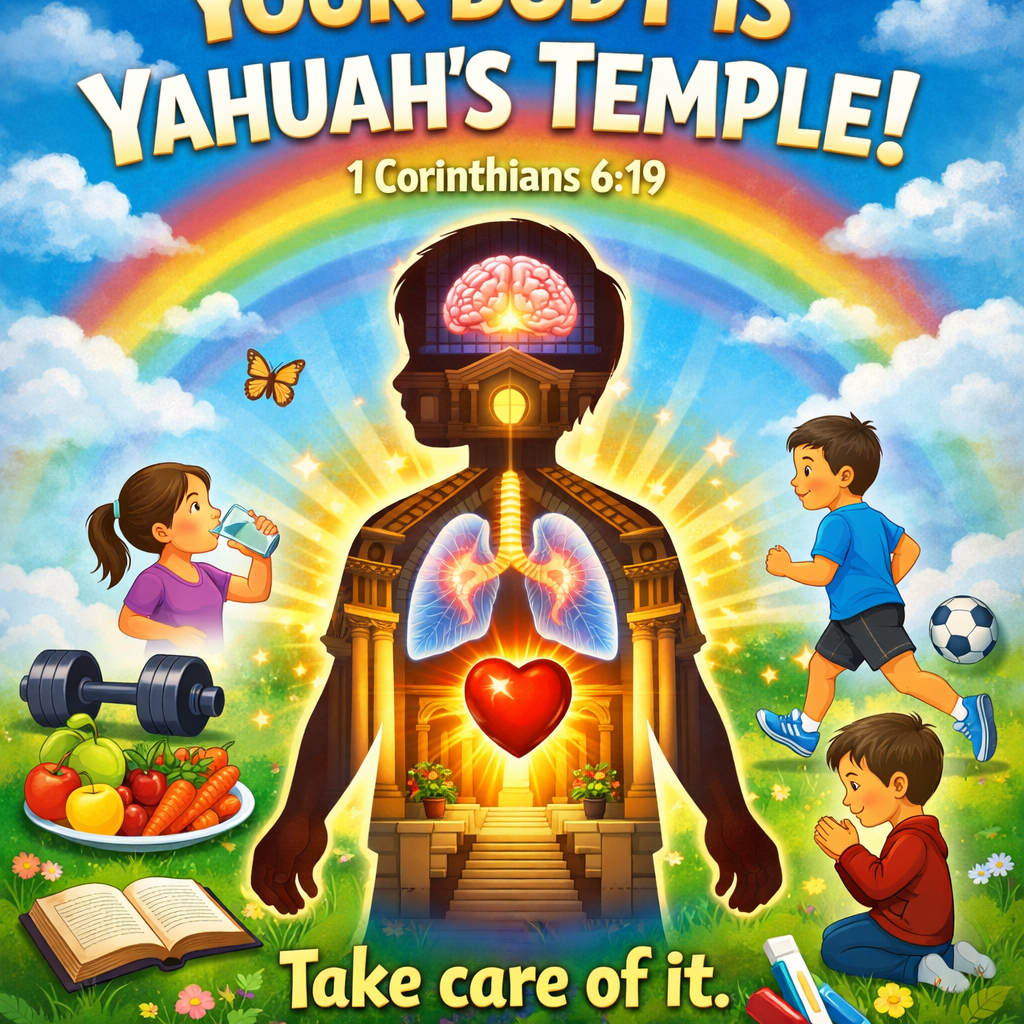
"What? know ye not that your body is the temple of the Ruach HaKodesh which is in you, which ye have of Elohim, and ye are not your own?"
— 1 Corinthians 6:19
Course Summary
This course has examined mainstream medicine to help you understand:
Topics Covered
History and development of modern medicine
Germ theory of disease
The immune system
Vaccines and their theory
Antibiotics and antimicrobials
The pharmaceutical industry
Chronic disease treatment
Cancer therapies
Mental health and psychiatry
Nutrition guidelines
Public health and epidemiology
Alternative medicine
Making informed decisions
Key Takeaways
Understand what mainstream medicine teaches
Recognize financial and institutional interests
Question assumptions behind standard practices
Research both mainstream and alternative views
Trust Yahuah as the ultimate healer
Make informed decisions for your family
📝 Final Reflection
How has this course changed your understanding of mainstream medicine?
What questions will you ask before accepting medical treatments?
How does knowing your body is the temple of the Ruach HaKodesh affect your health decisions?
What role should prayer and Scripture play in health decisions?
"Bless Yahuah, O my soul, and forget not all his benefits: Who forgiveth all thine iniquities; who healeth all thy diseases."
— Psalm 103:2-3