Early Modern History
The Age of Enlightenment & Industrial Revolution
Grades 11-12 | Truth Carriers Education System
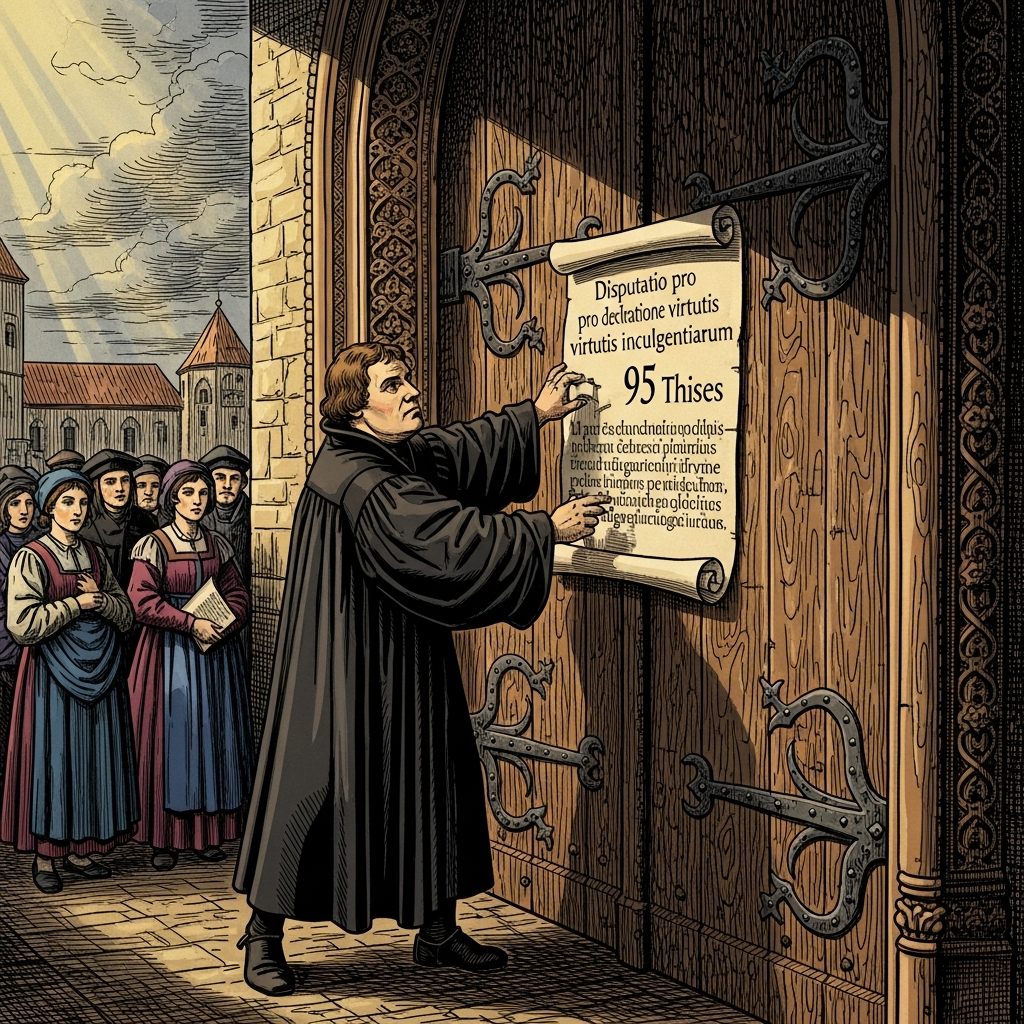
Early modern period
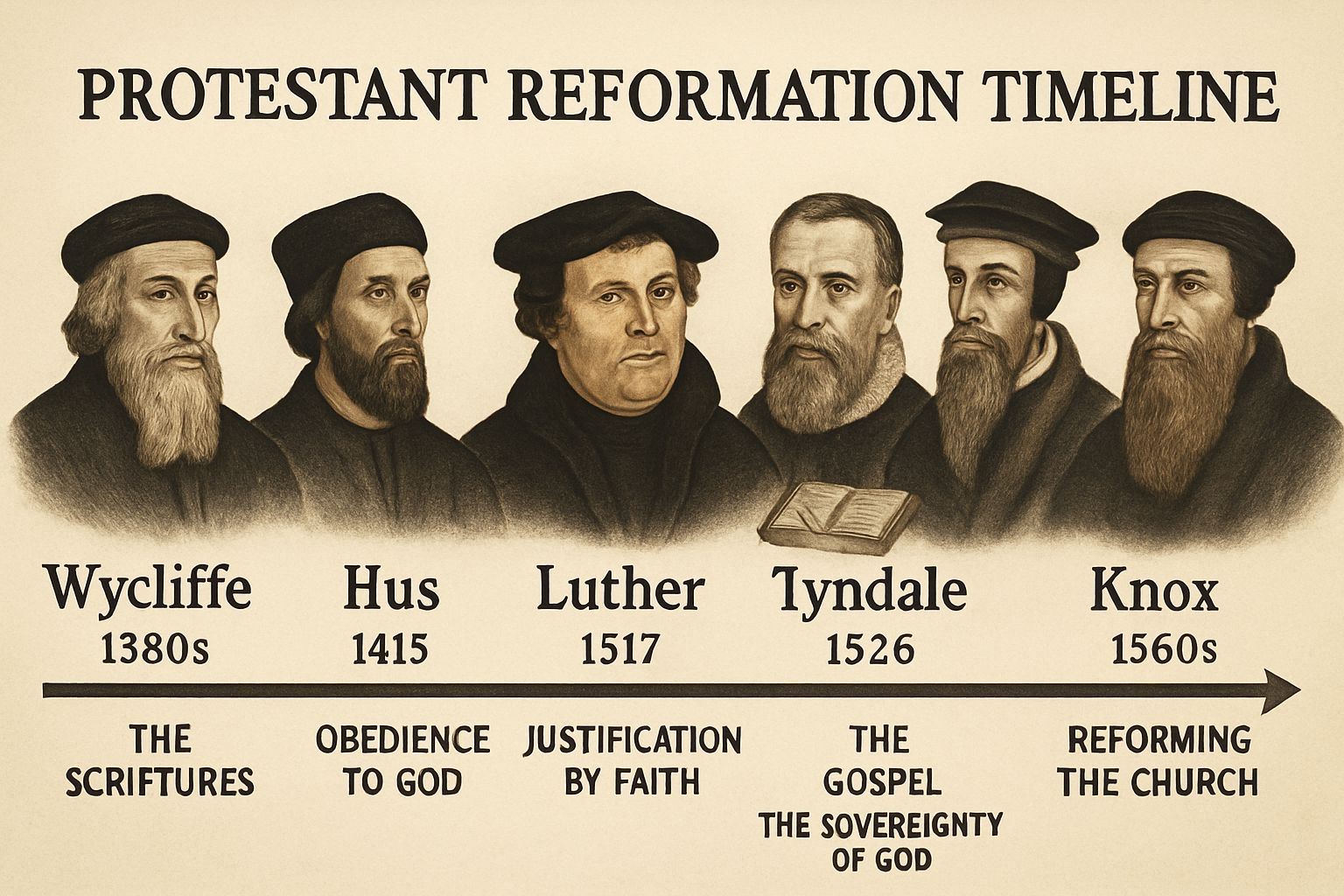
Reformation timeline
Pronunciation Guide for Sacred Names
Yahuah (יהוה) - "Yah-HOO-ah" - The Father's covenant name
Yahusha (יהושע) - "Yah-HOO-sha" - The Son's name meaning "Yah is salvation"
Elohim (אלהים) - "El-oh-HEEM" - God (plural majesty)
Ruach HaKodesh (רוח הקודש) - "Roo-AKH Ha-KO-desh" - The Holy Spirit
Lesson 1: Introduction to the Early Modern Era
The 4Rs Learning Framework
Receive: Learn the content through reading and study
Reflect: Consider what Scripture teaches about these topics
Recall: Test your knowledge with fill-in-the-blank exercises
Respond: Apply what you've learned through discussion and action
Receive
The Early Modern Era (approximately 1500-1800) witnessed transformative changes in how humans understood themselves, their world, and their relationship to the divine. This period includes the Scientific Revolution, the Enlightenment, and the beginning of the Industrial Revolution.
Early Modern Era Timeline
Why Study This Period?
Understanding the Early Modern Era is essential because:
- It shaped the modern secular worldview we encounter today
- Many intellectual assumptions of this era still influence thinking
- Both positive discoveries and dangerous philosophies emerged
- The relationship between faith and reason was redefined
Reflect
This era presents a challenge: How do we appreciate genuine scientific and social advances while recognizing where human thinking departed from divine truth? We must learn to discern both wisdom and error in this influential period.
Recall
Fill in the Blanks
1. The Early Modern Era spans approximately 1500 to .
2. The Revolution occurred from approximately 1500-1700.
3. The Enlightenment is also called the Age of .
4. The Revolution began around 1760.
5. The Revolution occurred in 1789.
Respond
Discussion Questions
1. Why is it important to understand both the achievements and errors of this era?
2. What challenges might Christians face when studying secular intellectual history?
Answer Key - Lesson 1
1. 1800
2. Scientific
3. Reason
4. Industrial
5. French
Lesson 2: The Scientific Revolution
Receive
The Scientific Revolution (1500-1700) transformed how humans study nature. While producing genuine discoveries, it also laid groundwork for later secular thinking that removed God from consideration.
Key Figures
Nicolaus Copernicus (1473-1543)
Polish astronomer who proposed heliocentrism (sun-centered solar system). Importantly, Copernicus was a devout Catholic who saw his work as revealing God's design. His theory wasn't immediately controversial.
Galileo Galilei (1564-1642)
Italian astronomer who used the telescope to support heliocentrism. His conflict with the Church was as much political and personal as theological. Many modern accounts exaggerate the religion-science conflict.
Isaac Newton (1642-1727)
English scientist who discovered laws of motion and gravity. Newton was deeply religious, spending more time on biblical studies than science. He believed his discoveries revealed God's handiwork.
Often Overlooked
Most early scientists were believers who saw science as studying God's creation. The modern myth of "warfare" between science and religion was largely invented in the 19th century. The Scientific Revolution was built on biblical assumptions:
- Creation is orderly because a rational God made it
- Nature follows laws because God is consistent
- Humans can understand creation because we're made in God's image
The Shift in Thinking
While early scientists honored God, their methods created a framework that later thinkers would use to exclude God:
- Empiricism: Knowledge comes from observation and experiment
- Mechanism: Nature works like a machine with predictable laws
- Naturalism: Eventually, explanations excluded supernatural causes
Recall
Fill in the Blanks
1. proposed the heliocentric (sun-centered) theory.
2. used the telescope to support heliocentrism.
3. Isaac discovered laws of motion and gravity.
4. Newton spent more time on studies than science.
5. The idea of knowledge through observation and experiment is called .
Respond
Discussion Questions
1. Why is it important to know that early scientists were often believers?
2. How did biblical assumptions actually enable the Scientific Revolution?
Answer Key - Lesson 2
1. Copernicus
2. Galileo
3. Newton
4. biblical
5. empiricism
Lesson 3: The Enlightenment - Age of Reason
Receive
The Enlightenment (approximately 1685-1815) was an intellectual movement that emphasized human reason as the supreme guide to truth. While producing valuable political ideas, it also promoted dangerous rejection of divine revelation.
Core Enlightenment Ideas
- Reason supremacy: Human reason can solve all problems
- Progress: Humanity is improving and will continue to improve
- Natural rights: Humans have inherent rights (life, liberty, property)
- Religious skepticism: Traditional religion should be questioned or rejected
- Secularism: Society should be organized without religious authority
Key Enlightenment Thinkers
John Locke (1632-1704): English philosopher who influenced American founding. Believed in natural rights and religious toleration, though he was nominally Christian.
Voltaire (1694-1778): French writer who attacked Christianity with satire. Famous for criticizing the church while promoting Deism.
Jean-Jacques Rousseau (1712-1778): Believed humans are naturally good but corrupted by society. His ideas influenced the French Revolution.
Immanuel Kant (1724-1804): German philosopher who sought to limit reason while also limiting faith. His phrase defined the era: "Dare to know."
Deism - The Enlightenment Religion
Deism was a belief system that accepted God as Creator but rejected:
- Divine revelation (the Bible as God's Word)
- Miracles (supernatural interventions)
- Prayer (God's involvement in daily life)
- Salvation through Christ
Deists believed God created the world like a clockmaker, then left it to run on its own.
Biblical Assessment
While the Enlightenment produced some good ideas (religious liberty, opposition to tyranny), its core premises contradict Scripture:
- Human reason is fallen and limited (Proverbs 3:5-6)
- Humanity is not naturally good but sinful (Romans 3:23)
- True wisdom begins with fearing Yahuah (Proverbs 9:10)
- Divine revelation is essential for knowing truth (2 Timothy 3:16)
Recall
Fill in the Blanks
1. The Enlightenment emphasized human as the supreme guide to truth.
2. John believed in natural rights and influenced American founding.
3. attacked Christianity with satire in France.
4. believed God created the world but then left it alone.
5. Kant's phrase "Dare to " defined the era.
Respond
Discussion Questions
1. What is the difference between using reason as a tool versus worshiping reason?
2. Why is Deism ultimately unsatisfying compared to biblical faith?
Answer Key - Lesson 3
1. reason
2. Locke
3. Voltaire
4. Deism
5. know
Lesson 4: The American Revolution
Receive
The American Revolution (1765-1783) combined Enlightenment political ideas with Protestant religious convictions to create a new nation. Understanding its mixed heritage helps us properly evaluate American founding principles.
Causes of the Revolution
- Taxation without representation: Colonists had no voice in Parliament
- Self-governance tradition: Colonists had governed themselves for generations
- Enlightenment ideas: Natural rights, consent of the governed
- Religious convictions: Many saw resistance to tyranny as duty before God
The Declaration of Independence (1776)
Written primarily by Thomas Jefferson, the Declaration expressed key principles:
- "All men are created equal"
- Endowed by their "Creator" with unalienable rights
- Life, liberty, and the pursuit of happiness
- Government derives power from consent of the governed
A Mixed Heritage
The Founding Fathers held diverse religious views:
- Devout Christians: Samuel Adams, Patrick Henry, John Jay
- Deists: Thomas Jefferson, Benjamin Franklin, Thomas Paine
- Mixed: George Washington, John Adams (somewhere between)
The founding documents reflect this mixture—invoking the Creator while avoiding specifically Christian language.
The Constitution (1787)
The U.S. Constitution established a federal republic with:
- Separation of powers (executive, legislative, judicial)
- Checks and balances between branches
- Limited government with enumerated powers
- Bill of Rights protecting individual freedoms
Recall
Fill in the Blanks
1. The Declaration of Independence was written primarily by Thomas .
2. The Declaration says all men are endowed by their with unalienable rights.
3. The U.S. was written in 1787.
4. The Constitution established of powers among government branches.
5. The of Rights protects individual freedoms.
Respond
Discussion Questions
1. How did both Christian and Enlightenment ideas shape American founding?
2. Should America be considered a "Christian nation"? Why or why not?
Answer Key - Lesson 4
1. Jefferson
2. Creator
3. Constitution
4. separation
5. Bill
Lesson 5: The French Revolution
Receive
The French Revolution (1789-1799) shows what happens when Enlightenment ideas are taken to extremes without biblical balance. While the American Revolution succeeded, the French Revolution descended into chaos and terror.
Causes of the Revolution
- Inequality: Nobles and clergy had privileges; common people were burdened
- Debt: France was bankrupt from wars and royal excess
- Enlightenment ideas: Philosophers had attacked tradition and religion
- Famine: Crop failures led to bread shortages
Key Events
The Reign of Terror
Under Robespierre, the Revolution became murderously radical:
- Approximately 17,000 officially executed by guillotine
- Tens of thousands more died in prisons and violence
- Christianity was attacked; churches desecrated
- "Goddess of Reason" worshiped in Notre Dame Cathedral
- Even revolutionary leaders were executed as the violence consumed itself
Why Such Different Outcomes?
| American Revolution | French Revolution |
|---|---|
| Christian and Enlightenment influences balanced | Radical anti-Christian Enlightenment dominated |
| Sought independence from tyranny | Sought to remake society completely |
| Acknowledged human sinfulness (checks and balances) | Believed humans naturally good (Rousseau) |
| Rights come from Creator | Rights come from the state |
| Gradual, orderly change | Violent, chaotic upheaval |
Recall
Fill in the Blanks
1. The French Revolution began in .
2. The was stormed on July 14, 1789.
3. The Reign of saw thousands executed.
4. was the radical leader during the Terror.
5. seized power in 1799, ending the Revolution.
Respond
Discussion Questions
1. Why did rejecting Christianity lead to such violence in France?
2. What lessons should we learn from comparing these two revolutions?
Answer Key - Lesson 5
1. 1789
2. Bastille
3. Terror
4. Robespierre
5. Napoleon
Lesson 6: The Industrial Revolution Begins
Receive
The Industrial Revolution (approximately 1760-1840) transformed human society from agricultural to industrial. Beginning in Britain, it brought both remarkable advances and serious problems.
Why Britain First?
- Natural resources: Coal and iron ore abundant
- Agricultural improvements: Freed workers for factories
- Colonial markets: British Empire provided raw materials and customers
- Stable government: Property rights protected
- Protestant work ethic: Industry valued as service to God
Key Inventions
Textile Industry
Spinning Jenny (1764): James Hargreaves - spun multiple threads
Water Frame (1769): Richard Arkwright - water-powered spinning
Power Loom (1785): Edmund Cartwright - mechanized weaving
Steam Power
Steam Engine (1769): James Watt improved Newcomen's design
Steam power freed factories from rivers, enabled railroads and steamships
The Factory System
Before industrialization, goods were produced in homes ("cottage industry"). Factories centralized production, bringing:
- Greater efficiency and output
- Division of labor (workers did specialized tasks)
- Rigid schedules governed by machines and clocks
- Concentration of workers in industrial cities
Mixed Legacy
The Industrial Revolution demonstrates how human innovation can bring both blessing and curse:
- Increased production of goods
- Eventual rise in living standards
- But also: exploitation, pollution, family disruption
Recall
Fill in the Blanks
1. The Industrial Revolution began in .
2. James improved the steam engine.
3. Before factories, goods were made in homes, called " industry."
4. The Jenny spun multiple threads at once.
5. Steam power freed factories from dependence on .
Respond
Discussion Questions
1. How did the Protestant work ethic contribute to industrialization?
2. Is technological progress always good? How should we evaluate it biblically?
Answer Key - Lesson 6
1. Britain
2. Watt
3. cottage
4. Spinning
5. rivers (or water)
Lesson 7: Social Impact of Industrialization
Receive
While the Industrial Revolution brought economic growth, it also caused tremendous social disruption and suffering, especially in its early decades. Understanding these effects helps us think biblically about economics and social justice.
Urbanization
Industrial cities grew explosively as workers left the countryside:
- Manchester, England grew from 25,000 (1772) to 300,000 (1850)
- Overcrowded housing lacking sanitation
- Disease spread rapidly in cramped conditions
- Pollution from factories darkened skies
- Traditional community and family ties weakened
Working Conditions
Early factory conditions were often brutal:
- 12-16 hour workdays, six days a week
- Child labor from age 5-6 in mines and factories
- Dangerous machinery with no safety regulations
- Wages barely enough for survival
- No job security—workers could be fired at will
Child Labor
Children worked in:
- Textile mills: Small fingers cleaned machines
- Coal mines: Small bodies fit in narrow tunnels
- Chimney sweeping: Dangerous and deadly
Many children died young from accidents, disease, or exhaustion.
Christian Reformers
William Wilberforce (1759-1833)
Famous for ending the slave trade, Wilberforce also fought for factory reform and working conditions.
Lord Shaftesbury (1801-1885)
Evangelical Christian who championed Factory Acts limiting child labor and improving conditions. Called "the poor man's earl."
Biblical Economics
Scripture provides principles for evaluating economic systems:
- Workers deserve fair wages (Leviticus 19:13)
- The poor should not be exploited (Proverbs 22:16)
- Children should be protected (Matthew 18:6)
- Rest (Sabbath) is essential (Exodus 20:8-11)
Recall
Fill in the Blanks
1. Manchester grew from 25,000 to between 1772 and 1850.
2. Early factory workers often worked -16 hour days.
3. Child labor began as young as age in some factories.
4. Lord championed Factory Acts to protect workers.
5. Shaftesbury was called "the man's earl."
Respond
Discussion Questions
1. Why was it significant that Christian leaders fought for factory reform?
2. How should biblical principles guide our thinking about work and economics today?
Answer Key - Lesson 7
1. 300,000
2. 12
3. 5 (or 6)
4. Shaftesbury
5. poor
Lesson 8: Rise of Capitalism and Its Critics
Receive
The Industrial Revolution was accompanied by the development of capitalism as the dominant economic system. Understanding capitalism and its critiques helps us think biblically about economics.
Adam Smith and Free Market Economics
Adam Smith (1723-1790)
Scottish philosopher who wrote "The Wealth of Nations" (1776). Key ideas:
- Free markets coordinate economic activity efficiently
- The "invisible hand" guides self-interest toward common good
- Division of labor increases productivity
- Government should have limited economic role
Key Features of Capitalism
- Private property: Individuals own means of production
- Free markets: Prices set by supply and demand
- Competition: Businesses compete for customers
- Profit motive: Incentive for investment and innovation
- Limited government: State doesn't control economy
Critics of Capitalism
Karl Marx (1818-1883)
German philosopher who created communist ideology:
- History is driven by class struggle
- Capitalism exploits workers (proletariat)
- Workers should seize means of production
- Religion is "opium of the people"
- Goal: classless, stateless communist society
Biblical Assessment
Capitalism's strengths:
- Respects private property (8th commandment)
- Harnesses human motivation productively
- Has raised living standards historically
Capitalism's weaknesses:
- Can become idolatry of wealth (1 Timothy 6:10)
- May neglect the poor without moral restraint
- Requires biblical ethics to function justly
Marxism's fatal flaws:
- Atheistic foundation (denies Creator)
- Violates property rights (theft)
- Has produced tyranny wherever implemented
- Fails to account for human sinfulness
Recall
Fill in the Blanks
1. Adam wrote "The Wealth of Nations."
2. Smith described an "invisible " guiding markets.
3. Karl created communist ideology.
4. Marx called religion the " of the people."
5. Capitalism is based on property ownership.
Respond
Discussion Questions
1. Why does capitalism need biblical ethics to function justly?
2. Why has Marxism produced tyranny despite its claimed goals?
Answer Key - Lesson 8
1. Smith
2. hand
3. Marx
4. opium
5. private
Lesson 9: Transportation Revolution
Receive
The Industrial Revolution transformed not just manufacturing but also how people and goods moved. The Transportation Revolution connected regions and accelerated economic growth.
Road Improvements
Before industrialization, roads were often impassable in bad weather:
- Turnpikes: Private toll roads improved surfaces
- Macadam: John McAdam's crushed stone road surface
- Travel times dramatically reduced
Canals
Canal building peaked 1760-1830:
- Allowed heavy goods transport by water
- Connected industrial centers to ports
- Lowered shipping costs dramatically
- Erie Canal (1825) transformed American trade
The Railroad Age
Key Railroad Developments
1825: Stockton and Darlington Railway (first public railroad)
1830: Liverpool and Manchester Railway (first intercity line)
George Stephenson: "Father of Railways" - developed the Rocket locomotive
By 1850: Britain had 6,000 miles of track
Impact of Railroads
- Fastest transportation ever seen by humans
- Opened interior regions to development
- Created national markets for goods
- Standardized time zones (previously varied by locality)
- Changed perception of distance and speed
- Made possible mass migration and urbanization
Steamships
Steam power transformed ocean travel:
- No longer dependent on wind
- Faster, more reliable voyages
- Increased international trade
- Enabled mass immigration to America
Recall
Fill in the Blanks
1. John developed the crushed stone road surface.
2. The Canal (1825) transformed American trade.
3. George is called the "Father of Railways."
4. The Stockton and Darlington Railway opened in .
5. By 1850, Britain had miles of railroad track.
Respond
Discussion Questions
1. How did faster transportation change people's understanding of the world?
2. What connections do you see between Daniel 12:4 and modern technology?
Answer Key - Lesson 9
1. McAdam
2. Erie
3. Stephenson
4. 1825
5. 6,000
Lesson 10: Religious Responses to Modernization
Receive
The Enlightenment and Industrial Revolution prompted various religious responses. Some embraced modernity; others resisted it; many sought balance between tradition and progress.
The Great Awakening (America)
First Great Awakening (1730s-1740s)
Revival movement emphasizing personal conversion and emotional faith:
- Jonathan Edwards: "Sinners in the Hands of an Angry God"
- George Whitefield: Traveling evangelist with dramatic preaching
- Challenged both Enlightenment rationalism and dead formalism
- United colonists across regional boundaries
Second Great Awakening (1790s-1840s)
Another revival wave responding to post-Revolution religious decline:
- Camp meetings and frontier revivals
- Charles Finney: revivalist methods and social reform
- Spawned reform movements: abolition, temperance, education
Methodism and Evangelicalism
John Wesley (1703-1791)
Founder of Methodism. Emphasized:
- Personal conversion experience
- Holy living and moral reform
- Preaching to the poor and working class
- Small groups for spiritual growth
Methodism reached factory workers whom the established church neglected.
Liberal Theology
Some Protestants accommodated to Enlightenment thinking:
- Questioned biblical miracles and supernatural claims
- Reduced Christianity to ethical teaching
- Rejected doctrines seen as outdated (original sin, hell)
- Eventually produced what we now call "mainline" Protestantism
The Danger of Accommodation
Liberal theology's attempt to make Christianity "respectable" to modern thinkers ultimately weakened it. Churches that abandoned biblical authority eventually declined. The lesson: we must engage with our culture without surrendering to it.
Recall
Fill in the Blanks
1. Jonathan preached "Sinners in the Hands of an Angry God."
2. George was a traveling evangelist in the First Great Awakening.
3. John founded Methodism.
4. Charles was associated with the Second Great Awakening.
5. theology accommodated to Enlightenment thinking.
Respond
Discussion Questions
1. How did revivals counteract Enlightenment rationalism?
2. Why is it dangerous for churches to accommodate to the surrounding culture?
Answer Key - Lesson 10
1. Edwards
2. Whitefield
3. Wesley
4. Finney
5. Liberal
Lesson 11: Colonialism and Global Expansion
Receive
The Early Modern Era saw European powers expand across the globe, establishing colonies in the Americas, Africa, and Asia. This colonialism had complex effects—both destructive and sometimes beneficial.
Motivations for Colonization
- Economic: Access to raw materials and markets
- Political: National prestige and military advantage
- Religious: Spreading Christianity (often mixed with cultural arrogance)
- Social: Outlet for population and adventurous spirits
Major Colonial Empires
- Spain: Central and South America, Philippines
- Portugal: Brazil, coastal Africa, India, East Indies
- Britain: North America, India, Australia, later Africa
- France: North America (Canada, Louisiana), later Africa
- Netherlands: East Indies (Indonesia), Caribbean
The Atlantic Slave Trade
A Grievous Sin
Perhaps the greatest evil of this era was the transatlantic slave trade:
- Approximately 12 million Africans forcibly transported
- Perhaps 2 million died during the Middle Passage
- Slavery denied the image of God in human beings
- Economic greed motivated this horror
- It took Christian abolitionists to end it
Christian Missions
Mixed Legacy
Missionaries often accompanied colonizers with mixed results:
- Some genuinely served indigenous peoples
- Others enabled exploitation or cultural destruction
- Many fought against colonial abuses
- The Gospel spread despite flawed messengers
Recall
Fill in the Blanks
1. colonized Central and South America.
2. Approximately million Africans were transported in the slave trade.
3. colonized India and North America.
4. The Passage was the voyage across the Atlantic.
5. Christian worked to end slavery.
Respond
Discussion Questions
1. How should we evaluate the complex legacy of colonialism?
2. Why was Christian abolition necessary to end slavery?
Answer Key - Lesson 11
1. Spain
2. 12
3. Britain
4. Middle
5. abolitionists
Lesson 12: Seeds of Modern Secularism
Receive
The Early Modern Era planted seeds that would grow into the secular worldview dominant today. Understanding these developments helps us recognize and respond to secular assumptions.
The Rise of Naturalism
While early scientists believed in God, their methods were later used to exclude Him:
- Methodological naturalism: Only natural causes allowed in science
- Philosophical naturalism: Nothing exists beyond the natural world
- These are different claims often conflated
Higher Criticism
Enlightenment methods were applied to the Bible:
- Treated Scripture as merely human literature
- Questioned traditional authorship (Moses, Isaiah, etc.)
- Denied supernatural elements as legendary
- Undermined biblical authority in academic circles
Secularization Process
Steps Toward Secularism
- Deism: God exists but doesn't intervene
- Liberal theology: Christianity without supernatural
- Agnosticism: Cannot know if God exists
- Atheism: Denial of God's existence
- Secularism: Society organized without reference to God
Darwin and Evolution
Charles Darwin's "Origin of Species" (1859) came later but was prepared by Enlightenment thinking:
- Offered naturalistic explanation for life's diversity
- Removed need for divine design (so they claimed)
- Became foundation for secular worldview
The Christian Response
We need not fear secular claims:
- Science itself arose from Christian worldview
- Naturalism is a philosophical assumption, not a scientific discovery
- The Bible has withstood centuries of criticism
- Evidence for God in creation remains powerful
Recall
Fill in the Blanks
1. naturalism claims only natural causes exist.
2. criticism treated the Bible as merely human literature.
3. claims we cannot know if God exists.
4. Charles wrote "Origin of Species."
5. is society organized without reference to God.
Respond
Discussion Questions
1. What is the difference between methodological and philosophical naturalism?
2. How can we engage with secular culture without compromising biblical truth?
Answer Key - Lesson 12
1. Philosophical
2. Higher
3. Agnosticism
4. Darwin
5. Secularism
Lesson 13: Art, Culture, and Ideas
Receive
The Early Modern Era produced distinctive art and culture reflecting changing ideas about God, humanity, and nature. Understanding these cultural expressions helps us see worldview in action.
The Baroque Period (1600-1750)
Baroque art and music expressed:
- Dramatic emotion and grandeur
- Counter-Reformation Catholic piety
- But also Protestant seriousness (Bach)
- Human beings in dynamic, powerful poses
Johann Sebastian Bach (1685-1750) wrote "Soli Deo Gloria" (To God Alone Be Glory) on his manuscripts.
The Classical Period (1750-1820)
Reflected Enlightenment values:
- Order, balance, and reason
- Clarity and restraint
- Mozart, Haydn, early Beethoven
- Less overtly religious themes
Romanticism (1780-1850)
A reaction against Enlightenment rationalism:
- Emphasized emotion, intuition, nature
- Celebrated the individual genius
- Rediscovered medieval period positively
- Sometimes spiritual but often pantheistic rather than biblical
Literature of the Era
Jonathan Swift (1667-1745): "Gulliver's Travels" - satire of human folly
John Milton (1608-1674): "Paradise Lost" - epic Christian poetry
Jane Austen (1775-1817): Novels depicting moral choice
William Blake (1757-1827): Mystical poetry and art
Architecture
- Baroque: Ornate, dramatic churches and palaces
- Neoclassical: Return to Greek and Roman styles (Jefferson's Monticello)
- Reflected Enlightenment admiration for ancient reason
Recall
Fill in the Blanks
1. Johann Sebastian wrote "Soli Deo Gloria" on his manuscripts.
2. The period reflected Enlightenment order and reason.
3. reacted against Enlightenment rationalism.
4. John wrote "Paradise Lost."
5. architecture returned to Greek and Roman styles.
Respond
Art Analysis
Listen to one piece by Bach and one by Mozart. How do they differ in expressing faith or worldview? Write a paragraph comparing them.
Answer Key - Lesson 13
1. Bach
2. Classical
3. Romanticism
4. Milton
5. Neoclassical
Lesson 14: Course Review and Lessons for Today
Receive
The Early Modern Era shaped the world we live in today. As we conclude, let's review key themes and consider what we can learn for faithful living in our time.
Summary of Major Developments
| Area | Key Changes | Biblical Assessment |
|---|---|---|
| Science | Empirical method, natural laws | Good method; foundation in biblical worldview |
| Philosophy | Reason exalted, faith questioned | Reason is good but not supreme |
| Politics | Rights, constitutions, revolutions | Liberty is biblical; tyranny is not |
| Economics | Capitalism, industrialization | Mixed blessings; needs moral restraint |
| Society | Urbanization, class changes | Care for poor essential; community matters |
| Religion | Skepticism, revivals, liberalism | Hold fast to Scripture; resist accommodation |
Key Lessons
What We Can Learn
- Science and faith are compatible: They conflict only when philosophy replaces Scripture
- Human reason is valuable but fallen: It must be submitted to divine revelation
- Progress is not automatic: The French Revolution shows what happens without moral restraint
- Economic systems need biblical ethics: Neither pure capitalism nor socialism is biblical
- Accommodation destroys faith: Liberal theology's path leads to empty pews
- Revival comes through Scripture: Return to the Bible renews the church
Application for Today
- Test modern claims by Scripture, not feelings or fashion
- Appreciate genuine knowledge without embracing secular worldviews
- Engage culture as salt and light, not as accommodators
- Work for justice in economic and social systems
- Maintain confidence in God's Word despite attacks
Recall
Final Review Fill-in-the-Blanks
1. The Scientific Revolution occurred approximately 1500-.
2. Isaac discovered laws of motion and gravity.
3. exalted human reason as the supreme guide to truth.
4. The Revolution began around 1760.
5. Adam wrote "The Wealth of Nations."
6. The of Terror killed thousands in France.
7. Lord championed factory reform in Britain.
8. John founded Methodism.
9. theology accommodated to Enlightenment thinking.
10. We should test modern claims by , not feelings.
Respond
Final Project Options
Choose one of the following projects:
- Essay: Write 500 words on "How the Early Modern Era Shapes Modern Secularism"
- Biography: Write a detailed account of one figure from this era
- Comparison: Compare the American and French Revolutions
- Timeline: Create an illustrated timeline of the era
Final Discussion Questions
1. What aspect of this era's history was most surprising to you?
2. How does understanding this period help you understand today's world?
3. What lessons from this era should the church remember today?
4. How will you apply what you've learned?
Answer Key - Lesson 14
1. 1700
2. Newton
3. The Enlightenment
4. Industrial
5. Smith
6. Reign
7. Shaftesbury
8. Wesley
9. Liberal
10. Scripture