Medieval History & The Reformation
From the Fall of Rome to the Protestant Reformation
Grades 10-11 | Truth Carriers Education System
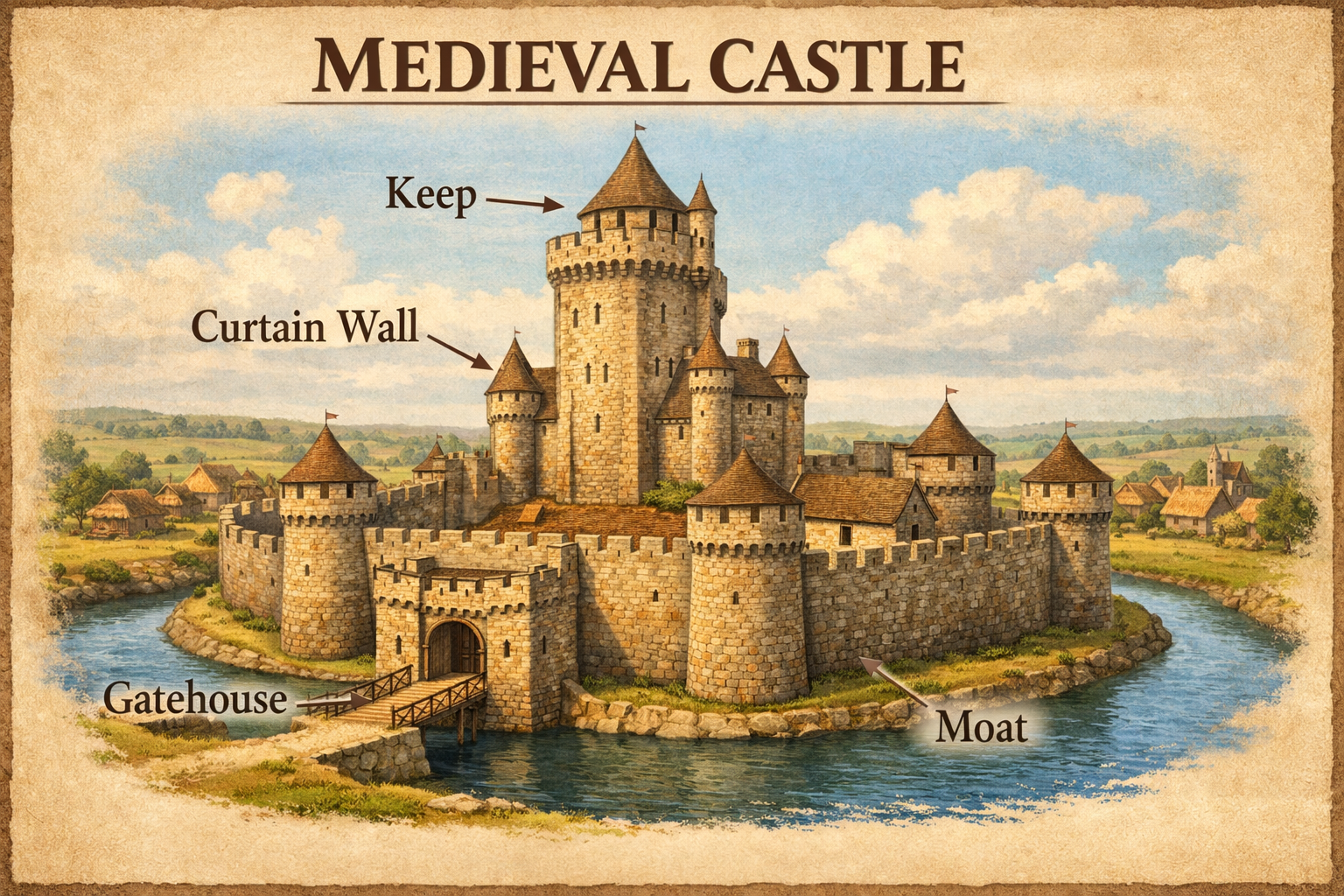
Medieval times
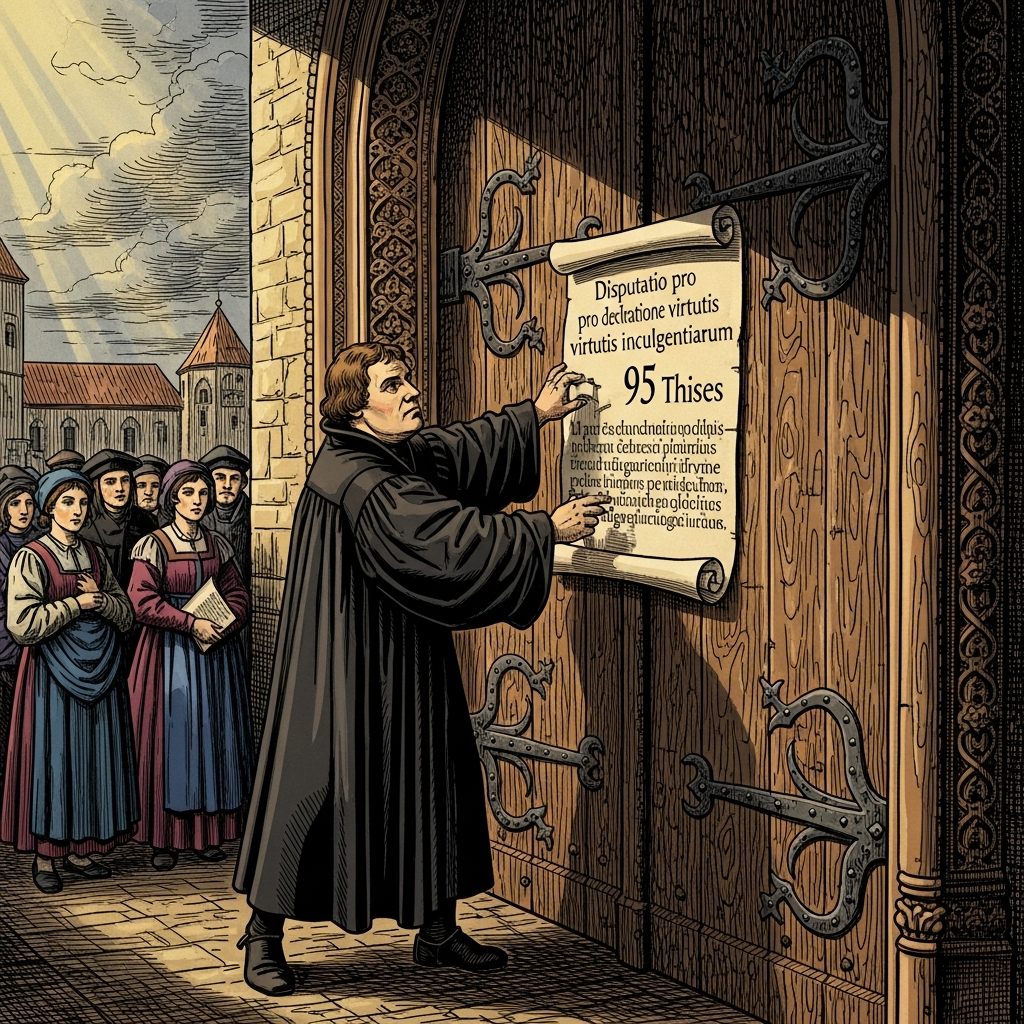
The Reformation era
Pronunciation Guide for Sacred Names
Yahuah (יהוה) - "Yah-HOO-ah" - The Father's covenant name
Yahusha (יהושע) - "Yah-HOO-sha" - The Son's name meaning "Yah is salvation"
Elohim (אלהים) - "El-oh-HEEM" - God (plural majesty)
Ruach HaKodesh (רוח הקודש) - "Roo-AKH Ha-KO-desh" - The Holy Spirit
Lesson 1: Introduction to the Medieval Period
The 4Rs Learning Framework
Receive: Learn the content through reading and study
Reflect: Consider what Scripture teaches about these topics
Recall: Test your knowledge with fill-in-the-blank exercises
Respond: Apply what you've learned through discussion and action
Receive
The Medieval Period (approximately AD 500-1500) spans roughly a thousand years between the fall of Rome and the Renaissance. This era saw the rise and dominance of the Roman Catholic Church, the development of European nations, and eventually the Protestant Reformation.
Understanding the Timeline
Why Study Medieval History?
Understanding medieval history is essential for believers because:
- It reveals how the institutional church departed from Scripture
- It shows how brave individuals preserved and rediscovered biblical truth
- It explains the roots of modern Christianity and denominationalism
- It helps us recognize patterns of spiritual compromise
Reflect
The medieval period shows both the corruption that happens when faith becomes institutionalized and the courage of those who stood for truth. As you study this period, consider: How can we guard against similar compromises today?
Recall
Fill in the Blanks
1. The Medieval Period lasted approximately from AD to AD 1500.
2. The Western Roman Empire fell in AD .
3. The Early Medieval Period is sometimes called the " Ages."
4. The Protestant Reformation began in AD .
5. The Church dominated religious life during the medieval period.
Respond
Discussion Questions
1. Why do you think this period is sometimes called the "Dark Ages"?
2. What might have been some positive aspects of medieval life that are often overlooked?
Answer Key - Lesson 1
1. 500
2. 476
3. Dark
4. 1517
5. Roman Catholic (or Catholic)
Lesson 2: The Rise of the Papacy
Receive
One of the most significant developments of the early medieval period was the growth of papal power. Understanding how the Bishop of Rome became the Pope helps us see how religious authority can be corrupted.
Early Church Leadership
In the early church, leadership was distributed among elders (presbyters) and bishops. Major cities had influential bishops, but no single bishop held supreme authority. The churches in Rome, Constantinople, Alexandria, Antioch, and Jerusalem were all considered important.
Factors in Rome's Rise
- Political significance: Rome was the former imperial capital
- Apostolic claims: Rome claimed connection to Peter and Paul
- Vacuum of power: After Rome fell, the church filled governmental roles
- Doctrinal disputes: Rome positioned itself as arbiter of orthodoxy
- Leo I (AD 440-461): First to claim supreme authority as Pope
Key Historical Development
The Donation of Constantine: A document claiming Emperor Constantine gave the Pope authority over western Europe. This document justified papal political power for centuries—until Renaissance scholars proved it was a forgery created around AD 750-850.
Biblical Perspective
The Bible teaches that Yahusha alone is the head of the church (Colossians 1:18). The concept of a supreme human leader over all believers contradicts the New Testament model of shared eldership and the priesthood of all believers.
Recall
Fill in the Blanks
1. The Bishop of Rome eventually became known as the .
2. I was the first to claim supreme papal authority.
3. The Donation of Constantine was proven to be a .
4. Five major cities had influential bishops in the early church, including Rome and .
5. Colossians 1:18 teaches that is the head of the church.
Respond
Discussion Questions
1. Why would a forged document (Donation of Constantine) be accepted for so long?
2. How does the rise of papal authority compare to biblical church leadership?
Answer Key - Lesson 2
1. Pope
2. Leo
3. forgery
4. Constantinople (or Alexandria, Antioch, Jerusalem)
5. Yahusha (or Christ/Jesus)
Lesson 3: Monasticism and Medieval Faith
Receive
Monasticism was a movement where individuals withdrew from ordinary life to devote themselves entirely to prayer, study, and spiritual disciplines. While it had both positive and negative aspects, monasteries played a crucial role in preserving knowledge during the medieval period.
Origins of Monasticism
Monasticism began in the 3rd-4th centuries with desert hermits in Egypt like Anthony the Great. The movement grew as believers sought to escape what they saw as the corruption of mainstream Christianity after it became the official Roman religion.
Key Monastic Rules
Benedict of Nursia (AD 480-547)
Created the "Rule of St. Benedict" emphasizing prayer, work, and study. His motto: "Ora et Labora" (Pray and Work). Benedictine monasteries became centers of learning throughout Europe.
Positive Contributions
- Preserved manuscripts: Monks copied Scriptures and classical texts
- Education: Monastery schools were often the only education available
- Agriculture: Monasteries developed farming techniques
- Charity: Cared for the poor, sick, and travelers
Problems with Monasticism
- Unbiblical separation: Scripture doesn't command withdrawal from society
- Works-based merit: Asceticism became a way to earn salvation
- Corruption: Many monasteries became wealthy and worldly
- Veneration problems: Monks' relics became objects of worship
A Balanced View
While we can appreciate the monks' devotion and their role in preserving Scripture, we should recognize that isolating oneself from the world contradicts Yahusha's command to be salt and light in the world. The monastic ideal, though sincere, moved away from the New Testament pattern.
Recall
Fill in the Blanks
1. Monasticism began with desert hermits in .
2. Benedict of Nursia created the " of St. Benedict."
3. The motto "Ora et Labora" means "Pray and ."
4. Monks preserved knowledge by manuscripts.
5. John 17:15 shows Yahusha prayed we be kept from evil, not taken out of the .
Respond
Discussion Questions
1. How can Christians today balance spiritual devotion with engagement in the world?
2. What positive lessons can we learn from the monks' dedication to Scripture?
Answer Key - Lesson 3
1. Egypt
2. Rule
3. Work
4. copying
5. world
Lesson 4: The Crusades
Receive
The Crusades were a series of military campaigns (1095-1291) organized by the Roman Catholic Church to capture and hold the Holy Land from Muslim control. They had profound and lasting consequences.
Origins of the Crusades
In 1095, Pope Urban II called for a holy war to recapture Jerusalem. His motivations included:
- Responding to Byzantine emperor's request for military help
- Uniting European nobles under papal authority
- Redirecting European warfare toward external enemies
- Offering spiritual rewards (indulgences) to crusaders
Major Crusades
First Crusade (1096-1099): Successfully captured Jerusalem; established Crusader states
Second Crusade (1147-1149): Failed to recapture lost territory
Third Crusade (1189-1192): Richard the Lionheart vs. Saladin; partial success
Fourth Crusade (1202-1204): Attacked Constantinople instead of Holy Land
Children's Crusade (1212): Tragic youth movement ended in disaster
Consequences of the Crusades
- Religious violence: Mass killings justified in God's name
- Persecution: Jews massacred along crusade routes
- East-West division: Fourth Crusade deepened split with Eastern Christianity
- Lasting hostility: Muslim-Christian tensions still felt today
- Papal power: Increased church authority over secular rulers
Biblical Assessment
The Crusades represent a grave departure from Scripture:
- Yahusha said "My kingdom is not of this world" (John 18:36)
- He taught to love enemies, not kill them (Matthew 5:44)
- The sword used wrongly brings judgment (Matthew 26:52)
- Faith cannot be spread by force (2 Corinthians 10:4)
Recall
Fill in the Blanks
1. Pope II called for the First Crusade in 1095.
2. The First Crusade successfully captured .
3. The Fourth Crusade attacked instead of the Holy Land.
4. were massacred along crusade routes.
5. Yahusha said "My kingdom is not of this ."
Respond
Discussion Questions
1. How do the Crusades demonstrate what happens when religion and political power combine?
2. Why is it important for Christians today to understand and acknowledge this history?
Answer Key - Lesson 4
1. Urban
2. Jerusalem
3. Constantinople
4. Jews
5. world
Lesson 5: Medieval Church Practices and Corruption
Receive
By the late medieval period, the Roman Catholic Church had developed numerous practices that departed significantly from New Testament Christianity. Understanding these practices helps us appreciate why the Reformation was necessary.
Unbiblical Practices
Indulgences
The church claimed power to reduce time in purgatory. Initially granted for acts of penance, indulgences were eventually sold for money. The famous phrase: "As soon as the coin in the coffer rings, the soul from purgatory springs" summarized the corruption.
Purgatory
The doctrine that after death, souls undergo purification before entering heaven. This doctrine, without clear biblical support, created fear and allowed the church to sell "relief" through indulgences, masses for the dead, and prayers to saints.
Other Problematic Practices
- Prayers to saints: Seeking intercession from dead believers rather than going directly to Yahuah
- Relic veneration: Worshiping objects supposedly from saints—bones, clothing, even "pieces of the true cross"
- Transubstantiation: Claiming the communion bread and wine literally become Christ's body and blood
- Withholding Scripture: Bible kept in Latin; laity forbidden to read it
- Clergy celibacy: Required despite 1 Timothy 3:2
- Papal infallibility: Claiming the Pope cannot err in official teachings
Financial Corruption
Simony: The buying and selling of church positions. Wealthy families could purchase bishoprics and other offices, leading to leaders more concerned with profit than souls.
The Core Problem
All these practices share a common error: placing human institutions, traditions, and authorities between believers and Yahuah. Scripture teaches direct access to the Father through Yahusha alone—no priest, saint, or pope needed as intermediary.
Recall
Fill in the Blanks
1. were sold to reduce time in purgatory.
2. is the doctrine of purification after death.
3. The buying and selling of church positions was called .
4. The Bible was kept in , which common people couldn't read.
5. 1 Timothy 2:5 says there is mediator between Elohim and men.
Respond
Discussion Questions
1. Why would withholding the Bible from ordinary people help maintain church power?
2. What modern religious practices might parallel these medieval corruptions?
Answer Key - Lesson 5
1. Indulgences
2. Purgatory
3. simony
4. Latin
5. one
Lesson 6: Pre-Reformation Movements
Receive
Before Luther, many individuals and groups recognized the church's departure from Scripture and called for reform. These "morning stars of the Reformation" prepared the way for the Protestant movement.
Peter Waldo and the Waldensians (1170s)
A wealthy merchant from Lyon who gave away his possessions to follow Christ. The Waldensians emphasized:
- Scripture as the sole authority
- Bible translation into common languages
- Rejection of purgatory and prayers to saints
- Poverty and simple living
They were declared heretics and severely persecuted, yet survived in the Alps for centuries.
John Wycliffe (1320-1384)
"The Morning Star of the Reformation." This Oxford professor:
- Translated the Bible into English
- Rejected papal authority over civil government
- Denied transubstantiation
- Trained "Lollard" preachers to spread biblical teaching
The church condemned him posthumously and dug up his bones to burn them.
Jan Hus (1369-1415)
Bohemian reformer influenced by Wycliffe. He:
- Preached against indulgences and corruption
- Insisted Scripture is supreme authority
- Defended Wycliffe's teachings
Promised safe conduct to defend his views at the Council of Constance, he was betrayed and burned at the stake. His famous words: "You may roast this goose (Hus means 'goose'), but in a hundred years a swan will arise whom you will not be able to burn."
Common Themes
These pre-reformers shared key convictions:
- Scripture over tradition: The Bible, not the church, is final authority
- Bible in common language: People must read God's Word themselves
- Rejection of papal claims: No man can claim to be Christ's vicar
- Willingness to suffer: Truth is worth dying for
Recall
Fill in the Blanks
1. Peter founded the Waldensian movement.
2. John Wycliffe is called "The Star of the Reformation."
3. Wycliffe translated the Bible into .
4. Jan Hus was at the stake for his beliefs.
5. Hus predicted a "" would arise whom they couldn't burn.
Respond
Discussion Questions
1. Why was translating the Bible into common languages so threatening to the church hierarchy?
2. What does the courage of these reformers teach us about standing for truth?
Answer Key - Lesson 6
1. Waldo
2. Morning
3. English
4. burned
5. swan
Lesson 7: Martin Luther and the 95 Theses
Receive
On October 31, 1517, an Augustinian monk named Martin Luther posted 95 statements for debate on the church door in Wittenberg, Germany. This act is traditionally seen as the beginning of the Protestant Reformation.
Luther's Background
Martin Luther (1483-1546)
Born in Eisleben, Germany. Became a monk after a terrifying thunderstorm. Despite rigorous religious practices, he found no peace until studying Romans and discovering salvation by grace through faith. Professor of theology at the University of Wittenberg.
The Indulgence Controversy
Johann Tetzel, a Dominican friar, was selling indulgences near Wittenberg to fund the construction of St. Peter's Basilica in Rome. His aggressive sales tactics—including the promise that indulgences could free souls from purgatory—outraged Luther.
Key Points of the 95 Theses
- True repentance is a heart matter, not a financial transaction
- The Pope has no power over purgatory
- Christians who trust in indulgences are deceived
- The Pope should build St. Peter's with his own money, not the poor's
- True treasure of the church is the Gospel
Luther's Tower Experience
Luther's breakthrough came while studying Romans 1:17: "The just shall live by faith." He realized that righteousness comes not from human works but from God as a gift received through faith. This "justification by faith alone" became the central doctrine of the Reformation.
Spread of the 95 Theses
Thanks to the printing press (invented by Gutenberg around 1440), Luther's theses spread throughout Germany within weeks and across Europe within months. The Reformation had begun.
Recall
Fill in the Blanks
1. Luther posted the 95 Theses on October 31, .
2. Johann was selling indulgences near Wittenberg.
3. Luther was a professor at the University of .
4. The press helped spread the 95 Theses quickly.
5. Luther's key insight was that "the just shall live by ."
Respond
Discussion Questions
1. How did technology (the printing press) play a role in the Reformation's success?
2. Why was the doctrine of justification by faith alone so revolutionary?
Answer Key - Lesson 7
1. 1517
2. Tetzel
3. Wittenberg
4. printing
5. faith
Lesson 8: Luther's Later Work and the Diet of Worms
Receive
After posting the 95 Theses, Luther continued developing his theology and faced increasing pressure from the Roman Church. His stand at the Diet of Worms became one of history's most celebrated moments of conscience.
Key Writings (1520)
Luther published three major works that sharpened the Reformation message:
- "Address to the Christian Nobility": Called German princes to reform the church
- "The Babylonian Captivity of the Church": Attacked the sacramental system
- "On the Freedom of a Christian": Explained salvation by faith alone
The Papal Bull
In June 1520, Pope Leo X issued "Exsurge Domine," threatening excommunication unless Luther recanted within 60 days. Luther's response? He publicly burned the papal bull along with books of church law—a dramatic rejection of papal authority.
The Diet of Worms (1521)
Luther was summoned before the Holy Roman Emperor Charles V at the Diet (assembly) of Worms. Asked to recant his writings, Luther requested a day to consider. The next day, he gave his famous reply:
Luther's Stand
"Unless I am convinced by Scripture and plain reason—I do not accept the authority of popes and councils, for they have contradicted each other—my conscience is captive to the Word of God. I cannot and I will not recant anything, for to go against conscience is neither right nor safe. Here I stand. I can do no other. God help me. Amen."
The Wartburg Castle
Declared an outlaw, Luther was "kidnapped" by friends and hidden in Wartburg Castle. During his ten months there, he translated the entire New Testament into German—making Scripture accessible to ordinary Germans.
Recall
Fill in the Blanks
1. Pope Leo X issued a papal threatening Luther's excommunication.
2. Luther burned the papal document along with books of church .
3. Luther stood before Emperor V at the Diet of Worms.
4. Luther said his conscience was captive to the of God.
5. At Castle, Luther translated the New Testament into German.
Respond
Writing Exercise
Write a paragraph explaining why Luther's phrase "my conscience is captive to the Word of God" is significant for believers today.
Answer Key - Lesson 8
1. bull
2. law
3. Charles
4. Word
5. Wartburg
Lesson 9: The Swiss Reformation
Receive
While Luther was reforming Germany, another movement arose independently in Switzerland. The Swiss Reformation, led by Ulrich Zwingli and later John Calvin, developed its own distinct character.
Ulrich Zwingli (1484-1531)
Parish priest in Zurich who began reforming the church there in 1519. Zwingli emphasized:
- Scripture as sole authority (even more strictly than Luther)
- Removing all unbiblical practices
- Simple worship without images, organs, or elaborate ceremonies
- The Lord's Supper as symbolic memorial (differing from Luther)
Zwingli died in battle defending Zurich against Catholic cantons.
The Marburg Colloquy (1529)
Luther and Zwingli met to unite Protestantism but couldn't agree on the Lord's Supper. Luther insisted Christ was physically present "in, with, and under" the bread and wine. Zwingli believed it was purely symbolic. This disagreement kept Lutherans and Reformed traditions separate.
John Calvin (1509-1564)
French reformer who made Geneva a model Protestant city. Calvin's contributions:
- Institutes of the Christian Religion: Systematic Protestant theology
- Geneva Academy: Trained Reformed ministers for all Europe
- Church discipline: Organized church government
- Predestination emphasis: God's sovereign choice in salvation
Calvinism's Five Points (TULIP)
Later summarized as:
- Total Depravity - Sin affects all of human nature
- Unconditional Election - God chooses without regard to foreseen merit
- Limited Atonement - Christ died effectively for the elect
- Irresistible Grace - God's saving call cannot be finally rejected
- Perseverance of Saints - True believers will persevere to the end
Recall
Fill in the Blanks
1. Ulrich led the Reformation in Zurich.
2. The Marburg failed to unite Luther and Zwingli.
3. John Calvin made a model Protestant city.
4. Calvin wrote the " of the Christian Religion."
5. The five points of Calvinism are summarized by the acronym .
Respond
Discussion Questions
1. Why couldn't Luther and Zwingli agree about the Lord's Supper?
2. What do you think about the doctrine of predestination?
Answer Key - Lesson 9
1. Zwingli
2. Colloquy
3. Geneva
4. Institutes
5. TULIP
Lesson 10: The Radical Reformation
Receive
Beyond Luther and Calvin, a third stream of reform emerged—the Radical Reformation. These believers wanted to go further than the "magisterial" reformers, completely separating church from state and restoring New Testament Christianity.
Key Distinctives of Radical Reformers
- Believer's baptism: Only those professing faith should be baptized (rejecting infant baptism)
- Church-state separation: The state has no authority over the church
- Non-resistance: Many rejected violence and refused military service
- Simple living: Emphasis on discipleship and holy living
- Voluntary church: Membership by personal choice, not birth
The Anabaptists
"Anabaptist" means "re-baptizer." They were called this because they baptized adults who had been baptized as infants. Major groups included:
- Swiss Brethren: Formed in Zurich under Conrad Grebel and Felix Manz
- Mennonites: Followers of Menno Simons (Netherlands)
- Hutterites: Communal living communities founded by Jakob Hutter
Persecution from Both Sides
Tragically, Anabaptists were persecuted by both Catholics and Protestants:
- Felix Manz was drowned in Zurich by Zwingli's government (1527)
- Thousands were executed across Europe
- Methods included burning, drowning, beheading
- Both Luther and Calvin approved of persecution
A Painful Truth
The mainstream reformers, while recovering biblical doctrines, failed to apply them consistently regarding religious liberty. They kept the medieval idea that the state should enforce religious conformity—just now with Protestant rather than Catholic theology.
Anabaptist Legacy
Despite persecution, Anabaptist principles survived and influenced:
- Baptist churches
- Religious liberty movements
- Separation of church and state (American model)
- Mennonite and Amish communities today
Recall
Fill in the Blanks
1. "Anabaptist" means "-baptizer."
2. Felix was drowned by Zwingli's government.
3. Simons led the Mennonite movement.
4. Anabaptists were persecuted by both and Protestants.
5. The Anabaptist principle of church-state separation influenced the model of religious liberty.
Respond
Discussion Questions
1. Why is it significant that both Catholics and Protestants persecuted Anabaptists?
2. What can we learn from the Anabaptists about faithfulness under persecution?
Answer Key - Lesson 10
1. re
2. Manz
3. Menno
4. Catholics
5. American
Lesson 11: The English Reformation
Receive
The English Reformation had unique characteristics, beginning for political rather than theological reasons, yet eventually producing important Protestant developments.
Henry VIII's Break with Rome (1534)
King Henry VIII wanted to annul his marriage to Catherine of Aragon to marry Anne Boleyn. When the Pope refused, Henry declared himself head of the Church of England (Act of Supremacy, 1534). Initially, this was political separation only—Henry remained doctrinally Catholic and persecuted Protestants.
English Reformation Timeline
William Tyndale and the English Bible
William Tyndale (1494-1536)
Translated the New Testament and much of the Old Testament from Greek and Hebrew into English. His famous declaration: "If God spare my life, I will make a boy that drives the plough know more of the Scripture than the Pope does."
Tyndale was betrayed, arrested, strangled, and burned at the stake. His last words: "Lord, open the King of England's eyes." Within a year, Henry VIII authorized an English Bible based largely on Tyndale's work.
The Puritans
The Puritans believed the Church of England retained too many Catholic practices. They wanted to "purify" the church by:
- Removing remaining Catholic ceremonies
- Preaching biblical exposition
- Strict moral discipline
- Simplifying worship
Persecuted in England, many Puritans emigrated to America, profoundly shaping American culture.
Recall
Fill in the Blanks
1. Henry VIII declared himself head of the Church of England in .
2. Queen Mary I was called " Mary" for her persecution of Protestants.
3. William translated the Bible into English.
4. The King Bible was published in 1611.
5. The wanted to purify the Church of England.
Respond
Discussion Questions
1. How did Tyndale's prayer ("Lord, open the King of England's eyes") come true?
2. Why was giving people the Bible in their own language so important to the reformers?
Answer Key - Lesson 11
1. 1534
2. Bloody
3. Tyndale
4. James
5. Puritans
Lesson 12: The Counter-Reformation
Receive
The Roman Catholic Church responded to the Protestant Reformation with its own reform efforts, known as the Counter-Reformation or Catholic Reformation. While addressing some abuses, it also solidified the doctrinal differences between Catholics and Protestants.
The Council of Trent (1545-1563)
This church council met intermittently over 18 years to respond to Protestantism. Key decisions:
- Affirmed tradition: Church tradition equal to Scripture as authority
- Rejected sola fide: Salvation requires faith AND works
- Upheld transubstantiation: Bread and wine become Christ's body and blood
- Kept seven sacraments: Versus Protestant's two (baptism, Lord's Supper)
- Maintained purgatory: Though reformed some abuses
- Confirmed papal authority: Pope's primacy over all Christians
The Jesuits (Society of Jesus)
Founded by Ignatius of Loyola in 1540, the Jesuits became the church's most effective agents:
- Highly educated and disciplined
- Established schools and universities throughout Europe
- Led missionary efforts worldwide
- Served as advisors to kings and princes
- Worked to win back Protestant territories
The Inquisition Intensified
The Roman Inquisition was strengthened to suppress heresy. The Index of Forbidden Books was created, banning Protestant writings and certain scientific works (including Galileo's).
Biblical Assessment
While the Counter-Reformation addressed some genuine abuses (simony, clerical immorality), it rejected the Reformation's core rediscoveries:
- Scripture alone as authority
- Faith alone for salvation
- Christ alone as mediator
- Grace alone as the source of salvation
- Glory to God alone
Recall
Fill in the Blanks
1. The Council of met from 1545 to 1563.
2. The council affirmed that tradition was to Scripture.
3. Ignatius of founded the Jesuits.
4. The Index of Books banned Protestant writings.
5. The Counter-Reformation rejected salvation by faith .
Respond
Discussion Questions
1. Why do you think the Catholic Church couldn't simply accept the Reformation's core teachings?
2. What positive changes came from the Counter-Reformation?
Answer Key - Lesson 12
1. Trent
2. equal
3. Loyola
4. Forbidden
5. alone
Lesson 13: The Five Solas and Reformation Theology
Receive
The Protestant Reformation can be summarized in five Latin phrases known as the Five Solas. These represent the core rediscoveries of biblical Christianity that distinguished Protestantism from medieval Catholicism.
The Five Solas
1. Sola Scriptura - Scripture Alone
The Bible is the only infallible rule of faith and practice. Church tradition, papal decrees, and councils must be tested by Scripture, not the reverse.
Key verse: "All scripture is given by inspiration of Elohim, and is profitable for doctrine, for reproof, for correction, for instruction in righteousness." - 2 Timothy 3:16
2. Sola Fide - Faith Alone
Justification (being declared righteous before God) comes through faith alone, not through human works or merit.
Key verse: "Therefore being justified by faith, we have peace with Elohim through our Master Yahusha Ha'Mashiach." - Romans 5:1
3. Sola Gratia - Grace Alone
Salvation is entirely a gift of God's grace, not something earned or deserved. Even faith itself is God's gift.
Key verse: "For by grace are ye saved through faith; and that not of yourselves: it is the gift of Elohim." - Ephesians 2:8
4. Solus Christus - Christ Alone
Yahusha is the only mediator between God and man. No saint, priest, or pope can intercede for salvation—only Christ.
Key verse: "For there is one Elohim, and one mediator between Elohim and men, the man Mashiach Yahusha." - 1 Timothy 2:5
5. Soli Deo Gloria - To God Alone Be Glory
All glory belongs to God alone for salvation. Humans cannot take credit for any part of being saved.
Key verse: "Not unto us, O Yahuah, not unto us, but unto thy name give glory, for thy mercy, and for thy truth's sake." - Psalm 115:1
Why These Matter Today
The Five Solas remain relevant because the same errors they addressed still exist:
- Traditions elevated above Scripture
- Works-based religion (trying to earn salvation)
- Human mediators between believers and God
- Self-glory rather than God-centered faith
Recall
Fill in the Blanks
1. Sola Scriptura means " Alone."
2. Sola means "Faith Alone."
3. Sola Gratia means " Alone."
4. Solus means "Christ Alone."
5. Soli Deo Gloria means "To Alone Be Glory."
Respond
Memory Exercise
Create a study card for each of the Five Solas, including the Latin phrase, English meaning, and a key Scripture verse.
Answer Key - Lesson 13
1. Scripture
2. Fide
3. Grace
4. Christus
5. God
Lesson 14: Course Review and Legacy of the Reformation
Receive
The Protestant Reformation fundamentally changed Christianity and Western civilization. As we conclude this course, let's review key concepts and consider the Reformation's lasting significance.
Course Summary
| Topic | Key Points |
|---|---|
| Medieval Church | Papal authority, monasticism, Crusades, corruption |
| Pre-Reformers | Waldo, Wycliffe, Hus - prepared the way |
| Luther | 95 Theses, justification by faith, Diet of Worms |
| Swiss Reformation | Zwingli, Calvin, Reformed theology |
| Radical Reformation | Anabaptists, believer's baptism, church-state separation |
| English Reformation | Tyndale, English Bible, Puritans |
| Counter-Reformation | Council of Trent, Jesuits, Catholic response |
Reformation Legacy
- Bible access: Scripture translated into hundreds of languages
- Education: Emphasis on literacy so people could read the Bible
- Individual conscience: Luther's stand influenced concepts of religious freedom
- Work ethic: All work seen as service to God, not just religious vocations
- Political change: Challenged absolute authority, eventually influencing democracy
Unfinished Reformation
While the Reformation recovered crucial biblical truths, reformers didn't go far enough in some areas:
- Retained infant baptism (except Anabaptists)
- Kept state-church unions
- Often persecuted dissenters
- Didn't restore biblical feast days
- Kept Sunday rather than returning to Sabbath
Reformation is an ongoing process—"Reformed and always reforming" (Semper Reformanda).
Application for Today
The Reformation teaches us to:
- Test all teaching by Scripture
- Trust in Christ alone for salvation
- Stand for truth even at great cost
- Continue studying and reforming our beliefs
- Value direct access to God's Word
Recall
Final Review Fill-in-the-Blanks
1. The Medieval Period lasted approximately AD 500 to .
2. John Wycliffe is called the " Star of the Reformation."
3. Martin Luther posted the 95 Theses in .
4. The Swiss reformer emphasized predestination.
5. Anabaptists practiced 's baptism rather than infant baptism.
6. William translated the Bible into English.
7. The Council of was the Catholic response to Protestantism.
8. Sola Scriptura means " Alone."
9. The Jesuits were founded by Ignatius of .
10. Semper Reformanda means "always ."
Respond
Final Project Options
Choose one of the following projects:
- Essay: Write a 500-word essay on "Why the Reformation Still Matters Today."
- Biography: Research and write a detailed biography of one reformer not fully covered in this course.
- Timeline: Create an illustrated timeline of the Reformation from 1400-1600.
- Comparison: Compare and contrast any two reformers' views on a specific issue.
Final Discussion Questions
1. Which reformer's story impacted you most and why?
2. How has this course changed your understanding of church history?
3. What areas might still need "reformation" in Christianity today?
4. How can we apply the reformers' courage to our own lives?
Answer Key - Lesson 14
1. 1500
2. Morning
3. 1517
4. Calvin
5. believer
6. Tyndale
7. Trent
8. Scripture
9. Loyola
10. reforming