Historical Fiction & Biographies of Faithful Believers
Grades 5-6
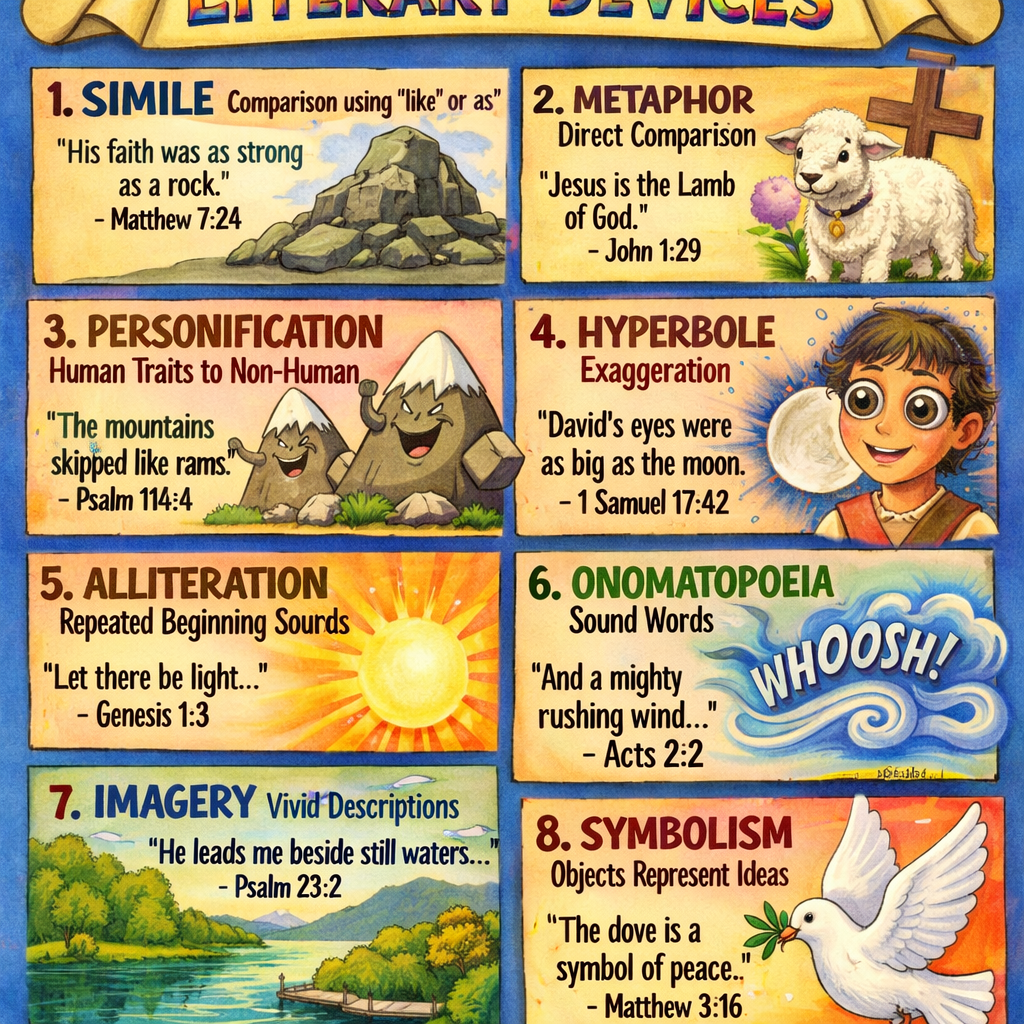
Literary devices
Character analysis
Study Guide: Reading with Discernment
This course teaches you to read literature thoughtfully - enjoying good stories while evaluating them through a biblical worldview.
Comprehension
Understanding what you read
Analysis
Breaking down the story elements
Evaluation
Judging by biblical standards
Application
Learning lessons for life
"Finally, brethren, whatsoever things are true, whatsoever things are honest, whatsoever things are just, whatsoever things are pure, whatsoever things are lovely, whatsoever things are of good report; if there be any virtue, and if there be any praise, think on these things." - Philippians 4:8
1What is Historical Fiction?
Understanding the Genre
Historical fiction is a story set in a real time period from the past. It combines:
Historical facts: Real events, places, and sometimes real people
Fictional elements: Made-up characters, dialogue, and specific scenes
Worldview Alert!
When reading historical fiction, ask:
What parts are historically accurate?
What parts are invented by the author?
Does this align with Scripture's account of history?
What worldview is the author promoting?
Elements of Fiction to Analyze
Setting: Where and when does the story take place?
Characters: Who are the people in the story?
Plot: What happens? (Beginning, middle, end)
Conflict: What problems must be overcome?
Theme: What message or lesson does the story teach?
Point of View: Who is telling the story?
Think About It
1. Why might an author choose to write historical fiction rather than non-fiction history?
2. What are the benefits and dangers of learning history through fiction?
3. How can we use Philippians 4:8 as a guide for what we read?
Family Activity
2Biography: William Tyndale
The Man Who Gave Us the English Bible
📖
Recommended Reading
"The Smuggler's Flame" or any Tyndale biography
BiographyReformation
The story of William Tyndale, who gave his life to translate Scripture into English.
Key Facts About William Tyndale (c. 1494-1536)
c. 1494 - Born in Gloucestershire, England
1512-1515 - Studied at Oxford University
1523 - Sought permission to translate the Bible; was refused
1524 - Fled to Germany to translate Scripture
1526 - First printed English New Testament completed
1536 - Martyred for his faith (strangled and burned)
Tyndale's Famous Quote: "I defy the Pope, and all his laws; and if God spares my life, ere many years, I will cause the boy that drives the plow to know more of the Scriptures than thou dost!"
Character Traits to Admire
Courage: He risked (and gave) his life for truth
Dedication: Years of work in hiding to complete his translation
Conviction: He would not compromise despite threats
Love for Common People: He wanted everyone to read Scripture
Questions for Discernment
1. Why did the religious authorities want to stop people from reading the Bible in English?
2. Why was Tyndale considered a "heretic" by the church of his day?
3. What does this teach us about "official" religious authorities versus Scripture?
Writing Activity
Write a journal entry as if you were William Tyndale, hiding in Germany while translating the New Testament. What thoughts and prayers might you have? (8-10 sentences)
Family Activity
3Historical Fiction: The Bronze Bow
by Elizabeth George Speare
⚔️
The Bronze Bow
Elizabeth George Speare (1961)
Historical FictionFirst Century Israel
A young Jewish man named Daniel, filled with hatred for the Romans, encounters Yahusha and must choose between revenge and forgiveness.
Historical Setting
Time: First century AD, during Roman occupation of Israel
Place: Galilee, near the Sea of Galilee
Historical Context: The Jewish people were under Roman rule. Many hoped for a military Messiah who would overthrow Rome. Zealot groups formed to fight the Romans.
Main Characters
Daniel bar Jamin: A young man consumed by hatred after Romans killed his father
Leah: Daniel's sister, traumatized and fearful
Joel and Malthace: Wealthy young people who befriend Daniel
Yahusha (Jesus): A historical figure woven into the story
Worldview Analysis
Key Theme: Hatred destroys, but love heals.
The book explores the tension between:
Desire for revenge vs. Yahusha's teaching of love
Political freedom vs. spiritual freedom
Human methods vs. Yahuah's ways
Critical Question: While this book portrays Yahusha positively, how accurately does it represent His true teachings and identity?
Discussion Questions
1. Why was Daniel so consumed by hatred? What had happened to his family?
2. How did the Zealots plan to defeat Rome? Why did this approach fail?
3. What did Yahusha mean by "the kingdom of Elohim"? Was it the political kingdom the people expected?
4. How did Daniel change by the end of the story? What caused this change?
"But I say unto you, Love your enemies, bless them that curse you, do good to them that hate you, and pray for them which despitefully use you, and persecute you." - Matthew 5:44
Writing Activity
Write about a time when you struggled with anger or unforgiveness. How does Yahusha's teaching challenge us to respond differently? (One paragraph)
Family Activity
4Biography: Corrie ten Boom
The Hiding Place
🕊️
The Hiding Place
Corrie ten Boom (1971)
AutobiographyWorld War II
The true story of a Dutch Christian family who hid Jews during the Nazi occupation, and Corrie's journey through concentration camps.
Key Facts About Corrie ten Boom (1892-1983)
1892 - Born in Haarlem, Netherlands
1940 - Germany invaded the Netherlands
1942-1944 - Family hid Jews in their home ("the Hiding Place")
1944 - Family arrested; sent to concentration camps
1944 - Father Casper died 10 days after arrest
1944 - Sister Betsie died in Ravensbruck camp
1945 - Corrie released (clerical error - one week before all women her age were killed)
1945-1983 - Traveled the world sharing her testimony
Character Traits to Admire
Courage: Risked death to protect the persecuted
Faith: Trusted Yahuah even in the concentration camp
Forgiveness: Forgave her captors, including a former guard
Obedience: Followed Yahuah's command to love, regardless of cost
Corrie's Famous Quote: "There is no pit so deep that [Elohim's] love is not deeper still."
Lessons for Today
Question to Consider: The ten Boom family helped Jews escape persecution. What does this teach us about:
Standing up against evil, even when dangerous?
Obeying Yahuah's law above man's law?
The reality of anti-Semitism and why it persists?
How ordinary people can do extraordinary things?
Discussion Questions
1. Why did the ten Boom family risk their lives to hide Jews?
2. How did Corrie and Betsie maintain their faith in the concentration camp?
3. What does Corrie's story teach us about forgiveness? (Think about her meeting with the former guard.)
4. Could something like the Holocaust happen again? What signs should we watch for?
Writing Activity
Imagine you lived in Nazi-occupied Europe. Would you risk your life to hide someone being persecuted? Write about what you think you would do and why. (One paragraph)
Family Activity
5Historical Fiction: The Hawk That Dare Not Hunt By Day
by Scott O'Dell
🦅
The Hawk That Dare Not Hunt By Day
Scott O'Dell (1975)
Historical FictionReformation
A young English smuggler becomes involved in helping William Tyndale smuggle the first English Bibles into England.
Historical Context
Time: 1520s-1530s, during the Protestant Reformation
Place: England, Germany, Belgium
Conflict: The Catholic Church controlled Scripture. Reading an English Bible was punishable by death. Reformers believed everyone should read Yahuah's Word in their own language.
Main Characters
Tom Barton: Young smuggler who becomes involved in Bible smuggling
Uncle Jack: Tom's uncle, a merchant smuggler
William Tyndale: Historical figure - the Bible translator
Worldview Analysis
Key Themes:
The power of Scripture to change lives
The cost of following truth
Religious corruption vs. pure faith
Personal transformation through conviction
Critical Question: Why would religious leaders want to keep the Bible from common people? What does this reveal about religious systems that claim authority over Scripture?
Discussion Questions
1. Why was it illegal to own an English Bible in the 1500s?
2. How does Tom's character change throughout the story? What causes this change?
3. What risks did people take to get the Bible into England? Was it worth it?
4. Are there places today where the Bible is forbidden? What can we learn from Tyndale's courage?
"The grass withers, the flower fades: but the word of our Elohim shall stand forever." - Isaiah 40:8
Writing Activity
Write a news report as if you were a journalist in 1536 reporting on Tyndale's death. Include: what happened, why he was executed, and what his work accomplished. (8-10 sentences)
Family Activity
6Biography: George Müller
The Man Who Lived by Faith
🏠
Recommended Reading
Any biography of George Müller
BiographyFaith
The remarkable story of a man who cared for 10,000 orphans without ever asking anyone for money - only praying.
Key Facts About George Müller (1805-1898)
1805 - Born in Prussia (Germany)
Early Life - Was a thief and gambler as a young man
1825 - Converted to faith at age 20
1836 - Opened first orphan home in Bristol, England
1836-1898 - Cared for over 10,000 orphans
Lifetime - Received over £1.5 million through prayer alone
1898 - Died at age 92
Remarkable Facts
Never asked anyone for money - only prayed
Never went into debt
Kept detailed records of every prayer answered
Read the Bible through over 200 times
His purpose: to show that Yahuah still answers prayer
Müller's Life Verse: "Open your mouth wide, and I will fill it." - Psalm 81:10
Discussion Questions
1. How did Müller's early life contrast with his later life of faith?
2. Why did Müller choose to never ask people for money?
3. What can we learn from Müller about trusting Yahuah for our needs?
4. How does Müller's life demonstrate that Yahuah is alive and active today?
Writing Activity
Müller once prayed for breakfast when there was no food - and it arrived just in time. Write about something you need to trust Yahuah for. Then write a prayer about it. (One paragraph)
Family Activity
7Evaluating Literature Biblically
A Framework for Discernment
Not all books labeled "Christian" are good, and not all secular books are bad. Here's how to evaluate what you read:
Questions to Ask About Any Book
What worldview does it promote?
Does it acknowledge Yahuah as Creator?
Does it present good and evil accurately?
What does it say (or assume) about human nature?
What behaviors does it celebrate or condemn?
Are sinful behaviors portrayed positively?
Are righteous behaviors mocked?
What effect does it have on your mind?
Does it draw you closer to Yahuah or away?
Does it fill your mind with pure or impure thoughts?
Is it historically/factually accurate?
Does it misrepresent history or Scripture?
Does it promote false information as truth?
"Prove all things; hold fast that which is good. Abstain from all appearance of evil." - 1 Thessalonians 5:21-22