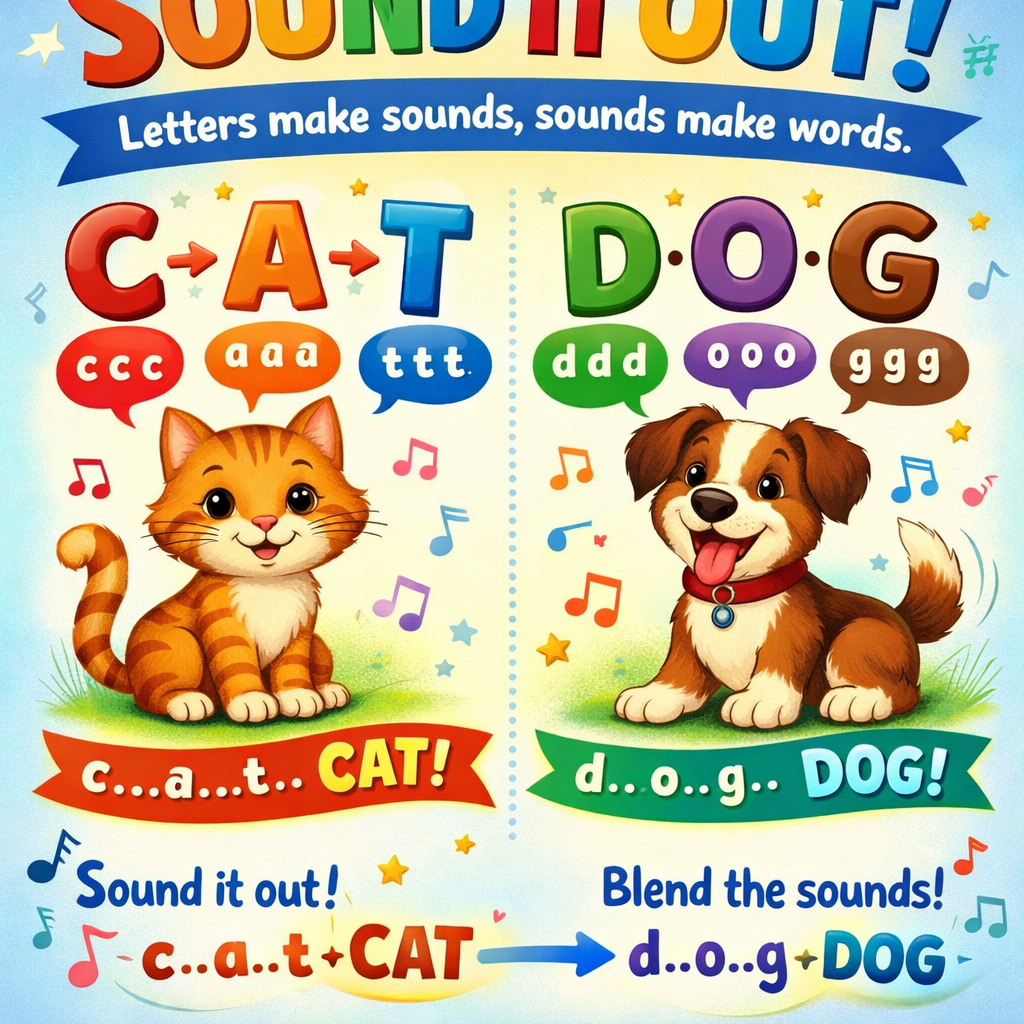
Learning to read!
Letters and sounds
Learning to read!
Letters and sounds
Grade 2 Level - Growing Strong in Reading and Truth
TRUTH CARRIERS EDUCATION SYSTEM
Language Arts Series - Chapter Book Adventures
You are becoming a reading champion! This year, you will read longer stories with chapters, learn to read with expression, and discover amazing truths from Scripture. Get ready for an exciting adventure through Yahuah's Word!
This Grade 2 workbook builds on Grade 1 skills with longer multi-part stories, increased comprehension depth, and fluency development. Each lesson includes:
Recommended pace: 1 lesson per week with daily sight word and fluency practice.
"Your word is a lamp to my feet and a light to my path."
- Psalm 119:105
descendants - all the people who come from one family, like children, grandchildren, and great-grandchildren
faith - believing something is true even when you cannot see it
altar - a special place built with stones to worship Yahuah
Canaan - the land Yahuah promised to give Abraham and his family
Abraham's Great Adventure Begins
Long ago, in a city called Ur, there lived a man named Abram. He lived with his wife Sarai and his family. In those days, most people worshiped false gods made of wood and stone. But Abram was different. He knew there was only one true Elohim.
One day, Yahuah spoke to Abram. "Leave your country," Yahuah said. "Leave your family and your father's house. Go to a land that I will show you."
This was not an easy thing to do! Abram did not know where he was going. He had to leave his home, his friends, and everything he knew. Would you be scared to leave everything behind?
But Yahuah made Abram a wonderful promise. He said, "I will make you into a great nation. I will bless you and make your name great. You will be a blessing to others. All the families of the earth will be blessed through you!"
What did Abram do? The Bible tells us that "Abram went, as Yahuah had told him." He believed Yahuah's promise, even though he could not see the land yet. He packed up his tents, gathered his animals, and began the long journey with his wife Sarai and his nephew Lot.
Abram was seventy-five years old when he started this great adventure of faith!
"By faith Abraham, when he was called to go out to a place which he was to receive as an inheritance, obeyed and went out, not knowing where he was going."
- Hebrews 11:8
What do you think will happen next in Abraham's journey? Write your prediction:
Answer in complete sentences!
1. Where did Abram live before Yahuah called him?
2. What did Yahuah tell Abram to do?
3. What promise did Yahuah make to Abram? Name TWO things Yahuah promised:
4. How old was Abram when he began his journey?
5. Think deeper: Why do you think it was hard for Abram to leave his home?
1. Yahuah made a wonderful to Abram.
2. Abram Yahuah and left his home.
3. Yahuah said He would make Abram into a great .
4. Abram believed Yahuah because he had .
5. Yahuah said Abram would be .
Read this passage with expression! Pay attention to the punctuation.
"Leave your country," Yahuah said. "Go to a land I will show you. I will make you into a great nation. I will bless you!" Abram believed. He obeyed. He packed his tents and began the long journey. He did not know where he was going, but he trusted Yahuah.
| Reading | Time | Expression (1-5) | Words Wrong |
|---|---|---|---|
| First | _____ seconds | _____ | _____ |
| Second | _____ seconds | _____ | _____ |
| Third | _____ seconds | _____ | _____ |
Has Yahuah ever asked you or your family to do something hard? How is your story like Abraham's story?
generous - willing to give or share freely with others
quarrel - an angry argument or disagreement
flocks - groups of sheep or goats
herds - groups of cattle or large animals
A Generous Heart
Abram traveled with his wife Sarai and his nephew Lot. They journeyed from place to place until they came to the land of Canaan. When they arrived, Yahuah appeared to Abram again.
"To your descendants I will give this land," Yahuah promised. Abram was so thankful! He built an altar there and worshiped Yahuah.
Years passed. Yahuah blessed Abram and Lot with many animals. Abram had sheep, goats, and cattle. Lot also had many flocks and herds. They both became very rich!
But then a problem came. There was not enough grass and water for all their animals. The servants of Abram and the servants of Lot began to quarrel. "Our animals need this land!" each group said.
Abram did not want to fight with his nephew. He went to Lot and said, "Let there be no quarrel between you and me. We are family! Look at all this land. You choose first. If you go left, I will go right. If you go right, I will go left."
Lot looked around. He saw a beautiful green valley with plenty of water. It looked like the best land! Lot chose that land for himself, near the cities of Sodom and Gomorrah.
Abram was generous. He let Lot choose first, even though Abram was older and could have chosen first. Abram trusted Yahuah to take care of him.
After Lot left, Yahuah spoke to Abram again. "Look in every direction - north, south, east, and west. All the land you see, I will give to you and your descendants forever!"
"A generous person will prosper; whoever refreshes others will be refreshed."
- Proverbs 11:25
1. Why did Abram's servants and Lot's servants quarrel?
2. What did Abram say to Lot to solve the problem?
3. What kind of land did Lot choose?
4. How did Abram show he was generous?
5. Think deeper: Why do you think Yahuah blessed Abram even more after he was generous to Lot?
Match the cause (what happened first) with the effect (what happened next):
| CAUSE | EFFECT |
|---|---|
| 1. There was not enough grass | A. Yahuah promised Abram all the land |
| 2. Abram let Lot choose first | B. The servants began to quarrel |
| 3. Abram was generous | C. Lot took the green valley |
Answers: 1-___ , 2-___ , 3-___
Write T for True or F for False:
_____ 1. Abram and Lot had very few animals.
_____ 2. Abram wanted to fight with Lot.
_____ 3. Lot chose the beautiful green valley.
_____ 4. Abram let Lot choose first.
_____ 5. Yahuah was angry with Abram for being generous.
Read with expression! Make the dialogue sound like real people talking.
"Let there be no quarrel between us," Abram said kindly. "We are family! Look at all this land. You choose first. If you go left, I will go right." Lot looked around carefully. He saw the beautiful green valley. "I will take that land," Lot said. Abram smiled. He trusted Yahuah.
| Reading | Time | Words Wrong |
|---|---|---|
| First | _____ seconds | _____ |
| Second | _____ seconds | _____ |
| Third | _____ seconds | _____ |
patient - able to wait calmly for a long time without getting upset
impossible - something that seems like it cannot happen
miracle - an amazing thing that only Yahuah can do
fulfilled - when a promise comes true
Nothing Is Too Hard for Yahuah
Many years passed after Yahuah's promise. Abram and Sarai grew older and older. They still had no children. Abram began to wonder, "How can I become a great nation if I have no son?"
One night, Yahuah took Abram outside. "Look up at the sky," Yahuah said. "Count the stars, if you can." Abram looked up. There were more stars than he could ever count!
"Your descendants will be like these stars," Yahuah promised. "They will be too many to count!"
Abram believed Yahuah. Even though it seemed impossible, Abram trusted in Yahuah's promise. The Bible says that Yahuah counted Abram's faith as righteousness.
More years went by. Abram was now ninety-nine years old! Yahuah appeared to him again. "I am changing your name," Yahuah said. "You will no longer be called Abram. Your name will be Abraham, which means 'father of many.' Your wife will be called Sarah instead of Sarai."
Then Yahuah told Abraham amazing news: "Sarah will have a son!"
When Sarah heard this, she laughed! She was ninety years old - how could she have a baby? But Yahuah asked, "Is anything too hard for Yahuah?"
And just as Yahuah promised, Sarah had a baby boy the next year! They named him Isaac, which means "laughter." Abraham was one hundred years old when Isaac was born!
Yahuah always keeps His promises - even when they seem impossible!
"Is anything too hard for Yahuah? At the appointed time I will return to you, and Sarah shall have a son."
- Genesis 18:14
1. Why was Abram worried about Yahuah's promise?
2. What did Yahuah compare Abraham's descendants to?
3. What does the name "Abraham" mean?
4. Why did Sarah laugh when she heard she would have a baby?
5. What does the name "Isaac" mean, and why was he given that name?
6. Think deeper: What does this story teach us about waiting for Yahuah's promises?
Number these events in the order they happened (1-6):
_____ Isaac was born when Abraham was 100 years old.
_____ Yahuah showed Abraham the stars.
_____ Yahuah changed Abram's name to Abraham.
_____ Sarah laughed when she heard she would have a baby.
_____ Abram wondered how he could become a great nation.
_____ Yahuah promised Sarah would have a son.
Hebrew Names and Their Meanings:
Abraham waited 25 years for Isaac to be born! Write about a time you had to wait for something. How did you feel while waiting?
twin - one of two children born at the same time to the same mother
birthright - special rights that belonged to the oldest son in a family
deceive - to trick someone or make them believe something that is not true
consequences - the results of our actions, good or bad
Two Brothers, Two Choices
Isaac grew up and married a woman named Rebekah. For many years, they had no children. Isaac prayed to Yahuah for his wife, and Yahuah answered his prayer. Rebekah was going to have twins!
The first baby born was red and hairy. They named him Esau. The second baby was born holding onto Esau's heel! They named him Jacob, which means "one who grabs the heel."
The twins were very different. Esau loved to hunt in the fields. He was strong and rough. Jacob was quiet and liked to stay near the tents. Their father Isaac loved Esau best because he enjoyed eating the wild animals Esau caught. Their mother Rebekah loved Jacob best.
One day, Esau came home from hunting. He was very, very hungry. Jacob was cooking some red stew that smelled delicious.
"Quick! Give me some of that red stew!" Esau begged. "I am so hungry I could die!"
Jacob saw his chance. "First, sell me your birthright," he said.
The birthright was very important. It meant that Esau would receive a double portion of everything his father owned. It meant he would be the leader of the family. But Esau did not think about the future. He only thought about his hungry stomach right now.
"What good is a birthright if I die of hunger?" Esau said. "Fine, you can have it!"
So Esau traded his birthright for a bowl of stew. The Bible says he "despised" his birthright - he did not value it at all. This was a very bad choice!
"See to it that no one is... like Esau, who for a single meal sold his inheritance rights as the oldest son."
- Hebrews 12:16
1. Who were the twin sons of Isaac and Rebekah?
2. How were the two brothers different from each other?
3. What is a birthright, and why was it important?
4. What did Esau trade his birthright for?
5. Think deeper: Why was Esau's choice a bad one? What should he have done instead?
Fill in the chart to compare Esau and Jacob:
| ESAU | JACOB | |
|---|---|---|
| Which twin was born first? | ||
| What did he like to do? | ||
| Which parent loved him best? | ||
| What kind of personality? |
flee - to run away quickly from danger
vision - a dream or picture from Yahuah
vow - a serious promise made to Yahuah
Bethel - means "house of Elohim"
A Stairway to Heaven
After Jacob took the blessing that was meant for Esau, his brother was furious! Esau was so angry that he planned to kill Jacob. When Rebekah heard about Esau's plan, she warned Jacob.
"You must flee to my brother Laban's house," she said. "Stay there until your brother's anger cools down."
So Jacob ran away from home. He traveled alone through the wilderness. When the sun went down, he stopped to sleep. He used a stone for a pillow - not very comfortable!
That night, Jacob had an amazing dream. He saw a ladder reaching from earth all the way up to heaven! Angels were going up and down on the ladder. At the very top stood Yahuah Himself!
Yahuah spoke to Jacob in the dream. "I am Yahuah, the Elohim of Abraham and Isaac. I will give you this land. Your descendants will be like the dust of the earth - too many to count! They will spread in every direction. And through your family, all the nations of the earth will be blessed."
Then Yahuah made Jacob a wonderful promise: "I am with you. I will watch over you wherever you go. I will bring you back to this land. I will never leave you until I have done everything I promised."
When Jacob woke up, he was amazed! "Surely Yahuah is in this place, and I did not know it!" he said. "This is the gate of heaven!"
Jacob took the stone he had used as a pillow and set it up as a marker. He poured oil on it and named the place Bethel, which means "house of Elohim." Then Jacob made a vow to serve Yahuah forever.
"I am with you and will watch over you wherever you go... I will not leave you until I have done what I have promised you."
- Genesis 28:15
1. Why did Jacob have to run away from home?
2. What did Jacob use for a pillow?
3. Describe what Jacob saw in his dream:
4. What did Yahuah promise Jacob?
5. What does "Bethel" mean, and why did Jacob name the place that?
Draw Jacob's dream - show the ladder, angels, and heaven:
Read with expression! Make your voice show Jacob's amazement.
Jacob looked up and saw an amazing sight! A ladder stood on the earth, reaching all the way to heaven! Angels were going up and down on the ladder! At the top stood Yahuah Himself! "I am with you," Yahuah said. "I will never leave you." When Jacob woke up, he cried, "Surely Yahuah is in this place!"
wrestle - to struggle or fight with someone by grabbing and holding them
reconcile - to become friends again after being angry with each other
Israel - Jacob's new name, meaning "one who struggles with Elohim"
embrace - to hug someone warmly
From Jacob to Israel
Jacob stayed with his uncle Laban for twenty years. He worked hard and married two wives, Leah and Rachel. He had twelve sons and one daughter. Yahuah blessed him with many animals and servants.
Then Yahuah told Jacob it was time to go home. But Jacob was afraid! What would Esau do when he saw him? Would his brother still want to kill him after all these years?
Jacob sent servants ahead with gifts for Esau - hundreds of goats, sheep, camels, cattle, and donkeys. "Maybe these gifts will make my brother forgive me," Jacob thought.
The night before Jacob would meet Esau, something amazing happened. Jacob was alone when a man appeared and began to wrestle with him! They wrestled all night long until daybreak.
Jacob would not let go! "I will not let you go unless you bless me," Jacob said.
The man asked, "What is your name?"
"Jacob," he answered.
"Your name will no longer be Jacob," the man said. "You will be called Israel, because you have struggled with Elohim and with humans and have overcome."
Jacob realized he had been wrestling with Yahuah Himself! He named that place Peniel, meaning "face of Elohim."
The next day, Jacob saw Esau coming with four hundred men! Jacob bowed down to the ground seven times as he approached his brother. But Esau did something wonderful - he ran to meet Jacob! He threw his arms around him and embraced him! Both brothers wept with joy.
Esau had forgiven Jacob. The brothers were reconciled at last!
"Then the man said, 'Your name will no longer be Jacob, but Israel, because you have struggled with Elohim and with humans and have overcome.'"
- Genesis 32:28
1. How long did Jacob stay with his uncle Laban?
2. Why was Jacob afraid to go back home?
3. What happened to Jacob the night before he met Esau?
4. What does the name "Israel" mean?
5. How did Esau respond when he finally saw Jacob?
6. Think deeper: What do you think Jacob learned from this experience about forgiveness?
Jacob changed a lot! Fill in how he was different:
| JACOB AT THE BEGINNING | ISRAEL AT THE END |
|---|---|
| Tricked his brother | |
| Ran away from problems | |
| Was afraid of Esau |
Hebrew - another name for an Israelite, one of Yahuah's chosen people
slave - a person who is forced to work without being paid and has no freedom
wilderness - a wild, empty land where few people live
humble - not thinking you are better than others; willing to learn
Learning in Two Schools
You remember baby Moses - how his mother put him in a basket, and the princess found him and raised him in the palace? Moses grew up as a prince of Egypt! He learned to read and write. He learned about war and government. He wore fine clothes and lived in a beautiful palace.
But Moses knew he was not really an Egyptian. He was a Hebrew - one of Yahuah's people! When he saw how the Egyptians treated the Hebrew slaves, it made him very sad and angry.
One day, when Moses was forty years old, he saw an Egyptian beating a Hebrew slave. Moses looked around. When he saw no one was watching, he killed the Egyptian and hid his body in the sand.
The next day, Moses saw two Hebrews fighting each other. When he tried to stop them, one of them said, "Who made you ruler over us? Are you going to kill me like you killed that Egyptian?"
Moses was afraid! Pharaoh heard what Moses had done and tried to kill him. So Moses ran away to a land called Midian, far from Egypt.
In Midian, Moses became a shepherd. He married a woman named Zipporah and had two sons. For forty years, Moses lived quietly in the desert, taking care of sheep.
But Yahuah was not finished with Moses! During those forty years, Yahuah was preparing Moses for something very special. Sometimes we have to wait and learn before Yahuah uses us for His purposes.
Back in Egypt, the Israelites cried out to Yahuah because of their slavery. And Yahuah heard their cry...
"Moses was educated in all the wisdom of the Egyptians and was powerful in speech and action."
- Acts 7:22
1. Where did Moses grow up, and what was his life like?
2. What made Moses sad and angry?
3. What did Moses do that made him have to run away?
4. Where did Moses go, and what did he do there for forty years?
5. Think deeper: Why do you think Yahuah let Moses spend forty years as a shepherd before using him to lead Israel?
Moses lived for 120 years! Fill in what happened during each part:
| YEARS | WHAT HAPPENED |
|---|---|
| 0-40 | Moses grew up in _______________ |
| 40-80 | Moses was a _______________ in Midian |
| 80-120 | Moses _______________ Israel out of Egypt |
exodus - a departure of many people; leaving a place
Passover - the feast remembering when the death angel passed over Hebrew homes
deliverance - being rescued or set free from danger
commemorate - to remember and honor an important event
The Night of Deliverance
After the burning bush, Moses returned to Egypt. He stood before Pharaoh and said, "Thus says Yahuah, 'Let My people go!'" But Pharaoh refused. So Yahuah sent nine terrible plagues on Egypt - blood, frogs, gnats, flies, livestock disease, boils, hail, locusts, and darkness.
Still, Pharaoh would not let the people go. Then Yahuah said, "One more plague I will bring on Pharaoh and Egypt. After that, he will let you go."
Yahuah gave Moses special instructions. "Tell each family to take a lamb without any spots or marks. Kill the lamb and put its blood on the top and sides of your door frames. Roast the lamb and eat it with unleavened bread and bitter herbs. Be dressed and ready to leave quickly!"
"That night," Yahuah said, "I will pass through Egypt. Every firstborn son will die. But when I see the blood on your door, I will pass over you. The plague will not touch you."
The Israelites did exactly as Yahuah commanded. At midnight, Yahuah struck down all the firstborn in Egypt. There was loud crying throughout the land - but in the homes with blood on the doorposts, everyone was safe!
Pharaoh called for Moses that very night. "Get out!" he cried. "Take your people and go! Leave my country!"
The Israelites left in such a hurry that their bread didn't have time to rise! After 430 years in Egypt, they were finally free! About 600,000 men, plus women and children, walked out of Egypt that night.
Yahuah told them to remember this night forever. Every year, they would celebrate the Passover feast to remember how Yahuah delivered them from slavery.
"This is a day you are to commemorate; for the generations to come you shall celebrate it as a festival to Yahuah - a lasting ordinance."
- Exodus 12:14
1. How many plagues did Yahuah send before the last one?
2. What did the Israelites have to put on their doorposts? Why?
3. What happened at midnight in Egypt?
4. Why is this feast called "Passover"?
5. How many years had the Israelites been in Egypt?
6. Think deeper: Why do you think Yahuah wanted His people to remember this night every year?
Match each Passover element with what it represents:
| ELEMENT | MEANING |
|---|---|
| 1. Lamb without spot | A. The bitterness of slavery |
| 2. Blood on doorpost | B. They left in a hurry |
| 3. Bitter herbs | C. Perfect, without sin |
| 4. Unleavened bread | D. Protection from death |
Answers: 1-___ , 2-___ , 3-___ , 4-___
manna - the miraculous bread from heaven that Yahuah provided for Israel
complain - to express unhappiness about something
grumble - to complain in a low, muttering voice
provision - things supplied to meet a need
Bread from Heaven, Water from Rock
After crossing the Red Sea, the Israelites traveled into the wilderness. There were millions of people - how would they find enough food and water in the desert?
Soon the people began to complain. "We wish we had died in Egypt!" they grumbled. "At least we had food there! Did you bring us out here to starve?"
Moses prayed to Yahuah. And Yahuah answered in an amazing way!
"I will rain down bread from heaven," Yahuah said. "Each morning, the people will gather enough for that day."
The next morning, the ground was covered with something white and flaky, like frost. "What is it?" the people asked. That's exactly what "manna" means - "What is it?" It tasted like wafers made with honey. Every morning for forty years, Yahuah provided manna for His people!
There were special rules about manna. They could only gather enough for one day. If they tried to keep extra, it would get wormy and smell bad - except on the sixth day! On the sixth day, they gathered double because no manna fell on the Sabbath. Yahuah was teaching them to trust Him day by day and to keep His Sabbath holy.
Another time, the people complained because there was no water. They were so angry they wanted to stone Moses!
Yahuah told Moses, "Take your staff and strike the rock. Water will come out of it."
Moses struck the rock, and water poured out - enough for millions of people and all their animals! Once again, Yahuah provided for His children in the wilderness.
"Yahuah said to Moses, 'I will rain down bread from heaven for you. The people are to go out each day and gather enough for that day.'"
- Exodus 16:4
1. What did the Israelites complain about in the wilderness?
2. What was manna, and what did it taste like?
3. What were the special rules about gathering manna?
4. How did Yahuah provide water for His people?
5. Think deeper: What lessons was Yahuah teaching His people through the manna?
| CAUSE (What happened first) | EFFECT (What happened next) |
|---|---|
| The people complained about being hungry | |
| People tried to save extra manna overnight | |
| There was no water in the desert | |
| Moses struck the rock with his staff |
famine - a time when there is not enough food for people to eat
widow - a woman whose husband has died
loyal - faithful and devoted to someone
Moab - a country near Israel
Ruth's Promise
Long ago, there was a famine in the land of Israel. A man named Elimelech took his wife Naomi and their two sons to live in the country of Moab, where there was more food.
While they lived in Moab, sad things happened. First, Elimelech died, leaving Naomi a widow. Then her two sons married Moabite women named Orpah and Ruth. But after about ten years, both sons also died. Now there were three widows: Naomi, Orpah, and Ruth.
Naomi was very sad. She had lost her husband and both her sons! She heard that Yahuah had blessed Israel with food again, so she decided to return to Bethlehem, her hometown.
"Go back to your own mothers," Naomi told her daughters-in-law. "May Yahuah bless you for being kind to me and my sons."
Orpah kissed Naomi goodbye and went back to her family. But Ruth would not leave!
"Don't ask me to leave you," Ruth begged. "Where you go, I will go. Where you stay, I will stay. Your people will be my people, and your Elohim will be my Elohim. Where you die, I will die, and there I will be buried. May Yahuah punish me if anything but death separates you and me!"
When Naomi saw how determined Ruth was, she stopped trying to send her away. The two women traveled together to Bethlehem.
When they arrived, everyone in town was excited. "Is this really Naomi?" they asked. But Naomi said, "Don't call me Naomi (which means 'pleasant'). Call me Mara (which means 'bitter'), because Yahuah has made my life very hard."
They arrived in Bethlehem just as the barley harvest was beginning. Little did they know that Yahuah had a wonderful plan for them!
"Where you go I will go, and where you stay I will stay. Your people will be my people and your Elohim my Elohim."
- Ruth 1:16
1. Why did Naomi's family move to Moab?
2. What sad things happened to Naomi while she lived in Moab?
3. What did Ruth promise Naomi? Use her exact words if you can:
4. Why did Naomi want to be called "Mara"?
5. Think deeper: Why do you think Ruth refused to leave Naomi?
| ORPAH | RUTH | |
|---|---|---|
| What did she decide to do? | ||
| Where did she go? | ||
| What word describes her choice? |
glean - to gather leftover grain in a field after the harvest
harvest - the time when crops are gathered from the fields
favor - kindness or approval shown to someone
kinsman-redeemer - a family member who helps or rescues another family member
A Kind Man Named Boaz
Ruth and Naomi were very poor. They had no money and no food. But Ruth had a plan. She knew about Yahuah's law that said poor people could follow behind the harvesters and pick up any grain that was left behind. This was called gleaning.
"Let me go to the fields and glean grain," Ruth told Naomi. "Maybe someone will be kind to me."
Ruth went out to work. She happened to come to a field that belonged to a man named Boaz. He was actually a relative of Naomi's husband! Ruth didn't know this yet - but Yahuah did!
Ruth worked hard all morning, bending down to pick up stalks of grain. When Boaz came to check on his workers, he noticed Ruth.
"Who is that young woman?" he asked his servants.
"She is the Moabite woman who came back with Naomi," they answered. "She asked permission to glean and has been working hard since morning!"
Boaz went to Ruth. "Listen, my daughter," he said kindly. "Stay in my field. Don't go to anyone else's field. Stay close to my servant girls. I have told the young men not to bother you. When you are thirsty, drink from the water jars my servants have filled."
Ruth was amazed! She bowed down to the ground. "Why are you so kind to me?" she asked. "I am only a foreigner!"
Boaz answered, "I have heard about everything you have done for Naomi - how you left your own country to come with her. May Yahuah bless you for your kindness! May you be rewarded by Yahuah, under whose wings you have come to take refuge!"
At mealtime, Boaz invited Ruth to eat with his workers. He gave her so much food that she had leftovers to take home! He also secretly told his workers, "Let her glean among the sheaves. Pull out some stalks for her from the bundles and leave them for her to pick up."
When Ruth returned home that evening, she had gathered a whole basket of grain - much more than most gleaners! Naomi was so happy. "Where did you work today?" she asked. When Ruth told her about Boaz, Naomi exclaimed, "Yahuah bless him! That man is one of our kinsman-redeemers!"
"May Yahuah repay you for what you have done. May you be richly rewarded by Yahuah, the Elohim of Israel, under whose wings you have come to take refuge."
- Ruth 2:12
1. What is gleaning, and why did Ruth need to do it?
2. Who was Boaz, and how was he related to Naomi?
3. List THREE ways Boaz showed kindness to Ruth:
4. What did Boaz say he had heard about Ruth?
5. Think deeper: Do you think it was a coincidence that Ruth ended up in Boaz's field? Why or why not?
Write examples of how Ruth and Boaz showed these traits:
| TRAIT | RUTH | BOAZ |
|---|---|---|
| Hard-working | ||
| Kind | ||
| Generous |
redeem - to buy back or rescue something or someone
ancestor - a person in your family who lived before you, like a great-great-grandparent
lineage - the line of ancestors in a family; family history
restore - to bring back to an original good condition
A Family Redeemed
Ruth continued to glean in Boaz's fields through the barley harvest and the wheat harvest. Naomi began to think about Ruth's future.
"My daughter, I want to find you a home where you will be cared for," Naomi said. She told Ruth about a special custom. According to Yahuah's law, a relative could marry a widow and take care of her. This was called being a kinsman-redeemer.
Boaz was a kinsman-redeemer! But there was one problem - another relative was closer than Boaz. That man had the first right to redeem Ruth and Naomi's family land.
Boaz went to the town gate where important business was done. He found the other relative and gathered ten elders of the town as witnesses.
"Naomi is selling her husband's land," Boaz explained. "You have the first right to buy it. Will you redeem it?"
"Yes, I will redeem it," the man said.
"But," Boaz continued, "when you buy the land, you must also marry Ruth, to carry on her husband's family name."
The man changed his mind. "I cannot do that. You redeem it yourself!"
So Boaz became Ruth's kinsman-redeemer! He bought the land and married Ruth. All the people at the gate blessed them, saying, "May Yahuah make this woman like Rachel and Leah, who built up the house of Israel!"
Ruth and Boaz had a son! They named him Obed. Naomi, who once said her life was bitter, now held her grandson with joy! The women of Bethlehem told her, "Praise Yahuah! Your daughter-in-law, who loves you, is better to you than seven sons!"
But the most amazing part of Ruth's story is this: Obed grew up and had a son named Jesse. Jesse had a son named David - King David! And many generations later, from this very family, came Yahusha the Messiah!
A foreign widow who gleaned in the fields became the great-grandmother of the greatest king of Israel, and an ancestor of our Savior!
"So Boaz took Ruth and she became his wife... and she gave birth to a son. The women said to Naomi: 'Praise be to Yahuah!'"
- Ruth 4:13-14
1. What is a kinsman-redeemer, and what did he do?
2. Why did the first relative decide not to redeem Ruth?
3. What was the name of Ruth and Boaz's son?
4. How did Naomi's life change from the beginning of the story to the end?
5. What famous person was Ruth's great-great-grandson?
6. Think deeper: What does Ruth's story teach us about how Yahuah can use ordinary people for His amazing purposes?
Fill in the family tree:
| Ruth + Boaz | |
| ↓ | |
| ___________ (son) | |
| ↓ | |
| ___________ (grandson) | |
| ↓ | |
| ___________ (great-grandson, the king!) | |
| ↓ (many generations) | |
| Yahusha the Messiah! |
Write 3-4 sentences telling the whole story of Ruth. Include the beginning, middle, and end:
You have completed 12 amazing lessons!
You read 4 chapter-book stories from the Bible!
You learned over 120 new sight words!
You practiced fluency and comprehension!
You are ready for Grade 3 Reading!
For Parents/Teachers
Lesson 1:
Fill-in: 1-promise, 2-obeyed, 3-nation, 4-faith, 5-blessed
Lesson 2:
Cause/Effect: 1-B, 2-C, 3-A
True/False: 1-F, 2-F, 3-T, 4-T, 5-F
Lesson 3:
Sequence: 6, 2, 3, 5, 1, 4
Lesson 4:
Compare: Esau-first/hunting/Isaac/rough; Jacob-second/tents/Rebekah/quiet
Lesson 5:
Answers will vary for comprehension and visualization
Lesson 6:
Character change examples: forgave others, faced problems, trusted Yahuah
Lesson 7:
Timeline: Palace, shepherd, led
Lesson 8:
Passover elements: 1-C, 2-D, 3-A, 4-B
Lesson 9:
Cause/Effect: Yahuah sent manna; it got wormy; Moses struck the rock; water poured out
Lesson 10:
Compare: Orpah went home to Moab; Ruth stayed with Naomi and went to Bethlehem
Lesson 11:
Character traits - examples will vary but should show hard work, kindness, generosity
Lesson 12:
Family Tree: Obed, Jesse, David
120+ words learned in this workbook
| Unit 1 (Lessons 1-3) | Unit 2 (Lessons 4-6) |
|---|---|
| country, promise, journey, family, believe, obey, blessed, nation, trust, called, travel, worship, between, choose, separate, generous, nephew, quarrel, peaceful, plenty, wait, patient, stars, count, impossible, laugh, nothing, wonderful, finally, Isaac | twin, older, younger, birthright, hungry, stew, traded, deceive, blessing, angry, escape, afraid, dream, ladder, angels, heaven, stone, pillow, vow, Bethel, wrestle, Israel, forgive, embrace, weep, gift, bowed, reconcile, changed, overcome |
| Unit 3 (Lessons 7-9) | Unit 4 (Lessons 10-12) |
| palace, Egyptian, Hebrew, slave, beating, desert, Midian, shepherd, forty, prepare, exodus, freedom, mighty, deliverance, firstborn, Passover, lamb, blood, doorpost, remember, wilderness, complain, manna, quail, water, rock, provide, grateful, grumble, miracle | famine, widow, loyal, return, Moab, Bethlehem, bitter, cling, wherever, people, glean, field, harvest, grain, kind, favor, Boaz, relative, worker, protect, marry, wedding, redeem, ancestor, grandfather, Obed, Jesse, David, blessed, restore |
END OF WORKBOOK
Truth Carriers Education System - Language Arts Series
Grade 2 Reading - Chapter Book Adventures
straightisthegate.com | messiah2027.com