📖 Sacred Names Pronunciation Guide
- Yahuah (יהוה) - "Yah-HOO-ah" - The Father's Name
- Yahusha (יהושע) - "Yah-HOO-sha" - The Son's Name
- Elohim (אלהים) - "El-oh-HEEM" - God/Mighty One
- Ruach HaKodesh - "ROO-akh Ha-KO-desh" - Holy Spirit
Lesson 1: Introduction - Two Frameworks for Earth History
"In the beginning Elohim created the heaven and the earth."
— Genesis 1:1
Receive
Learn it
Reflect
Think about it
Recall
Remember it
Respond
Apply it
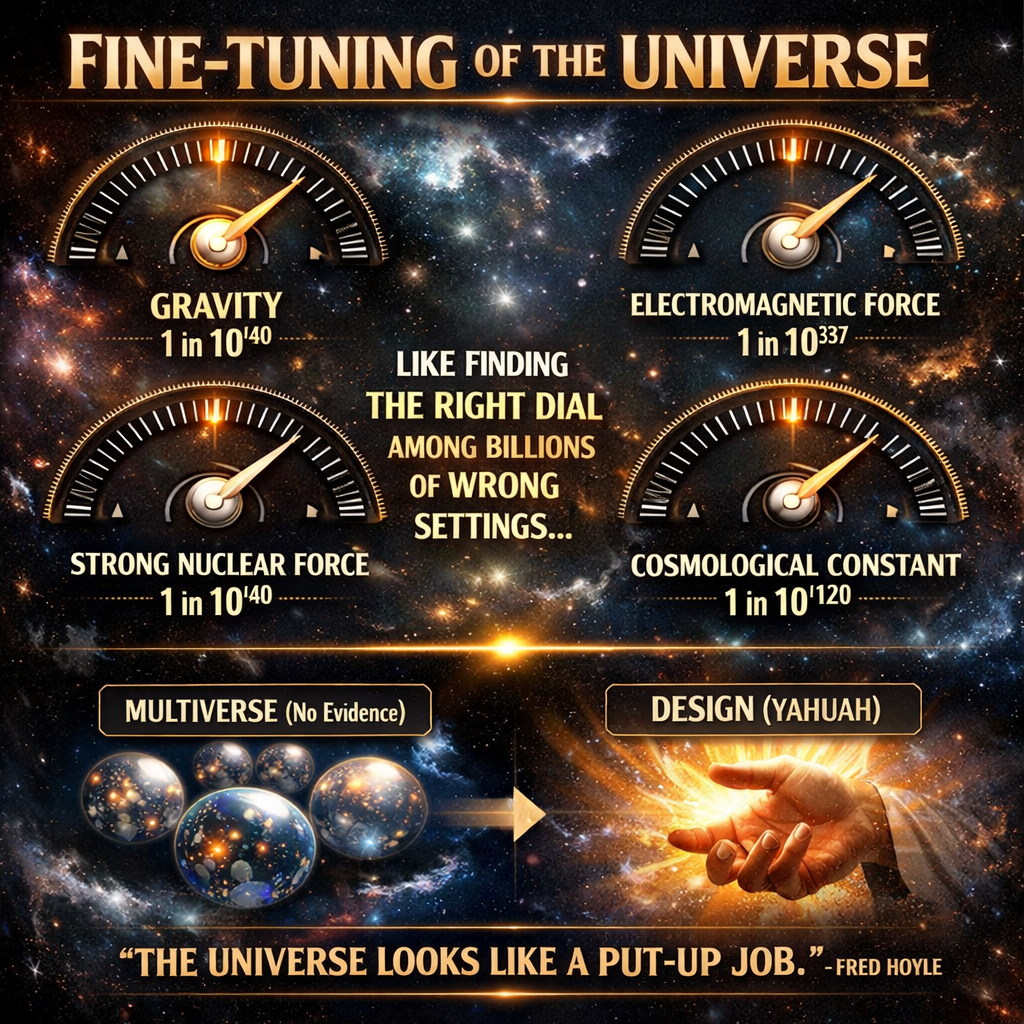
Physics Fine Tuning
Why Study Earth Science with Discernment?
Modern geology is presented with confident claims about billions of years. But scientific data doesn't speak for itself—it must be interpreted through a framework. Two competing frameworks shape how scientists interpret geological evidence:
🔬 Uniformitarian Framework
- Earth is ~4.5 billion years old
- "Present is key to the past"
- Slow, gradual processes
- No global catastrophes
- Life evolved over eons
📖 Biblical Framework
- Earth is ~6,000-10,000 years old
- Created mature and functioning
- Global Flood (~4,350 years ago)
- Catastrophic processes form features quickly
- Life created according to kinds
Understanding Worldview Influence
Both views examine the same rocks, fossils, and landforms. The difference is interpretation. When we understand that everyone—including secular scientists—interprets data through a worldview, we can examine evidence more critically.

Mark of Beast Analysis
Key Terms
- Uniformitarianism
- The belief that present-day processes, at present rates, explain all geological features
- Catastrophism
- The view that rapid, catastrophic events (especially Noah's Flood) shaped earth's geology
- Young Earth
- Biblical view that earth is thousands (not billions) of years old
- Deep Time
- The secular concept of billions of years of earth history
✏️ Fill in the Blanks
- The mainstream framework that assumes slow, gradual processes is called .
- The biblical framework emphasizes the global as a major geological event.
- Scientific data must be through a worldview framework.
- The secular concept of billions of years is called time.
- Both views examine the evidence but interpret it differently.
💬 Discussion Questions
- Why is it important to understand that everyone interprets evidence through a framework?
- Can we observe billions of years? What limitations does this create for science?
- How does 2 Peter 3:3-6 relate to geological interpretation?
Lesson 2: Earth's Structure and Composition
"For in six days Yahuah made heaven and earth, the sea, and all that in them is."
— Exodus 20:11
The Layers of the Earth
Earth has a layered structure, observable through seismic wave analysis:
The Crust
- Continental crust — 20-70 km thick, primarily granitic (less dense)
- Oceanic crust — 5-10 km thick, primarily basaltic (more dense)
- Contains all the rocks and minerals we interact with directly
The Mantle
- ~2,900 km thick
- Composed of silicate rocks rich in iron and magnesium
- Upper mantle is partially molten (asthenosphere)
- Lower mantle is solid but can flow slowly
The Core
- Outer core — Liquid iron and nickel (~2,200 km thick)
- Inner core — Solid iron and nickel (~1,200 km radius)
- Core generates Earth's magnetic field
Earth's Layers (Approximate)
Crust (5-70 km) → Mantle (2,900 km) → Outer Core (2,200 km) → Inner Core (1,200 km)
Minerals and Rocks
Minerals are naturally occurring, inorganic solids with definite chemical composition and crystalline structure.
Rocks are aggregates of minerals. Three main types:
- Igneous — Formed from cooled magma/lava (granite, basalt)
- Sedimentary — Formed from deposited sediments (sandstone, limestone, shale)
- Metamorphic — Changed by heat/pressure (marble, slate, quartzite)
✏️ Fill in the Blanks
- The Earth's is the outermost layer we live on.
- Continental crust is primarily rock.
- The generates Earth's magnetic field.
- Rocks formed from cooled magma are called rocks.
- Rocks changed by heat and pressure are called rocks.
Lesson 3: Plate Tectonics - The Moving Continents
"And unto Eber were born two sons: the name of one was Peleg; for in his days was the earth divided."
— Genesis 10:25
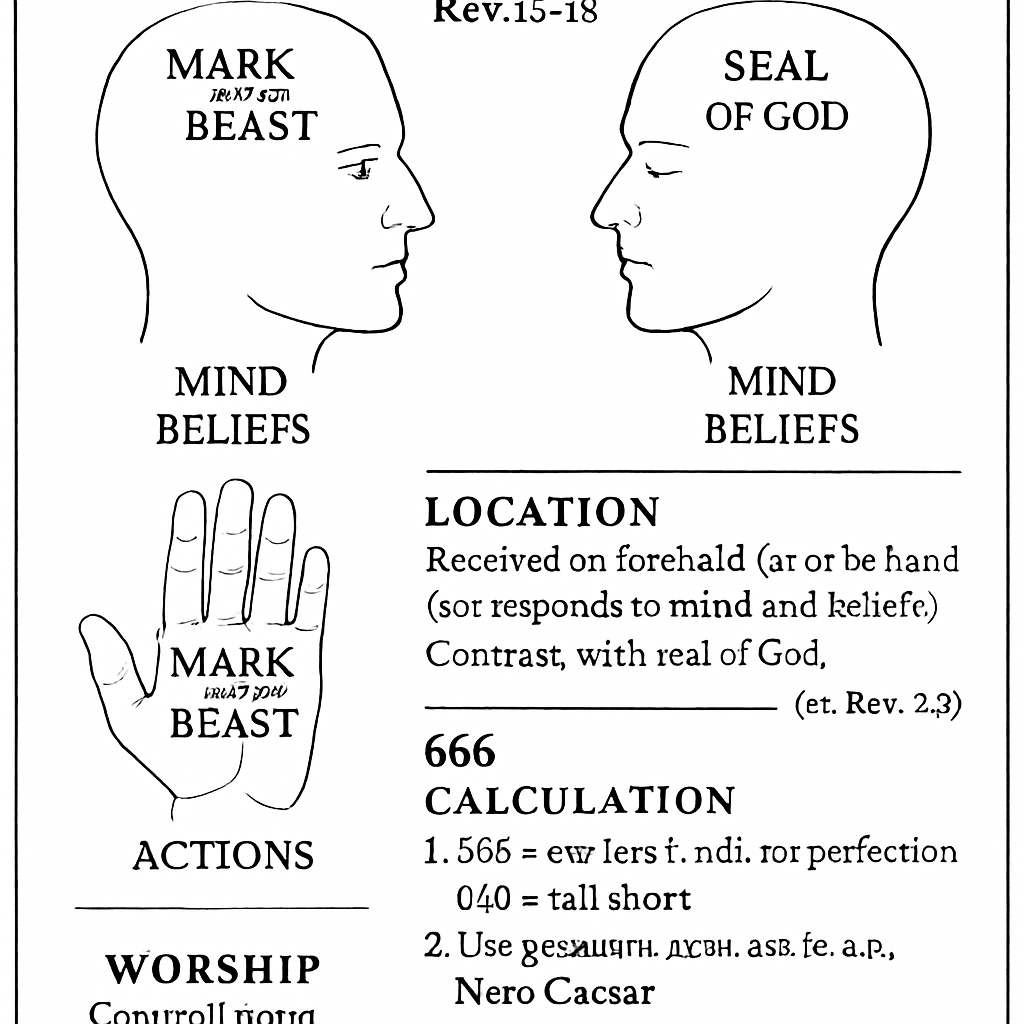
Mark Beast Analysis
What Is Plate Tectonics?
Earth's lithosphere (crust and upper mantle) is divided into large plates that move on the underlying asthenosphere. This movement causes earthquakes, volcanic activity, and mountain building.
Evidence for Plate Tectonics
- Continental fit — Africa and South America fit like puzzle pieces
- Fossil distribution — Same fossils found on separated continents
- Matching rock sequences — Rock layers match across oceans
- Mid-ocean ridges — New crust forms at spreading centers
- Earthquake patterns — Concentrated at plate boundaries
Types of Plate Boundaries
- Divergent — Plates move apart (mid-ocean ridges, rift valleys)
- Convergent — Plates move together (subduction zones, mountains)
- Transform — Plates slide past each other (San Andreas Fault)
🔬 Mainstream Interpretation
Continental drift has occurred slowly over hundreds of millions of years. Plates move 2-10 cm per year. Mountains formed over tens of millions of years.
📖 Biblical Interpretation
Catastrophic Plate Tectonics (CPT): During Noah's Flood, plates moved rapidly—perhaps meters per second. This explains why continents were once together (Pangaea) but separated quickly. Genesis 10:25 may reference residual movement after the Flood.
🔍 Evidence for Rapid Movement
- Subducted oceanic plates still cold, not heated (should be hot if millions of years old)
- Runaway subduction models show rapid movement is physically possible
- Massive volcanic activity during Flood could have triggered rapid movement
✏️ Fill in the Blanks
- Earth's lithosphere is divided into moving .
- When plates move apart, this is a boundary.
- The Fault is an example of a transform boundary.
- Catastrophic Plate Tectonics suggests plates moved rapidly during the .
- New oceanic crust forms at mid-ocean .
Lesson 4: The Rock Cycle and Sedimentary Rocks
"The waters prevailed exceedingly upon the earth; and all the high hills, that were under the whole heaven, were covered."
— Genesis 7:19
The Rock Cycle
Rocks are constantly being recycled through geological processes:
- Igneous rocks weather and erode → sediments
- Sediments compact and cement → sedimentary rocks
- Heat and pressure change rocks → metamorphic rocks
- Melting creates magma → new igneous rocks
Sedimentary Rocks: Witnesses to the Flood
Sedimentary rocks cover about 75% of Earth's land surface. They are particularly significant because:
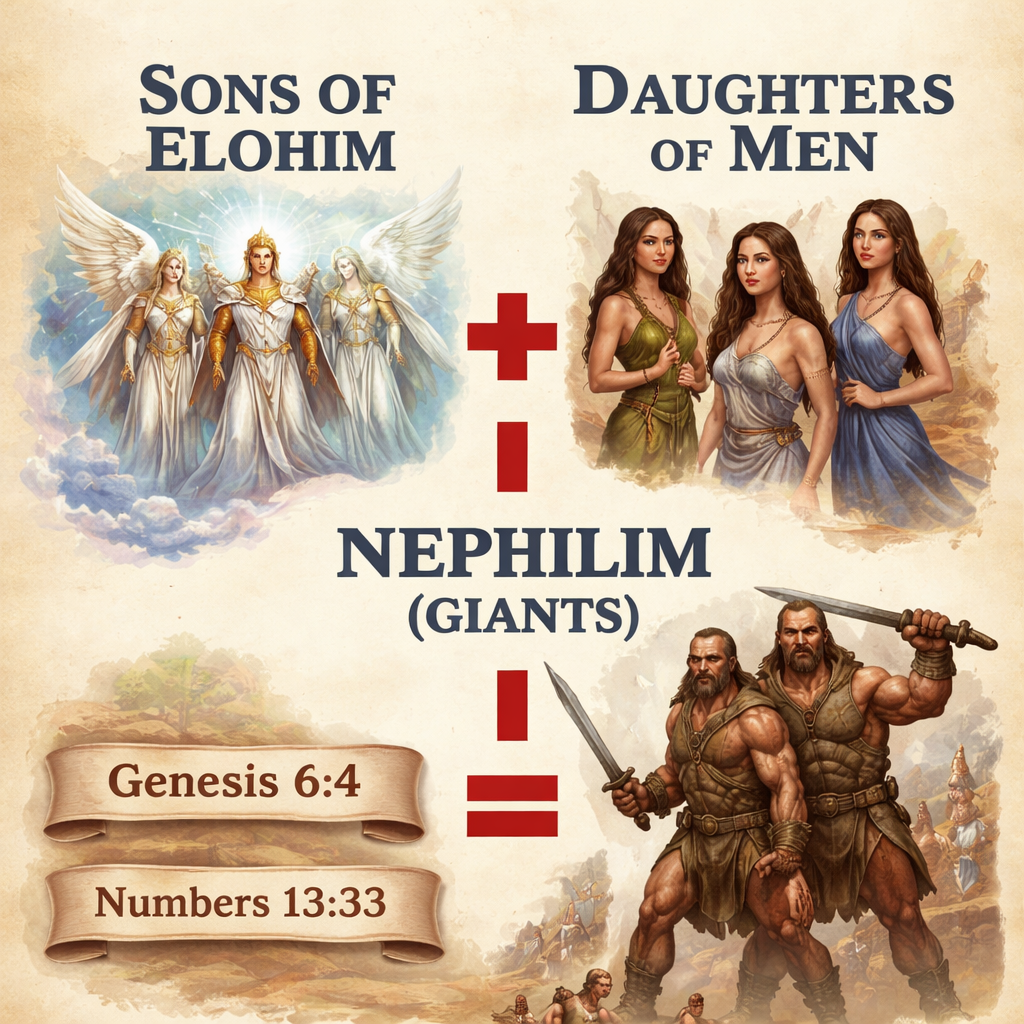
Genesis 6 Nephilim Study
- They contain most fossils
- They record depositional environments
- They often show evidence of rapid deposition
Types of Sedimentary Rocks
- Clastic — Made from rock fragments (sandstone, shale, conglomerate)
- Chemical — Precipitated from solution (limestone, rock salt)
- Organic — From living organisms (coal, chalk)
🔬 Mainstream Interpretation
Sedimentary layers accumulated slowly over millions of years in calm environments. Each layer represents long periods of deposition. Unconformities represent millions of years of erosion.
📖 Biblical Interpretation
Most sedimentary rocks were deposited rapidly during the global Flood. Massive water movements transported and deposited sediments quickly. The lack of erosion between layers supports rapid, continuous deposition.
🔍 Evidence for Rapid Deposition
- Flat contacts — No erosion between "millions of years" worth of layers
- Polystrate fossils — Tree trunks crossing multiple layers (couldn't stand for millions of years)
- Soft sediment deformation — Layers bent while still soft
- Massive extent — Single layers covering entire continents
✏️ Fill in the Blanks
- Sedimentary rocks cover about % of Earth's land surface.
- Rocks made from rock fragments are called sedimentary rocks.
- Fossils that cross multiple layers are called fossils.
- The absence of erosion between layers suggests deposition.
- Coal is an example of sedimentary rock.
Lesson 5: The Geologic Column and Fossil Order
"Whereby the world that then was, being overflowed with water, perished."
— 2 Peter 3:6
What Is the Geologic Column?
The geologic column is a conceptual diagram showing the sequence of rock layers and their relative ages. It's divided into eras, periods, and epochs based on the fossils found in each layer.
Major Divisions
- Precambrian — "Oldest" rocks, few fossils
- Paleozoic — Marine invertebrates, fish, amphibians
- Mesozoic — "Age of dinosaurs"
- Cenozoic — "Age of mammals," humans appear
🔬 Mainstream Interpretation
The geologic column represents billions of years of earth history. Fossils in each layer show evolutionary progression. Lower = older, higher = younger. Complete column exists worldwide.
📖 Biblical Interpretation
The geologic column is largely a Flood artifact. Fossil order reflects ecological zonation (where organisms lived) and hydrologic sorting (burial order during the Flood), not evolutionary progression. Complete column is never found in one location.
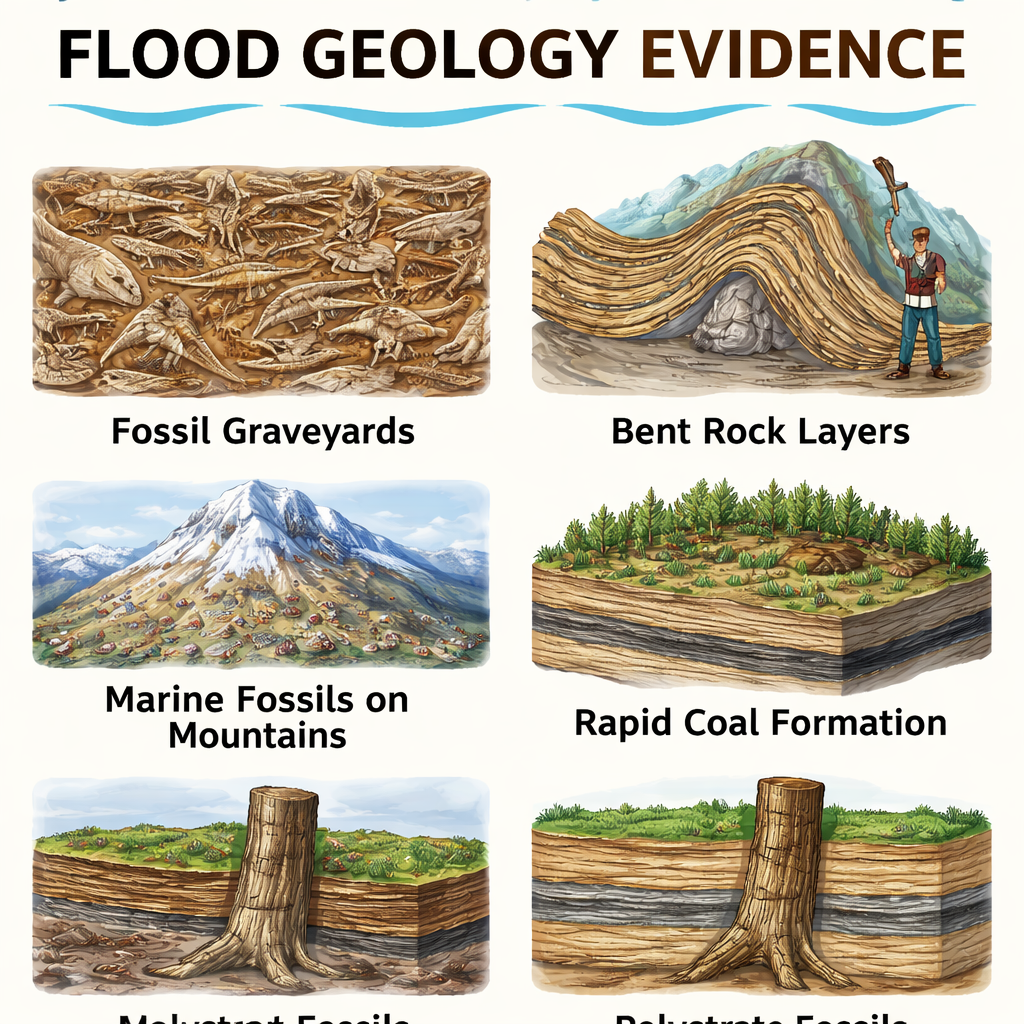
Flood Geology Evidence
Explaining Fossil Order Without Evolution
The general pattern (marine invertebrates → fish → amphibians → reptiles → mammals) can be explained by the Flood:
- Ecological zonation — Ocean floor creatures buried first, then shallow marine, then land animals
- Mobility — Less mobile organisms buried before more mobile ones
- Hydrodynamic sorting — Denser organisms settle faster
- Pre-Flood habitat elevation — Lower elevation creatures buried first
🔍 Problems with the Standard Interpretation
- Complete geologic column exists nowhere on Earth
- "Living fossils" — Organisms unchanged for "millions of years"
- "Out of sequence" fossils requiring special explanations
- Circular reasoning: Rocks dated by fossils, fossils dated by rocks
✏️ Fill in the Blanks
- The geologic column is divided into eras, periods, and .
- The "age of dinosaurs" is the Era.
- Fossil order can be explained by ecological during the Flood.
- Organisms unchanged for "millions of years" are called fossils.
- The complete geologic column is never found in one .
Lesson 6: Radiometric Dating - How Reliable?
"Knowing this first, that there shall come in the last days scoffers, walking after their own lusts, and saying, Where is the promise of his coming? for since the fathers fell asleep, all things continue as they were from the beginning of the creation."
— 2 Peter 3:3-4
How Radiometric Dating Works
Radioactive elements decay into stable "daughter" elements at measurable rates (half-lives). Scientists measure the ratio of parent to daughter atoms and calculate an age.

Clean Foods Health Science
Common Dating Methods
- Carbon-14 (¹⁴C) — Half-life ~5,730 years; used for organic material
- Potassium-Argon (K-Ar) — Half-life 1.25 billion years; used for volcanic rocks
- Uranium-Lead (U-Pb) — Half-life 4.5 billion years; used for zircon crystals
- Rubidium-Strontium (Rb-Sr) — Half-life 48.8 billion years; used for igneous rocks
Assumptions in Radiometric Dating
All radiometric dates depend on three unprovable assumptions:
- Initial conditions known — How much parent/daughter at the start?
- Closed system — No parent/daughter added or removed
- Constant decay rate — Rate never changed in billions of years
🔬 Mainstream Position
Radiometric dating is reliable because multiple methods give consistent results. Assumptions are reasonable. Dates of billions of years confirm deep time.
📖 Biblical Response
Assumptions are unprovable for the past. When dating can be tested against known ages, methods often fail. The RATE research project found evidence that decay rates may have been faster in the past.
🔍 Dating Failures and Anomalies
- Mt. St. Helens dacite — 10-year-old rock dated 0.35-2.8 million years
- Carbon-14 in diamonds — Should be zero if billions of years old
- Carbon-14 in coal — Found throughout the geologic column
- Discordant dates — Different methods on same rock give different ages
- Helium in zircons — Too much helium for billions of years
✏️ Fill in the Blanks
- Radiometric dating depends on three unprovable .
- Carbon-14 has a half-life of about years.
- For dating to work, the system must be (no contamination).
- When dating is tested against ages, methods often fail.
- Carbon-14 in diamonds suggests they are than billions of years old.
Lesson 7: Evidence for a Young Earth
"For in six days Yahuah made heaven and earth, the sea, and all that in them is, and rested the seventh day."
— Exodus 20:11
Geological and Physical Evidence
1. Earth's Magnetic Field Decay
- Field strength has been measured since 1835
- Decaying at ~5% per century
- Extrapolating back more than 20,000 years gives impossibly high values
2. Salt in the Ocean
- Rivers carry 450 million tons of sodium to oceans yearly
- Much less leaves the ocean than enters
- Current levels could accumulate in less than 62 million years (maximum)
3. Continental Erosion
- Continents erode at rates that would level them in 10-15 million years
- If billions of years old, continents should have eroded long ago
4. Tightly Folded Rock Strata
- Rock layers bent without fracturing
- Requires rock to have been soft when bent
- No time for hardening if bent millions of years after deposition
5. Soft Tissue in Dinosaur Bones
- Red blood cells, blood vessels, proteins found
- These cannot survive millions of years under any known conditions
- Consistent with burial thousands of years ago
🔍 Additional Young-Earth Evidences
- Carbon-14 in coal, diamonds, and dinosaur bones
- Not enough sediment on the seafloor
- Rapidly decaying comets
- DNA in "ancient" bacteria
- Short-lived radiohaloes
✏️ Fill in the Blanks
- Earth's magnetic field is at a measurable rate.
- Continents should have away if billions of years old.
- Tightly folded rocks without fracturing suggest the rock was when bent.
- Soft found in dinosaur bones cannot survive millions of years.
- Salt accumulation in oceans gives a maximum age far than billions of years.
Lesson 8: The Global Flood - Geological Evidence
"And the waters prevailed, and were increased greatly upon the earth; and the ark went upon the face of the waters."
— Genesis 7:18
What Would a Global Flood Produce?
If a global flood occurred, we would expect to find:
- Billions of dead things buried in rock layers laid down by water
- Massive sedimentary deposits covering continents
- Evidence of rapid, catastrophic deposition
- Fossil graveyards with animals buried together
This is exactly what we find.
Continental-Scale Flood Evidence
The Grand Canyon Region
- Mile-deep layers covering thousands of square miles
- Flat contacts between layers (no erosion)
- Same layers traceable across North America
- Requires massive water deposition
The Coconino Sandstone
- Traditional view: Desert sand dunes
- Problems: Cross-beds indicate underwater deposition; contains marine fossils
- Flood interpretation: Underwater sand waves
The Tapeats Sandstone
- Extends across entire North American continent
- Contains large boulders (requires high-energy water)
- Flat contact with basement rocks (no weathering)
Fossil Graveyards
Massive fossil deposits worldwide show evidence of catastrophic burial:
- Karoo Formation (South Africa) — 800 billion vertebrate fossils
- Dinosaur National Monument — Jumbled dinosaur bones
- Green River Formation — Billions of fish fossils
✏️ Fill in the Blanks
- If a global flood occurred, we would find billions of dead things buried in layers.
- The Grand Canyon shows contacts between layers with no erosion.
- The Coconino Sandstone was likely deposited , not as desert dunes.
- Massive graveyards show evidence of catastrophic burial.
- The Tapeats Sandstone extends across the entire continent.
Lesson 9: Fossils - What Do They Really Tell Us?
"And all flesh died that moved upon the earth, both of fowl, and of cattle, and of beast, and of every creeping thing that creepeth upon the earth, and every man."
— Genesis 7:21

Chemistry Carbon Uniqueness
How Fossils Form
Fossilization requires:
- Rapid burial — Before decay or scavenging
- Specific conditions — Mineral-rich water, low oxygen
- Preservation — Protection from weathering
Most environments today do not produce fossils—dead organisms decay. The fossil record represents unusual conditions of rapid burial.
What Fossils Show
Stasis, Not Evolution
- Fossils appear suddenly, fully formed
- "Living fossils" identical to ancient forms
- No clear transitional sequences
Catastrophic Burial
- Animals fossilized in death poses (sudden death)
- Fish fossilized while eating or giving birth
- Mass death assemblages
🔬 Mainstream Claim
Fossils show evolutionary progression over millions of years. "Transitional forms" like Tiktaalik and Archaeopteryx prove evolution. The fossil record documents the history of life.
📖 Biblical Response
Fossils show fully-formed creatures, not transitions. Claimed "transitional forms" are disputed even among evolutionists. The fossil record reflects the order of burial in the Flood, not evolutionary progression.
🔍 Fossil Problems for Evolution
- Cambrian Explosion — Most body plans appear suddenly
- Missing links still missing — Gaps remain despite 150+ years of searching
- Living fossils — Coelacanth, horseshoe crab, ginkgo tree unchanged
- Soft tissue preservation — Inconsistent with millions of years
✏️ Fill in the Blanks
- Fossilization requires burial before decay.
- The Explosion shows most body plans appearing suddenly.
- Organisms unchanged for "millions of years" are called fossils.
- Fish fossilized while eating show death.
- Fossils appear fully , not as transitional forms.
Lesson 10: The Ice Age - A Post-Flood Event
"Out of whose womb came the ice? and the hoary frost of heaven, who hath gendered it?"
— Job 38:29
Evidence for an Ice Age
Clear geological evidence shows extensive glaciation:
- Glacial striations (scratches in bedrock)
- Erratics (boulders transported far from source)
- U-shaped valleys
- Moraines (glacial deposits)
- Drumlins (streamlined hills)
🔬 Mainstream Theory
Multiple ice ages over millions of years, triggered by Milankovitch cycles (orbital variations). Cooling led to ice accumulation over thousands of years. Current interglacial period may end.
📖 Biblical Theory
One major Ice Age following Noah's Flood. Warm post-Flood oceans provided moisture; volcanic winter blocked sunlight. Unique conditions that couldn't occur otherwise. Lasted ~700 years.
Why Only After the Flood?
An ice age requires two conditions simultaneously:
- Lots of evaporation — Warm oceans provide moisture
- Cool summers — Snow doesn't melt, accumulates
This is a paradox: warm and cold at the same time. The Flood provides the unique answer:
- Hot water from the "fountains of the great deep" warmed oceans
- Massive volcanism blocked sunlight, cooling land
- Heavy evaporation from warm oceans fell as snow on cold continents
Problems with Multiple Ice Ages
- Milankovitch cycles are too weak to trigger ice ages
- No mechanism for warm oceans in secular model
- Can't explain rapid onset and melting of ice sheets
✏️ Fill in the Blanks
- Glacial are scratches in bedrock from ice movement.
- An ice age requires warm for evaporation and cool summers.
- Post-Flood warm oceans came from the "fountains of the ."
- Volcanic blocked sunlight, cooling the land.
- The biblical model proposes major Ice Age, not many.
Lesson 11: Coal and Oil - Flood Deposits
"And every living substance was destroyed which was upon the face of the ground, both man, and cattle, and the creeping things, and the fowl of the heaven."
— Genesis 7:23
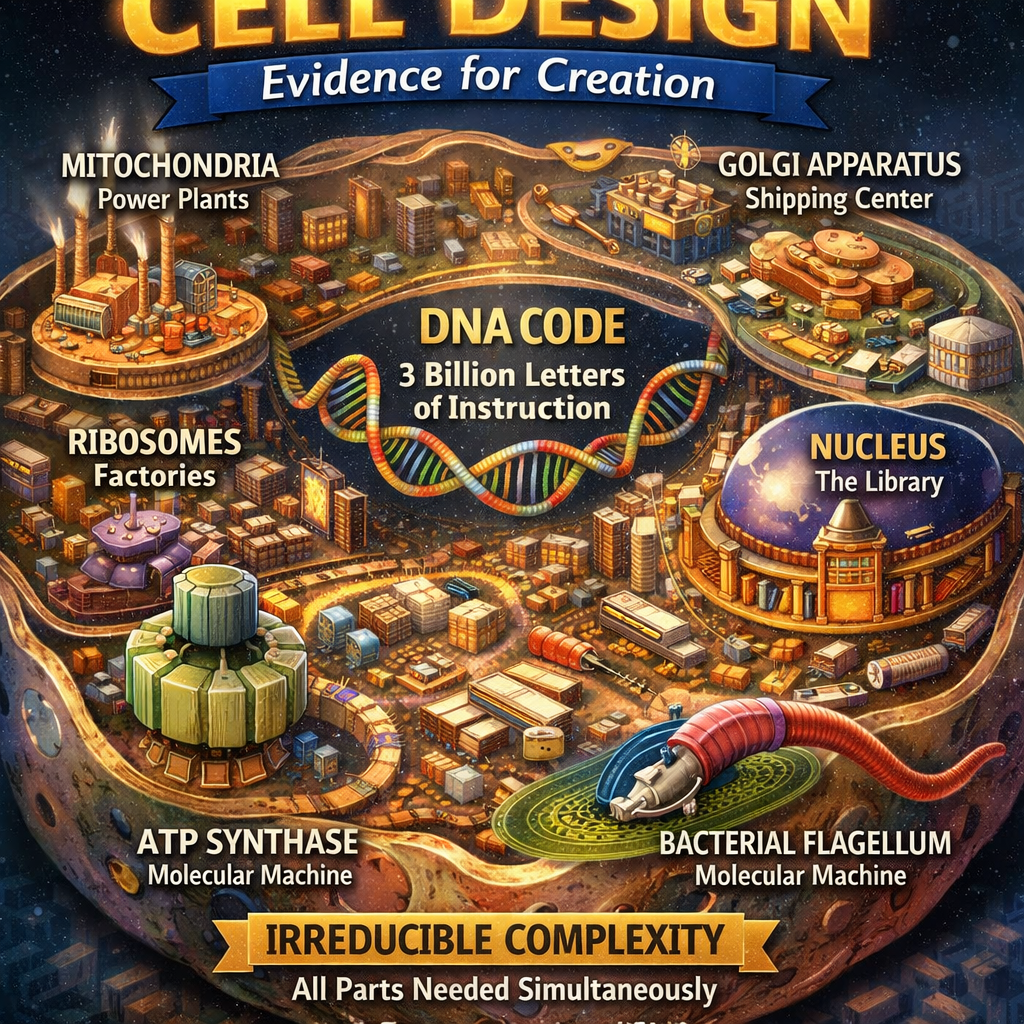
Biology Cell Design
Formation of Coal
Coal is fossilized plant material. The mainstream and biblical views differ significantly:
🔬 Mainstream Theory
Coal formed in swamps over millions of years. Plants died, accumulated as peat, then were buried and compressed. Each coal seam represents a different swamp environment.
📖 Biblical Theory
Coal formed from massive mats of vegetation ripped up by the Flood, transported, deposited in layers, and rapidly converted to coal by heat and pressure. Explains coal seams' features better.
Evidence for Rapid Coal Formation
- Lack of roots — If swamps, where are the roots?
- Pure coal — No soil layers mixed in (would occur in swamp)
- Boulder-sized bark — Transported, not grown in place
- Marine fossils in coal — Swamps don't have ocean creatures
- Coal formed rapidly in labs — Only takes heat, pressure, right conditions
Formation of Oil
Petroleum (oil) and natural gas come from buried organic material:
- Traditionally: Marine organisms buried slowly over millions of years
- Flood model: Massive burial of organisms, rapid conversion under heat/pressure
Evidence for Rapid Oil Formation
- Oil created in labs in hours under right conditions
- Oil in sediments supposedly too young for oil
- Continued pressure in oil reservoirs (should have dissipated over millions of years)
✏️ Fill in the Blanks
- Coal is fossilized material.
- The mainstream theory says coal formed in over millions of years.
- If coal formed in swamps, we would expect to find beneath seams.
- Marine in coal contradict the swamp model.
- Oil can be created in under the right conditions.
Lesson 12: Volcanoes and Earthquakes
"In the same day were all the fountains of the great deep broken up, and the windows of heaven were opened."
— Genesis 7:11
Volcanism
Volcanoes occur where magma from the mantle reaches the surface:
- At divergent boundaries — Mid-ocean ridges, rift valleys
- At convergent boundaries — Subduction zones (Ring of Fire)
- At hotspots — Hawaiian Islands, Yellowstone
The "Fountains of the Great Deep"
Genesis 7:11 describes massive geological activity at the Flood's start. Many creation scientists believe this involved:
- Rupture of Earth's crust along a massive rift
- Release of superheated water from beneath the crust
- Triggering of catastrophic plate tectonics
- Massive worldwide volcanism
Earthquakes
Earthquakes occur when stress in rocks is released suddenly. Most occur at plate boundaries:
- Transform faults — Horizontal sliding (San Andreas)
- Subduction zones — Largest earthquakes (Japan 2011, 9.1 magnitude)
- Divergent zones — Mid-ocean ridges, rift valleys
Volcanic Features
- Lava flows — Solidified magma
- Volcanic ash — Fine particles that can travel globally
- Pyroclastic flows — Deadly hot gas and debris clouds
- Calderas — Large volcanic craters from massive eruptions
✏️ Fill in the Blanks
- Most earthquakes occur at plate .
- The "fountains of the great " were broken up at the Flood's start.
- The Ring of is a zone of intense volcanic and earthquake activity.
- Pyroclastic are deadly hot gas and debris clouds.
- Large volcanic craters are called .
Lesson 13: Landforms and Rapid Processes
"He looketh on the earth, and it trembleth: he toucheth the hills, and they smoke."
— Psalm 104:32
Canyon Formation
Canyons can form in two ways:
- Slow erosion — A little water over a long time
- Rapid erosion — A lot of water over a short time
Evidence from Mount St. Helens (1980)
The eruption provided real-time evidence for rapid geological processes:
- A 40-foot deep canyon carved in hours
- Multiple stratified layers deposited in hours (not millions of years)
- Log mats sinking and creating "forests" that look in-place
- Peat forming at bottom of Spirit Lake
The Grand Canyon
🔬 Mainstream Theory
Colorado River carved the canyon over 5-6 million years. Slow erosion at current rates gradually cut through rock layers.
📖 Biblical Theory
Rapid erosion from dam-breach flood(s) after Noah's Flood. Post-Flood lakes drained catastrophically through soft sediments. Explains the canyon's features better.
Problems with Slow Grand Canyon Formation
- River flows through a plateau (rivers don't flow uphill)
- Missing millions of years of sediment downstream
- Soft sediments would have hardened; no canyon could form
- Side canyons as deep as main canyon (impossible by slow erosion)
✏️ Fill in the Blanks
- Canyons can form by a lot of over a short time.
- Mount St. Helens carved a 40-foot canyon in .
- The Grand Canyon's river flows through a , not around it.
- Multiple stratified layers formed in at Mount St. Helens.
- Post-Flood dam-breach could have carved the Grand Canyon.
Lesson 14: Course Review - Geology Reveals the Creator
"The earth is Yahuah's, and the fulness thereof; the world, and they that dwell therein. For he hath founded it upon the seas, and established it upon the floods."
— Psalm 24:1-2
Course Summary
This course has examined geological evidence through both mainstream and biblical frameworks:
Key Takeaways
- Evidence requires interpretation — Same data, different frameworks, different conclusions
- Uniformitarianism has problems — Many features require catastrophic processes
- The Flood explains the evidence — Sedimentary layers, fossils, coal, oil, landforms
- Dating methods have assumptions — Unprovable assumptions affect all radiometric dates
- Multiple young-earth evidences exist — Magnetic field decay, soft tissue, carbon-14
The Big Picture
Geology is not a threat to faith—it confirms Scripture when properly understood. The rocks cry out in testimony to:
- Creation — Complex systems designed from the beginning
- The Fall — Death entered through sin (fossils show death)
- The Flood — Global judgment preserved in rock layers
- The Creator — Yahuah's power displayed in creation
📝 Review Matching
- Uniformitarianism ______ A. Fossils showing no change
- Catastrophism ______ B. Slow, gradual processes
- Living fossils ______ C. Different methods, different ages
- Discordant dates ______ D. Rapid, catastrophic events
- Polystrate fossils ______ E. Fossils crossing multiple layers
💬 Final Reflection
- How has this course changed your understanding of geological evidence?
- Why is it important to understand that all scientists interpret data through a worldview?
- What evidence for a young earth and global Flood do you find most compelling?
- How can geology glorify Yahuah and point others to the Creator?
"For the wrath of Elohim is revealed from heaven against all ungodliness and unrighteousness of men, who hold the truth in unrighteousness; Because that which may be known of Elohim is manifest in them; for Elohim hath shewed it unto them. For the invisible things of him from the creation of the world are clearly seen, being understood by the things that are made, even his eternal power and Godhead."
— Romans 1:18-20
📋 Answer Key (For Parents/Teachers)
Lesson 1
- uniformitarianism
- Flood
- interpreted
- deep
- same
Lesson 2
- crust
- granitic
- core
- igneous
- metamorphic
Lesson 3
- plates
- divergent
- San Andreas
- Flood
- ridges
Lesson 4
- 75
- clastic
- polystrate
- rapid
- organic
Lesson 5
- epochs
- Mesozoic
- zonation
- living
- location
Lesson 6
- assumptions
- 5,730
- closed
- known
- younger
Lesson 7
- decaying
- eroded
- soft
- tissue
- less
Lesson 8
- rock
- flat
- underwater
- fossil
- North American
Lesson 9
- rapid
- Cambrian
- living
- sudden (or catastrophic)
- formed
Lesson 10
- striations
- oceans
- deep
- winter (or ash)
- one
Lesson 11
- plant
- swamps
- roots
- fossils
- labs (or hours)
Lesson 12
- boundaries
- deep
- Fire
- flows
- calderas
Lesson 13
- water
- hours
- plateau
- hours
- floods
Lesson 14 Review
Matching: 1-B, 2-D, 3-A, 4-C, 5-E