Just as a house is made of bricks, your body is made of tiny building blocks called cells! Cells are so small you need a microscope to see them.
"I will praise thee; for I am fearfully and wonderfully made: marvellous are thy works."
- Psalm 139:14
Your body has about 37 TRILLION cells! That's 37,000,000,000,000! And Yahuah designed every single one!
Parts of a Cell
Part
Job
Like...
Cell Membrane
Protects the cell, controls what goes in and out
A security fence
Nucleus
Control center with DNA instructions
The brain/library
Cytoplasm
Jelly-like fluid holding everything together
Jello
Mitochondria
Makes energy for the cell
Power plant
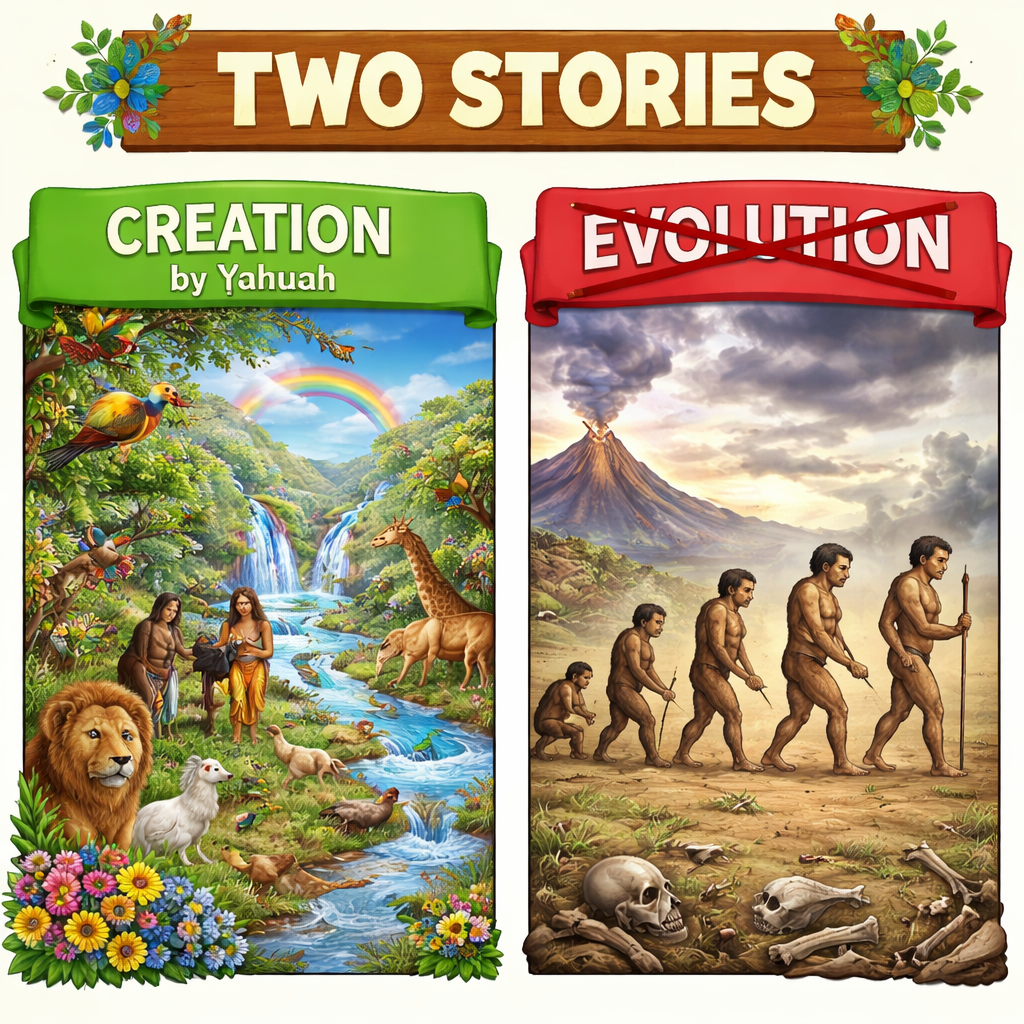
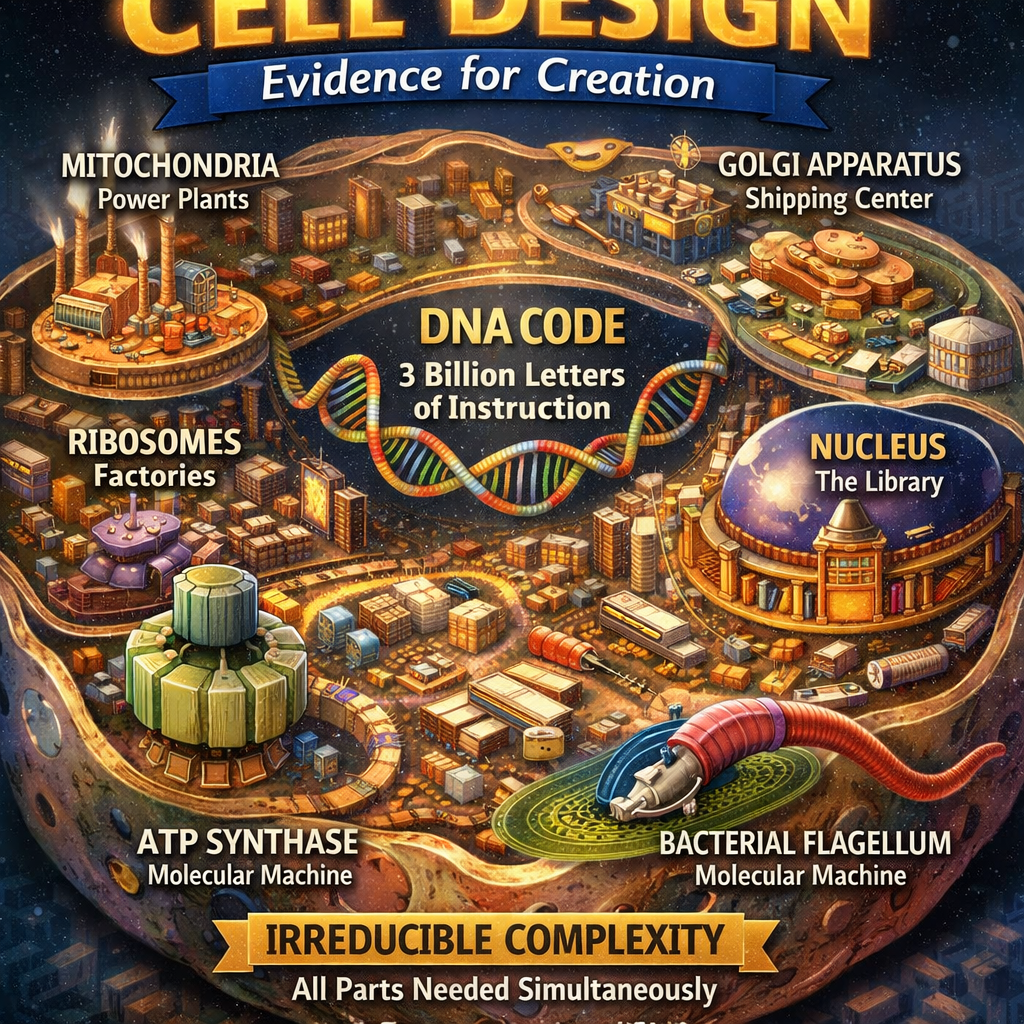
Cells are like tiny factories with specialized parts - and factories need a designer! The incredible complexity of cells shows they were CREATED, not randomly formed. Even the "simplest" cell is amazingly complex!
Creation Cosmos
Two Types of Cells:
Plant cells - Have a cell WALL (for support) and chloroplasts (for making food from sunlight)
Animal cells - No cell wall, no chloroplasts
REFLECT - Check Your Understanding
1. Fill in the blanks:
a) Cells are the blocks of life.
b) The is the control center of the cell.
c) make energy for the cell.
d) Your body has about 37 cells!
2. Match the cell part to its job:
___ Cell membrane A. Makes energy
___ Nucleus B. Jelly-like filling
___ Cytoplasm C. Control center
___ Mitochondria D. Protective barrier
RECALL - Draw & Label a Cell
Draw an animal cell and label: cell membrane, nucleus, cytoplasm, mitochondria
Unit 2 The Human Body Systems
RECEIVE - Learn About It
Yahuah designed our bodies with different systems that work together. Each system has a specific job!
"Know ye not that your body is the temple of the Set-Apart Spirit?"
- 1 Corinthians 6:19
Major Body Systems
System
Main Job
Key Parts
Skeletal
Support, protection
Bones
Muscular
Movement
Muscles
Digestive
Break down food
Stomach, intestines
Circulatory
Move blood
Heart, blood vessels
Respiratory
Breathing
Lungs
Nervous
Control, messages
Brain, nerves
All these systems work TOGETHER perfectly - like an orchestra playing in harmony! If one system fails, others are affected. This interconnection shows intelligent design, not random chance!
REFLECT - Check Your Understanding
Match the system to its job:
___ Skeletal A. Moves blood through body
___ Digestive B. Helps you breathe
___ Circulatory C. Supports and protects
___ Respiratory D. Breaks down food
Unit 3 The Skeletal & Muscular Systems
RECEIVE - Learn About It
The Skeletal System is your body's frame - like the frame of a building!
You have 206 bones in your body! Babies are born with about 270 bones, but many fuse together as you grow!
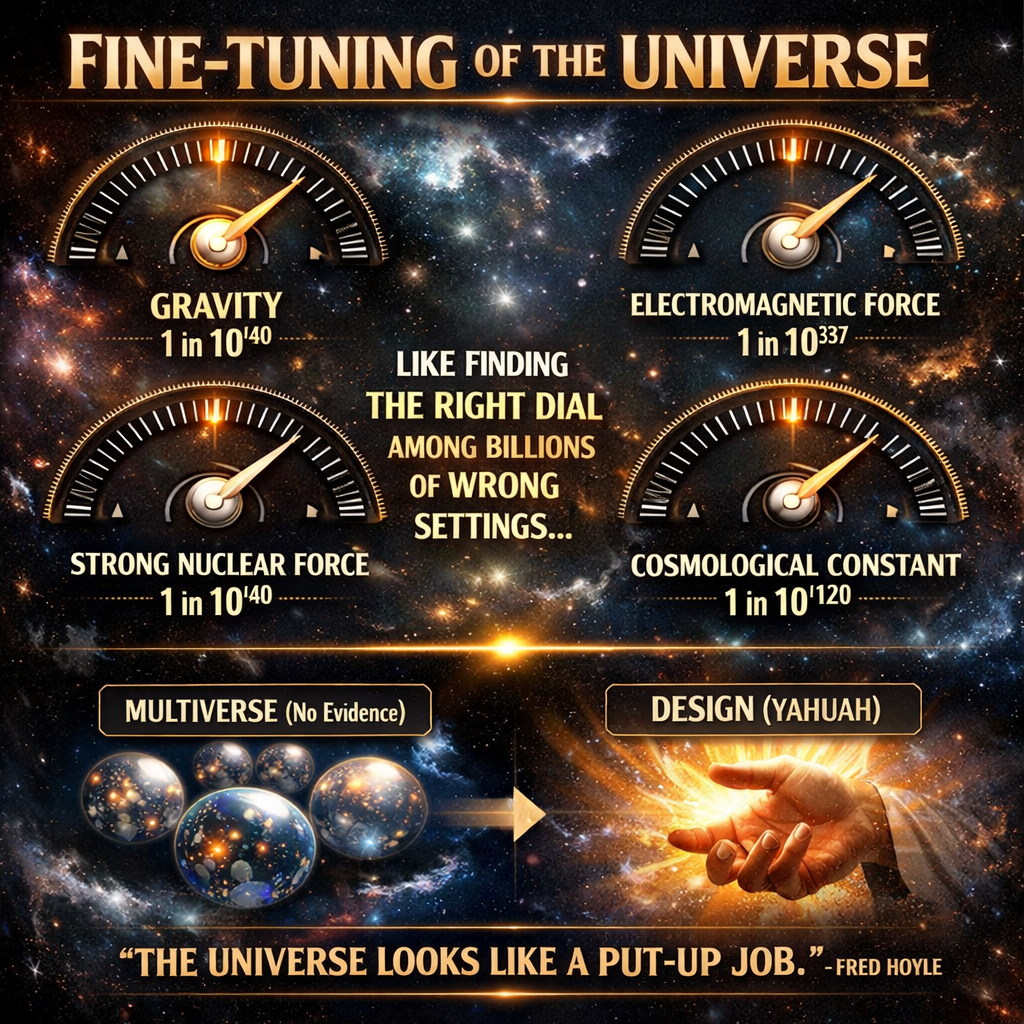
Physics Fine Tuning
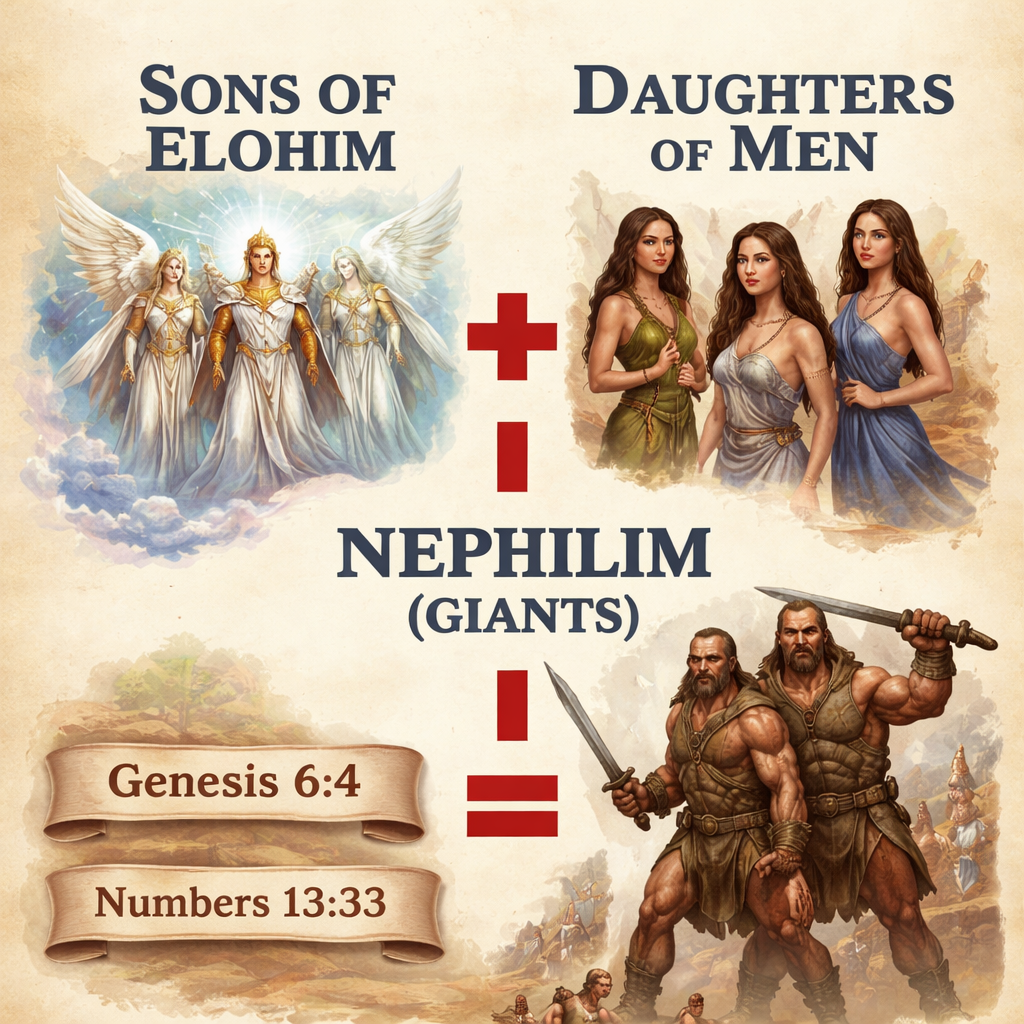
Genesis 6 Nephilim Study
Jobs of the Skeleton:
Support - Holds your body up (like tent poles)
Protection - Skull protects brain, ribs protect heart and lungs
Movement - Bones and muscles work together
Blood cell production - Bone marrow makes blood cells!
The Muscular System makes movement possible!
Three Types of Muscle
Skeletal muscles - Attached to bones, YOU control them (voluntary)
Smooth muscles - In organs like stomach, work automatically (involuntary)
Cardiac muscle - Only in the heart, never gets tired!
Your heart muscle beats about 100,000 times a day and never takes a break! It can't be tired because Yahuah designed it specially. No man-made machine can match the heart's endurance!
"The life of the flesh is in the blood."
- Leviticus 17:11
REFLECT - Check Your Understanding
1. How many bones do adults have?
2. What protects the brain?
3. What type of muscle is only in the heart?
4. Where are blood cells made?
True or False:
a) Skeletal muscles work automatically.
b) Ribs protect the heart and lungs.
c) Cardiac muscle gets tired easily.
Unit 4 The Digestive System
RECEIVE - Learn About It
The digestive system breaks down food into nutrients your body can use. It's like a long tube from mouth to... the end!
The Digestive Journey
Mouth - Teeth chew, saliva starts breaking down food
Esophagus - Tube that squeezes food down to stomach
Stomach - Churns and mixes food with acid
Small Intestine - Nutrients absorbed into blood (20 feet long!)
Large Intestine - Water absorbed, waste prepared
Rectum - Waste exits the body
Your small intestine is about 20 feet long - taller than a giraffe! If you spread out all its folds, it would cover a tennis court!
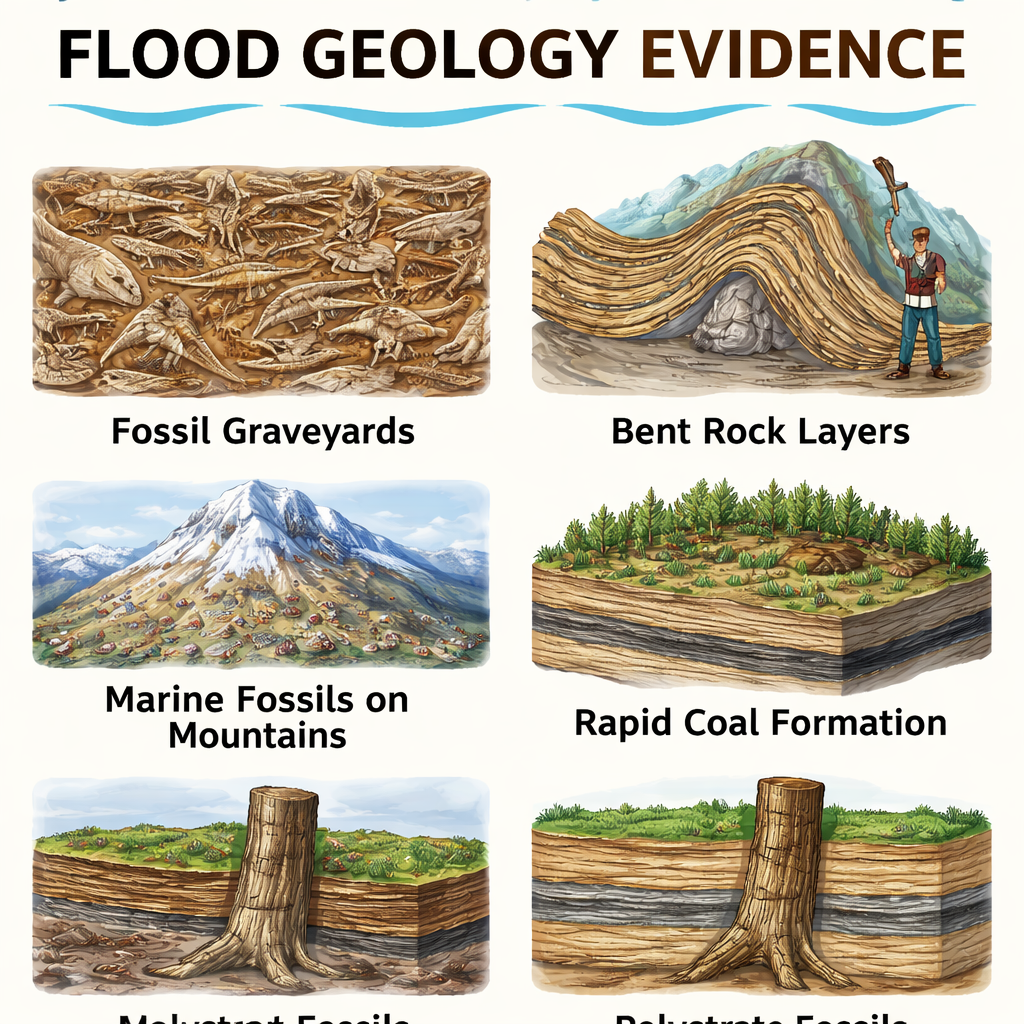
Flood Geology Evidence
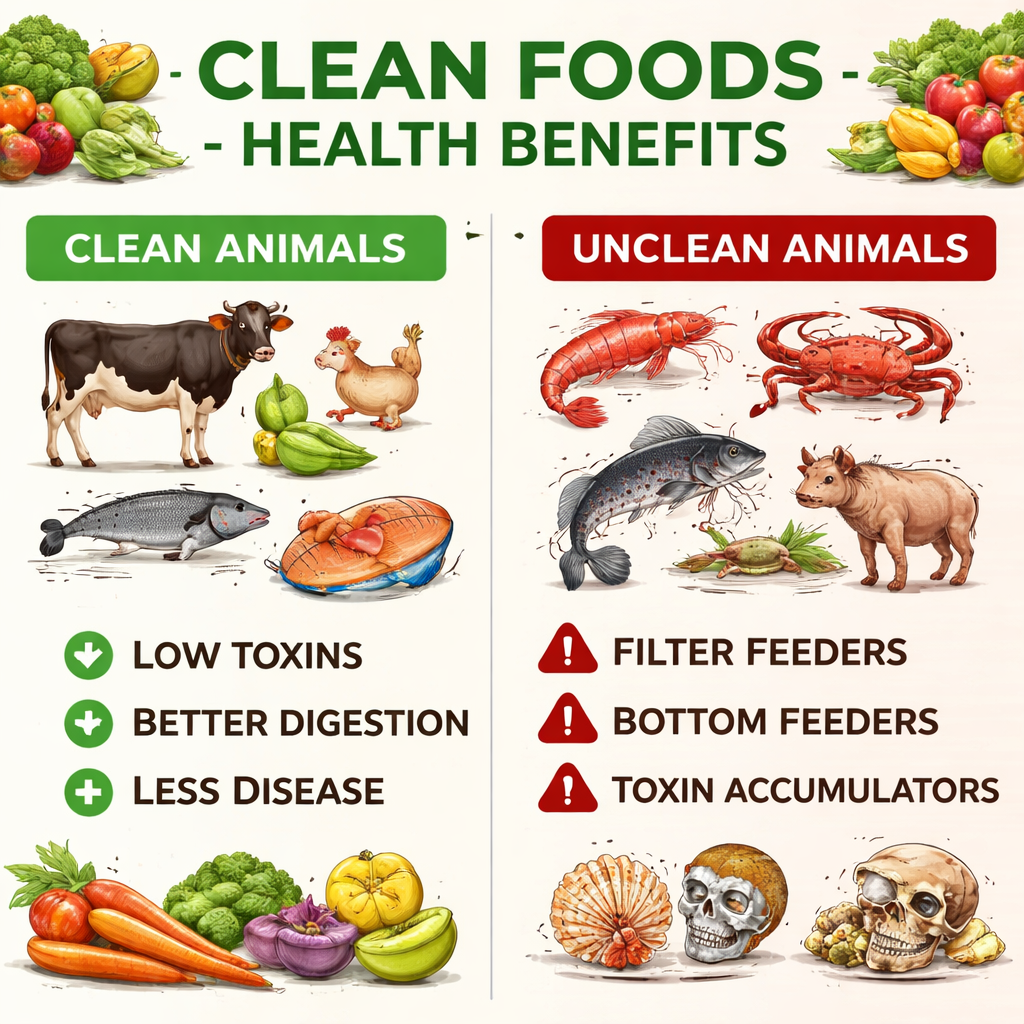
Clean Foods Health Science
Helper Organs:
Liver - Filters blood, makes bile to digest fat
Pancreas - Makes enzymes to break down food
Gallbladder - Stores bile
"Whether therefore ye eat, or drink, or whatsoever ye do, do all to the glory of Elohim."
- 1 Corinthians 10:31
Yahuah gave us clean foods that our digestive system handles well, and told us to avoid unclean foods that can make us sick. He designed our bodies AND the instruction manual (Torah)!
REFLECT - Check Your Understanding
Put in order (1-6):
___ Stomach ___ Large intestine ___ Mouth
___ Small intestine ___ Esophagus ___ Rectum
Fill in:
a) Food is chewed in the .
b) Nutrients are absorbed in the intestine.
c) The filters blood and makes bile.
Unit 5 The Circulatory System
RECEIVE - Learn About It
The circulatory system is your body's delivery system - carrying oxygen, nutrients, and more to every cell!
Parts of the Circulatory System
Heart - The pump (about the size of your fist)
Blood - Carries oxygen, nutrients, and waste
Blood vessels - The "roads" blood travels on
Arteries - Carry blood AWAY from heart (think "A" for Away)
Veins - Carry blood back TO the heart
Capillaries - Tiny vessels connecting arteries and veins
If you laid all your blood vessels end to end, they would circle the Earth TWICE! That's about 60,000 miles!
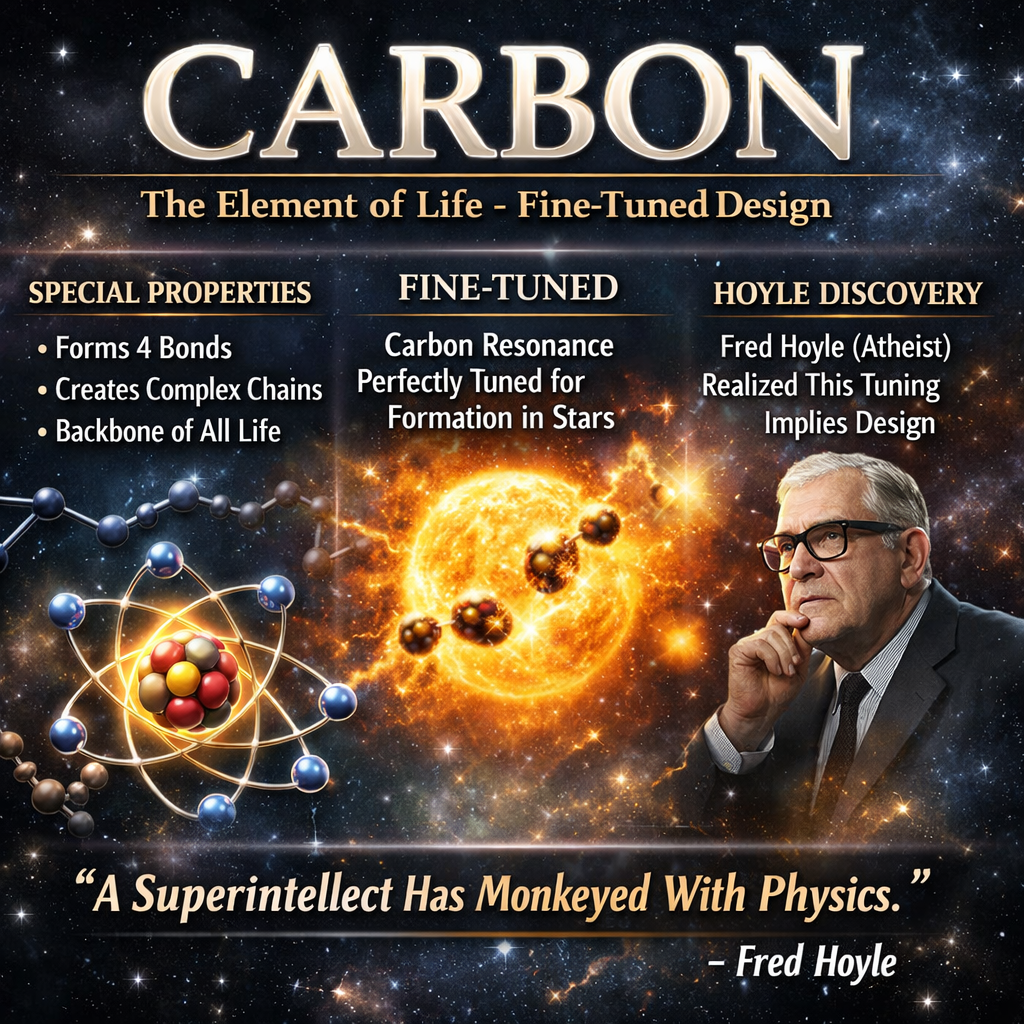
Chemistry Carbon Uniqueness
Biology Cell Design
Parts of the Blood:
Red blood cells - Carry oxygen (that's why blood is red!)
White blood cells - Fight germs and infections
Platelets - Help blood clot when you get a cut
Plasma - The liquid part that carries everything
"For the life of the flesh is in the blood."
- Leviticus 17:11
Scripture told us thousands of years ago that life is in the blood! Scientists didn't understand this until much later. Yahuah's Word is always ahead of science!
REFLECT - Check Your Understanding
Fill in:
a) carry blood AWAY from the heart.
b) carry blood back TO the heart.
c) blood cells carry oxygen.
d) blood cells fight germs.
e) help blood clot.
Unit 6 The Respiratory System
RECEIVE - Learn About It
The respiratory system brings oxygen into your body and removes carbon dioxide. You breathe about 20,000 times a day!
The Breathing Journey
Nose/Mouth - Air enters (nose filters and warms it)
Trachea (windpipe) - Tube that carries air down
Bronchi - Two tubes leading to each lung
Lungs - Where oxygen enters blood
Alveoli - Tiny air sacs where gas exchange happens
Diaphragm - Muscle that helps you breathe in and out
You have about 600 MILLION alveoli in your lungs! If you spread them flat, they would cover a tennis court!
"And Yahuah Elohim formed man of the dust of the ground, and breathed into his nostrils the breath of life."
- Genesis 2:7
Yahuah gave Adam the breath of life! Every breath we take is a gift from our Creator. The incredible design of our lungs - millions of tiny air sacs working together - shows amazing planning!
REFLECT - Check Your Understanding
True or False:
a) The trachea is also called the windpipe.
b) We breathe about 200 times a day.
c) The diaphragm is a muscle that helps breathing.
d) Gas exchange happens in the alveoli.
Unit 7 The Nervous System
RECEIVE - Learn About It
The nervous system is your body's communication network - sending messages faster than any computer!
Parts of the Nervous System
Brain - Control center for everything (thinking, feeling, moving)
Spinal cord - Highway for messages between brain and body
Nerves - Carry messages to and from all body parts
Neurons - Special cells that send electrical signals
Your brain has about 86 BILLION neurons! That's more than the number of stars in most galaxies! And they can send messages at 250 mph!
Parts of the Brain:
Cerebrum - Thinking, learning, emotions (the wrinkly part)
"Be ye transformed by the renewing of your mind."
- Romans 12:2
The brain is the most complex object in the known universe! No computer comes close to matching what your brain can do. And evolutionists want us to believe this happened by accident? The brain PROVES intelligent design!
REFLECT - Check Your Understanding
Match:
___ Brain A. Carries messages between brain and body
___ Spinal cord B. Controls balance
___ Cerebellum C. Control center for body
___ Neurons D. Cells that send electrical signals
Unit 8 Ecosystems - Living Together
RECEIVE - Learn About It
An ecosystem is a community of living things (plants, animals, organisms) interacting with each other AND their non-living environment (water, air, rocks, soil).
Key Vocabulary
Habitat - The place where an organism lives
Population - All members of one species in an area
Community - All living things in an ecosystem
Biome - Large areas with similar climate and life
Types of Ecosystems:
Ecosystem
Features
Examples
Forest
Many trees, lots of rain
Deer, bears, squirrels
Desert
Very dry, hot or cold
Snakes, lizards, cacti
Ocean
Saltwater, largest ecosystem
Fish, whales, coral
Grassland
Mostly grasses, few trees
Lions, zebras, buffalo
Tundra
Very cold, permafrost
Polar bears, caribou
"And Elohim said, Let the earth bring forth the living creature after his kind."
- Genesis 1:24
Yahuah designed ecosystems to be BALANCED! Each creature has a role. Remove one, and others are affected. This incredible design shows a wise Creator who planned everything to work together!
REFLECT - Check Your Understanding
Fill in:
a) A is where an organism lives.
b) All living things in an ecosystem make up a .
c) The is the largest ecosystem on Earth.
d) are large areas with similar climate.
Unit 9 Food Chains & Food Webs
RECEIVE - Learn About It
A food chain shows how energy passes from one living thing to another. All energy originally comes from the sun!
Parts of a Food Chain
Producers - Make their own food (plants use sunlight)
Consumers - Eat other living things
Herbivores - Eat plants (deer, rabbits)
Carnivores - Eat animals (lions, hawks)
Omnivores - Eat both (bears, humans)
Decomposers - Break down dead things (fungi, bacteria)
Simple Food Chain:
☀️ Sun → 🌿 Grass → 🐰 Rabbit → 🦊 Fox → 🦠 Decomposers
Energy flows from producers to consumers
A food web shows how many food chains connect. Real ecosystems have complex webs, not just simple chains!
Only about 10% of energy passes to the next level of the food chain. That's why there are more plants than herbivores, and more herbivores than carnivores!
Food chains show how everything is connected! Yahuah designed each creature with a role. Before sin entered the world, all creatures ate plants (Genesis 1:30). Death came after the Fall.
REFLECT - Check Your Understanding
Classify each as Producer, Consumer (herb/carn/omni), or Decomposer:
a) Grass:
b) Lion:
c) Deer:
d) Mushroom:
e) Bear:
Draw a simple food chain with 4 steps (producer → 3 consumers):
RECALL - Draw Your Food Chain
Create a food chain from an ecosystem of your choice. Label each part!
Unit 10 Taking Care of Yahuah's Creation
RECEIVE - Learn About It
Yahuah gave humans a special job: to take care of His creation!
"And Yahuah Elohim took the man, and put him into the garden of Eden to dress it and to keep it."
- Genesis 2:15
Stewardship means taking care of something that belongs to someone else. The Earth belongs to Yahuah, and we are His stewards!
Ways We Can Care for Creation
Don't waste food, water, or resources
Pick up litter and keep places clean
Grow a garden and learn about plants
Be kind to animals
Learn about nature and appreciate Yahuah's design
Don't pollute air, water, or land
When we care for creation, we honor the Creator! Studying nature helps us see Yahuah's wisdom and power. Every animal, plant, and ecosystem tells us something about Him!
"The heavens declare the glory of Elohim; and the firmament showeth his handywork."
- Psalm 19:1
RESPOND - Apply What You Learned
1. What does "stewardship" mean?
2. List 3 ways you can take care of creation this week:
a)
b)
c)
3. What does creation teach us about Yahuah?
Answer Key
Unit 1: 1) building, nucleus, mitochondria, trillion | 2) D, C, B, A
Unit 2: C, D, A, B
Unit 3: 1) 206, skull, cardiac, bone marrow | T/F: F, T, F