📚 Textbook View
- Rome fell due to barbarian invasions
- The "Dark Ages" followed—a period of ignorance
- The Church filled a power vacuum
- Progress halted until the Renaissance
Grades 10-11 | Truth Carriers Education
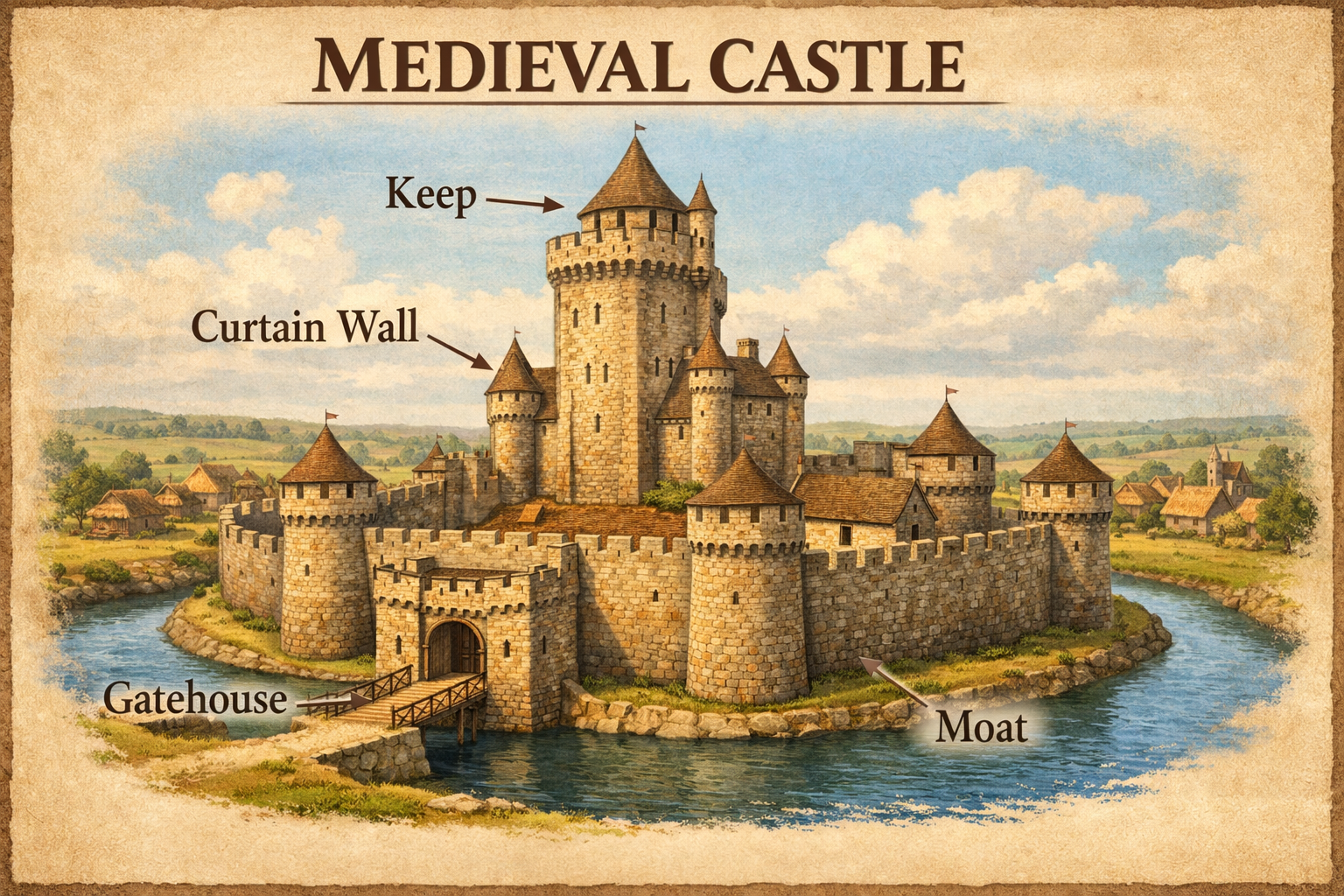
Medieval times
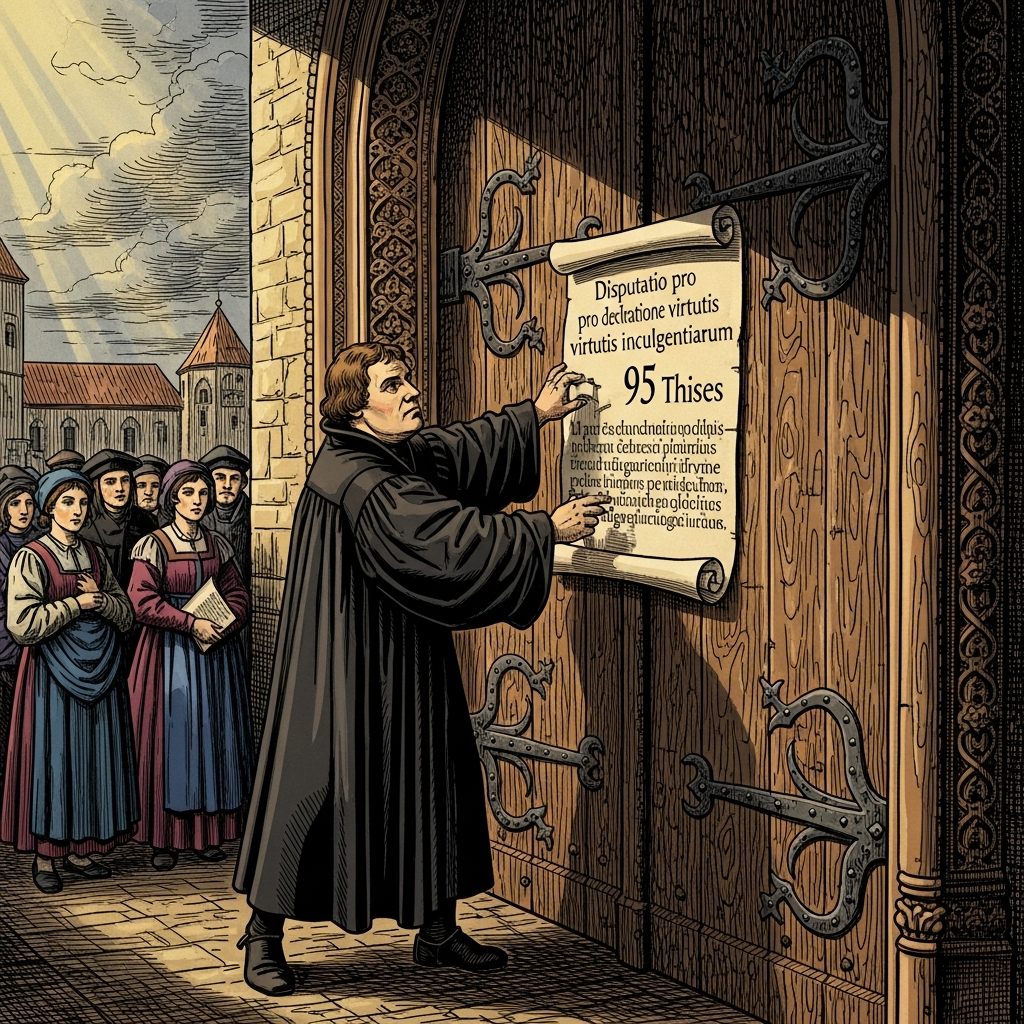
The Reformation era
Lesson 1
The "fall" of Rome wasn't a single event but a gradual transformation. As the Western Roman Empire collapsed, a new social order emerged centered on the Church, local lords, and Germanic kingdoms.
In Daniel chapter 2, Nebuchadnezzar dreamed of a statue with a head of gold (Babylon), chest of silver (Medo-Persia), belly of bronze (Greece), and legs of iron (Rome). The iron mixed with clay represented Rome's division. History followed this prophecy exactly.
Lesson 2
The Bishop of Rome gradually claimed supreme authority over all Christianity. This transformation from a servant leader to a political power fulfills biblical prophecy about apostasy.
Many Reformers identified the papal system with prophecies in Daniel 7:25 and Revelation 13. The "little horn" would speak great words against Yahuah, wear out the saints, and think to change times and laws.
Lesson 3
Medieval Europe was organized hierarchically: kings granted land to nobles, who granted portions to knights, who ruled over peasants. This system provided stability but limited freedom.
| Class | Role | Obligations |
|---|---|---|
| King/Monarch | Supreme ruler, granted land | Protection, justice |
| Nobles/Lords | Held fiefs, administered justice | Military service, loyalty to king |
| Knights | Warriors, protected land | Military service to lord |
| Peasants/Serfs | Worked the land | Labor, portion of harvest |
| Clergy | Spiritual leadership | Prayer, sacraments, education |
The medieval Church controlled nearly every aspect of life: birth (baptism), marriage, death (last rites), education, holidays, morality, and even the calendar. Most people never read Scripture themselves—they relied entirely on priests.
Lesson 4
Pope Urban II called for the First Crusade in 1095 to recapture Jerusalem from Muslim control. Over 200 years, multiple crusades were launched with mixed motives and results.
Lesson 5
Throughout the medieval period, groups maintained biblical faith despite persecution. These "heretics" often held beliefs remarkably similar to what the Reformers would later teach.
Founded c. 1170 by Peter Waldo
Beliefs: Scripture as sole authority, rejection of purgatory and indulgences, lay preaching, vernacular Bible translation. They preserved Scripture in the mountains of northern Italy for centuries, suffering intense persecution.
Southern France, 12th-13th centuries
Rejected papal authority and Catholic sacraments. The Albigensian Crusade (1209-1229) was launched against them by Pope Innocent III, resulting in massacres. "Kill them all; God will know His own" was allegedly spoken at Béziers.
c. 1320-1384, England
"The Morning Star of the Reformation." Translated the Bible into English, challenged papal authority, transubstantiation, and clerical corruption. His followers, the Lollards, spread biblical teaching despite persecution.
c. 1369-1415, Bohemia
Preached against indulgences and corruption. Despite a promise of safe conduct, he was burned at the stake at the Council of Constance. His last words: "In 100 years, God will raise up a man whose calls for reform cannot be suppressed." (Luther came 102 years later.)
The Medieval Inquisition (1184 onward) was established to combat "heresy." Methods included torture, imprisonment, and execution by burning. Those who rejected papal authority were considered enemies of both Church and state.
Lesson 6
Martin Luther (1483-1546) was an Augustinian monk tormented by guilt. Through studying Romans, he discovered justification by faith alone—not by works or Church sacraments.
The Reformation can be summarized in five Latin phrases:
| Latin | English | Meaning |
|---|---|---|
| Sola Scriptura | Scripture Alone | The Bible is the only infallible authority |
| Sola Fide | Faith Alone | Justification is through faith, not works |
| Sola Gratia | Grace Alone | Salvation is entirely by Yahuah's grace |
| Solus Christus | Christ Alone | Yahusha is the only mediator between Elohim and man |
| Soli Deo Gloria | To God Alone Be Glory | All glory belongs to Yahuah, not men or institutions |
Lesson 7
Switzerland
Reformed Zurich. Rejected images, relics, and the Mass. Disagreed with Luther on the Lord's Supper. Died in battle—mixing church and state.
France & Geneva
Systematized Protestant theology in "Institutes of the Christian Religion." Emphasized Yahuah's sovereignty and predestination. Geneva became a model Protestant city—but also executed some dissenters.
Various locations, from 1525
The "radical reformers" rejected infant baptism, insisted on believer's baptism, separated church and state, and often practiced nonviolence. Persecuted by Catholics AND Protestants. Groups include Mennonites, Amish, and Hutterites.
The Catholic Church responded to Protestantism with:
Lesson 8
While the Reformers recovered many biblical truths, they didn't restore everything. True reformation continues as believers search Scripture and follow Yahuah's Word more fully.
Throughout history, those who follow Scripture rather than tradition face opposition. The medieval pattern continues in new forms: