The "Middle Ages" or "Medieval Period" spans roughly 500-1500 AD. How you view this era depends on your perspective - textbooks often have a very different view than what actually happened.
What Textbooks Teach
The "Dark Ages" - a time of ignorance and superstition
The Church suppressed science and learning
Crusades were Christian violence against peaceful Muslims
Renaissance "rescued" Europe from religious darkness
What We'll Discover
Medieval times saw great achievements and faith
True believers were often persecuted by the institutional church
The Crusades have a more complex history than taught
The Renaissance brought good AND concerning changes
"Remember the days of old, consider the years of many generations: ask your father, and he will show you; your elders, and they will tell you." - Deuteronomy 32:7
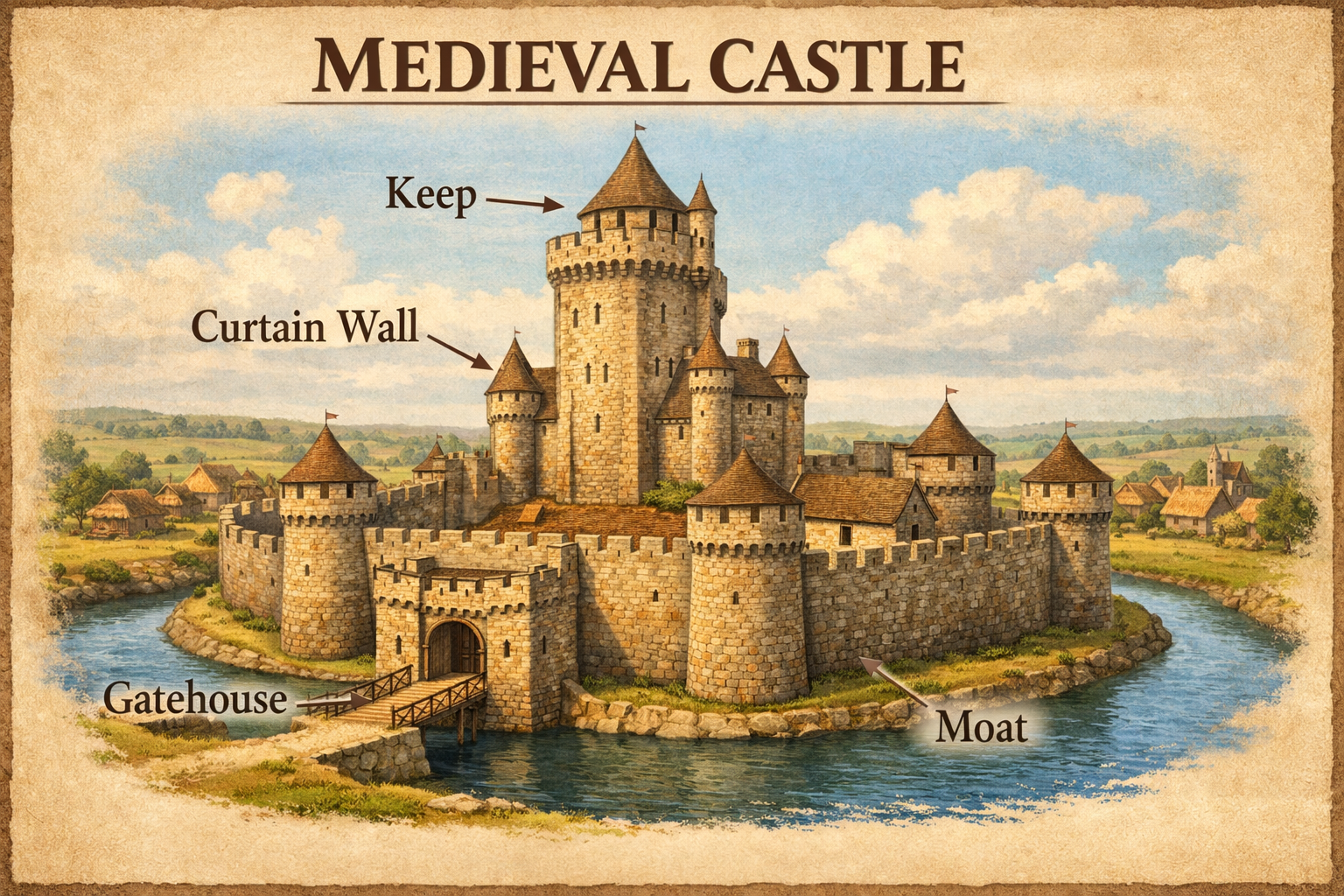
Medieval architecture and fortified castles
1Medieval Society: Feudalism
How Society Was Organized
The Feudal System
After the fall of Rome (476 AD), Europe reorganized into a new system:
King: Ruled the land, granted land to lords
Lords/Nobles: Owned large estates, owed military service to king
Knights: Soldiers who served lords in exchange for land
Peasants/Serfs: Worked the land, gave portion of crops to lords
What Textbooks Say
Feudalism was oppressive - serfs were basically slaves with no freedom.
More Complete Picture
Serfs had guaranteed land and protection
Lords had obligations TO serfs, not just from them
The system provided stability after Rome's collapse
Church taught all people had value before Yahuah
Many peasants lived better than modern workers in some ways
Life in the Middle Ages
Myth
Reality
Everyone was dirty and diseased
Many towns had public baths; hygiene was valued
People thought the earth was flat
Educated people knew it was round (from ancient Greeks)
No learning or science
Universities founded; agricultural advances made
Constant warfare
Many long periods of peace; "Pax" times
Check Understanding
1. List the four levels of feudal society:
2. Name one myth about the Middle Ages and the reality:
2The Medieval Church
Two Different Churches
Important Distinction
The "Church" of the Middle Ages was actually TWO very different things:
The Institutional Church: The Roman Catholic hierarchy - popes, cardinals, bishops with political power
True Believers: Faithful followers of Scripture, often persecuted BY the institutional church
Institutional Church Problems
Selling indulgences: Claiming money could reduce time in purgatory
Forbidding Bible reading: Bible in Latin only; common people couldn't read it
Political corruption: Church positions bought and sold
Inquisition: Persecution of "heretics" (often true believers)
The Faithful Remnant
Throughout the Middle Ages, groups of believers kept Scripture alive:
Waldensians: Read Scripture in common language, lived simply
Lollards: Followers of John Wycliffe, translated Bible to English
Hussites: Followers of Jan Hus, called for reform
These groups were persecuted as "heretics" for simply following the Bible!
John Wycliffe (1320s-1384)
Called the "Morning Star of the Reformation"
Translated the Bible into English
Taught that Scripture, not the pope, was final authority
His followers (Lollards) spread across England
Church was so angry they dug up his bones and burned them!
"Thy word is a lamp unto my feet, and a light unto my path." - Psalm 119:105
Check Understanding
1. What's the difference between the institutional church and true believers?
2. Who was John Wycliffe and why was he important?
3The Crusades (1095-1291)
What Were the Crusades?
Basic Facts
Series of military campaigns to retake the Holy Land
Called by Pope Urban II in 1095
Jerusalem and surrounding areas were the goal
About 9 major Crusades over 200 years
What Textbooks Often Teach
Crusades were unprovoked Christian aggression
Muslims were peacefully living in the Holy Land
Crusaders were barbaric; Muslims were civilized
Crusades caused ongoing Muslim resentment
What's Often Left Out
400 years of Islamic conquest: Muslims had conquered Christian lands from Spain to Persia BEFORE the Crusades
Pilgrims attacked: Christian pilgrims to Jerusalem were being killed and robbed
Byzantine plea: The Eastern Roman Empire begged for help against Muslim armies
Defensive nature: Crusades were a response to centuries of Islamic expansion
Before 1095
What Happened
636 AD
Muslims conquer Jerusalem (had been Christian)
711 AD
Muslims invade Spain
732 AD
Muslims stopped at Tours, France (almost took Europe)
1009 AD
Church of Holy Sepulchre destroyed by Muslims
1071 AD
Byzantines defeated; plead for Western help
A Balanced View
The Crusades had both good and bad elements:
Legitimate: Defending pilgrims; responding to aggression
Problematic: Pope's promises of salvation; violence against innocents
Mixed motives: Some went for faith, others for land or adventure
Truth is more complex than "Christians bad, Muslims good" or vice versa.
Check Understanding
1. What events happened BEFORE the Crusades that led to them?
2. Why is the textbook version incomplete?
4The Black Death (1347-1351)
The Great Plague
What Happened
Plague arrived in Europe from Asia via trade routes
Spread by fleas on rats (though this is debated)
Killed 30-60% of Europe's population (75-200 million people)
Recurring outbreaks for centuries
Effects on Society
Labor shortage gave peasants more bargaining power
Serfdom declined as workers could demand better conditions
Some lost faith; others became more devoted
Jews and others scapegoated and persecuted
Spiritual Perspective
Many turned to Yahuah in the crisis
Exposed the powerlessness of the institutional church
Led some to question church authority
Prepared the way for Reformation questions
"Yahuah is my refuge and my fortress: my Elohim; in Him will I trust. Surely He shall deliver you from the snare of the fowler, and from the noisome pestilence." - Psalm 91:2-3
Check Understanding
1. What was the Black Death and how many did it kill?
2. How did it affect society and faith?
5The Renaissance (1400-1600)
"Rebirth" of Classical Learning
What Was the Renaissance?
Started in Italy (Florence), spread across Europe
Revival of Greek and Roman art, literature, philosophy
New focus on human achievement ("humanism")
Great art, architecture, invention
What Textbooks Celebrate
Genius of Leonardo da Vinci, Michelangelo, Raphael
Scientific advances (Copernicus, Galileo)
Printing press (Gutenberg, 1440)
"Liberation" from medieval religious thinking
The Darker Side
Humanism: "Man is the measure of all things" - shifted focus from Yahuah to humans
Occult revival: Interest in ancient paganism, magic, Hermeticism
Medici banking: Powerful families funded art but also controlled through money
Mixed legacy: Both beautiful art and seeds of secular humanism
The Printing Press (1440)
Johannes Gutenberg's invention was the most important development:
First major book: The Bible
Made Scripture available to common people
Enabled the Reformation to spread
Information could no longer be controlled by the few
Yahuah used human invention to spread His Word!
Discerning the Renaissance
Good: Printing press, beautiful art glorifying Yahuah, increased learning
Concerning: Human-centered philosophy, revival of paganism, pride
Most important: It prepared the way for the Reformation!
Check Understanding
1. What was the Renaissance and where did it start?
2. What were both good and concerning aspects of the Renaissance?
6Review: Medieval to Renaissance
Timeline
476 AD: Fall of Rome - Beginning of Middle Ages
500-1000: Early Middle Ages - Feudalism develops
1095-1291: The Crusades
1347-1351: Black Death strikes Europe
1380s: Wycliffe translates Bible to English
1400-1600: The Renaissance
1440: Gutenberg's printing press
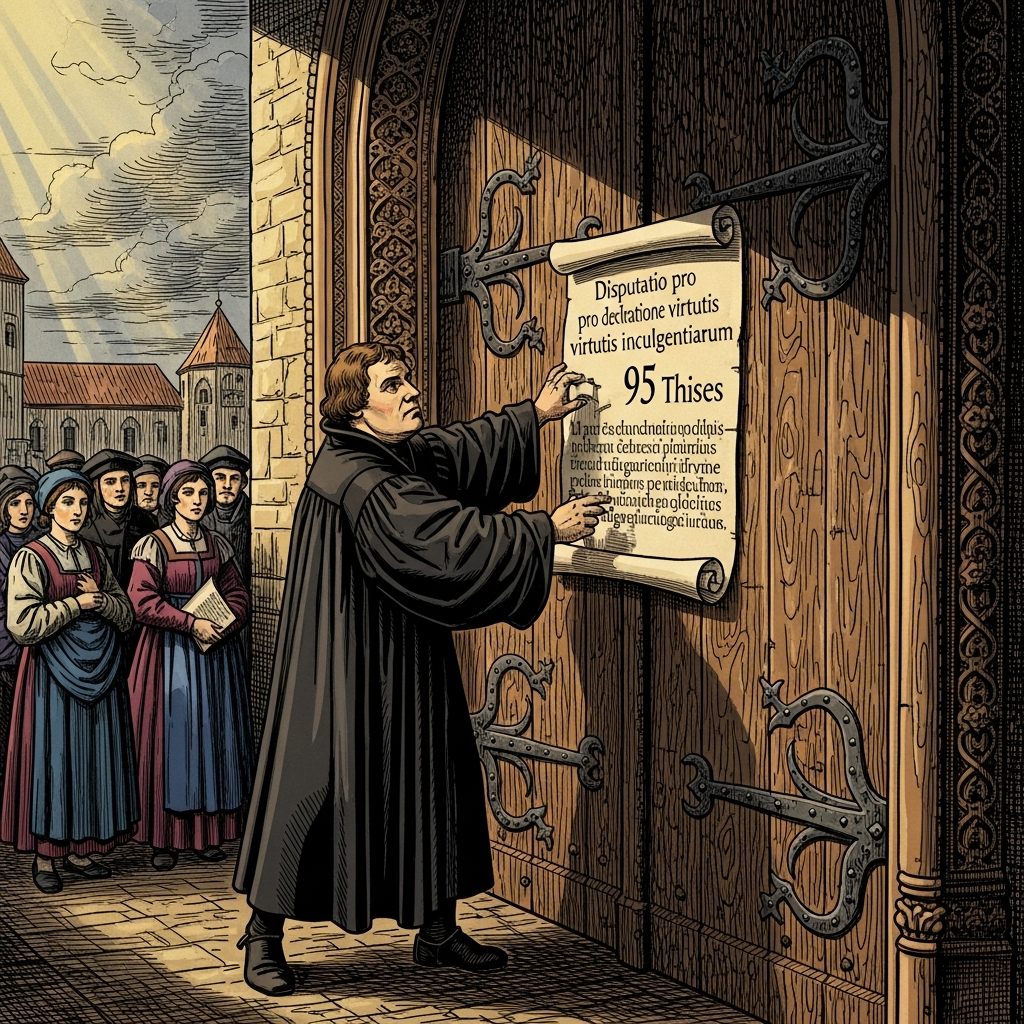
1517: Luther's 95 Theses - Reformation begins
Key Lessons
The Middle Ages weren't as "dark" as often portrayed
True believers existed throughout, often persecuted
Crusades had complex causes - not just Christian aggression
Renaissance had both good and concerning elements
Yahuah preserved His Word and His people through all of it
"The grass withers, the flower fades: but the word of our Elohim shall stand forever." - Isaiah 40:8
Final Assessment
1. What was feudalism and how did it work?
2. What happened BEFORE the Crusades that led to them?
3. Why was the printing press so important for spreading Scripture?
Course Completion
Key Answers
Lesson 1
Feudal levels: King → Lords → Knights → Peasants
Lesson 2
Institutional church: Political hierarchy, often corrupt
True believers: Waldensians, Lollards - followed Scripture, were persecuted
Lesson 3
Before Crusades: 400 years of Islamic conquest; attacks on pilgrims; Byzantine plea for help
Lesson 4
Black Death: Plague that killed 30-60% of Europe; led to social changes and spiritual questioning
Lesson 5
Renaissance: "Rebirth" of classical learning starting in Italy