World History: Medieval Period
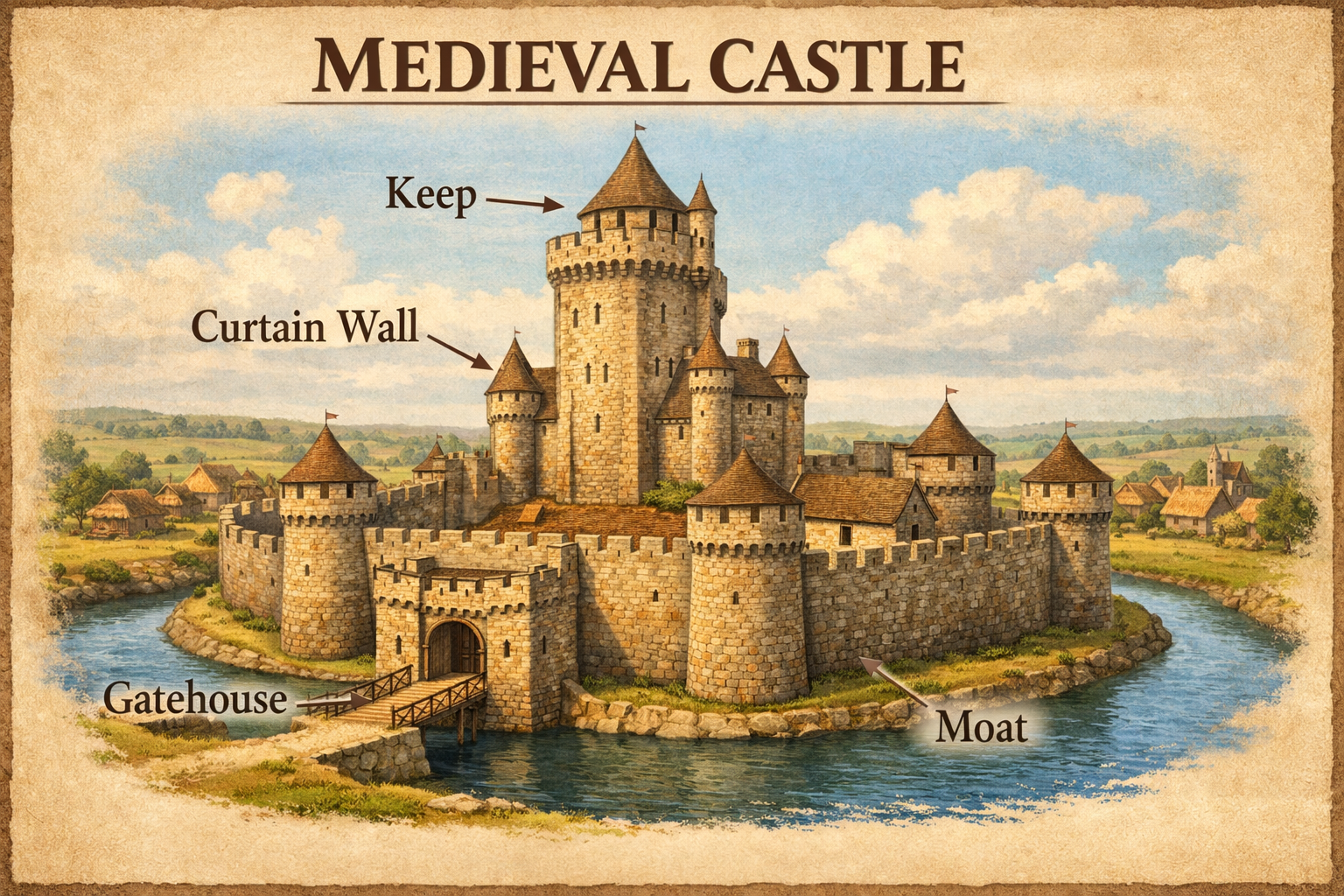
Medieval times
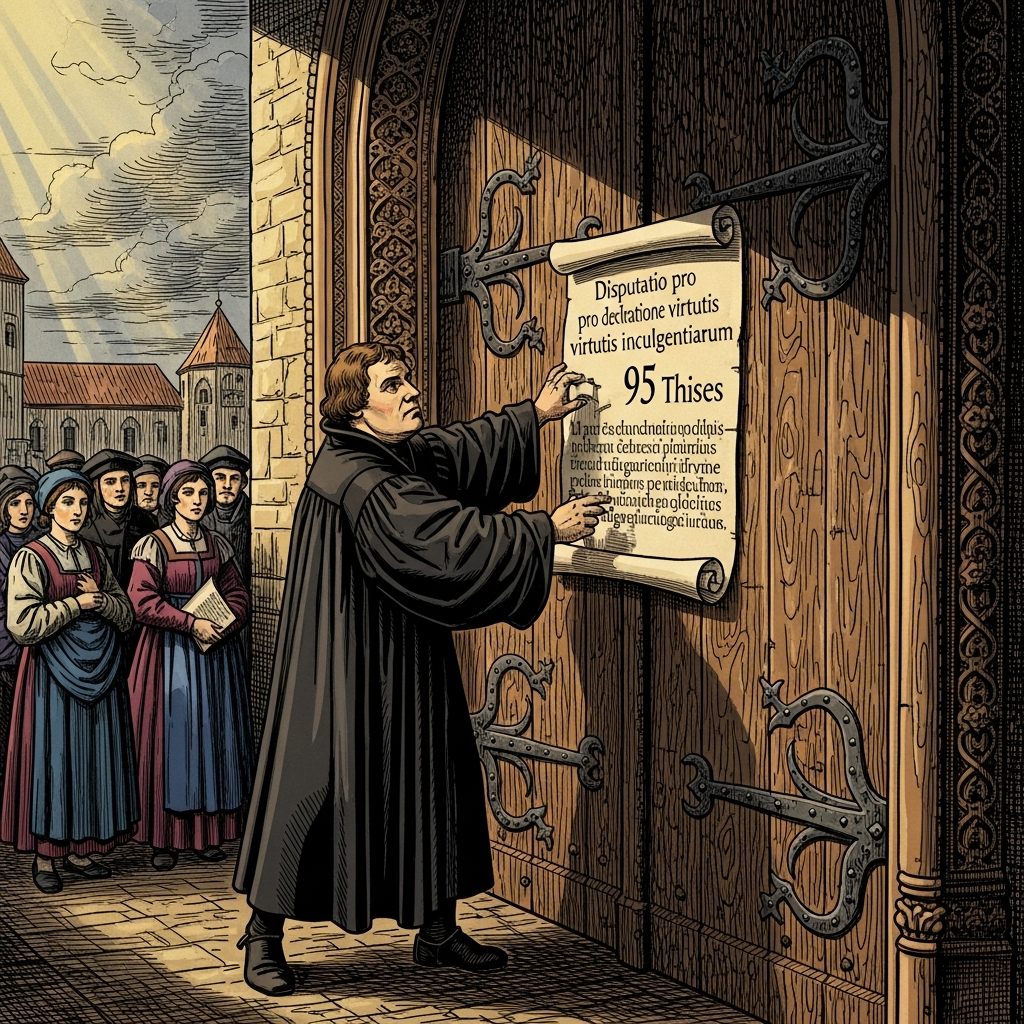
The Reformation era
Kings, Castles, and the True Faith Through the Ages
Youth Tier 2 | Grades 7-9
Medieval times
The Reformation era
Kings, Castles, and the True Faith Through the Ages
The Western Roman Empire officially fell in 476 AD when the Germanic leader Odoacer deposed the last Roman emperor, Romulus Augustulus. But Rome had been declining for centuries. This marked the beginning of what historians call the "Middle Ages" or Medieval Period (about 500-1500 AD).
Daniel's prophecy in chapter 2 described four world kingdoms. The fourth kingdom (Rome) would be "strong as iron" but would eventually be broken. Rome didn't fall to one great army - it crumbled from within through:
While Western Rome fell, the Eastern Roman Empire (Byzantine Empire) continued for another 1,000 years until 1453 AD! The Roman Catholic Church also preserved much of Rome's power structure, with the Pope eventually claiming authority over kings - something we'll explore in the next lesson.
Consider how the fall of Rome matches biblical prophecy. Daniel saw that the "iron" kingdom would be divided into pieces (Daniel 2:41-43). After Rome fell, Europe was divided into many smaller kingdoms - just as prophesied!
Why do you think Yahuah allowed such a powerful empire to fall?
1. The Western Roman Empire officially fell in AD.
2. The last Roman emperor was .
3. The period after Rome fell is called the Ages.
4. Daniel chapter prophesied about four world kingdoms.
5. Rome was compared to in Daniel's vision.
6. The sacked Rome in 410 AD.
Write a paragraph comparing Rome's fall to warning signs you see in modern society:
As the Roman Empire crumbled, the Bishop of Rome (the Pope) gained more and more power. With no strong emperor in the West, the Pope stepped into the power vacuum. The Roman Catholic Church became the most powerful institution in Medieval Europe.
The early followers of Yahusha (the "church") had no pope or central authority. Each congregation was led by elders (presbyters) and overseers (bishops) who were equal. But over time, the Bishop of Rome claimed special authority because:
Many believers throughout history saw the papal system as the fulfillment of Daniel 7's "little horn" that would "speak great words against the most High" and "think to change times and laws" (Daniel 7:25). The papacy changed the Sabbath from Saturday to Sunday, removed the second commandment about images, and added many traditions not found in Scripture. Faithful believers who kept the true faith were called "heretics" and persecuted.
The papacy claimed to be the representative of Yahusha on earth, yet the system accumulated wealth, political power, and eventually persecuted true believers. How did this differ from what Yahusha taught?
Compare the papal system to Yahusha's teachings about leadership (Matthew 23:8-12). What differences do you notice?
1. The Bishop of became known as the Pope.
2. Pope Leo I claimed supreme authority in -461 AD.
3. The Papal made the Pope a political ruler in 756 AD.
4. Daniel 7 describes a "little " that speaks against Yahuah.
5. Early congregations were led by elders and .
6. The papacy changed the Sabbath from Saturday to .
Research: What did the early Reformers (Luther, Calvin, etc.) believe about the papacy and prophecy?
While Western Rome fell, the Eastern Roman Empire continued for another 1,000 years! We call it the Byzantine Empire (after its capital, Byzantium, renamed Constantinople). This empire preserved Roman law, Greek culture, and Christianity throughout the Medieval Period.
Justinian was one of Byzantium's greatest emperors. He compiled Roman law into the "Justinian Code," which influenced European law for centuries. He also built the magnificent Hagia Sophia church in Constantinople. However, Justinian also persecuted Sabbath-keepers and worked to unite church and state power.
Key features of the Byzantine Empire:
On a blank map of Europe and the Middle East, locate and label:
The Byzantine Empire preserved much ancient knowledge that would have been lost. However, it also merged state power with religious authority, creating a system where the emperor controlled the church.
What are the dangers when government controls religion, or when religion controls government?
1. The Byzantine Empire was the Roman Empire.
2. The capital was , renamed Constantinople.
3. Emperor compiled Roman law into a famous code.
4. The Great Schism of AD split Eastern and Western churches.
5. The Byzantine Empire spoke , not Latin.
6. Constantinople fell to the Turks in 1453.
Why do you think the Eastern Empire survived so much longer than the Western Empire?
In the 600s AD, a new religion arose in Arabia that would dramatically change the Medieval world. Islam was founded by Muhammad, who claimed to receive revelations from Allah (Arabic for "God"). Within 100 years, Islamic armies conquered vast territories from Spain to India.
Key facts about early Islam:
From a scriptural view, Islam denies key truths: that Yahusha is the Son of Yahuah, that He died for our sins, and that He rose again. The Quran calls these beliefs "shirk" (blasphemy). While we should treat all people with respect, Scripture warns us to "test the spirits" and compare all teachings to Yahuah's Word. Islam claims connection to Abraham through Ishmael, but Scripture shows the covenant was through Isaac (Genesis 17:19-21).
Islam spread very rapidly, partly through military conquest and partly through trade. The Islamic world preserved much Greek and Roman knowledge that Europe had forgotten.
How should believers respond when others follow different religions? How do we balance truth with love?
1. Islam was founded by in Arabia.
2. The Islamic holy book is called the .
3. The Hijra occurred in AD.
4. Jerusalem was captured by Muslims in AD.
5. Charles stopped the Muslim advance into France.
6. Islam has main pillars of practice.
How can we share truth with those of other faiths while showing love and respect?
After Rome fell, Germanic tribes established kingdoms across Western Europe. The Franks became the most powerful, especially under their king Charlemagne (Charles the Great, 742-814 AD). Charlemagne united much of Western Europe and was crowned "Holy Roman Emperor" by the Pope in 800 AD.
Charlemagne was a brilliant military leader who expanded Frankish territory across modern France, Germany, and Italy. He promoted education and literacy (the "Carolingian Renaissance"), established schools, and standardized weights and measures. However, he also forcibly converted pagan Saxons to Christianity, killing thousands who refused baptism.
Important aspects of Charlemagne's reign:
When the Pope crowned Charlemagne "Holy Roman Emperor," it established a dangerous precedent: the Pope claimed authority to give and take away kingdoms. This union of church and state power would lead to centuries of corruption and persecution. Yahusha's kingdom was "not of this world" (John 18:36), yet the medieval church sought earthly political power.
Charlemagne used force to "convert" pagans. Many were baptized at sword-point. Was this true faith?
Can someone be truly converted by force? What does Scripture say about how people come to faith?
1. Charlemagne means "Charles the ".
2. Charlemagne was crowned Holy Roman Emperor in AD.
3. The revival of learning under Charlemagne is called the Renaissance.
4. Pope III crowned Charlemagne.
5. The Treaty of divided Charlemagne's empire in 843 AD.
6. Charlemagne forcibly converted the people.
Why is the separation of church and state important? What happens when they are combined?
After Charlemagne's empire fell apart, Europe was plagued by invasions from Vikings, Magyars, and Muslims. With no strong central government, a new system called feudalism emerged to provide protection and order. This system would define Medieval society for centuries.
The Feudal Hierarchy:
Daily Life for Peasants:
About 90% of medieval people were peasants. Their lives were hard:
The feudal system was a form of bondage. While not exactly slavery, serfs had few rights and could not escape their station. This contradicts the biblical Year of Jubilee, when Yahuah commanded that all debts be forgiven and all slaves freed (Leviticus 25). The medieval church often supported this oppressive system rather than challenging it.
The feudal system provided stability but at the cost of freedom. Serfs were bound to the land for their entire lives, as were their children.
How does the Year of Jubilee (Leviticus 25) contrast with feudalism? What does this tell us about Yahuah's view of permanent bondage?
1. The medieval social system was called .
2. Land granted by a king to nobles was called a .
3. About % of medieval people were peasants.
4. Peasants who were bound to the land were called .
5. Armored warriors who served lords were called .
6. Average life expectancy was only -35 years.
Compare feudalism to modern economic systems. Are there any parallels in how people become "bound" today?
In 1095, Pope Urban II called for a "holy war" to recapture Jerusalem and the Holy Land from Muslim control. This began nearly 200 years of Crusades - military campaigns that would leave a bloody legacy and permanently affect relations between Christians, Muslims, and Jews.
Major Crusades:
The Crusades were not fought for true biblical faith. They were motivated by papal power, greed for land and wealth, and false promises of salvation. Pope Urban promised that anyone who died on Crusade would go straight to heaven - a lie nowhere found in Scripture. The Crusaders killed not only Muslims, but also Jews and Eastern Orthodox Christians. Yahusha never commanded His followers to spread the faith by the sword.
The Crusaders believed they were doing Yahuah's will. Yet they committed horrible atrocities in His name.
How did the Crusades contradict Yahusha's teachings? What should the response have been to Muslim control of Jerusalem?
1. Pope II called for the First Crusade in 1095.
2. The Crusaders captured Jerusalem in .
3. recaptured Jerusalem for Muslims in 1187.
4. The Fourth Crusade attacked instead of Jerusalem.
5. The Crusades lasted approximately years.
6. The last Crusader fortress fell in .
How can people today misuse religion to justify violence or hatred? How do we guard against this?
While the Roman Catholic Church dominated Medieval Europe, faithful believers who held to Scripture alone faced persecution. These "remnant" groups kept the true faith alive despite tremendous opposition. They were called "heretics" by the church, but they were truly following Yahuah's Word.
The Waldensians (1170s onwards):
Founded by Peter Waldo in Lyon, France. They believed:
Other Remnant Groups:
A Bohemian priest who preached against church corruption and taught that Scripture was the ultimate authority. He was promised safe passage to the Council of Constance to defend his views, but was arrested, tried, and burned at the stake. His last words were reportedly, "You are now going to burn a goose (Hus means 'goose' in Czech), but in a century you will have a swan which you can neither roast nor boil." A century later, Martin Luther began the Reformation.
History books often focus on kings and popes, but throughout the Medieval Period, faithful believers kept Yahuah's commandments - including the seventh-day Sabbath - despite persecution. The Waldensians hid in the Alps, carrying handwritten portions of Scripture. Some groups preserved Torah-observant faith for centuries. This is the "remnant" prophesied in Revelation - those who "keep the commandments of Elohim, and have the testimony of Yahusha."
These believers faced death rather than compromise their faith. They valued Scripture above church tradition.
What can we learn from the Waldensians and other remnant believers? Would you be willing to suffer for your faith?
1. The were founded by Peter Waldo in the 1170s.
2. Revelation 12:17 describes the who keep Yahuah's commandments.
3. Jan was burned at the stake in 1415.
4. The were followers of John Wycliffe in England.
5. "Hus" means in Czech.
6. The Waldensians believed is the only authority.
Research one of the remnant groups mentioned. What did they believe, and what happened to them?
In 1347, ships arriving in Sicily carried a deadly cargo: rats infected with bubonic plague. Within five years, the "Black Death" had killed between 30-60% of Europe's population - roughly 25-50 million people. This catastrophe would permanently transform Medieval society.
How the Plague Spread:
Effects on Society:
Jewish communities often had lower death rates from the plague. Why? They followed many of the cleanliness laws in the Torah: regular handwashing, avoiding contact with dead bodies, quarantine of the sick (Leviticus 13-15). These "outdated" biblical laws actually protected them from disease. Tragically, instead of learning from this, many Europeans accused Jews of poisoning wells and massacred them.
The plague revealed the importance of biblical cleanliness laws that medieval Europe had ignored.
How did Yahuah's laws in Leviticus about cleanliness and quarantine relate to plague prevention? What does this tell us about the Torah's relevance today?
1. The Black Death arrived in Europe in .
2. The plague killed between -60% of Europe's population.
3. The disease was carried by on black rats.
4. communities had lower death rates because of cleanliness practices.
5. The plague traveled along routes from Asia.
6. Leviticus chapters -15 contain cleanliness and quarantine laws.
What "old-fashioned" biblical principles might protect us today that modern society has rejected?
By the late 1400s, pressure for church reform was building. The printing press (invented around 1450 by Johannes Gutenberg) made books - including the Bible - widely available for the first time. People could now read Scripture for themselves and see how far the church had strayed. The stage was set for the Protestant Reformation.
Precursors to Reformation:
"The Morning Star of the Reformation" translated the Bible into English, believing all people should be able to read Scripture in their own language. He opposed papal authority, indulgences, and church wealth. Though he died naturally, the church was so offended by his teachings that they dug up his bones 44 years later and burned them!
The Reformation was a huge step forward in recovering biblical truth, but it didn't go far enough. Luther kept Sunday worship and infant baptism from Catholicism. Most Protestant denominations today still ignore the seventh-day Sabbath, the biblical feasts, and dietary laws. The work of reformation continues - returning fully to the faith "once delivered unto the saints" (Jude 1:3). This is the mission of the remnant today.
The printing press changed everything by putting Scripture into the hands of ordinary people. When people could read the Bible themselves, they saw the difference between what it taught and what the church practiced.
Why is it so important for believers to read Scripture for themselves rather than just listening to others? What happens when we rely only on religious leaders to interpret for us?
1. The printing press was invented by Johannes around 1450.
2. John translated the Bible into English in the 1380s.
3. Wycliffe is called "The Star of the Reformation."
4. Martin Luther posted his 95 Theses in .
5. The Gutenberg was the first major printed book.
6. The church dug up Wycliffe's bones and them 44 years after his death.
What areas of church tradition today still need to be reformed according to Scripture? What traditions have you learned that may not have biblical support?