How Math Education Was Deliberately Dumbed Down
Truth Carriers Academy | Parents & Students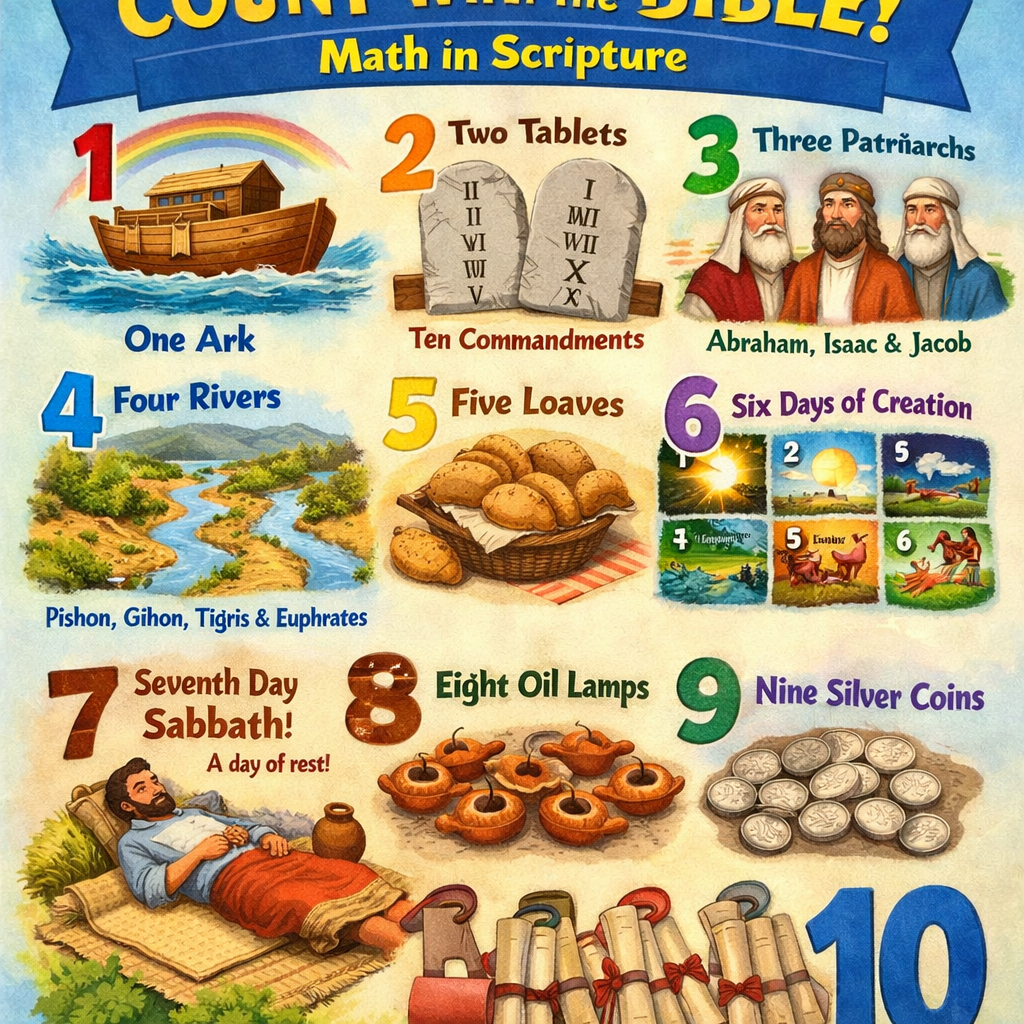
Learning to count with Yahuah!
American students once led the world in mathematics. Now we rank near the bottom of developed nations. Was this an accident - or by design?
Education reformers have openly stated their goals:
"We want one class of persons to have a liberal education, and we want another class of persons, a very much larger class, to forego the privileges of a liberal education." - Woodrow Wilson, 1909
1. What happened to US math education between 1900 and today?
2. Why might education reformers want students to be poor at math?
Traditional Method (simple, efficient):
62 - 17 = ?
Borrow from tens: 12 - 7 = 5, 5 - 1 = 4
Answer: 45
"New Math" Method (confusing, time-consuming):
62 - 17 expressed in set notation...
Consider the union of sets...
Using base 10 blocks in different configurations...
Multiple steps later... Answer: 45
Same answer - but one method builds skills, the other builds confusion!
"In the new approach, as I understand it, the idea is to understand what you're doing rather than to get the right answer. It's okay not to get the right answer, as long as you understand what you're doing." - Tom Lehrer, mathematician & satirist, 1965
1. What was wrong with "New Math"?
2. Why might it be useful to create math methods parents don't understand?
Traditional Method:
26 + 17 = ?
6 + 7 = 13 (write 3, carry 1)
2 + 1 + 1 = 4
Answer: 43
Common Core "Strategy":
26 + 17 = ?
First, make a ten: 26 + 4 = 30
17 - 4 = 13
30 + 13 = 43
Now draw it on a number line...
Now show with base-10 blocks...
Now write a paragraph explaining your thinking...
"The creators of the Common Core have little knowledge of how our mathematical minds develop." - Dr. James Milgram, Stanford mathematician who refused to sign off on Common Core
1. How does Common Core math resemble "New Math"?
2. Why is it concerning that Common Core was never pilot-tested?
"We are turning out people who are not numerate. They cannot balance a checkbook, they cannot understand compound interest... and they don't know how dangerous that is." - John Taylor Gatto, former NY Teacher of the Year
"The purpose of education is not to fill the minds of students with facts... It is to teach them to think." - Robert Hutchins, Ford Foundation
Questions from an 1895 8th grade exam in Kansas:
Could today's high school graduates answer these?
1. How does mathematical illiteracy make people easier to control?
2. Why might powerful interests want a population that can't think logically?
| Modern Math Education | Classical Math Education |
|---|---|
| Multiple strategies before mastery | Master one efficient method first |
| Calculator from early grades | Mental math and hand calculation |
| "Understanding" over answers | Correct answers build understanding |
| Abstract concepts early | Concrete to abstract progression |
| Group work, discovery learning | Direct instruction, practice |
| Move on regardless of mastery | Master before advancing |
The goal of education reformers was never to help your children succeed. It was to create compliant workers who can't think critically.
Don't accept that your child "just isn't good at math." With proper instruction, nearly every child can achieve mathematical competence!
1. How was math education deliberately changed in America?
2. What are the characteristics of effective classical math education?
3. What can parents do to ensure their children become mathematically literate?