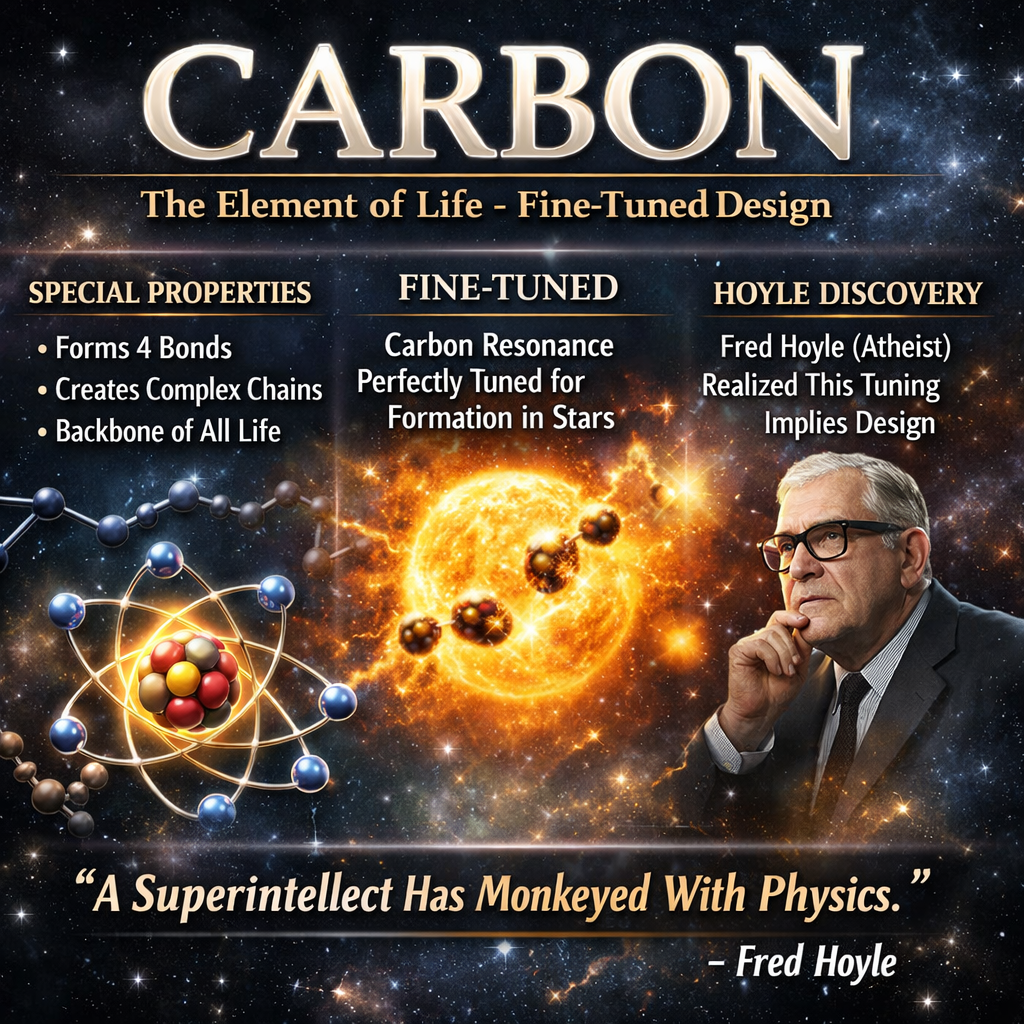
Chemistry is the study of matter—what things are made of and how they interact. Every atom, molecule, and reaction reveals the incredible design of Yahuah. In this course, you'll discover the building blocks of creation and marvel at the Creator's wisdom.
Colossians 1:16-17 - "For by him were all things created, that are in heaven, and that are in earth... And he is before all things, and by him all things consist."
The word "consist" means "hold together." Yahusha holds every atom in the universe together!
Chemistry is the study of matter, its properties, and how it changes. Matter is anything that has mass and takes up space.
Key Definitions
Matter: Anything that has mass and takes up space
Mass: The amount of matter in an object
Volume: The amount of space something takes up
Properties: Characteristics that describe matter
Types of Properties:
Physical Properties
Chemical Properties
Can be observed without changing the substance
Describe how a substance reacts with other substances
Color, shape, size, density, melting point
Flammability, reactivity, acidity
🤔 REFLECT: Design in Chemistry
Every chemical property points to design. Water freezes at exactly 0°C and boils at exactly 100°C. Carbon can form exactly four bonds, making it perfect for building life. These precise properties didn't happen by accident—they were designed by our Creator.
✏️ RECALL: Practice Questions
Lesson 2: States of Matter
📖 RECEIVE: Solid, Liquid, Gas
Matter exists in three main states, determined by how its particles move:
State
Shape
Volume
Particle Motion
Solid
Fixed
Fixed
Vibrate in place
Liquid
Takes container shape
Fixed
Slide past each other
Gas
Fills container
Fills container
Move freely, far apart
State Changes
Melting: Solid → Liquid (add heat)
Freezing: Liquid → Solid (remove heat)
Evaporation/Boiling: Liquid → Gas (add heat)
Condensation: Gas → Liquid (remove heat)
Sublimation: Solid → Gas directly
Water: The Perfect Molecule
Water is unique in all creation:
It's one of the few substances that expands when it freezes
Ice floats—protecting life in lakes and oceans
It can dissolve more substances than any other liquid
It has a high heat capacity (stabilizes temperatures)
This is design, not accident!
✏️ RECALL: Practice Questions
Lesson 3: Atoms - The Building Blocks
📖 RECEIVE: Inside the Atom
An atom is the smallest unit of matter that retains the properties of an element. Atoms are made of even smaller particles:
Particle
Charge
Location
Mass
Proton
Positive (+)
Nucleus (center)
1 amu
Neutron
Neutral (0)
Nucleus (center)
1 amu
Electron
Negative (-)
Orbiting nucleus
Nearly 0
Key Facts
The number of protons determines which element it is
Atoms are mostly empty space!
The nucleus is incredibly dense
Electrons determine how atoms bond
Hebrews 11:3 - "Through faith we understand that the worlds were framed by the word of Elohim, so that things which are seen were not made of things which do appear."
Long before microscopes, Scripture taught that visible things are made of invisible particles!
✏️ RECALL: Practice Questions
Lesson 4: Elements & The Periodic Table
📖 RECEIVE: The Elements
An element is a pure substance made of only one type of atom. There are about 118 known elements, organized in the Periodic Table.
Sample Elements
1
H
Hydrogen
6
C
Carbon
8
O
Oxygen
26
Fe
Iron
79
Au
Gold
Reading the Periodic Table:
Atomic Number: Number of protons (top number)
Symbol: 1-2 letter abbreviation
Atomic Mass: Protons + Neutrons (bottom number)
Groups (columns): Elements with similar properties
Periods (rows): Elements with the same number of electron shells
Essential Elements for Life
About 25 elements are essential for life. The most common:
Carbon (C): The backbone of all organic molecules
Hydrogen (H): In water and organic molecules
Oxygen (O): In water, air, and organic molecules
Nitrogen (N): In proteins and DNA
✏️ RECALL: Practice Questions
Lesson 5: Molecules & Compounds
📖 RECEIVE: Atoms Combine
When atoms bond together, they form molecules. A compound is a molecule made of two or more different elements.
Common Molecules
H₂O = Water (2 hydrogen + 1 oxygen)
CO₂ = Carbon Dioxide (1 carbon + 2 oxygen)
NaCl = Table Salt (1 sodium + 1 chlorine)
C₆H₁₂O₆ = Glucose/Sugar
Understanding Chemical Formulas
Letters represent elements
Subscript numbers show how many atoms
No subscript means 1 atom
Example: H₂O = 2 hydrogen atoms + 1 oxygen atom
The Water Molecule: Perfect Design
H₂O is bent at a 104.5° angle—not straight. This angle gives water its unique properties:
Makes water a polar molecule (slightly charged ends)
Allows water to dissolve many substances
Creates surface tension
Allows ice to float
Change this angle even slightly, and life would be impossible!
✏️ RECALL: Practice Questions
Lesson 6: Chemical Bonds
📖 RECEIVE: How Atoms Connect
Atoms bond together by sharing or transferring electrons. The main types of bonds:
Bond Type
How It Works
Example
Ionic
One atom gives electrons to another
NaCl (salt)
Covalent
Atoms share electrons
H₂O (water)
Hydrogen
Weak attraction between molecules
Water to water
Why Atoms Bond
Atoms "want" full outer electron shells (usually 8 electrons—the "octet rule"). They bond to achieve this stable configuration.
✏️ RECALL: Practice Questions
Lesson 7: Chemical Reactions
📖 RECEIVE: Matter Changing
A chemical reaction occurs when substances combine or break apart to form new substances with different properties.
This produces carbon dioxide gas (the bubbles you see!).
✏️ RECALL: Practice Questions
Lesson 8: Acids & Bases
📖 RECEIVE: The pH Scale
Acids and bases are two important categories of chemicals. The pH scale measures how acidic or basic a substance is.
The pH Scale (0-14)
pH Range
Type
Examples
0-6
Acid
Lemon juice (2), vinegar (3), coffee (5)
7
Neutral
Pure water
8-14
Base (alkaline)
Baking soda (9), soap (10), bleach (13)
Acid-Base Properties
Acids
Bases
Taste sour
Taste bitter
React with metals
Feel slippery
Donate H⁺ ions
Accept H⁺ ions
Proverbs 25:20 - "As he that taketh away a garment in cold weather, and as vinegar upon nitre, so is he that singeth songs to an heavy heart."
This verse describes the acid-base reaction between vinegar (acid) and nitre/soda (base)—Scripture mentioned chemistry thousands of years ago!
✏️ RECALL: Practice Questions
Lesson 9: Chemistry in Living Things
📖 RECEIVE: Biochemistry Basics
Biochemistry is the chemistry of life. Living things are made of four main types of molecules:
Molecule Type
Made Of
Function
Carbohydrates
C, H, O
Energy, structure
Lipids (fats)
C, H, O
Energy storage, cell membranes
Proteins
C, H, O, N, S
Structure, enzymes, transport
Nucleic Acids
C, H, O, N, P
DNA and RNA—genetic information
DNA: The Code of Life
DNA is the most complex molecule known to science. It:
Contains the instructions for building every protein
Uses a 4-letter code (A, T, G, C)
If stretched out, your DNA would reach the sun and back 600 times
Contains more information than any human-made storage system
Information always comes from intelligence. DNA proves a Creator!
✏️ RECALL: Practice Questions
Lesson 10: Chemistry in Everyday Life
📖 RECEIVE: Chemistry All Around Us
Chemistry is everywhere! Here are some everyday examples:
Activity
Chemistry Involved
Cooking/Baking
Chemical reactions (Maillard reaction, leavening)
Cleaning
Acids, bases, surfactants
Breathing
Gas exchange, hemoglobin chemistry
Digestion
Enzyme reactions, acid breakdown
Fire/Burning
Combustion reactions
Rust
Oxidation of iron
Kitchen Chemistry Experiments
Make a pH indicator: Boil red cabbage, use the water to test acids and bases
Invisible ink: Write with lemon juice, reveal with heat
Crystals: Grow salt or sugar crystals from supersaturated solutions
Density tower: Layer honey, water, and oil
Romans 1:20 - "For the invisible things of him from the creation of the world are clearly seen, being understood by the things that are made, even his eternal power and Godhead."
Chemistry reveals Yahuah's invisible design through visible matter!
🎯 RESPOND: Course Summary
Answer Key
Lesson 1
1. matter | 2. physical | 3. chemical | 4. Anything that has mass and takes up space
Lesson 2
1. Solid, liquid, gas | 2. Evaporation or boiling | 3. Gas | 4. It protects life in water below from freezing; insulates lakes and oceans
Lesson 3
1. Protons, neutrons, electrons | 2. Proton | 3. Center of the atom | 4. The number of protons
Lesson 4
1. A pure substance made of only one type of atom | 2. The number of protons | 3. Au | 4. Carbon
Lesson 5
1. Two or more atoms bonded together | 2. 3 (2 hydrogen + 1 oxygen) | 3. CO₂ | 4. NaCl
Lesson 6
1. Covalent | 2. Ionic | 3. Atoms "want" 8 electrons in their outer shell to be stable
Lesson 7
1. Reactants | 2. Products | 3. Any two: color change, gas bubbles, temperature change, precipitate forms, light produced
Lesson 8
1. 7 | 2. Acid | 3. Base | 4. They neutralize each other, forming water and a salt
Lesson 9
1. Carbohydrates, lipids, proteins, nucleic acids | 2. Nucleic acids (DNA) | 3. DNA contains complex information/code, and information always comes from intelligence