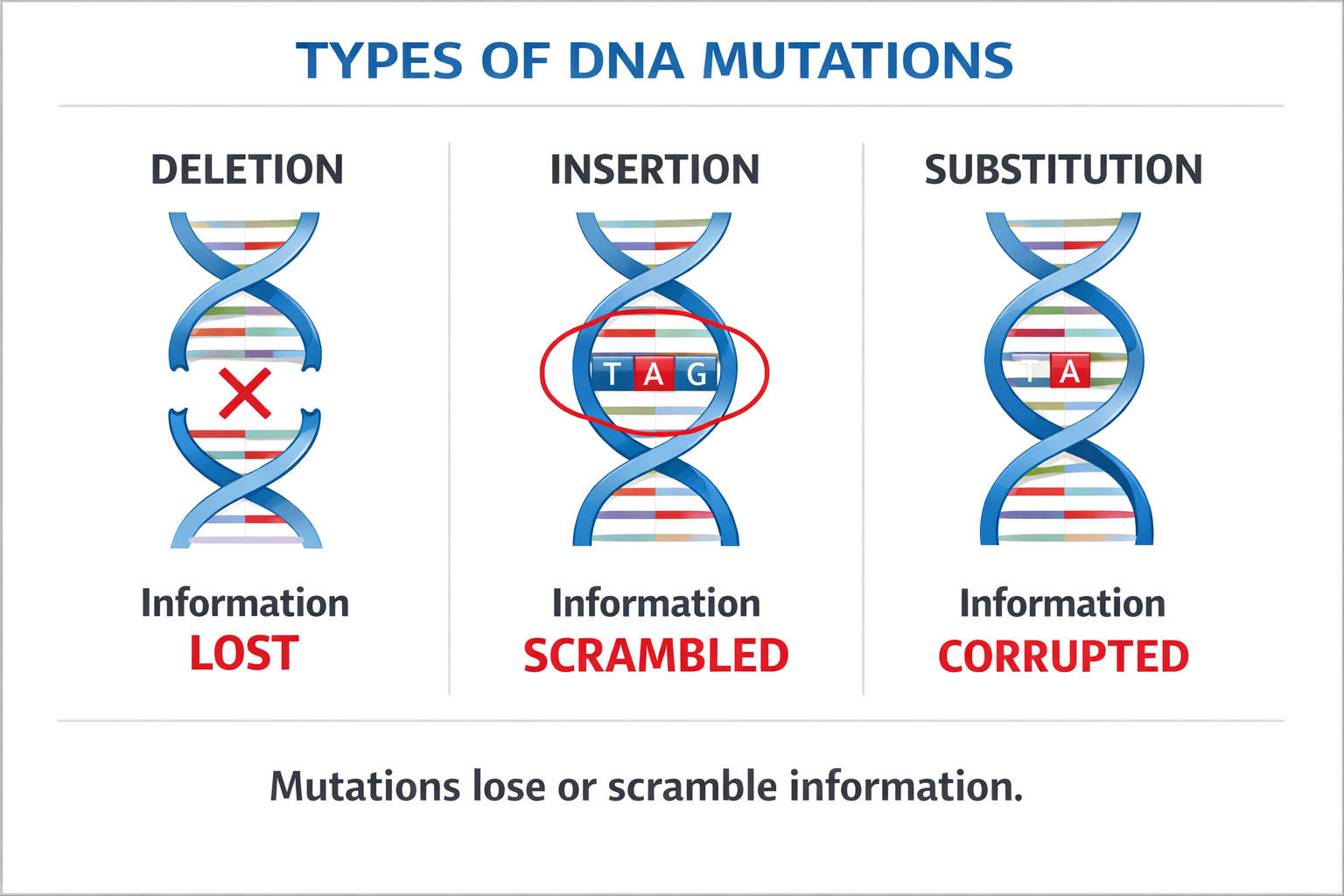
Types of mutations
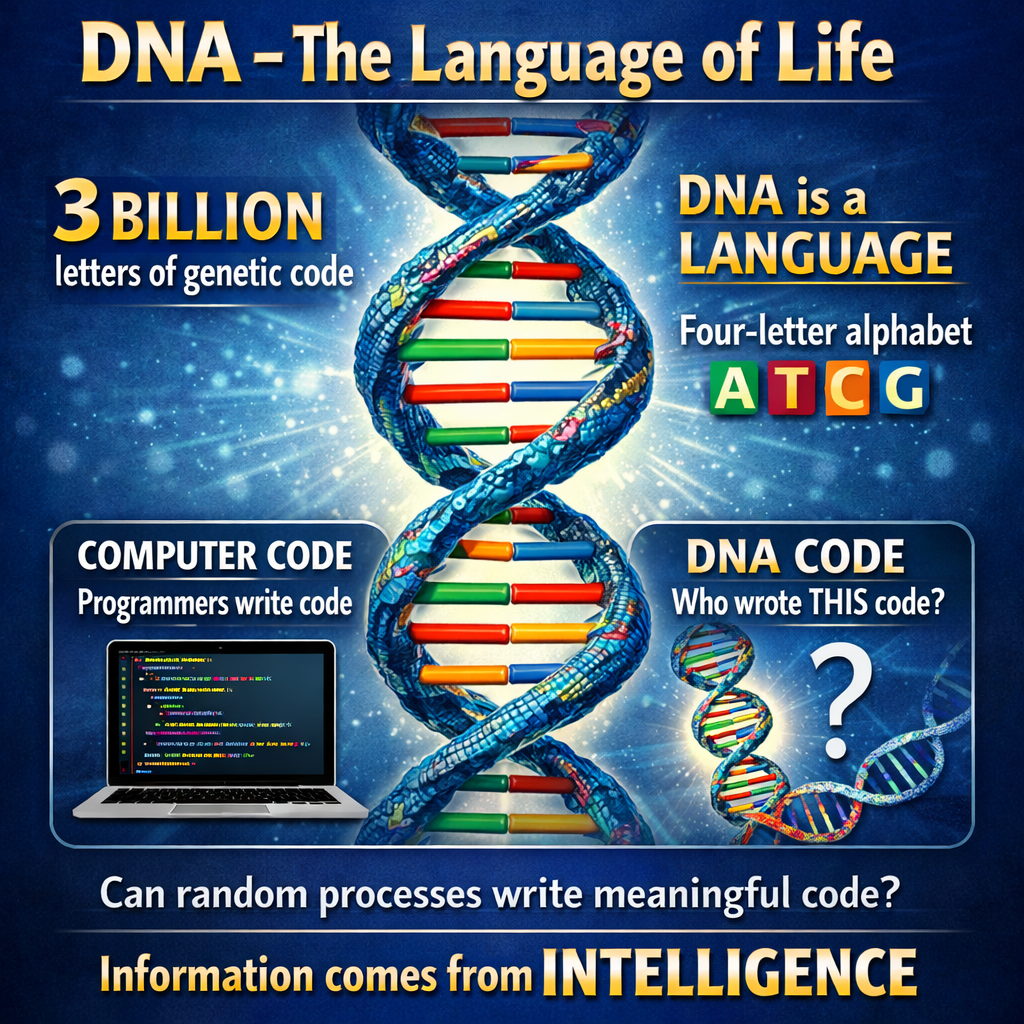
DNA information
Why Mutations Can't Create New Information
Truth Carriers Academy | All Ages
Types of mutations
DNA information
Evolution claims random mutations plus natural selection create new complex features. Mutations are copying errors; they delete, corrupt, duplicate, or rearrange information.

DNA is a massive instruction set—mutations are copying errors
| Type | What Happens | New Info? |
|---|---|---|
| Deletion | Letters removed | No |
| Substitution | Letter swapped | No |
| Insertion | Extra letters | No (usually duplication) |
| Duplication | Copies existing section | No new info |
Typos don't write new chapters; mutations don't build new organs.

Common mutation types: deletion, substitution, insertion, duplication
Why can't duplications create new information?
Name two diseases caused by mutations:
Loss of function or selection of existing resistant bacteria—no new information.

Antibiotic resistance selects existing traits; nothing new is created
Why is sickle cell not a true gain of function?
Thousands of new genes for lungs, legs, hair, complex brain, etc.
Random mutations creating new functional genes is astronomically improbable.
Why is the library analogy relevant?
What can natural selection do? What can’t it do?
Why can't mutations create new genetic information?