Textbook View
4.5B-year-old Earth; slow processes form layers and features.
Uniformitarianism vs. Catastrophism
Grades 6-8 | Dual-View ApproachGeology interpretations depend on starting assumptions. We compare textbook claims with biblical catastrophism.
4.5B-year-old Earth; slow processes form layers and features.
Young earth; global Flood reshaped surface rapidly; most layers/fossils formed in the Flood year.

Two interpretations: slow and gradual vs rapid Flood-driven geology
1. What does uniformitarianism mean?

Clean Foods Health Science
| Type | Formation | Examples |
|---|---|---|
| Igneous | Cooled magma/lava | Granite, basalt |
| Sedimentary | Deposited sediments | Sandstone, limestone |
| Metamorphic | Heat/pressure changed | Marble, slate |
Rapid water-laid layers; little erosion between strata; fossils require quick burial.

Rapid Flood deposition forms sedimentary layers quickly
Layers reflect Flood stages (sea → land → post-Flood), not ages.
Why are polystrate fossils a problem for slow deposition?

Chemistry Carbon Uniqueness
| Feature | Uniformitarian Time | Observed Time |
|---|---|---|
| Layered strata | Millions of years | Hours |
| Canyon formation | Millions | Days |

Mt. St. Helens: canyon carved rapidly
Rapid burial, mixed-species graveyards, marine fossils on mountains.

Mixed-species fossil beds indicate catastrophic burial
| Evidence | Uniformitarian | Flood/Catastrophist |
|---|---|---|
| Rock layers | Millions of years | Rapid Flood deposition |
| Fossils | Slow burial | Rapid burial |
| Grand Canyon | Slow erosion | Rapid drainage |
| Polystrate fossils | Ages between layers | Single rapid event |
How does the Flood explain fossils better than slow processes?
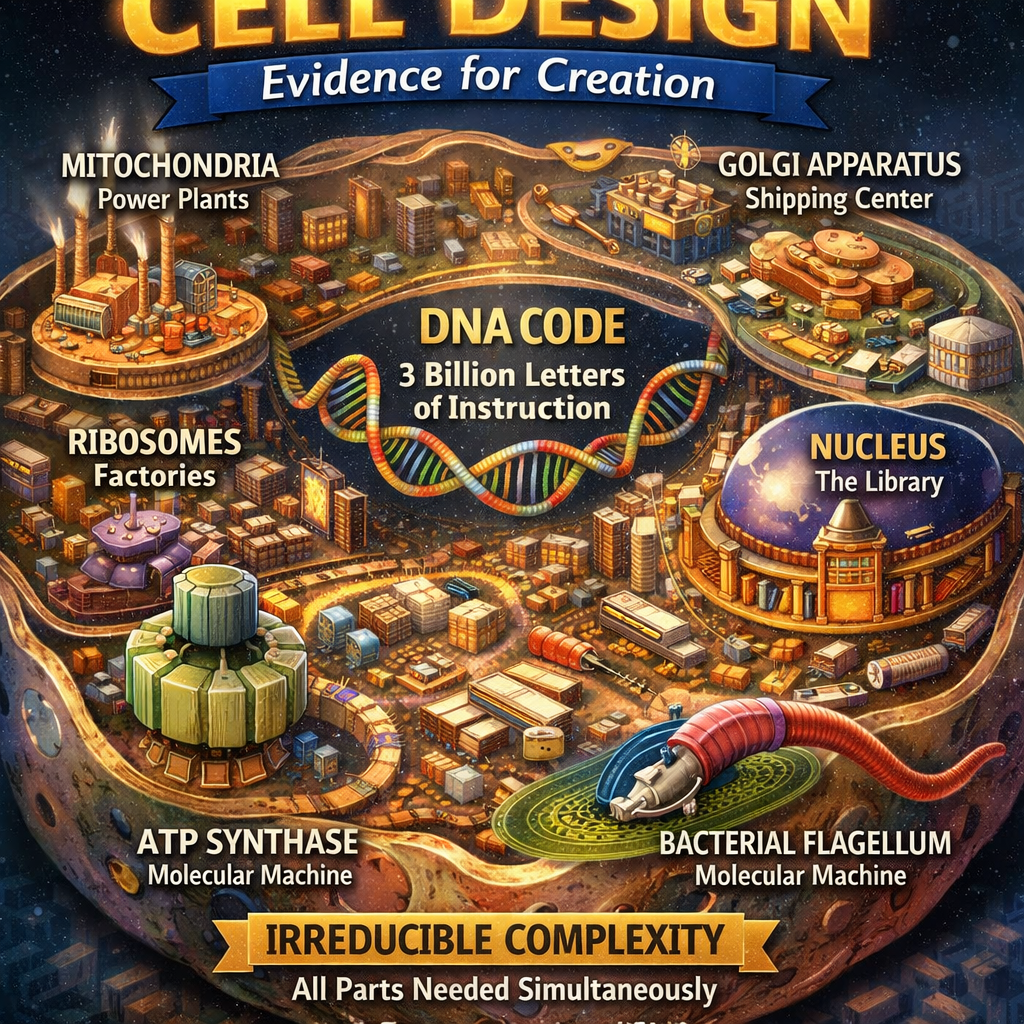
Biology Cell Design