What Textbooks Teach (Mainstream View)
This is what most public schools and secular textbooks teach. You need to know this material for standardized tests, but you should also understand its assumptions and limitations.
Understanding Life Through Two Lenses
Grade 6In this workbook, you'll learn about cells and genetics from two perspectives:
This is what most public schools and secular textbooks teach. You need to know this material for standardized tests, but you should also understand its assumptions and limitations.
This is what the Bible reveals about Yahuah's creation. Scripture is our ultimate authority, and true science will always align with His Word.
Here we examine evidence that contradicts evolutionary assumptions and supports intelligent design. Real science asks hard questions!
Cell Theory (3 Parts):
Textbooks claim the first cells arose from non-living chemicals billions of years ago through random chemical reactions (abiogenesis).
Yahuah created all living things during Creation Week. Life did not arise from non-life by accident.
1. What are the three parts of cell theory?
2. What did Louis Pasteur prove about life?
3. Why is it impossible for a cell to form by random chance?
4. According to Scripture, where does all life come from?
| Organelle | Function | Analogy |
|---|---|---|
| Cell Membrane | Controls what enters/exits the cell | Security gate |
| Nucleus | Contains DNA; controls cell activities | Control center/brain |
| Mitochondria | Produces energy (ATP) | Power plant |
| Ribosomes | Makes proteins | Factory assembly line |
| Endoplasmic Reticulum | Transports materials | Highway system |
| Golgi Body | Packages and ships proteins | Shipping department |
| Lysosomes | Breaks down waste | Recycling center |
A cell is like a miniature city with factories, power plants, transportation systems, communication networks, and defense systems - all working together perfectly!
Could random chance design a city? Then why believe it designed a cell?
"For by Him were all things created, that are in heaven, and that are in earth... all things were created by Him, and for Him." - Colossians 1:16
The incredible design in cells points to an intelligent Creator!
[Draw and label: Cell membrane, Nucleus, Mitochondria, Ribosomes, ER, Golgi, Lysosomes]
1. Match the organelle to its function:
| ___ Nucleus | A. Produces energy |
| ___ Mitochondria | B. Makes proteins |
| ___ Ribosomes | C. Contains DNA |
| ___ Cell Membrane | D. Controls entry/exit |
2. Why does cell complexity suggest design rather than chance?
3. What happens if a cell is missing its mitochondria?
DNA is Yahuah's instruction manual for life, written at the moment of creation:
"In the beginning was the Word..." (John 1:1) - Yahuah is the author of genetic information!
1. What are the 4 bases in DNA?
A = T =
G = C =
2. Why is DNA evidence of intelligent design?
3. Can information arise by random chance? Explain.
4. What does Psalm 139:16 suggest about DNA?
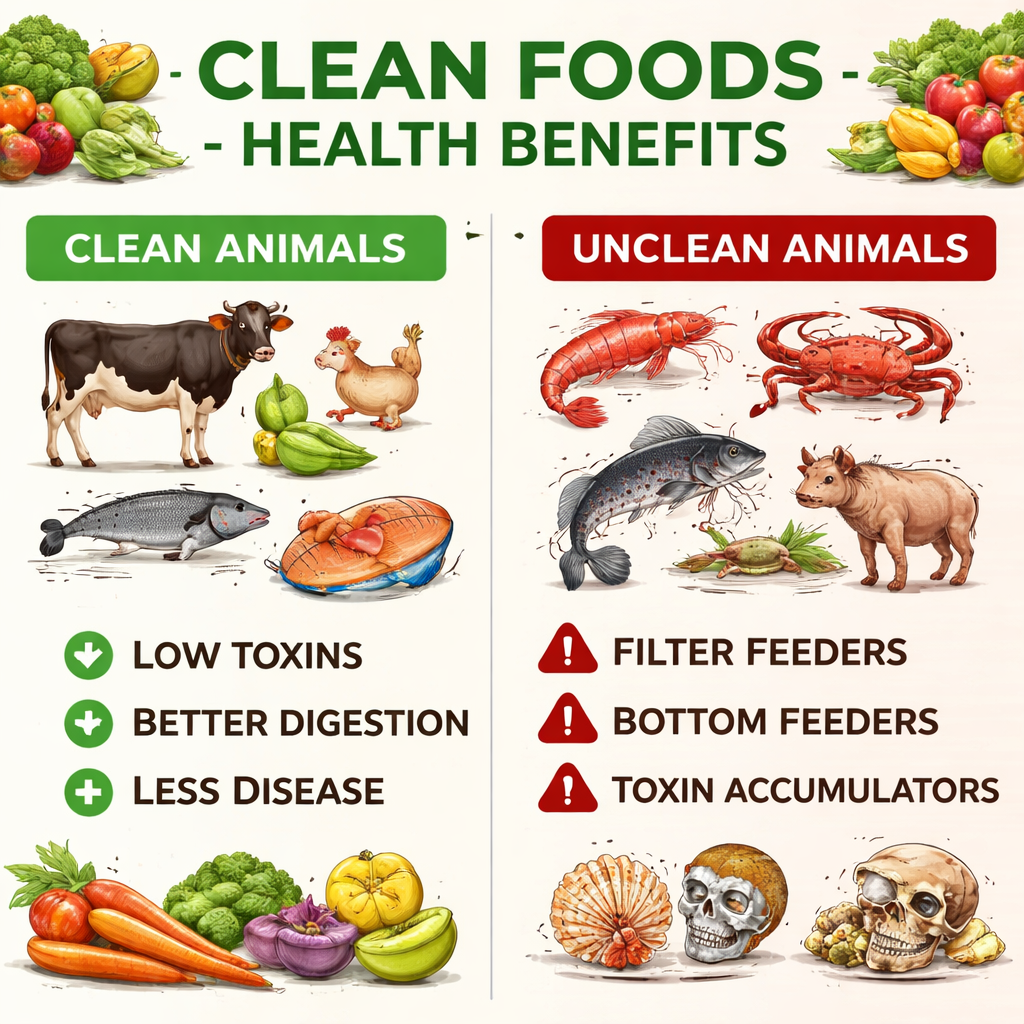
Clean Foods Health Science
Gregor Mendel was a Christian monk who discovered the laws of inheritance by studying pea plants in the 1860s. His faith led him to see order and design in creation!
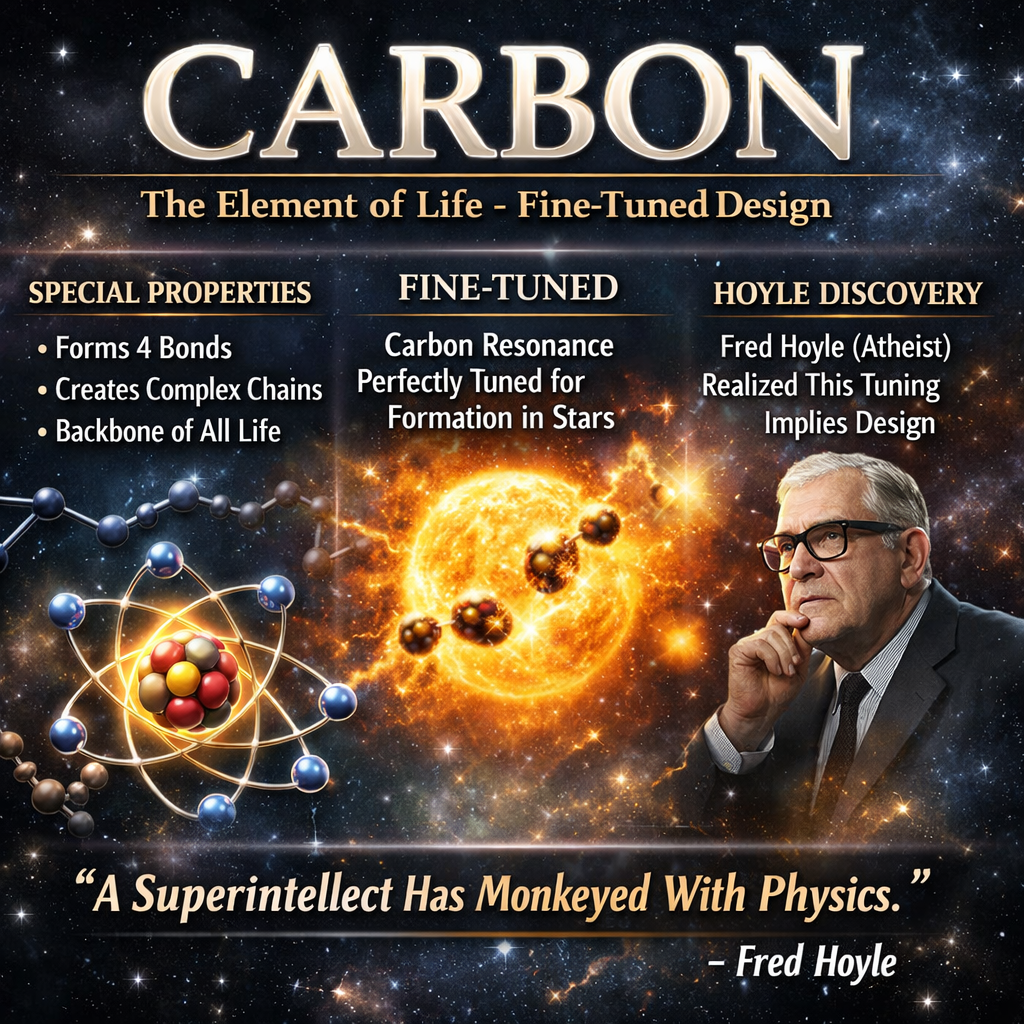
Chemistry Carbon Uniqueness
Genetics confirms "after their kind" - we see variation within kinds, never one kind becoming another!
| What We Observe | What Evolution Claims |
|---|---|
| Dogs always produce dogs | Dogs evolved from non-dogs |
| Variation within kinds (dog breeds) | New kinds evolve over time |
| Mutations cause disease | Mutations create new features |
| Kinds remain distinct | All life shares common ancestor |
1. What phrase does Genesis 1 repeat about reproduction?
2. Do we observe dogs producing cats? What do dogs always produce?
3. What do mutations typically do to genetic information?
[ ] Create new information [ ] Lose or damage information
4. Why did Gregor Mendel (a Christian) make such important discoveries?
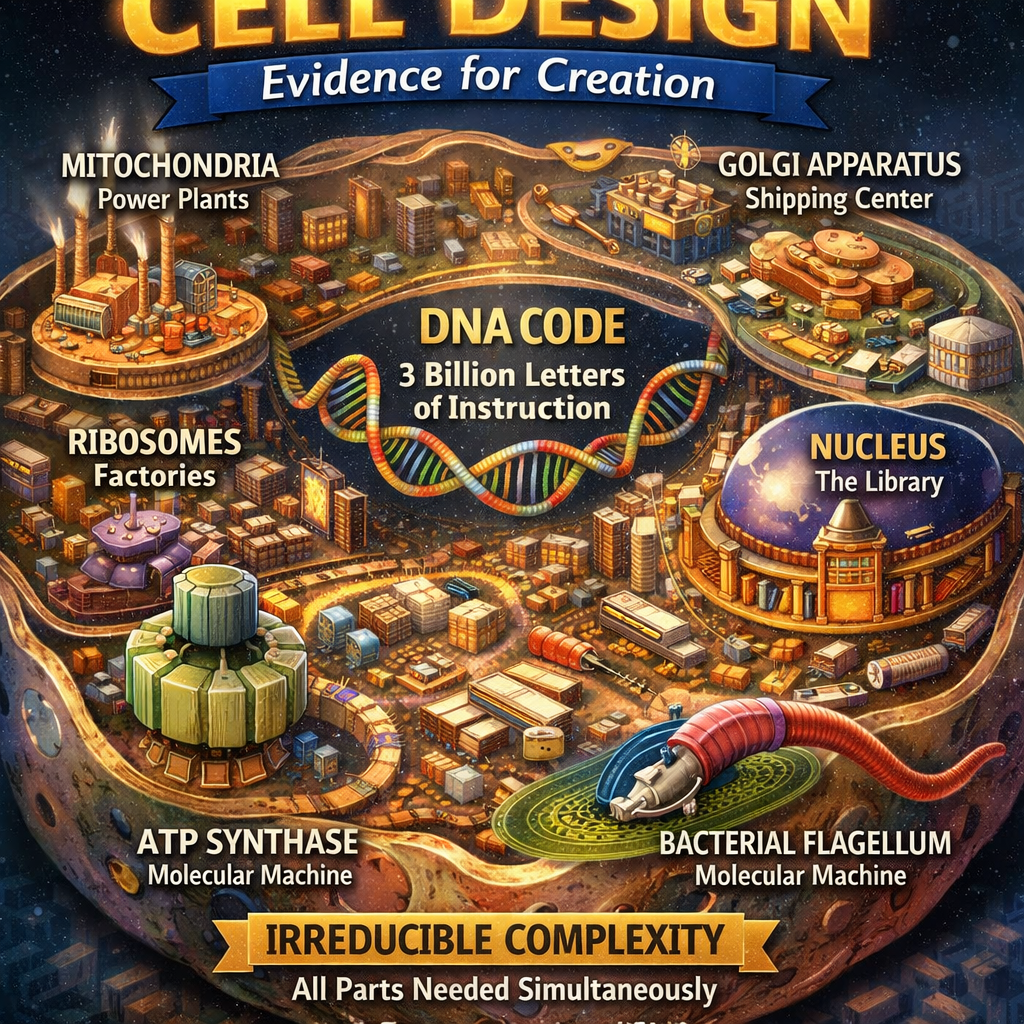
Biology Cell Design
| Phase | What Happens |
|---|---|
| 1. Interphase | Cell grows; DNA copies itself |
| 2. Prophase | Chromosomes condense; nuclear membrane dissolves |
| 3. Metaphase | Chromosomes line up in the middle |
| 4. Anaphase | Chromosomes separate to opposite sides |
| 5. Telophase | Nuclear membranes reform; cell divides |
Cell division is like a factory producing perfect copies of a complex machine - it requires incredible engineering!
Yahuah designed reproduction from the beginning:
1. What is the difference between mitosis and meiosis?
Mitosis:
Meiosis:
2. Put the phases of mitosis in order:
___ Telophase ___ Metaphase ___ Anaphase ___ Prophase ___ Interphase
3. How accurate is DNA replication?
4. How does cell division show evidence of design?
The answer to all these questions: "In the beginning, Elohim created..." (Genesis 1:1)
1. State the Law of Biogenesis:
2. Name 3 organelles and their functions:
3. Why is DNA evidence of design rather than evolution?
4. What does "after their kind" mean for genetics?
5. Write a paragraph explaining why cells prove Yahuah exists:
2. Life only comes from life (biogenesis)
4. Yahuah/Elohim - the Creator
Matching: C, A, B, D
3. It would have no energy and die
1. Adenine, Thymine, Guanine, Cytosine
3. No - information always comes from an intelligent source
1. "After their kind"
2. Dogs (never cats)
3. Lose or damage information
Order: 5, 3, 4, 2, 1
3. 99.9999% accurate
1. Life only comes from life