1Introduction: Fearfully & Wonderfully Made
RECEIVE - Understanding Our Design
"I will praise You; for I am fearfully and wonderfully made: marvelous are Your works; and that my soul knows right well." - Psalm 139:14
WHAT TEXTBOOKS TEACH
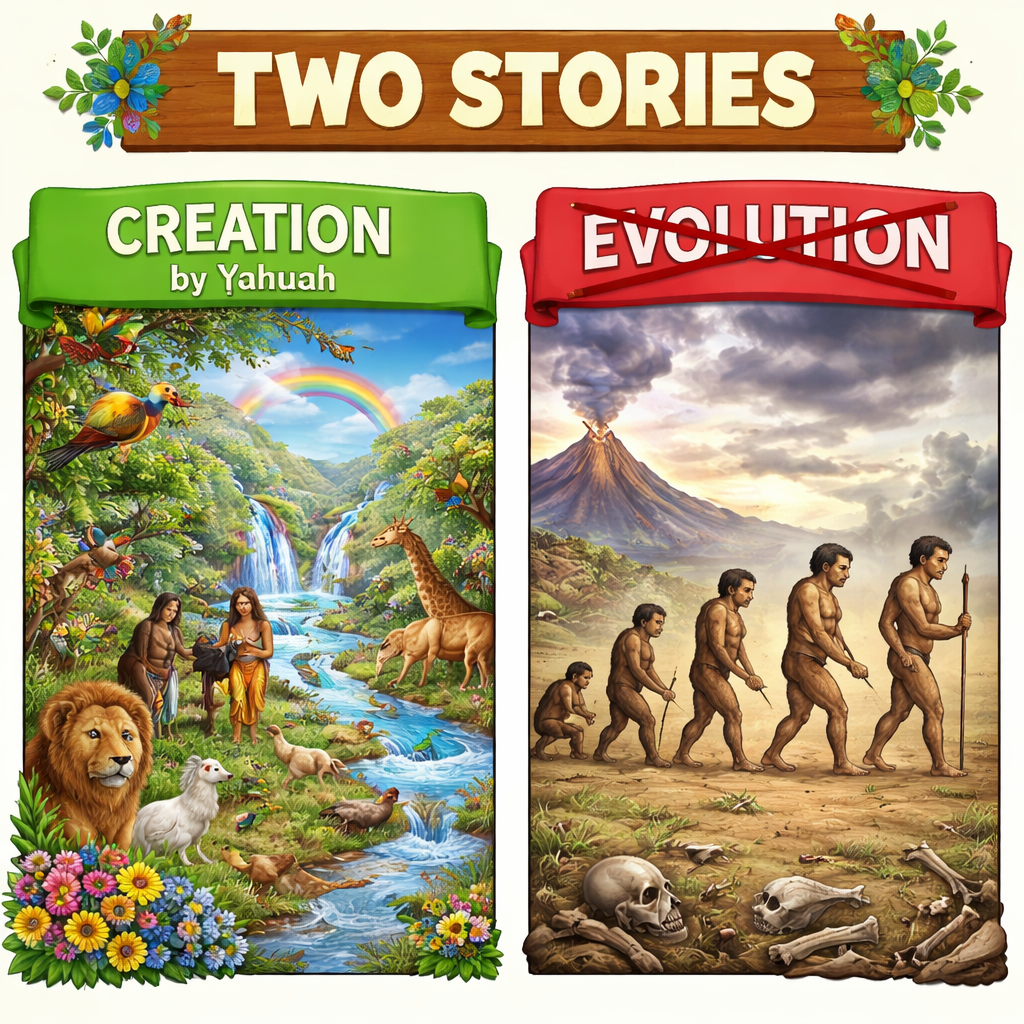
The human body evolved over millions of years from simpler organisms. Body systems developed gradually through random mutations and natural selection. Each organ system is the result of evolutionary pressures.
WHAT SCRIPTURE SAYS
Yahuah created humans fully formed on Day 6 of Creation. He designed our bodies with incredible precision and purpose. Every system works together as evidence of intelligent design, not random chance.
PROBLEMS WITH THE EVOLUTIONARY VIEW
- Irreducible Complexity: Body systems like blood clotting require all parts present at once to function - they couldn't evolve gradually
- Information Problem: DNA contains coded information; codes always come from intelligent sources
- No Transitional Forms: Fossils don't show gradual development of body systems
- Interdependency: Systems depend on each other - the heart needs nerves, blood needs vessels, lungs need muscles
The 11 Major Body Systems
| System | Main Function |
|---|
| Skeletal | Support, protection, movement, blood cell production |
| Muscular | Movement, heat production |
| Circulatory | Transport oxygen, nutrients, waste |
| Respiratory | Gas exchange (oxygen in, carbon dioxide out) |
| Digestive | Break down food, absorb nutrients |
| Nervous | Control, communication, senses |
| Endocrine | Hormone regulation |
| Immune/Lymphatic | Defense against disease |
| Integumentary | Protection (skin, hair, nails) |
| Urinary | Waste removal, water balance |
| Reproductive | Produce offspring |
REFLECT - Questions
1. What does "fearfully and wonderfully made" tell us about our Creator?
2. Why does the interdependency of body systems point to design rather than evolution?

Creation Cosmos
2The Skeletal System
RECEIVE - Our Framework
"And Yahuah Elohim caused a deep sleep to fall upon Adam, and he slept: and he took one of his ribs, and closed up the flesh instead thereof." - Genesis 2:21
Skeletal System Facts
- Bones in adult body: 206
- Bones in baby: ~270 (some fuse as we grow)
- Largest bone: Femur (thigh bone)
- Smallest bone: Stapes (in the ear)
Functions: Support, protection, movement (with muscles), blood cell production (in marrow), mineral storage (calcium)
WHAT TEXTBOOKS TEACH
The human skeleton evolved from fish fins, then to amphibian limbs, to reptile structures, and finally to mammalian bones. "Vestigial" bones like the coccyx (tailbone) are remnants of our evolutionary ancestors.
WHAT SCRIPTURE SAYS
Yahuah designed the human skeleton for upright walking from the beginning. Our bones are perfectly suited for human life and function. The coccyx anchors important muscles - it's not vestigial!
PROBLEMS WITH EVOLUTIONARY VIEW
- "Vestigial" organs aren't useless: The coccyx anchors 9 muscles needed for pelvic floor function
- Human skeleton is unique: Designed for bipedal (two-legged) walking - not a modified ape skeleton
- Bone complexity: Bones are self-repairing, constantly remodeled by osteoblasts/osteoclasts
- Blood production: Red and white blood cells are made in bone marrow - complex interdependency
Types of Bones
| Type | Description | Examples |
|---|
| Long bones | Longer than wide, shaft and two ends | Femur, humerus |
| Short bones | Cube-shaped, mostly spongy bone | Carpals, tarsals |
| Flat bones | Thin, protect organs | Skull, ribs, scapula |
| Irregular bones | Complex shapes | Vertebrae, pelvis |
REFLECT - Questions
3. Why is the coccyx NOT a vestigial organ?
Physics Fine Tuning
3The Muscular System
RECEIVE - The Power of Movement
"In his neck remains strength, and sorrow is turned into joy before him." - Job 41:22
Muscular System Facts
- Number of muscles: Over 600 skeletal muscles
- Percentage of body weight: ~40%
- Smallest muscle: Stapedius (in ear)
- Largest muscle: Gluteus maximus
Three Types of Muscle
| Type | Control | Location | Appearance |
|---|
| Skeletal | Voluntary | Attached to bones | Striated (striped) |
| Smooth | Involuntary | Organs, blood vessels | Non-striated |
| Cardiac | Involuntary | Heart only | Striated, branched |
WHAT TEXTBOOKS TEACH
Muscle tissue evolved from simpler contractile cells in primitive organisms. The three muscle types developed independently over millions of years.
WHAT SCRIPTURE SAYS
Yahuah designed each muscle type for specific purposes - skeletal for voluntary movement, smooth for digestion and blood flow, cardiac to pump blood continuously without fatigue.
PROBLEMS WITH EVOLUTIONARY VIEW
- Molecular motors: Muscle contraction uses actin/myosin proteins that work like tiny machines - irreducibly complex
- Cardiac muscle uniqueness: Heart muscle never gets tired, beats 100,000+ times daily - designed for endurance
- Neuromuscular junction: The connection between nerve and muscle requires multiple precisely fitted components
4The Circulatory System
RECEIVE - The River of Life
"For the life of the flesh is in the blood." - Leviticus 17:11
Yahuah revealed this truth thousands of years before science confirmed it!
Circulatory System Facts
- Blood vessels: 60,000+ miles if laid end to end!
- Red blood cells: ~25 trillion in body
- Blood volume: ~5 liters in adult
- Heart pumps: ~2,000 gallons/day
Components
| Part | Function |
|---|
| Heart | Pumps blood through two circuits |
| Arteries | Carry blood AWAY from heart |
| Veins | Carry blood TO the heart |
| Capillaries | Exchange gases, nutrients at tissue level |
| Red Blood Cells | Carry oxygen (hemoglobin) |
| White Blood Cells | Fight infection |
| Platelets | Blood clotting |
| Plasma | Liquid carrying cells, nutrients, waste |
WHAT TEXTBOOKS TEACH
The circulatory system evolved from simple diffusion in single-celled organisms to open circulatory systems to closed systems with hearts.
WHAT SCRIPTURE SAYS
Yahuah designed the circulatory system as a complete, functioning unit. He declared "life is in the blood" - a truth Moses recorded 3,400 years ago that medicine only confirmed in the 1600s!
PROBLEMS WITH EVOLUTIONARY VIEW
- Blood clotting cascade: Requires 20+ proteins working in precise sequence - remove one and you bleed to death or clot internally
- Hemoglobin precision: The oxygen-carrying protein must fold exactly right - design, not chance
- Four-chambered heart: Complex structure couldn't form gradually while keeping the organism alive
REFLECT - Questions
1. What did Yahuah reveal in Leviticus 17:11 about blood?
Genesis 6 Nephilim Study
3. Why does blood clotting show evidence of design?
Flood Geology Evidence
5The Respiratory System
RECEIVE - The Breath of Life
"And Yahuah Elohim formed man of the dust of the ground, and breathed into his nostrils the breath of life; and man became a living soul." - Genesis 2:7
Respiratory System Facts
- Breaths per day: ~20,000
- Surface area of lungs: ~70 square meters (tennis court!)
- Alveoli (air sacs): ~300 million per lung
- Air filtered by nose: Removes 80% of particles
Parts of the Respiratory System
Upper: Nose, nasal cavity, pharynx, larynx
Lower: Trachea, bronchi, bronchioles, alveoli, lungs
Process: Inhale O₂ → blood picks up oxygen → releases CO₂ → exhale
PROBLEMS WITH EVOLUTIONARY VIEW
- Alveoli design: Microscopic air sacs with one-cell-thick walls for gas exchange - precise engineering
- Surfactant necessity: Without this lung fluid, alveoli would collapse - must exist from the beginning
- Diaphragm coordination: Breathing requires brain, nerves, and muscles working together from first breath
REFLECT - Questions
3. How does Genesis 2:7 connect breathing to our creation?
Clean Foods Health Science
6The Digestive System
RECEIVE - Processing Yahuah's Provision
"Whether therefore ye eat, or drink, or whatsoever ye do, do all to the glory of Elohim." - 1 Corinthians 10:31
Digestive System Path
Journey of food: Mouth → Esophagus → Stomach → Small intestine → Large intestine → Rectum
Accessory organs: Liver, gallbladder, pancreas
Length: ~30 feet from mouth to anus
Time: 24-72 hours for complete digestion
Digestive Functions
| Organ | Function |
|---|
| Mouth | Mechanical breakdown, salivary enzymes (amylase) |
| Stomach | Acid (HCl), protein digestion (pepsin) |
| Small intestine | Most nutrient absorption, villi increase surface area |
| Liver | Produces bile, detoxifies blood |
| Pancreas | Digestive enzymes, insulin production |
| Large intestine | Water absorption, bacteria produce vitamins |
PROBLEMS WITH EVOLUTIONARY VIEW
- Stomach acid protection: The stomach produces acid strong enough to dissolve metal, yet mucus protects it - both must exist simultaneously
- Enzyme specificity: Each enzyme works on specific nutrients - precise design
- Villi architecture: Millions of finger-like projections increase absorption - not random
REFLECT - Questions
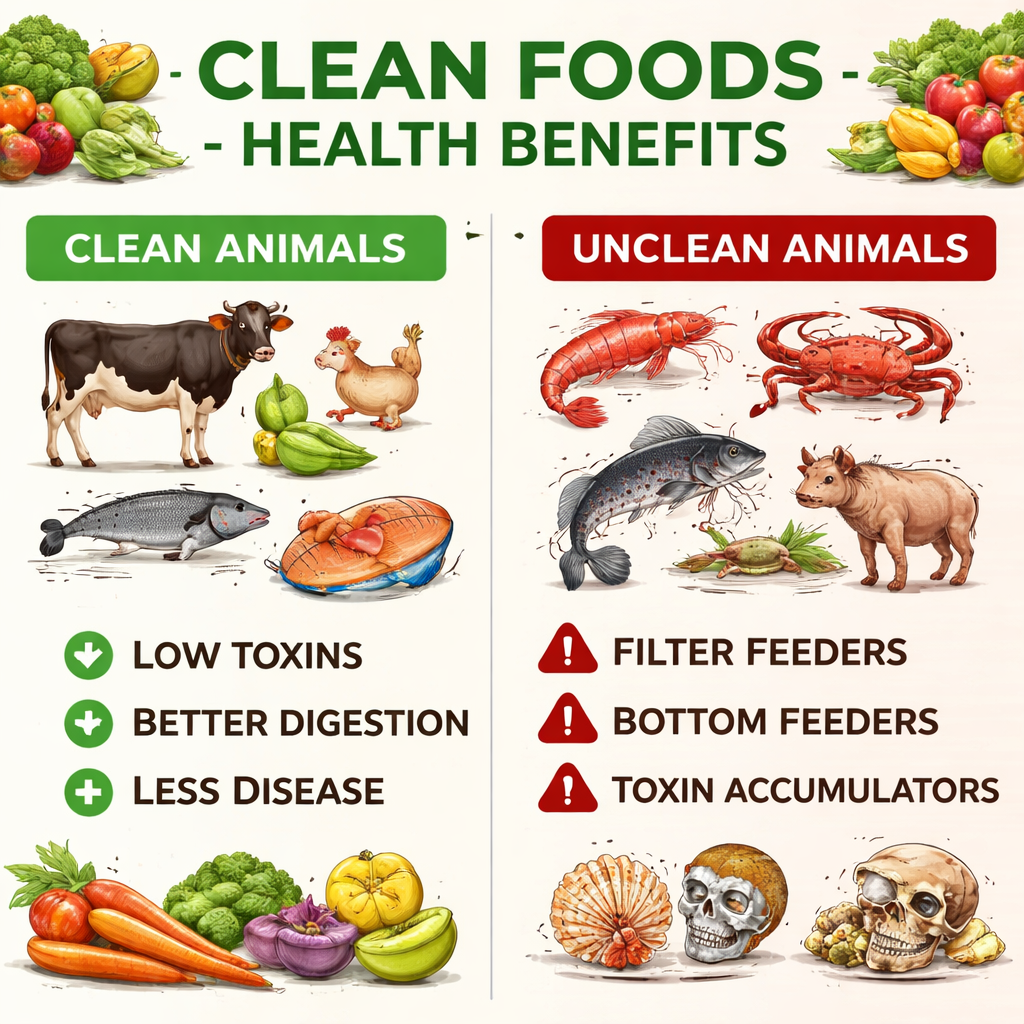
2. What does Yahuah command about clean and unclean foods in Leviticus 11? Why might this matter for digestion?
Chemistry Carbon Uniqueness
7The Nervous System
RECEIVE - The Body's Control Center
"For who has known the mind of Yahuah?" - Romans 11:34
The human brain reflects Yahuah's infinite intelligence!
Nervous System Facts
- Neurons in brain: ~86 billion
- Connections (synapses): 100+ trillion
- Nerve signal speed: Up to 268 mph
- Brain uses: 20% of body's energy
Divisions of the Nervous System
- Central Nervous System (CNS): Brain and spinal cord
- Peripheral Nervous System (PNS): All other nerves
- Somatic (voluntary - movement)
- Autonomic (involuntary - heart, digestion)
- Sympathetic ("fight or flight")
- Parasympathetic ("rest and digest")
PROBLEMS WITH EVOLUTIONARY VIEW
- Brain complexity: Most complex object in known universe - can't arise by chance
- Consciousness: Evolution can't explain self-awareness, morality, or abstract thought
- Neuron precision: Each of 86 billion neurons must connect correctly - random connections = death
- Eye-brain connection: The visual system processes millions of signals simultaneously - irreducibly complex
REFLECT - Questions
3. Why can't evolution explain human consciousness?
Biology Cell Design
8The Endocrine System
RECEIVE - Chemical Messengers
Major Endocrine Glands
| Gland | Hormones | Function |
|---|
| Pituitary | Growth hormone, TSH, FSH, LH | "Master gland" - controls others |
| Thyroid | T3, T4 | Metabolism regulation |
| Adrenal | Cortisol, adrenaline | Stress response |
| Pancreas | Insulin, glucagon | Blood sugar regulation |
| Pineal | Melatonin | Sleep-wake cycle |
PROBLEMS WITH EVOLUTIONARY VIEW
- Hormone-receptor lock-and-key: Each hormone fits only specific receptors - precise design
- Feedback loops: Complex self-regulating systems couldn't evolve gradually
- Blood sugar regulation: Without insulin AND glucagon AND receptors, death occurs
9The Immune System
RECEIVE - The Body's Defense Army
"He shall cover you with His feathers, and under His wings shall you trust: His truth shall be your shield and buckler." - Psalm 91:4
Just as Yahuah protects us spiritually, He designed our immune system to protect us physically!
Three Lines of Defense
- 1st Line: Physical barriers (skin, mucus, stomach acid)
- 2nd Line: Non-specific response (inflammation, fever, white blood cells)
- 3rd Line: Specific/adaptive immunity (antibodies, T-cells, memory cells)
PROBLEMS WITH EVOLUTIONARY VIEW
- Antibody diversity: Body can produce billions of different antibodies - information explosion can't come from random mutations
- Self vs. non-self recognition: Immune system must distinguish body cells from invaders - errors cause autoimmune disease
- Memory cells: Remember past infections for decades - sophisticated data storage
REFLECT - Questions
2. Why is the immune system evidence of design?
10The Reproductive System
RECEIVE - Yahuah's Gift of Life
"So Elohim created man in His own image, in the image of Elohim created He him; male and female created He them. And Elohim blessed them, and Elohim said unto them, Be fruitful, and multiply." - Genesis 1:27-28
Design for Complementarity
Yahuah created male and female with complementary systems designed to work together for procreation. This is not random evolution but purposeful design.
- Male system: Produces sperm (millions daily)
- Female system: Produces eggs, nurtures developing baby
- Both required: Neither system functions for reproduction alone
PROBLEMS WITH EVOLUTIONARY VIEW
- Sexual reproduction paradox: Why would evolution develop two separate systems that require each other?
- Embryonic development: 9 months of precisely timed development - one genetic program unfolding
- Meiosis complexity: Cell division that halves chromosomes is highly complex and precise
REFLECT - Questions
1. According to Genesis, what did Yahuah command regarding reproduction?
2. Why does the existence of male AND female point to design?
11Systems Working Together
RECEIVE - Integration and Interdependence
"For as the body is one, and has many members, and all the members of that one body, being many, are one body..." - 1 Corinthians 12:12
How Systems Depend on Each Other
Example: Running
- Nervous: Brain commands muscles
- Muscular: Muscles contract
- Skeletal: Bones provide framework
- Respiratory: Lungs provide oxygen
- Circulatory: Blood delivers oxygen to muscles
- Endocrine: Adrenaline increases heart rate
- Integumentary: Skin releases sweat to cool
THE ULTIMATE PROBLEM FOR EVOLUTION
No system can function without the others! The circulatory system needs the heart (muscular) to pump, blood vessels to carry blood, lungs to get oxygen, the brain to control heartbeat, and bones to produce blood cells.
This interdependency proves design! All systems had to exist and work together from the beginning.
REFLECT - Questions
1. Pick two body systems and explain how they depend on each other:
2. How does 1 Corinthians 12:12 apply to our physical bodies?
12Caring for Our Bodies
RECEIVE - Stewardship of Yahuah's Temple
"Know ye not that your body is the temple of the Set-Apart Spirit which is in you, which ye have of Elohim, and ye are not your own? For ye are bought with a price: therefore glorify Elohim in your body." - 1 Corinthians 6:19-20
Biblical Health Principles
| Principle | Application | Scripture |
|---|
| Clean foods | Follow Leviticus 11 dietary laws | Leviticus 11 |
| Rest (Sabbath) | Weekly rest for body restoration | Exodus 20:8-11 |
| Avoid toxins | No drunkenness, harmful substances | Proverbs 20:1 |
| Exercise/work | Physical labor is good | Genesis 2:15 |
| Cleanliness | Washing, hygiene practices | Leviticus 15 |
| Mental health | Trust Yahuah, avoid anxiety | Philippians 4:6-7 |
RESPOND - Application
1. Why should we take care of our bodies according to 1 Corinthians 6:19-20?
Answer Key (Selected)
Unit 2: 1) 206 bones; 2) Support, protection, movement, blood cell production
Unit 3: 1a) Skeletal, b) Smooth, c) Cardiac; 2) 100,000+
Unit 4: 2) Away, to
Unit 5: 1) 20,000; 2) Oxygen, Carbon dioxide
Unit 6: 1) Esophagus, Stomach, Small intestine
Unit 7: 1) 86 billion; 2) Brain, Spinal cord
Unit 8: 1) Pituitary; 2) Insulin
Unit 9: 1) Physical barriers (skin, mucus)