What Textbooks Teach (Mainstream View)
This is what most public schools and secular textbooks teach. You need to know this material for standardized tests, but you should also understand its assumptions and limitations.
Understanding Life's Connections Through Two Lenses
Grade 8In this workbook, you'll learn about ecology and biological classification from two perspectives:
This is what most public schools and secular textbooks teach. You need to know this material for standardized tests, but you should also understand its assumptions and limitations.
This is what the Bible reveals about Yahuah's creation. Scripture is our ultimate authority, and true science will always align with His Word.
Here we examine evidence that contradicts evolutionary assumptions about common descent and supports the biblical view of created kinds.
Creation Cosmos
| Level | Definition | Example |
|---|---|---|
| Organism | A single living thing | One deer |
| Population | All organisms of one species in an area | All deer in a forest |
| Community | All populations in an area | Deer, wolves, trees, birds together |
| Ecosystem | Community + physical environment | Forest with all its organisms, soil, water, climate |
| Biome | Large region with similar climate and life | Temperate forest biome |
| Biosphere | All life on Earth | The entire living planet |
Secular ecology claims:
Yahuah designed ecosystems with purpose and wisdom:
1. Define ecology:
2. Put these in order from smallest to largest: Community, Organism, Ecosystem, Population
1. → 2. → 3. → 4.
3. What is the difference between biotic and abiotic factors?
4. How does ecosystem balance point to design rather than chance?
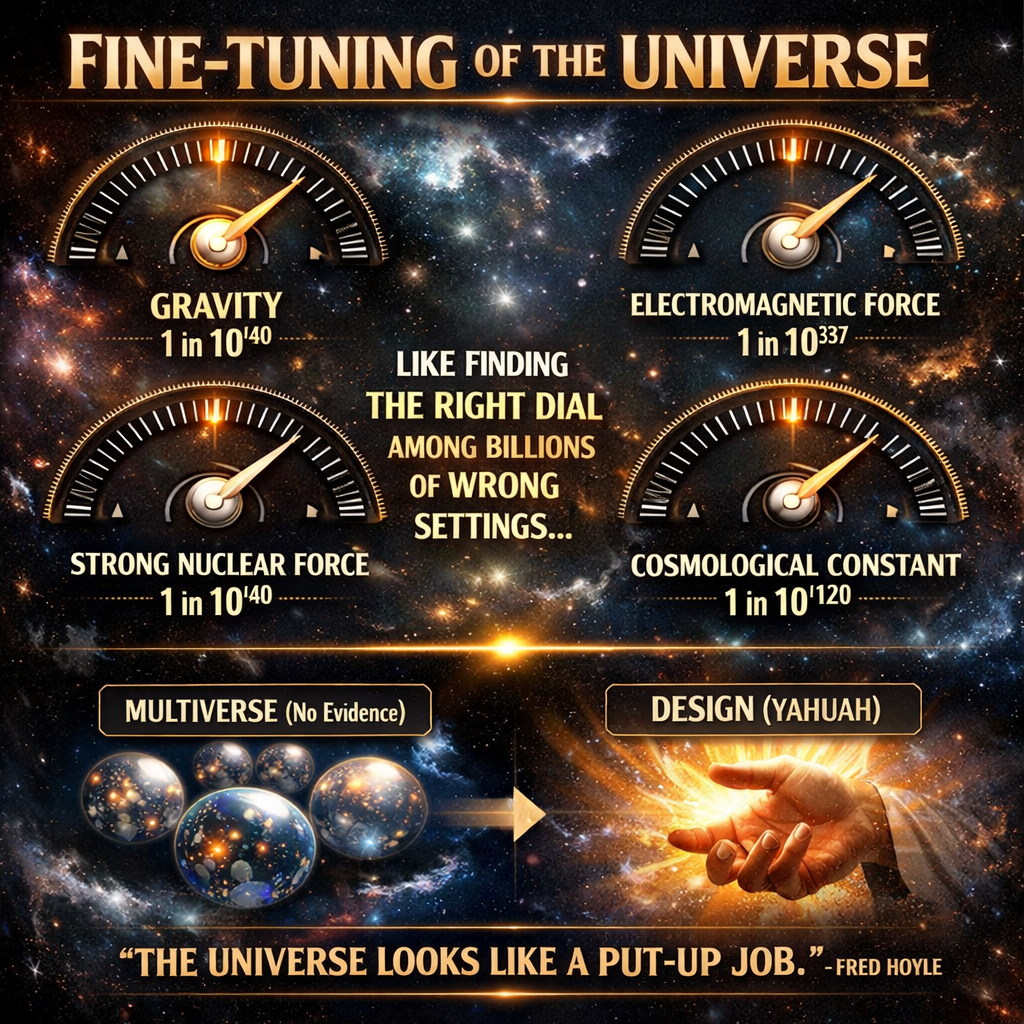
Physics Fine Tuning
| Biome | Climate | Key Features |
|---|---|---|
| Tropical Rainforest | Hot, wet year-round | Greatest biodiversity; dense vegetation |
| Desert | Very dry; hot or cold | Sparse vegetation; specialized organisms |
| Grassland | Moderate rainfall; seasonal | Grasses dominate; large herbivores |
| Temperate Forest | Moderate; four seasons | Deciduous trees; rich soil |
| Taiga (Boreal) | Cold; long winters | Coniferous trees; sparse undergrowth |
| Tundra | Very cold; permafrost | No trees; low-growing plants |
Secular scientists claim biomes formed gradually over millions of years:
The Bible provides a different timeline:
1. Name the 6 major terrestrial biomes:
2. What biome has the greatest biodiversity?
3. How did the global Flood affect Earth's biomes?
4. Match the biome to its characteristic:
| ___ Tundra | A. Hot and wet year-round |
| ___ Desert | B. Permafrost, no trees |
| ___ Rainforest | C. Very dry |
| ___ Taiga | D. Coniferous forests |
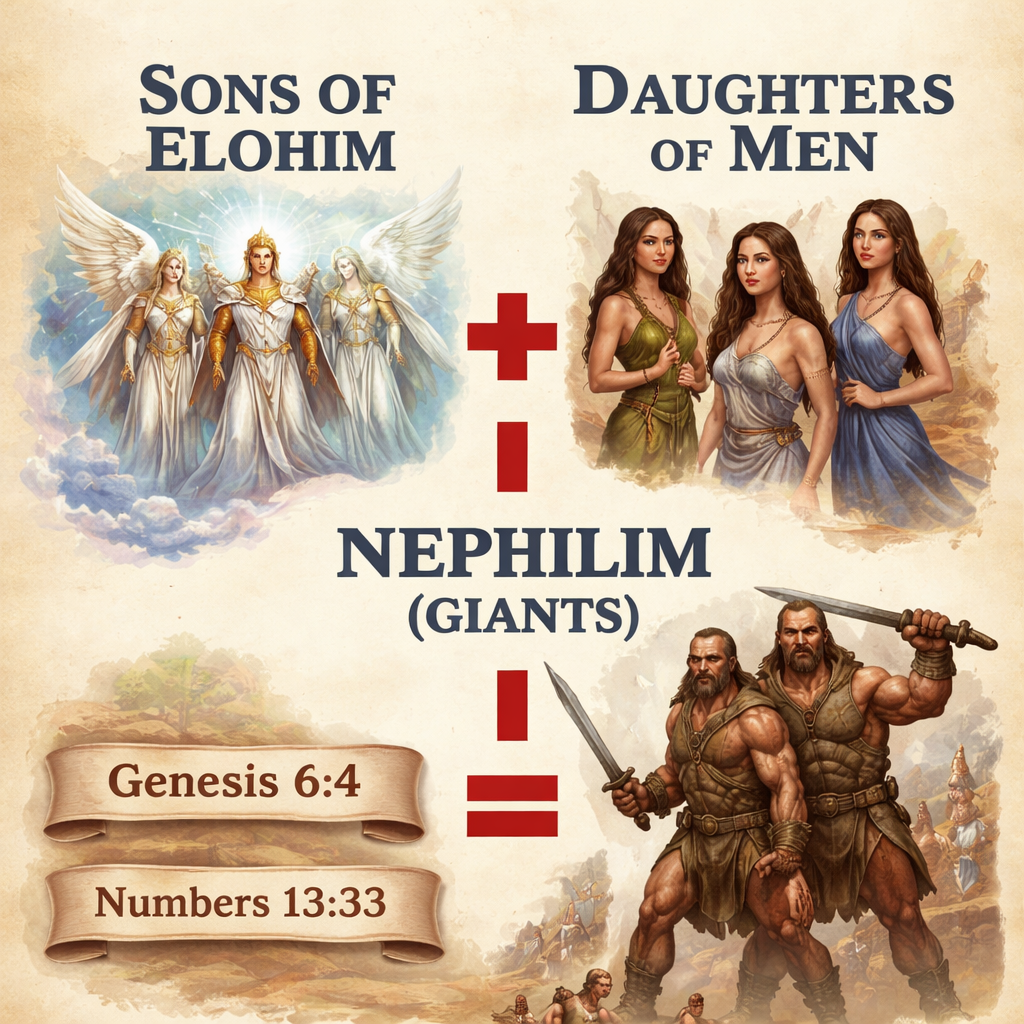
Genesis 6 Nephilim Study
| Level | Name | Role | Example |
|---|---|---|---|
| 1st | Producers | Make own food (photosynthesis) | Plants, algae |
| 2nd | Primary Consumers | Eat producers (herbivores) | Rabbits, deer, caterpillars |
| 3rd | Secondary Consumers | Eat primary consumers | Snakes, small birds |
| 4th | Tertiary Consumers | Top predators | Eagles, wolves, lions |
| All | Decomposers | Break down dead material | Bacteria, fungi, worms |
Only about 10% of energy transfers from one level to the next. 90% is lost as heat.
🌿 1000 → 🐛 100 → 🐦 10 → 🦅 1
This is why there are more plants than herbivores, and more herbivores than predators!
Death is not "natural" - it's a consequence of sin that Yahusha came to conquer!
1. What is the difference between a food chain and a food web?
2. Create a simple food chain with 4 levels:
Producer → → →
3. According to Genesis 1:30, what did animals originally eat?
4. Why does the 10% rule mean there are fewer predators than herbivores?
5. What event in Genesis introduced death and predation into the world?
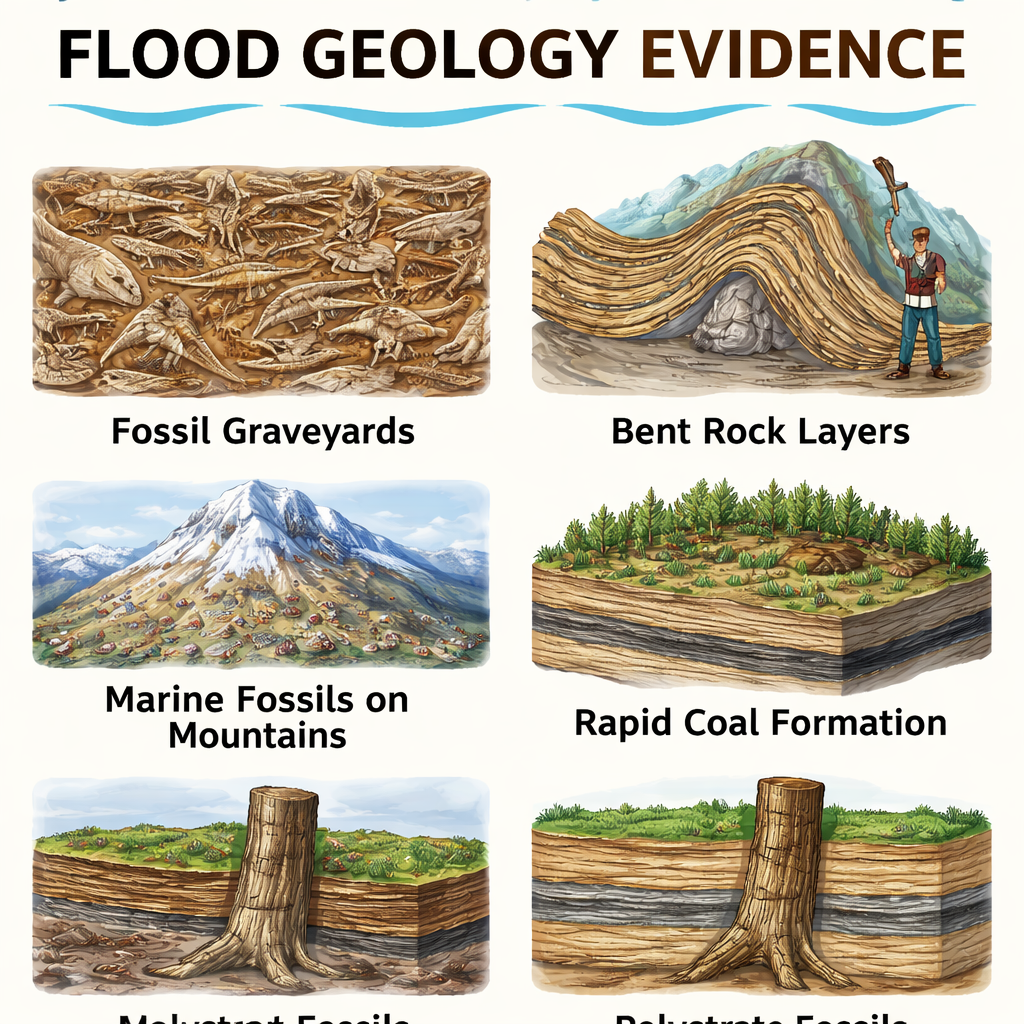
Flood Geology Evidence
Carl Linnaeus (1707-1778) was a creationist Christian who developed the classification system still used today. He believed he was "thinking God's thoughts after Him" by organizing creation!
Memory Aid: "King Philip Came Over For Good Soup"
| Level | Human Example | Description |
|---|---|---|
| Kingdom | Animalia | Broadest category |
| Phylum | Chordata | Body plan type |
| Class | Mammalia | Major group features |
| Order | Primates | More specific group |
| Family | Hominidae | Close relatives |
| Genus | Homo | Very close relatives |
| Species | sapiens | Most specific - can interbreed |
Example: Dogs, wolves, coyotes, and jackals - all one created kind (Canidae) with incredible variety, but they never become cats!
1. Who developed the modern classification system? Was he a creationist?
2. Put these in order from broadest to most specific: Family, Kingdom, Species, Class
1. → 2. → 3. → 4.
3. What is binomial nomenclature?
4. Why do creationists believe similar features show a common Designer rather than common ancestry?
This is the central debate between evolutionary biology and biblical creation. Let's examine both views carefully.
Claim: All life on Earth descended from a single common ancestor over billions of years.
Evidence cited: Homologous structures, DNA similarities, fossil record, embryo similarities
Truth: Yahuah created distinct "kinds" (Hebrew: baramin) that reproduce only within their kind.
Evidence: No transitional fossils, limits to variation, irreducible complexity, genetic entropy
1. The Cambrian Explosion
2. Irreducible Complexity
3. Genetic Entropy
4. No Observed Macroevolution
|
Evolution's "Tree of Life" 🌳 All life from one ancestor |
Creation's "Orchard" 🌲🌳🌴🌵 Many separate created kinds |
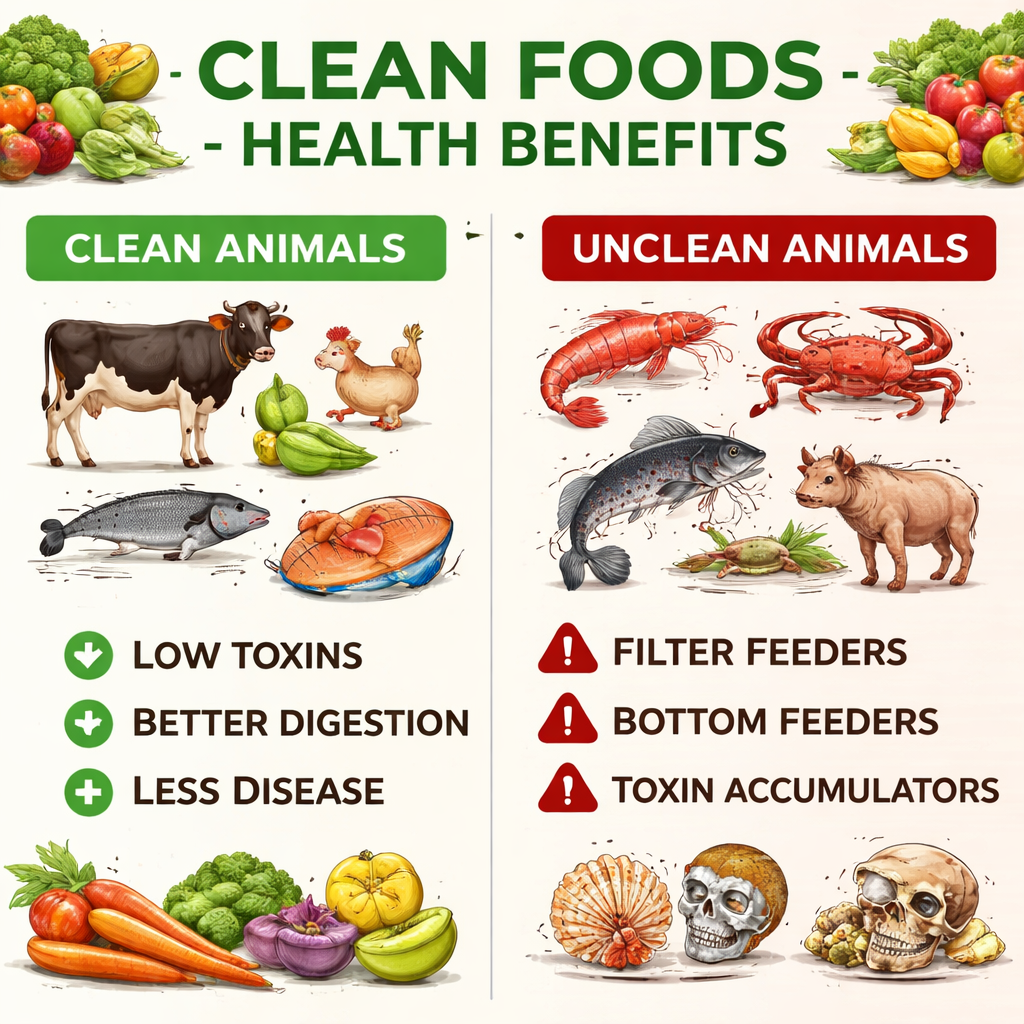
Clean Foods Health Science
The orchard model matches what we observe: dogs vary into many breeds but remain dogs. There are no transitional forms between major groups.
1. What does "common descent" mean?
2. What is a "created kind" (baramin)?
3. What is the Cambrian Explosion, and why is it a problem for evolution?
4. Explain the difference between the "tree of life" and the "orchard" model:
5. Why does DNA similarity NOT prove common ancestry?
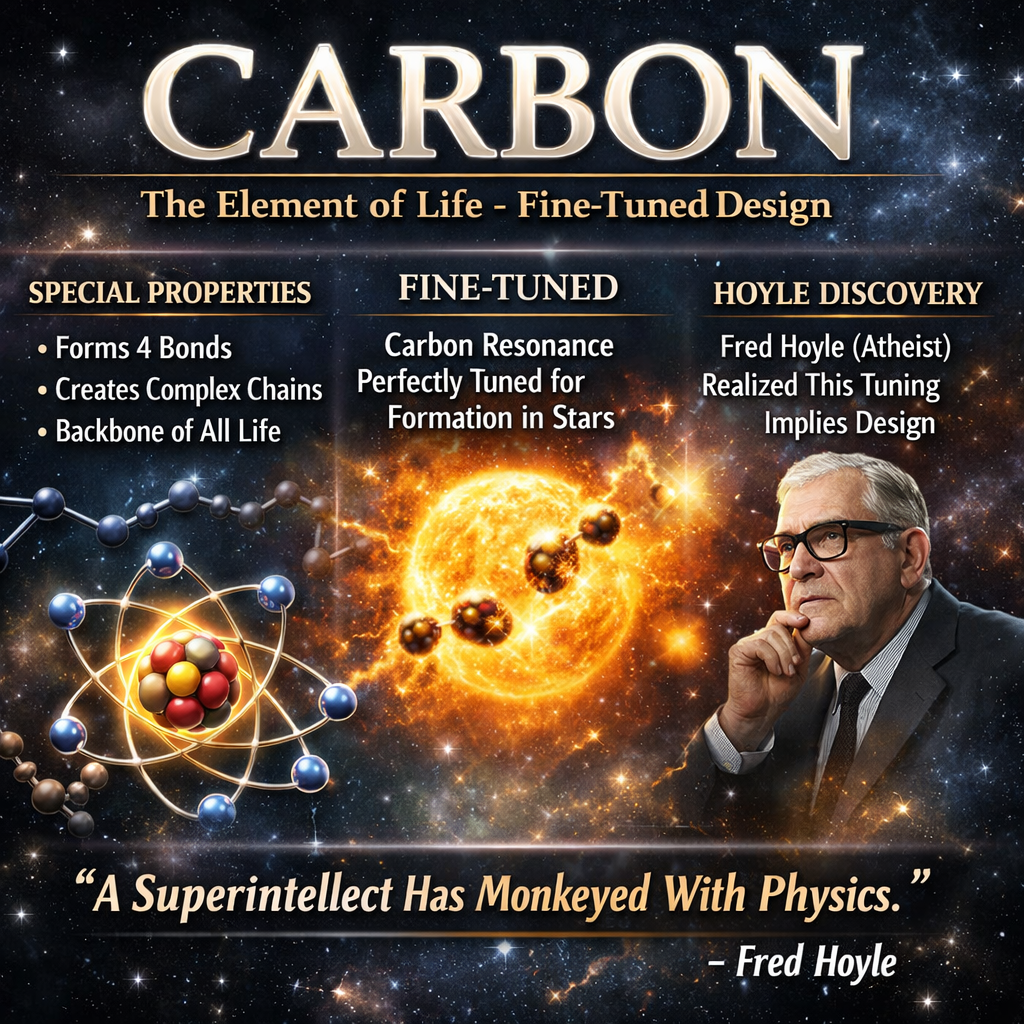
Chemistry Carbon Uniqueness
| Increase Population | Decrease Population |
|---|---|
| Births (natality) | Deaths (mortality) |
| Immigration (moving in) | Emigration (moving out) |
| Abundant resources | Limited resources |
| Few predators | Many predators/disease |
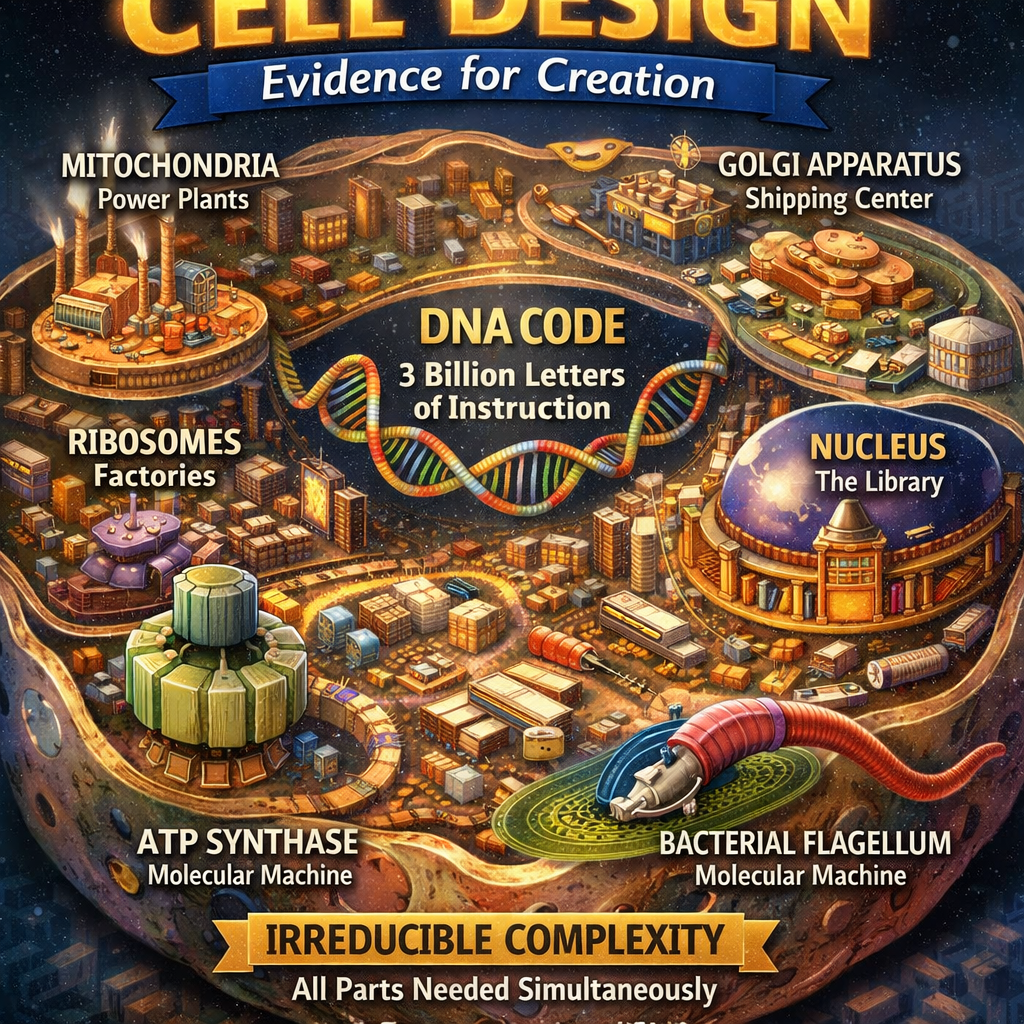
Biology Cell Design
| Interaction | Species A | Species B | Example |
|---|---|---|---|
| Predation | Benefits (+) | Harmed (−) | Lion eats zebra |
| Competition | Harmed (−) | Harmed (−) | Two plants competing for light |
| Mutualism | Benefits (+) | Benefits (+) | Bee and flower |
| Commensalism | Benefits (+) | Neutral (0) | Barnacle on whale |
| Parasitism | Benefits (+) | Harmed (−) | Tick on dog |
Many mutualistic relationships are so precise they couldn't have evolved gradually:
1. What four factors affect population size?
2. Define carrying capacity:
3. Match the interaction type:
| ___ Bee pollinates flower | A. Predation |
| ___ Tick feeds on dog | B. Mutualism |
| ___ Lion hunts zebra | C. Competition |
| ___ Trees compete for sunlight | D. Parasitism |
4. Why do mutualistic relationships suggest design rather than evolution?
| Impact | Description | Effects |
|---|---|---|
| Habitat Destruction | Removing natural areas for development | Species lose homes, extinction risk |
| Pollution | Adding harmful substances to environment | Air, water, soil contamination |
| Overexploitation | Taking more than ecosystems can replace | Overfishing, deforestation |
| Invasive Species | Introducing non-native organisms | Outcompete native species |
| Climate Effects | Changes affecting weather patterns | Ecosystem disruption |
Note: Some of these ideas have roots in evolutionary thinking that devalues human uniqueness.
| Extreme 1: Earth Worship | Biblical Balance | Extreme 2: Earth Abuse |
|---|---|---|
| Nature has ultimate value | Nature has value because Yahuah made it | Nature exists only to exploit |
| Humans are the problem | Humans are responsible stewards | Humans have no responsibility |
| Population control | Be fruitful and multiply wisely | Reckless consumption |
| "Mother Earth" spirituality | Worship Creator, not creation | No gratitude to Creator |
True stewardship comes from love for Yahuah and His creation, not fear or worship of nature.
1. What does "dominion" mean in Genesis 1:28?
2. What's the difference between stewardship and ownership?
3. Name three ways humans negatively impact ecosystems:
4. Why is worshiping "Mother Earth" wrong according to Scripture?
5. How can you practice biblical stewardship in your daily life?
The answer: "In the beginning, Elohim created..." (Genesis 1:1)
1. Define ecosystem and name its two main components:
2. Name the 6 major biomes:
3. What was the original diet of all creatures according to Genesis?
4. List the 7 levels of classification in order:
5. Explain the difference between the evolutionary "tree of life" and the creationist "orchard" model:
6. What is a created kind (baramin), and why does it matter?
7. What is biblical stewardship, and how does it differ from secular environmentalism?
8. Write a paragraph explaining how ecology and classification point to Yahuah as Creator:
1. Ecology: The study of how living things interact with each other and their environment
2. Organism → Population → Community → Ecosystem
3. Biotic = living things; Abiotic = non-living things (water, temperature, soil, etc.)
1. Tropical Rainforest, Desert, Grassland, Temperate Forest, Taiga, Tundra
2. Tropical Rainforest
4. Matching: B, C, A, D
3. Plants/herbs (vegetarian)
5. The Fall (sin entering the world)
1. Carl Linnaeus; Yes, he was a creationist
2. Kingdom → Class → Family → Species
1. All life descended from a single common ancestor
2. A distinct group of organisms created by Yahuah that reproduce within their kind
1. Births, deaths, immigration, emigration
2. Maximum population an environment can sustain long-term
3. Matching: B, D, A, C
1. Responsible rule over creation as Yahuah's representatives
3. Any three: habitat destruction, pollution, overexploitation, invasive species, climate effects
3. Plants/herbs (vegetarian)
4. Kingdom, Phylum, Class, Order, Family, Genus, Species