"Blessed is the nation whose Elohim is Yahuah; and the people whom he hath chosen for his own inheritance."
— Psalm 33:12
What This Workbook Teaches:
How to tell the difference between verified quotes and made-up quotes
What the founding documents actually say about religion
The truth about the founders' personal beliefs
Why verifying sources matters for truth-seekers
Our Goal: Teach you to check facts, not repeat false claims!
Note on Sacred Names: When the founders wrote, they used "God," "Lord," and "Jesus Christ" - the terms common in their time. We keep their original words for accuracy. In our own teaching, we use the sacred names: Yahuah (the Father), Yahusha (the Son), and Elohim (Mighty One).
Lesson 1: What the Founding Documents Really Say
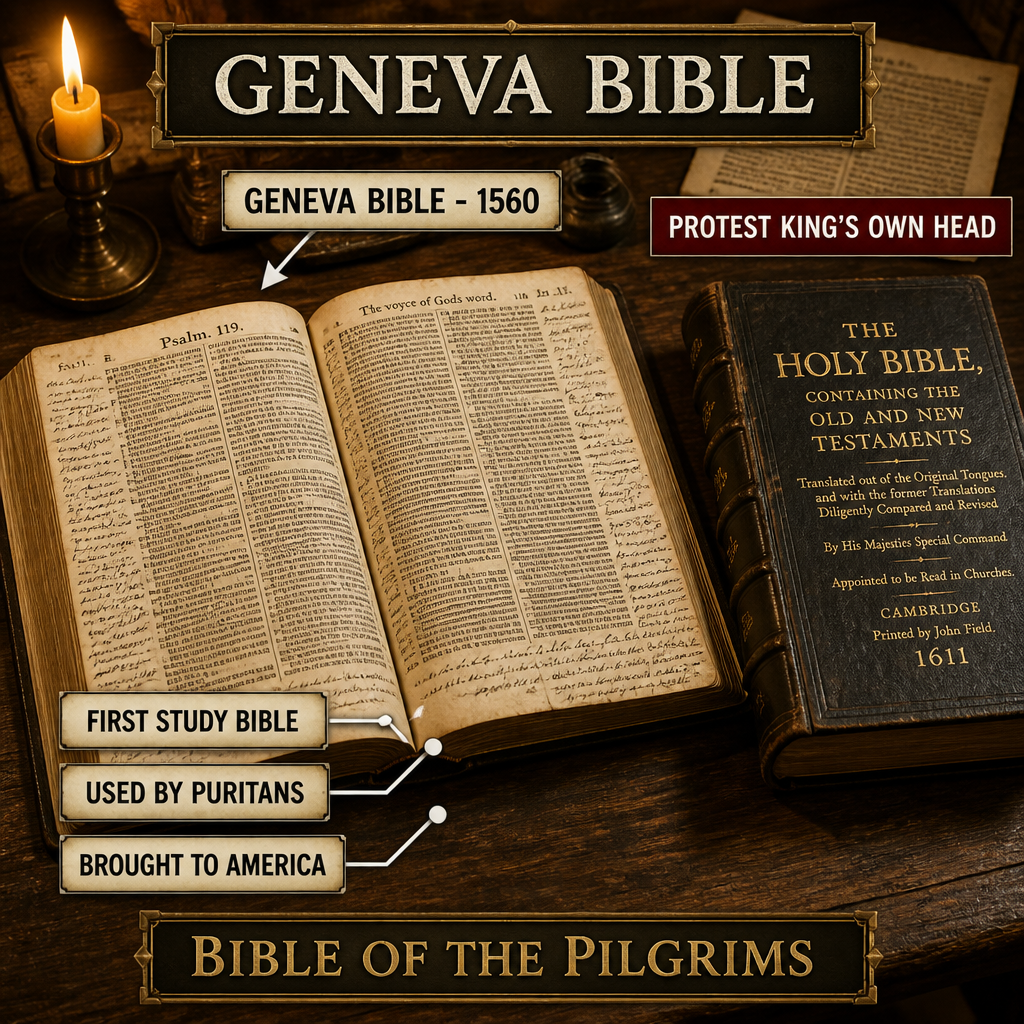
YOUTH Reform Geneva Bible
The Declaration of Independence (July 4, 1776)
The Declaration mentions a divine being four times:
1. "Nature's God" - "the Laws of Nature and of Nature's God"
2. "Creator" - "endowed by their Creator with certain unalienable Rights"
3. "Supreme Judge" - "appealing to the Supreme Judge of the world"
4. "Divine Providence" - "a firm reliance on the protection of divine Providence"
Think About It: These terms could mean different things to different people. A Christian might think of the God of the Bible, while a Deist might think of an impersonal "Creator." This may have been intentional to unite people with different beliefs.
The U.S. Constitution (1787)
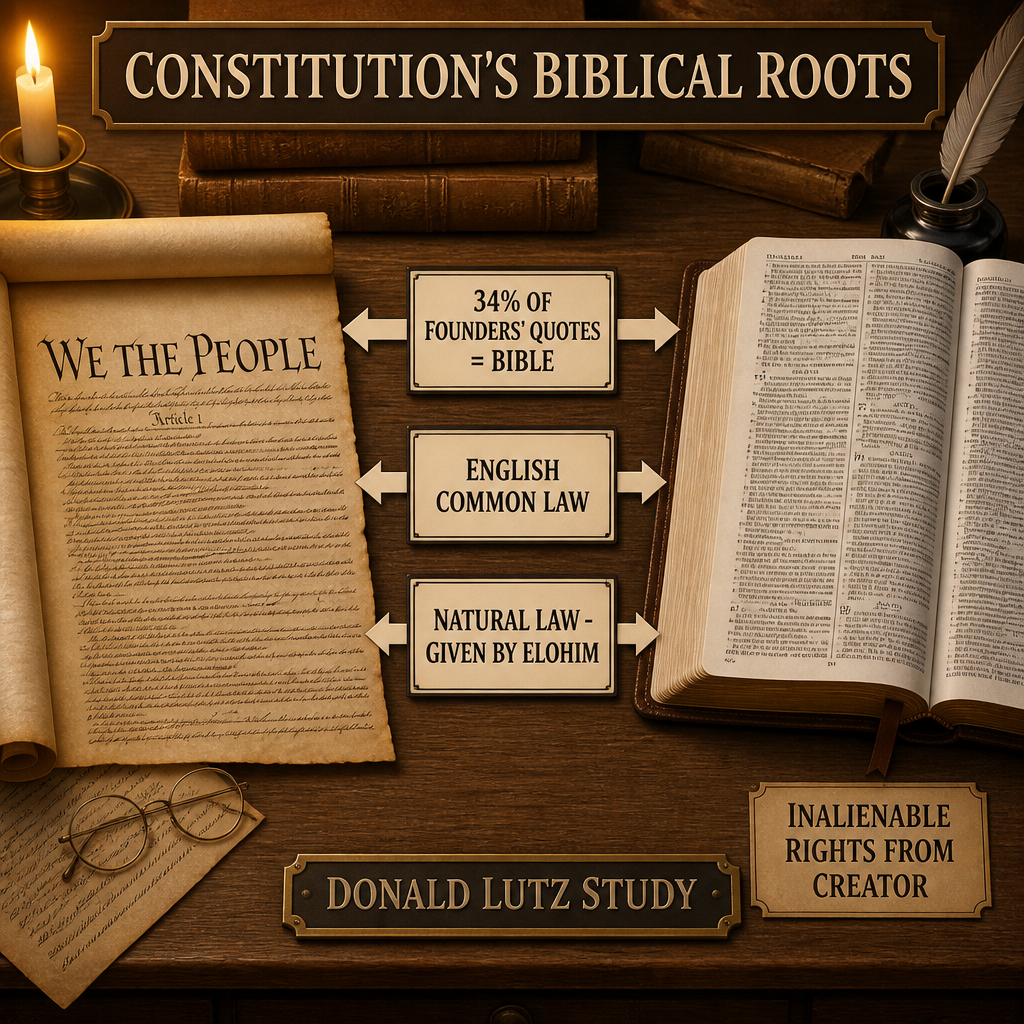
Here's a surprising fact: The Constitution has NO mention of God, Jesus Christ, or Christianity in its main text!
Article VI, Clause 3:
"No religious Test shall ever be required as a Qualification to any Office or public Trust under the United States."
[U.S. Constitution]
This was radical! At that time, nine of thirteen states required people to be Christians (or even Protestants) to hold office!
The First Amendment (1791)
"Congress shall make no law respecting an establishment of religion, or prohibiting the free exercise thereof..."
[Bill of Rights, First Amendment]
Key Point: The First Amendment originally only applied to the FEDERAL government. States could still have official churches! Massachusetts had one until 1833.
Fill in the Blanks:
1. The Declaration of Independence contains references to a divine being.
2. The U.S. Constitution contains references to God.
3. Article VI says no religious shall be required for office.
4. The last state to get rid of its official church was in 1833.
True or False?
— The Constitution mentions Jesus Christ by name.
— The First Amendment originally applied to state governments too.
Scripture Memory: Psalm 33:12
"Blessed is the nation whose Elohim is Yahuah; and the people whom he hath chosen for his own inheritance."
Recall Exercise
Close this workbook. Write from memory: The four divine references in the Declaration, and what the Constitution says about religious tests.
Teach-Back Challenge
Explain to a family member the difference between how the Declaration and Constitution talk about God.
Person I taught:
Apply It!
Lesson 2: George Washington - Real Quotes vs. Fake Quotes
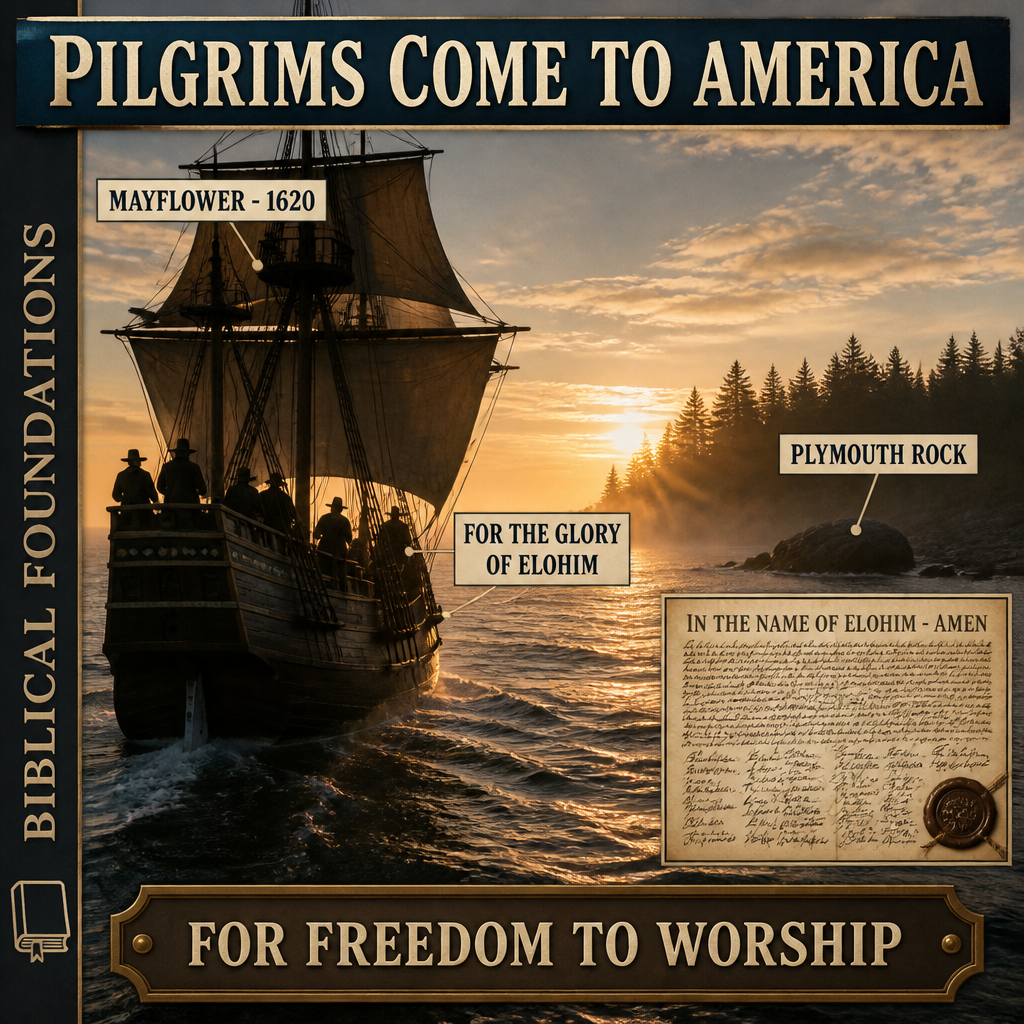
YOUTH Found Pilgrims Adult
George Washington is often quoted in debates about America's religious heritage. But some popular quotes are completely made up! Let's learn to tell the difference.
VERIFIED Quotes (These Are Real!)
REAL — Farewell Address (1796):
"Of all the dispositions and habits which lead to political prosperity, Religion and morality are indispensable supports..."
[Founders Online, National Archives - You can look this up!]
REAL — Letter to Hebrew Congregation (1790):
The U.S. government "gives to bigotry no sanction, to persecution no assistance."
[Founders Online, National Archives]
FABRICATED Quote (This Is FAKE!)
FAKE — "It is impossible to rightly govern the world without God and the Bible"
Why it's fake:
Mount Vernon's official website calls this "spurious" (false)
PolitiFact rated it FALSE
First appeared decades after Washington died - with no documentation
DO NOT share this quote as Washington's!
Why Does This Matter? As followers of truth, we should never spread false information - even if it seems to support our beliefs! Proverbs 12:22 says lying lips are an abomination to Yahuah.
What Records Show About Washington's Faith:
Fact
Evidence
Served as church vestryman
Attended 23 of 35 vestry meetings
Went to church
About once a month (from his diary)
Left before communion
Multiple witnesses confirm this after the Revolution
Used deistic terms for God
"Providence," "Grand Architect," "Supreme Being"
Fill in the Blanks:
1. Washington said "Religion and are indispensable supports."
2. The "govern without God and Bible" quote is listed as by Mount Vernon.
3. Washington left church before taking .
Which Is Real? Which Is Fake?
— "Religion and morality are indispensable supports"
— "Impossible to govern without God and the Bible"
Scripture Memory: Proverbs 12:22
"Lying lips are abomination to Yahuah: but they that deal truly are his delight."
Recall Exercise
Close the workbook. Write: One real Washington quote, one fake quote, and why the fake one is wrong to share.
Apply It!
Lesson 3: What Did the Founders Really Believe?
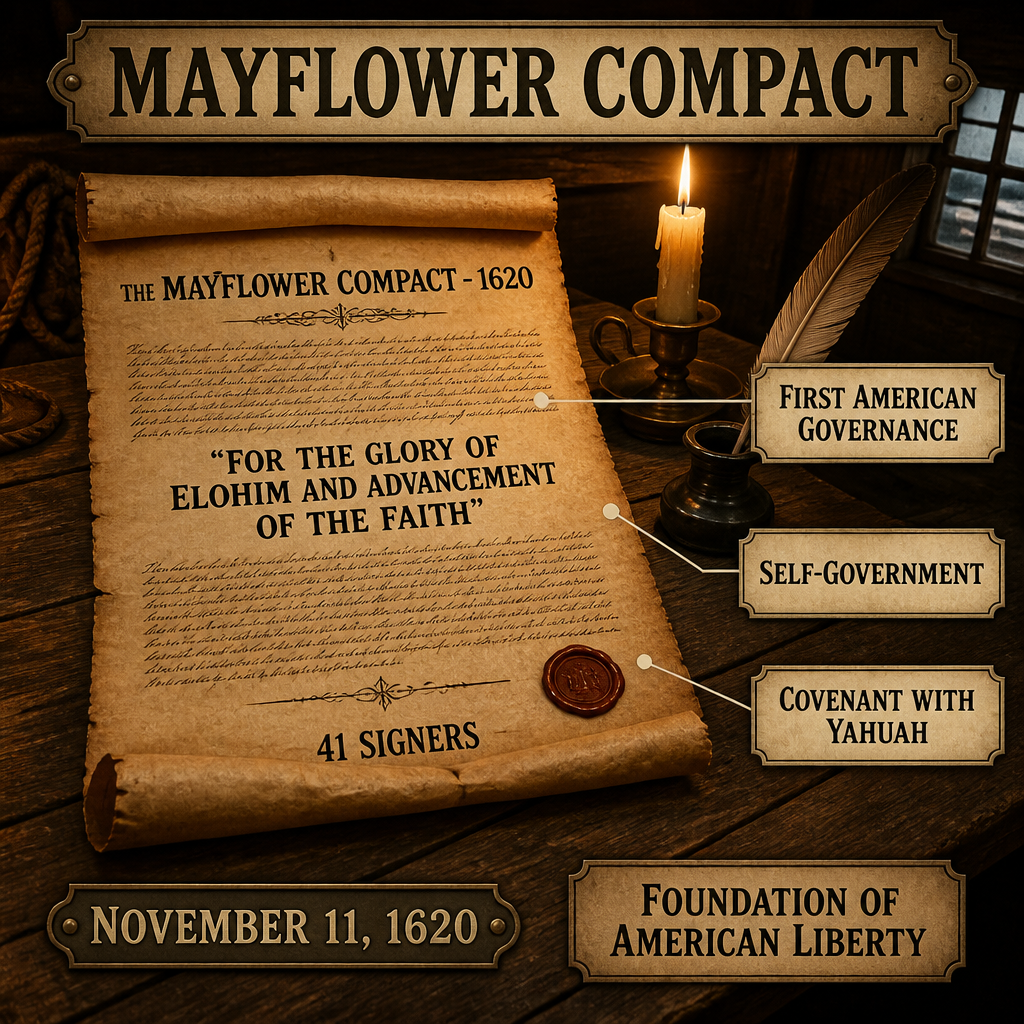
YOUTH Found Mayflower Compact
The founders had VERY different beliefs about religion! Some were devout Christians; others rejected basic Christian teachings.
John Adams - Valued Religion, Rejected the Trinity
REAL Quote:
"Our Constitution was made only for a moral and religious People. It is wholly inadequate to the government of any other."
[Letter to Massachusetts Militia, 1798]
His beliefs: Started as Congregationalist, became a Unitarian (rejected the Trinity). Called himself "a church going animal."
Thomas Jefferson - Made His Own "Bible"
REAL Quote:
"Question with boldness even the existence of a god."
[Letter to Peter Carr, 1787]
What he did: Jefferson took scissors and glue and cut out all the miracles from the Gospels - including the resurrection! His "Jefferson Bible" ends with Jesus being buried - no rising from the dead.
Benjamin Franklin - Doubted Christ's Divinity
REAL Quote:
"I have... some Doubts as to his [Jesus's] Divinity."
[Letter to Ezra Stiles, 1790]
Patrick Henry - A Real Christian!
REAL Quote (from his will):
"The religion of Christ can give them one which will make them rich indeed."
[Last Will and Testament, 1798]
FAKE — "This great nation was founded on the gospel of Jesus Christ"
This quote does NOT appear in any of Patrick Henry's writings. It first appeared in 1956 with no source.
Summary Chart:
Founder
Belief Type
Key Evidence
Washington
Theistic Rationalist
Avoided communion, deistic terms
Adams
Unitarian
Rejected Trinity
Jefferson
Deist
Removed miracles from Gospels
Franklin
Deist
Doubted Christ's divinity
Patrick Henry
Orthodox Christian
Explicit faith in will
Samuel Adams
Orthodox Christian
Devout Congregationalist
Fill in the Blanks:
1. Adams said our Constitution was made only for a moral and people.
2. Jefferson created the "Jefferson " by removing miracles.
3. Franklin had "some " about Christ's divinity.
4. Patrick Henry said the religion of could make his family rich.
Discussion: Does it matter what the founders personally believed? Can people who aren't Christians still create good laws?
Scripture Memory: 2 Timothy 2:15
"Study to shew thyself approved unto Elohim, a workman that needeth not to be ashamed, rightly dividing the word of truth."
Recall Exercise
Name three founders who were NOT orthodox Christians and explain why. Name two who WERE orthodox Christians.
Lesson 4: The Great Awakening Changed Everything
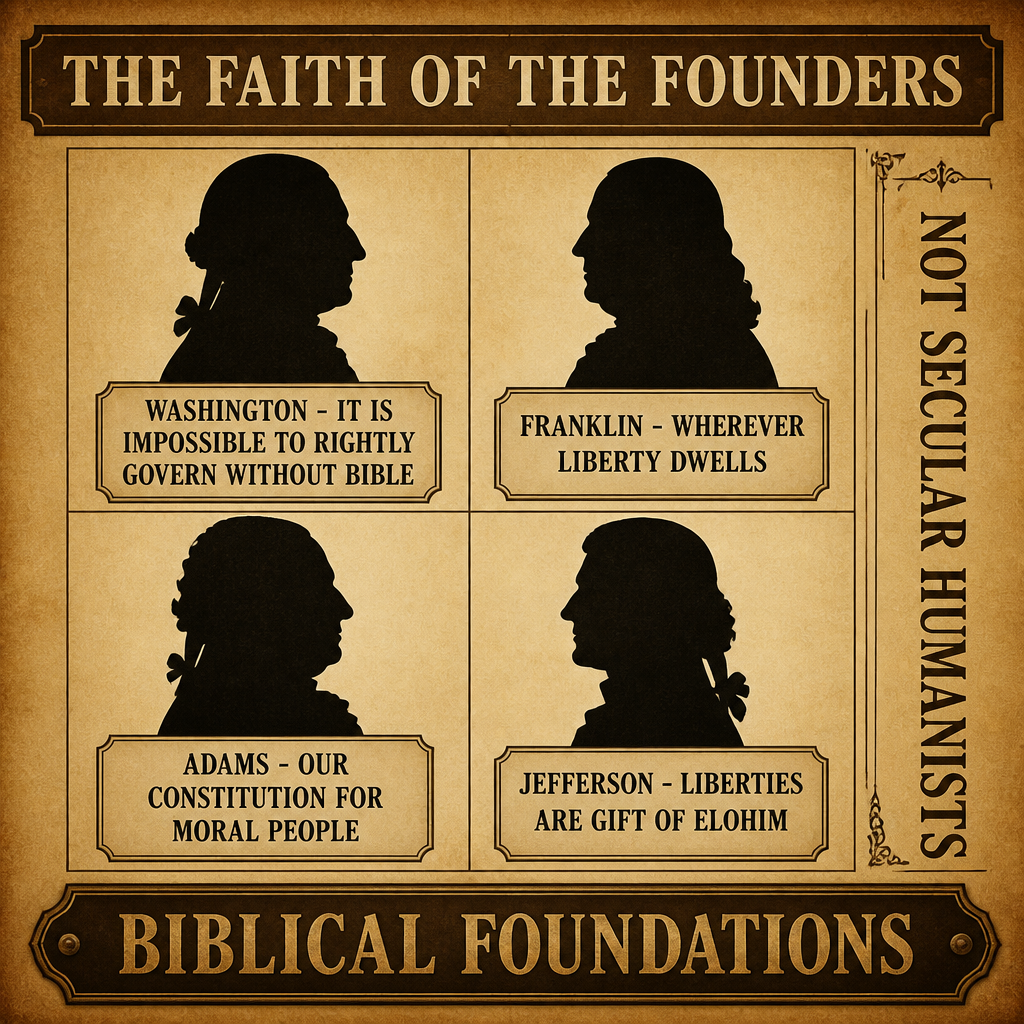
YOUTH Found Founders Faith
What Was the Great Awakening?
In the 1730s-1740s, a massive religious revival swept through the American colonies. Famous preachers traveled everywhere, preaching to huge crowds.
Key Preachers:
Jonathan Edwards - Preached "Sinners in the Hands of an Angry God"
George Whitefield - Preached to crowds of 80,000+ people!
Harry Hosier ("Black Harry") - Black preacher who influenced thousands
How Did This Lead to Revolution?
Effect of Awakening
How It Helped Cause Revolution
Personal relationship with God
If I can talk to God myself, I don't need kings or bishops!
Questioning church authority
If I can question church leaders, I can question political leaders
Shared experience across colonies
People in Virginia and Massachusetts now felt connected
Gospel preached to all classes
Common people felt empowered - not just the elite
The "Black Regiment": British soldiers called colonial preachers the "Black Regiment" because they wore black robes and preached resistance to tyranny from the pulpit. Sermons taught people WHEN it was okay to resist an unjust government.
Fill in the Blanks:
1. The Great Awakening happened in the s and 1740s.
2. George preached to crowds of 80,000+.
3. British called colonial clergy the " Regiment."
4. The Awakening created across the colonies.
Scripture Memory: John 8:36
"If the Son therefore shall make you free, ye shall be free indeed."
Think About It: How does spiritual freedom relate to political freedom?
Apply It!
Lesson 5: Religion in Colonial America - The Numbers
YOUTH Found Constitution Bible
How Religious Were the Colonies in 1776?
Overall: About 75% of the population was affiliated with a church in 1776.
Breakdown by Denomination:
Denomination
Percentage
Congregationalist
~20%
Presbyterian
~19%
Baptist
~17%
Anglican/Episcopal
~16%
Other (Quaker, Lutheran, etc.)
~28%
Regional Differences:
Region
Church Affiliation
Main Church
New England
~85%+
Congregationalist (Puritan)
Middle Colonies
~65%
Mixed (religious freedom)
Southern Colonies
~60%
Anglican (but often just on paper)
Important Warning: Being on a church list doesn't mean someone is truly saved! Many people were "cultural Christians" - they went to church because everyone did, not because they had real faith.
Fill in the Blanks:
1. About % of colonists were affiliated with churches.
2. The largest denomination was .
3. New England had %+ church affiliation.
4. Church affiliation doesn't equal personal .
Scripture Memory: Matthew 7:14
"Because strait is the gate, and narrow is the way, which leadeth unto life, and few there be that find it."
Lesson 6: The Balanced Truth
YOUTH Found Liberty Bell Adult
Myth 1: "America Was Founded as a Christian Nation"
Partial Truth: American CULTURE was mostly Christian (75% church membership). But Also True: The FEDERAL GOVERNMENT was designed to be secular - no religious tests, no official church, no mention of Christ in the Constitution.
Myth 2: "All the Founders Were Deists or Atheists"
Partial Truth: Some founders (Jefferson, Franklin) were Deists or had unorthodox beliefs. But Also True: Other founders (Patrick Henry, Samuel Adams) were genuine Christians. They were DIVERSE in their beliefs.
Treaty of Tripoli (1797)
"As the government of the United States of America is not in any sense founded on the Christian Religion..."
[Treaty of Tripoli, Article 11 - Signed by President John Adams, ratified unanimously by Senate]
Context: This was written to tell Muslim nations that America wasn't like European "Christian" nations that had fought religious wars. It was about the GOVERNMENT's structure, not American culture.
The Balanced Summary:
Claim
True or False?
American culture was Christian
TRUE
Federal government was secular
TRUE
ALL founders were Christians
FALSE
ALL founders were Deists
FALSE
State governments were secular
FALSE (many had official churches)
Fill in the Blanks:
1. American CULTURE was largely , but the federal government was secular.
2. The Treaty of Tripoli says America was "not in any sense founded on the Religion."
3. The founders were religiously - some Christian, some not.
Scripture Memory: John 8:32
"And ye shall know the truth, and the truth shall make you free."
Final Recall
In your own words, explain the balanced truth about America's religious founding:
Final Teach-Back
Explain to someone the nuanced truth about America's founding - avoiding both extreme views.