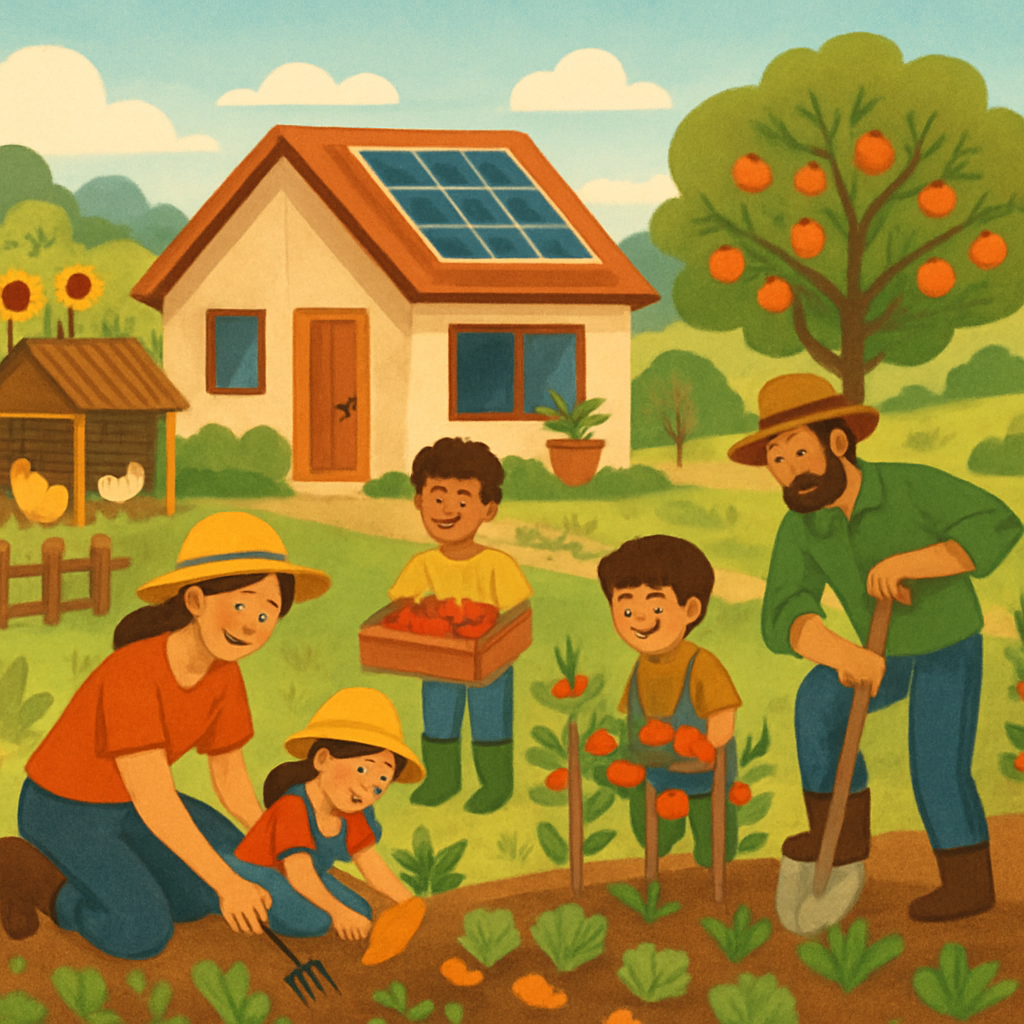
"Yahuah Elohim took the man and put him in the garden of Eden to work it and take care of it." — Genesis 2:15
Name:
Date Started:
About This Workbook
This workbook teaches practical homesteading skills grounded in biblical wisdom. Whether you have a backyard, a balcony, or dreams of a farm someday, these skills will help you grow food, develop self-sufficiency, and honor Yahuah through working with His creation.
What You'll Learn:
Why work is part of Yahuah's original design (not the curse!)
Each lesson uses the 6 Rs to help you really learn and remember:
Step
What You Do
1. RECEIVE
Read the lesson carefully
2. REFLECT
Answer the questions
3. RECALL
Close the book and write what you remember
4. RECITE
Teach someone what you learned
5. REVIEW
Come back and review at Day 1, 3, 7, 21, 60
6. RESPOND
Do something with what you learned!
About the Names We Use
Yahuah (yah-HOO-ah) = The Father's Hebrew name (usually written "LORD") Yahusha (yah-HOO-sha) = The Son's Hebrew name (usually written "Jesus") Elohim (el-oh-HEEM) = Hebrew word for God
LESSON 1: WORK IS YAHUAH'S DESIGN
Did you know work was given to Adam BEFORE sin entered the world? Let's explore!
Key Scripture: Genesis 2:15
"Yahuah Elohim took the man and put him in the garden of Eden to it and take care of it."
Hebrew Word Study
Abad (עָבַד) - "to work, serve, cultivate" - Strong's H5647
This word means our work in the garden is SERVICE to Yahuah!
Shamar (שָׁמַר) - "to keep, guard, protect" - Strong's H8104
Same word used in "Yahuah bless you and KEEP you" (Numbers 6:24). We guard the land as Yahuah guards us!
Think About It: Work isn't the curse - toil and thorns were the curse (Genesis 3:17-19). Work itself is a GIFT from Yahuah! He gave Adam meaningful work in a perfect garden.
Key Scriptures for Homesteaders
Scripture
What It Teaches
1 Timothy 5:8
Provide for your family - it's a spiritual duty
Colossians 3:23
Work heartily as for Yahuah, not for men
Proverbs 12:10
Righteous people care for their animals properly
Proverbs 6:6-8
Learn from the ant - prepare in summer for winter
Proverbs 31:16
The wise woman considers a field and buys it
What is "Self-Sufficiency"?
Self-sufficiency doesn't mean independence from Yahuah! It means depending on HIM rather than on the world's systems. We're not trying to be independent from Elohim - we're trying to depend on Him through practical skills.
Quick Quiz
1. When was Adam given work in the garden?
○ A) After he sinned ○ B) Before sin entered ○ C) After the flood ○ D) Never
2. What does the Hebrew word "abad" mean?
○ A) To rest ○ B) To work/serve ○ C) To sleep ○ D) To eat
3. According to Proverbs 6, who should we learn from about preparing for the future?
○ A) The lion ○ B) The eagle ○ C) The ant ○ D) The sheep
True or False
1. Work was part of the curse after Adam sinned. ○ True ○ False
2. Self-sufficiency means being independent from Yahuah. ○ True ○ False
3. Colossians 3:23 says to work as for Yahuah. ○ True ○ False
Memory Verse: Colossians 3:23
"Whatever you do, work at it with all your heart, as working for Yahuah, not for men."
☐ Day 1: Read 5x ☐ Day 3: Write it ☐ Day 7: Say it to someone
RECALL
Close the book. Write: What do "abad" and "shamar" mean? When was work given to Adam?
TEACH IT
Explain to a family member why work is Yahuah's gift, not the curse.
Who I taught: Date:
DO IT
☐ Read Genesis 2:15 and 3:17-19 - compare work vs. the curse
☐ Thank Yahuah for meaningful work today
☐ Other:
LESSON 2: STARTING YOUR FIRST GARDEN
Ready to grow your own food? Let's learn the basics!
Key Scripture: Genesis 1:29
"I have given you every bearing seed... to you it shall be for food."
Garden Basics
What Plants Need
How Much
Sunlight
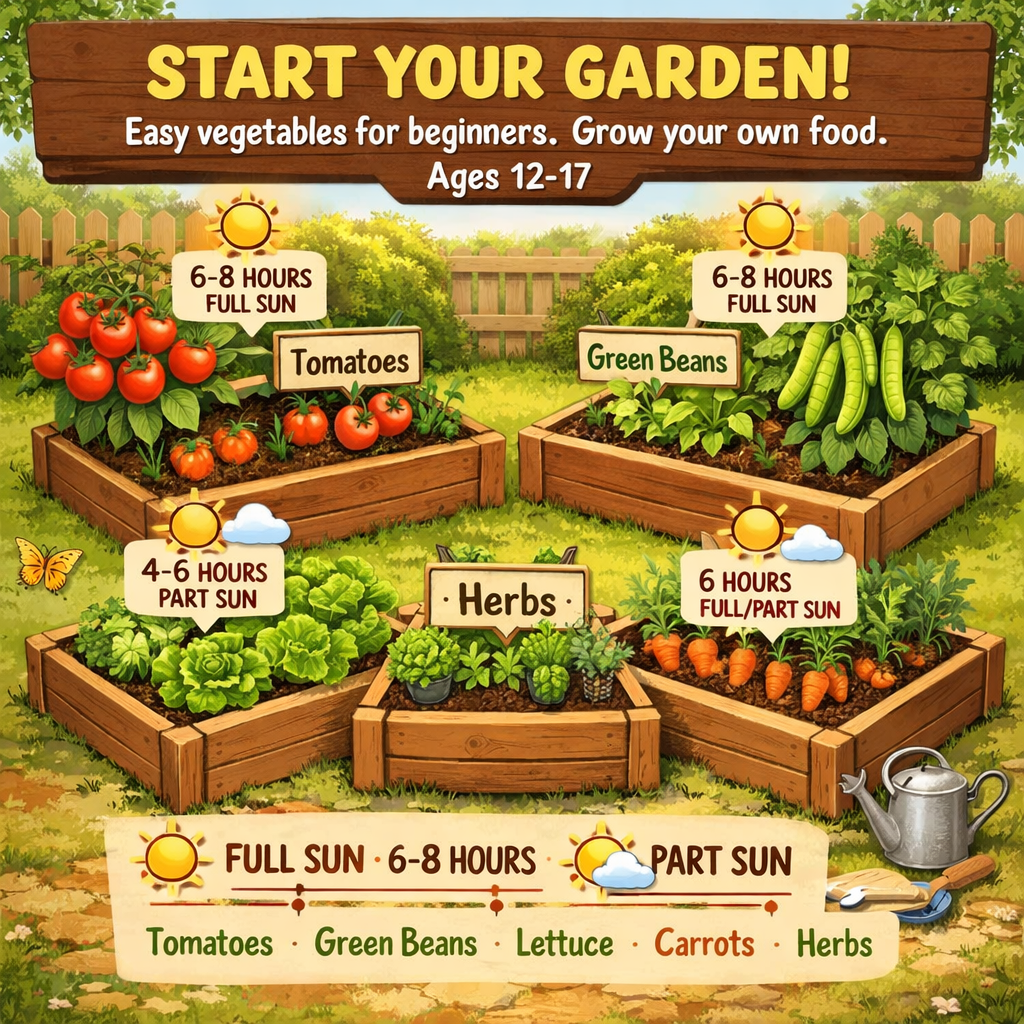
6-8 hours direct sun (vegetables); 4-6 hours (leafy greens)
Water
About 1 inch per week
Soil
pH 6.0-6.8 is ideal for most vegetables
Space
Start small! 4x4 foot raised bed is great for beginners
Easy Vegetables for Beginners
Vegetable
Days to Harvest
Difficulty
Radishes
24-35 days
Very Easy
Lettuce
30-45 days
Very Easy
Green Beans
50-65 days
Easy
Zucchini
45-55 days
Easy
Tomatoes
60-85 days
Moderate
Cucumbers
50-70 days
Easy
Pro Tip: Start with transplants (small plants from a nursery) instead of seeds for tomatoes and peppers - they're easier for beginners! Start radishes and lettuce from seed.
No Yard? No Problem!
Container gardening on a balcony or patio
Grow herbs in a sunny window
Microgreens in your kitchen
Ask a neighbor if you can help with their garden
Community garden plots
Quick Quiz
1. How many hours of sunlight do most vegetables need?
○ A) 1-2 hours ○ B) 4-5 hours ○ C) 6-8 hours ○ D) 12 hours
2. Which vegetable is the FASTEST to harvest?
○ A) Tomatoes ○ B) Radishes ○ C) Zucchini ○ D) Cucumbers
3. What is a good beginner raised bed size?
○ A) 2x2 feet ○ B) 4x4 feet ○ C) 10x10 feet ○ D) 50x50 feet
True or False
1. Leafy greens need less sunlight than tomatoes. ○ True ○ False
2. You need a big yard to grow any food. ○ True ○ False
3. Radishes are one of the easiest vegetables to grow. ○ True ○ False
Memory Verse: Genesis 1:29
"I have given you every herb bearing seed... to you it shall be for food."
☐ Day 1: Read 5x ☐ Day 3: Write it ☐ Day 7: Say it
HANDS-ON PROJECT
Plant Something! Choose one of these to try this week:
☐ Plant radish seeds in a container or garden
☐ Start lettuce in a sunny window
☐ Grow an herb (basil, mint, or cilantro) in a pot
☐ Regrow a green onion from the store in water
What I planted:
RECALL
Close the book. Write: What do plants need? Name 3 easy vegetables for beginners:
TEACH IT
Teach someone how to start a small garden.
Who I taught:
DO IT
☐ Plant at least one thing this week!
☐ Research your USDA hardiness zone
☐ Other:
LESSON 3: COMPANION PLANTING
Some plants help each other grow! Let's learn Yahuah's design in nature.
Key Scripture: Ecclesiastes 4:9
"Two are than one, because they have a good reward for their labor."
The Three Sisters
Native American Wisdom: Corn, beans, and squash planted together - they help each other!
Corn - Provides a structure for beans to climb
Beans - Add nitrogen to the soil that corn needs
Squash - Shades the ground to suppress weeds and keep moisture in
Companion Planting Guide
Plant
Good Companions
Keep Apart From
Tomatoes
Basil, Carrots, Marigolds
Corn, Potatoes
Beans
Corn, Cucumbers, Squash
Onions, Garlic
Carrots
Onions, Tomatoes, Rosemary
Dill
Cucumbers
Beans, Corn, Radishes
Potatoes, Sage
Peppers
Basil, Onions, Spinach
Beans
Think About It: Just like plants that help each other, we need community too! Ecclesiastes 4:9 says "Two are better than one." Yahuah designed us to work together.
Natural Pest Control
Good Bugs! Not all insects are pests. Attract these helpers:
Ladybugs - Eat aphids (plant pests)
Bees - Pollinate your plants
Praying Mantis - Eat many garden pests
Plant flowers like marigolds, dill, and yarrow to attract good bugs!
Quick Quiz
1. In the "Three Sisters," what does corn provide for beans?
○ A) Water ○ B) A climbing structure ○ C) Shade ○ D) Fertilizer
2. What do beans add to the soil?
○ A) Nitrogen ○ B) Sugar ○ C) Salt ○ D) Acid
3. Which insect is HELPFUL in the garden (eats pests)?
○ A) Aphids ○ B) Ladybugs ○ C) Grasshoppers ○ D) Slugs
True or False
1. Tomatoes and basil grow well together. ○ True ○ False
2. All insects are pests that should be killed. ○ True ○ False
3. Beans and onions should be planted together. ○ True ○ False
Memory Verse: Ecclesiastes 4:9
"Two are better than one, because they have a good reward for their labor."
☐ Day 1: Read 5x ☐ Day 3: Write it ☐ Day 7: Say it
RECALL
Close the book. Explain the Three Sisters and name 2 good companion plants for tomatoes:
TEACH IT
Teach someone about the Three Sisters planting method.
Who I taught:
DO IT
☐ Plan a companion planting for your garden
☐ Research how to attract ladybugs
☐ Other:
LESSON 4: COMPOSTING - FREE FERTILIZER
Turn kitchen scraps into garden gold!
Key Scripture: John 12:24
"Unless a grain of wheat falls into the and dies, it remains alone; but if it dies, it produces much grain."
What is Compost?
Compost is decomposed organic matter - nature's recycling! Things break down and become rich soil that feeds plants.
The Recipe: Browns + Greens + Water + Air
BROWNS (Carbon)
GREENS (Nitrogen)
Dry leaves
Fruit/vegetable scraps
Cardboard (shredded)
Grass clippings
Straw
Coffee grounds
Newspaper (shredded)
Eggshells
Wood chips
Fresh plant trimmings
Ideal Ratio: About 3 parts browns to 1 part greens
DON'T Compost:
Meat or dairy (attracts pests)
Pet waste (disease risk)
Diseased plants (spreads disease)
Weeds with seeds (may sprout)
Treated wood or colored paper
How to Start:
Choose a spot (corner of yard, or a bin)
Layer browns and greens
Keep moist (like a wrung-out sponge)
Turn every 1-2 weeks to add air
In 2-6 months, you'll have rich compost!
Spiritual Lesson: Just like things must "die" to become compost that grows new life, Yahusha said we must "die to self" to bear spiritual fruit. Decomposition leads to new growth!
Quick Quiz
1. What are "browns" in composting?
○ A) Green plants ○ B) Carbon-rich materials like dry leaves ○ C) Meat scraps ○ D) Water
2. What should you NOT put in compost?
○ A) Fruit scraps ○ B) Eggshells ○ C) Meat and dairy ○ D) Coffee grounds
3. What is the ideal ratio of browns to greens?
○ A) 1:1 ○ B) 3:1 ○ C) 10:1 ○ D) 1:3
True or False
1. You can put pet waste in compost. ○ True ○ False
2. Compost should be kept moist like a wrung-out sponge. ○ True ○ False
3. Compost is ready in about 2-6 months. ○ True ○ False
HANDS-ON PROJECT
Start Composting!
☐ Start a small compost bin or pile
☐ Collect kitchen scraps for one week
☐ Make a "compost jar" in your kitchen for scraps
RECALL
Close the book. What are browns and greens? What should you NOT compost?
3. You should try to prepare all at once. ○ True ○ False
Memory Verse: Proverbs 27:12
"A prudent man foreseeth the evil, and hideth himself: but the simple pass on, and are punished."
☐ Day 1: Read 5x ☐ Day 3: Write it ☐ Day 7: Say it
HANDS-ON PROJECT
Start Your Emergency Kit:
☐ Store 3 days of water for your family
☐ Make a list of what you need
☐ Locate flashlights and fresh batteries
RECALL
Close the book. List 5 categories of emergency supplies:
TEACH IT
Teach someone why preparation is biblical wisdom.
Who I taught:
DO IT
☐ Start storing water
☐ Create an emergency supply list
☐ Other:
LESSON 9: FINAL REVIEW
Let's review everything you've learned!
Key Concepts Review
Fill in the blanks:
1. Work was given to Adam sin entered the world.
2. The Hebrew word "abad" means to or cultivate.
3. Most vegetables need -8 hours of sunlight.
4. The "Three Sisters" are corn, , and squash.
5. The ideal compost ratio is 3 parts browns to 1 part .
6. /open-pollinated seeds can be saved and grown true.
7. Low-acid foods must be canned (not water bath).
8. Use cloth, not chicken wire, to protect chickens.
9. Store 1 of water per person per day.
10. Proverbs says a prudent man foresees and prepares.
Scripture Matching
Match the Scripture to what it teaches:
Scripture
Teaching (Write the letter)
1. Genesis 2:15
2. Proverbs 6:6-8
3. Colossians 3:23
4. Proverbs 12:10
5. Proverbs 27:12
A) Righteous care for animals
B) Work as for Yahuah
C) Work and keep the garden
D) Learn from the ant - prepare
E) The prudent foresee danger
What Have You Done?
Check what you've accomplished during this workbook:
☐ Planted something (garden, container, or windowsill)
☐ Started composting or saved kitchen scraps
☐ Saved seeds or learned how
☐ Made a fermented food
☐ Researched chickens or visited a farm
☐ Started an emergency water/food supply
☐ Taught someone what you learned
☐ Memorized at least 3 Scriptures
Personal Reflection
What is the most important thing you learned from this workbook?
What skill do you want to develop further?
How will homesteading skills help you serve Yahuah and your community?