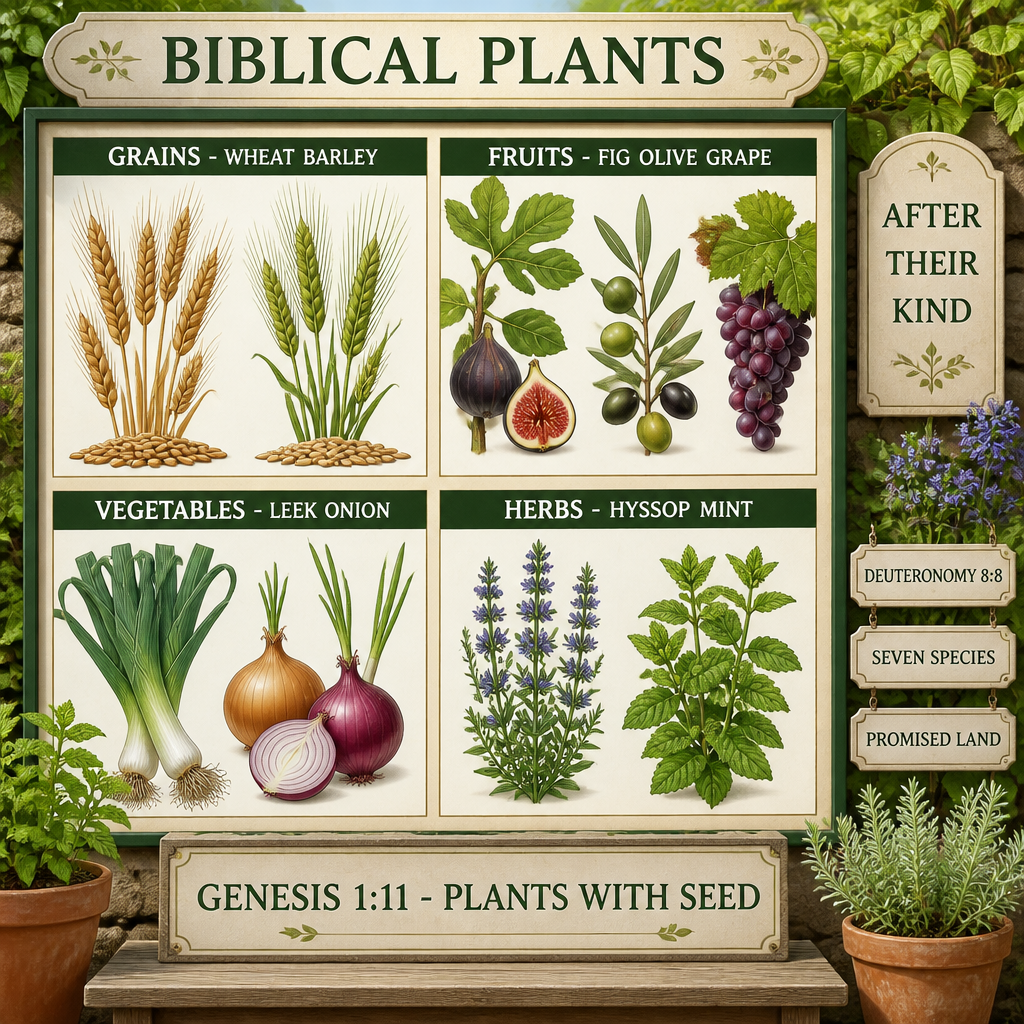
"And Yahuah Elohim planted a garden eastward in Eden; and there He put the man whom He had formed."
— Genesis 2:8
Student Name: ________________________________
Date Started: ________________________________
Truth Carriers Ministry straightisthegate.com | messiah2027.com
HOW TO USE THIS WORKBOOK
The 6Rs Learning Method
1. RECEIVE — Read the teaching content carefully.
2. REFLECT — Answer questions and think deeply.
3. RECALL — Close book and write from memory.
4. RECITE — Teach someone what you learned.
5. REVIEW — Use the tracker: Day 1, 3, 7, 21, 60.
6. RESPOND — Apply with hands-on activities.
Sacred Names:Yahuah (the Father), Yahusha (the Messiah)
1Biblical Foundation for Gardening
RECEIVE — Learn the Teaching
"And Yahuah Elohim planted a garden eastward in Eden; and there He put the man whom He had formed." — Genesis 2:8
Gardening: The First Job
Think about it: Yahuah didn't place Adam in a city, office, or factory. He placed him in a GARDEN. Working the earth was humanity's original calling!
"Dress it and keep it" (Genesis 2:15) — cultivate and protect
Every plant was given for food (Genesis 1:29)
After the flood, farming continued (Genesis 9:20)
Why Should YOU Learn to Garden?
Self-sufficiency: Less dependence on grocery stores
Health: Fresh, chemical-free food you grew yourself
Savings: A packet of seeds can produce hundreds of dollars of food
Skills: Knowledge that will serve you your entire life
Preparedness: Food security in uncertain times
Stewardship: Caring for Yahuah's creation
"And Elohim said, Behold, I have given you every herb bearing seed, which is upon the face of all the earth, and every tree, in the which is the fruit of a tree yielding seed; to you it shall be for meat." — Genesis 1:29
REFLECT — Answer Questions
Fill in the Blanks
1. Yahuah planted a garden in _____________.
2. Adam's first job was to _____________ and keep the garden.
3. Genesis 1:29 says every herb bearing _____________ was given for food.
4. Working the earth is an act of _____________ over Yahuah's creation.
Multiple Choice
1. Where did Yahuah first place Adam?
□ A) A city □ B) A garden □ C) A temple □ D) A house
2. Which is NOT a benefit of learning to garden?
□ A) Fresh, healthy food □ B) Money savings □ C) Dependence on stores □ D) Useful lifelong skills
True or False
____ 1. Farming only became important after the flood.
____ 2. Growing your own food increases self-sufficiency.
____ 3. Yahuah gave plants for food in Genesis 1:29.
Memory Verse — Genesis 2:15
"And Yahuah Elohim took the man, and put him into the garden of Eden to dress it and to keep it."
RECALL — Close Your Book
Write 3 reasons why learning to garden is important:
RESPOND — Apply This Week
2Planning Your Garden
RECEIVE — Learn the Teaching
Before You Plant: The Planning Phase
Assess your space: How much room do you have? Balcony? Backyard? Large property?
Check sunlight: Most vegetables need 6-8 hours of direct sun
Know your zone: USDA Hardiness Zones tell you what grows in your climate
Start small: Better to succeed with 4 plants than fail with 40
Garden Options by Space
Space
Options
Best Crops
Apartment/Balcony
Container garden, window boxes
Herbs, lettuce, tomatoes
Small yard
Raised beds (4x4 or 4x8 feet)
Salad greens, peppers, beans
Medium yard
Multiple raised beds or in-ground
Full vegetable garden
Large property
Row planting, market garden
Food independence!
Garden Layout Tips
Tall plants on north side: They won't shade shorter plants
Group by water needs: Thirsty plants together, drought-tolerant together
Leave walking paths: You need to access everything without stepping on soil
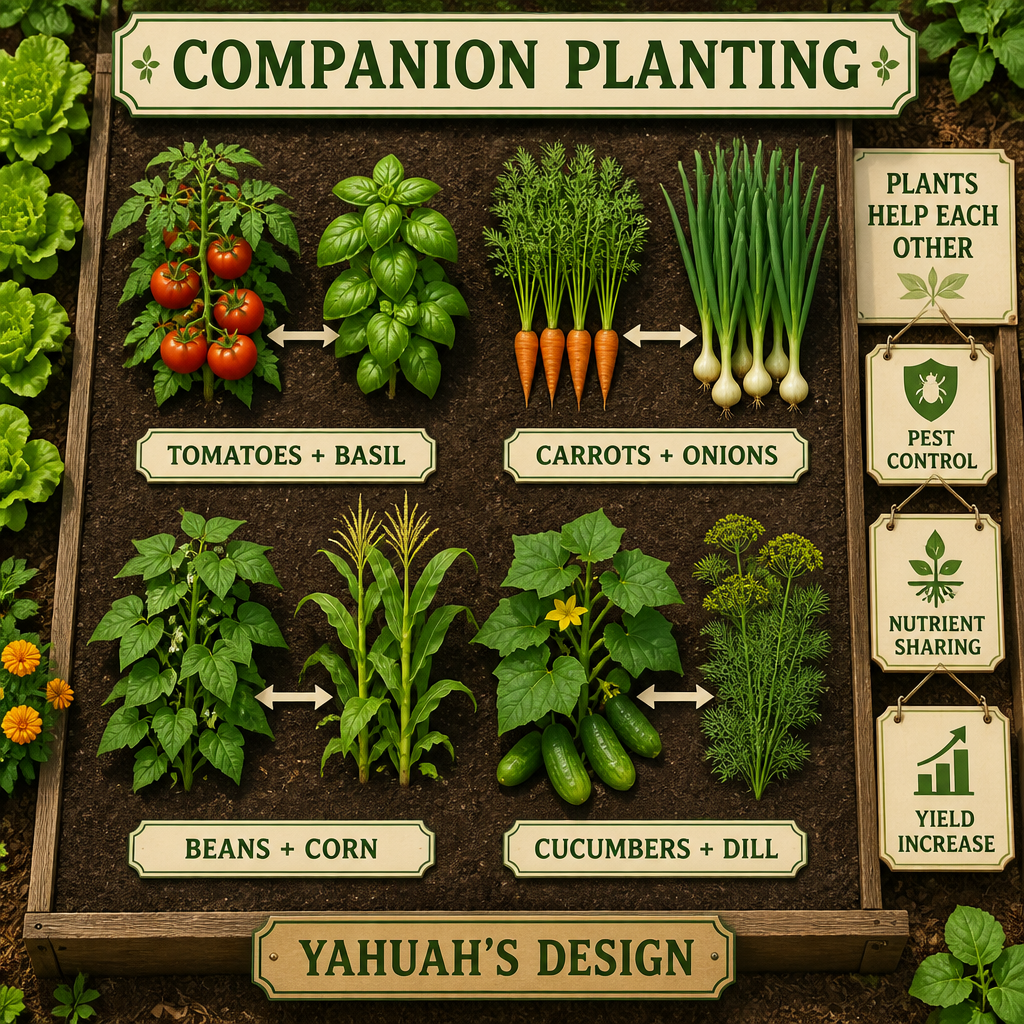
Consider companion planting: Some plants help each other grow
REFLECT — Answer Questions
Fill in the Blanks
1. Most vegetables need _______ to _______ hours of direct sunlight.
2. USDA _____________ Zones tell you what grows in your climate.
3. Tall plants should go on the _____________ side of the garden.
4. It's better to start _____________ and succeed than start big and fail.
Multiple Choice
1. What size raised bed is good for beginners?
□ A) 2x2 feet □ B) 4x4 or 4x8 feet □ C) 20x20 feet □ D) 100x100 feet
2. Why place tall plants on the north side?
□ A) They grow better there □ B) So they don't shade shorter plants □ C) Tradition □ D) They need less water there
RECALL — Close Your Book
List the 4 planning steps before planting:
RESPOND — Apply This Week
My Hardiness Zone: _____________
3Understanding Soil
RECEIVE — Learn the Teaching
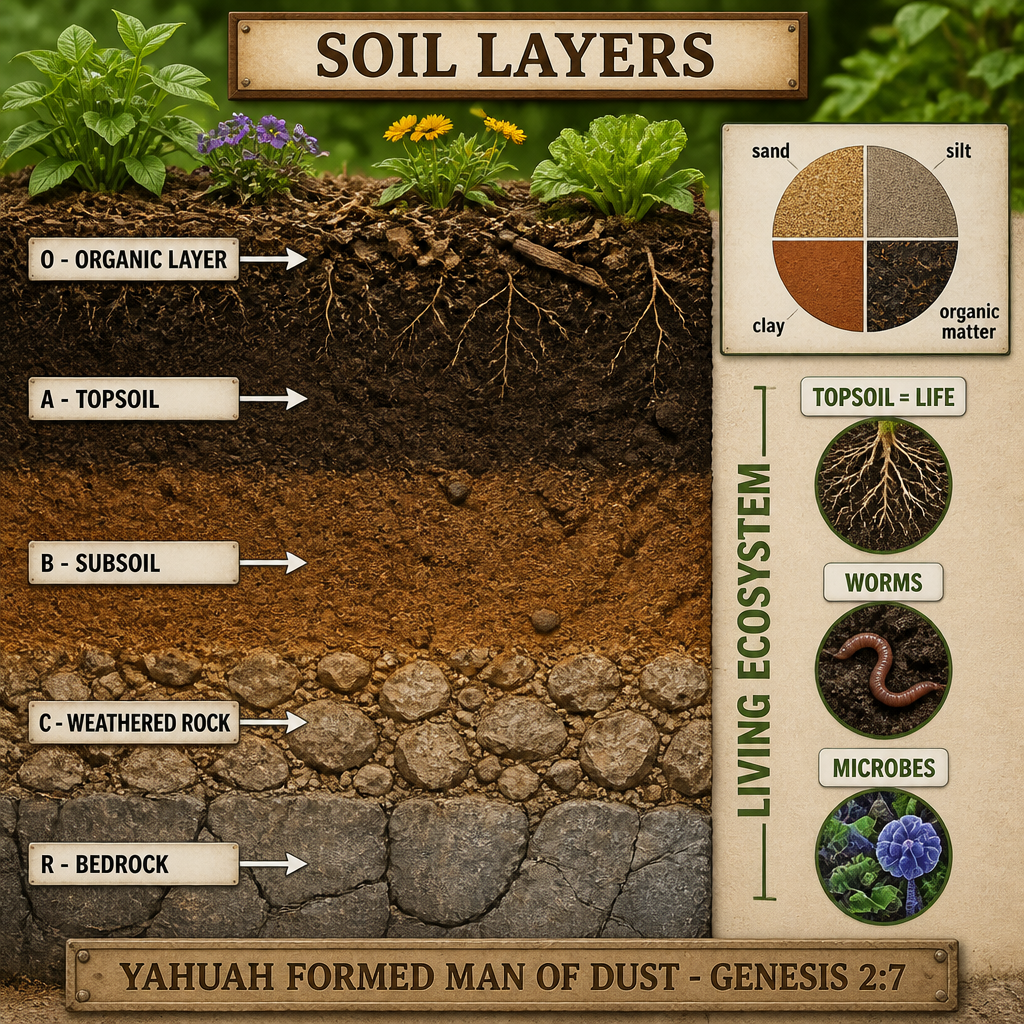
"And Yahuah Elohim formed man of the dust of the ground." — Genesis 2:7 We came from the soil — and our food grows from it!
What Makes Up Soil?
Minerals (45%): Sand, silt, and clay particles
Organic matter (5%): Decomposed plants and animals
Water (25%): Dissolves and carries nutrients
Air (25%): Roots need oxygen too!
The Three Soil Types
Type
Feel
Drainage
How to Improve
Sandy
Gritty
Too fast (dries quickly)
Add compost
Clay
Sticky when wet
Too slow (holds water)
Add sand + compost
Loam
Crumbly
Just right
Maintain with compost
Loam is the goal! It holds water but also drains. Most gardens need amendments.
The Jar Test — Identify Your Soil Type
Fill a clear jar 1/3 with garden soil
Add water until 2/3 full
Shake well, then let settle for 24 hours
Sand settles on bottom, then silt, then clay on top
Ideal mix: ~40% sand, ~40% silt, ~20% clay
REFLECT — Answer Questions
Fill in the Blanks
1. Soil is made of minerals, organic matter, water, and _____________.
2. _____________ soil feels gritty and drains too fast.
3. _____________ is the ideal soil type that's crumbly and drains well.
4. _____________ is the best thing to add to any soil type.
True or False
____ 1. Clay soil drains too quickly.
____ 2. Plant roots need oxygen from the air in soil.
____ 3. Compost helps improve all soil types.
____ 4. Sandy soil holds too much water.
RECALL — Close Your Book
Describe the three soil types and how to improve each:
RESPOND — Apply This Week
4Composting: Making "Black Gold"
RECEIVE — Learn the Teaching
What is Compost?
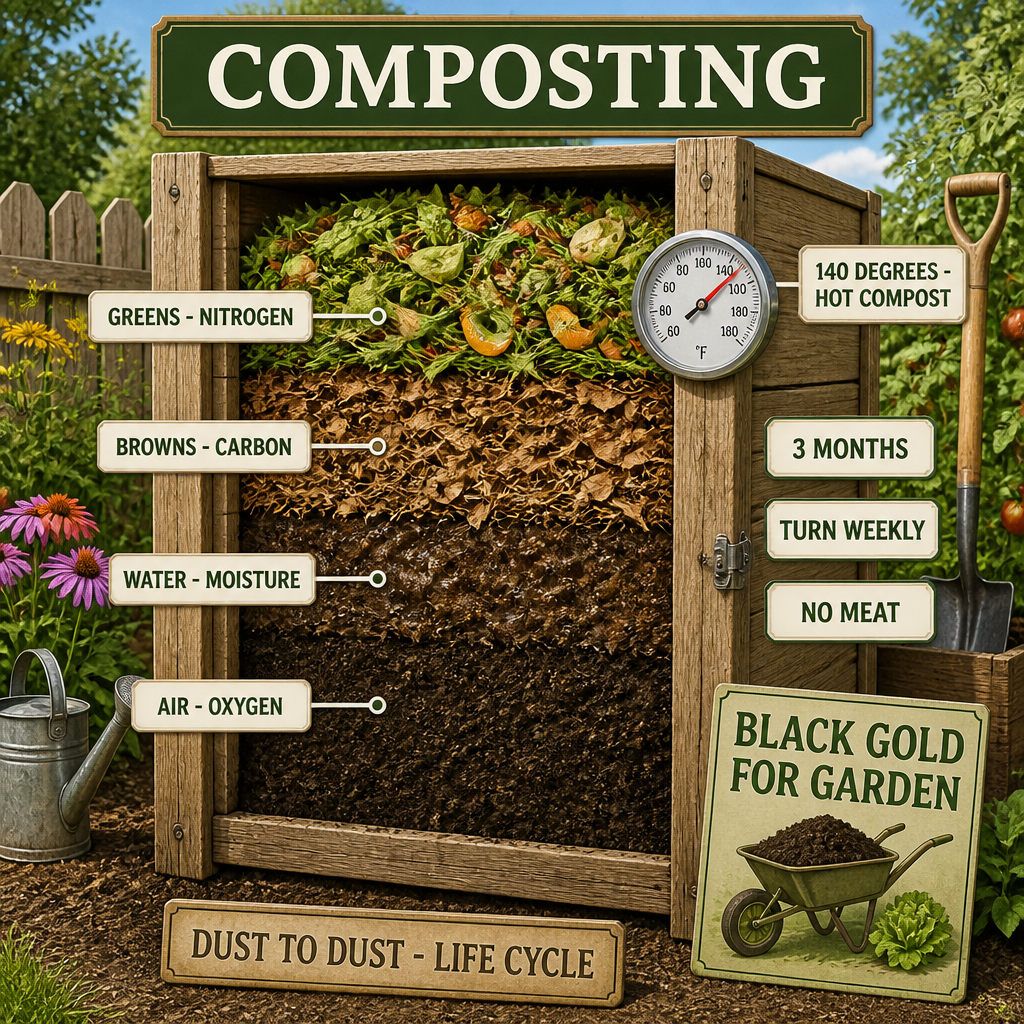
Compost is decomposed organic matter — nature's recycling system. When plant material breaks down, it becomes rich, dark soil amendment. Gardeners call it "black gold" because it's so valuable!
The Recipe: Browns + Greens
Browns (Carbon)
Greens (Nitrogen)
Dead leaves
Grass clippings
Cardboard, newspaper
Vegetable scraps
Straw or hay
Coffee grounds
Wood chips, sawdust
Fresh plant trimmings
Dried plant stalks
Herbivore manure (cow, horse, chicken)
Magic Ratio: 3 parts brown to 1 part green
NEVER Compost These:
❌ Meat, bones, or dairy (attracts pests)
❌ Pet waste from dogs/cats (disease risk)
❌ Diseased plants (spreads disease)
❌ Weeds with seeds (spreads weeds)
❌ Treated wood or glossy paper (chemicals)
Composting Methods
Method
Description
Time to Finish
Pile
Just heap it up, turn occasionally
6-12 months
Bin
Contained pile, easier to manage
3-6 months
Tumbler
Spinning barrel, fastest
6-8 weeks
Trench
Bury scraps directly in garden
2-4 months
REFLECT — Answer Questions
Fill in the Blanks
1. Gardeners call compost "_____________ gold."
2. The composting ratio is _______ parts brown to _______ part green.
3. Dead leaves and cardboard are _____________ (browns/greens).
4. A compost _____________ is the fastest method.
Multiple Choice
1. Which should NEVER go in compost?
□ A) Vegetable scraps □ B) Meat and bones □ C) Dead leaves □ D) Coffee grounds
2. Why avoid composting diseased plants?
□ A) They smell bad □ B) They decompose too slowly □ C) Disease can spread □ D) They attract pests
RECALL — Close Your Book
List 3 "browns" and 3 "greens" for composting:
RESPOND — Apply This Week
5Seeds: Types and Starting
RECEIVE — Learn the Teaching
"While the earth remaineth, seedtime and harvest, and cold and heat, and summer and winter, and day and night shall not cease." — Genesis 8:22
Three Types of Seeds
Type
What It Means
Can You Save Seeds?
Heirloom / Open-Pollinated
Traditional varieties passed down for generations
YES! Seeds grow true
Hybrid (F1)
Cross between two varieties for specific traits
No — won't grow true
GMO
Genetically modified in a lab
AVOID entirely
Always choose heirloom/open-pollinated when possible — you can save seeds year after year!
Direct Sow vs. Start Indoors
Direct Sow (plant in garden)
Start Indoors First
Beans, peas
Tomatoes
Corn
Peppers
Carrots, radishes
Eggplant
Squash, cucumbers
Broccoli, cabbage
Lettuce, spinach
Onions
Seed Starting Basics
Depth: Generally plant 2-3x the seed's diameter deep
Spacing: Follow seed packet directions
Timing: Start indoors 6-8 weeks before last frost date
Hardening off: Gradually expose indoor seedlings to outdoors over 7-10 days before transplanting
REFLECT — Answer Questions
Fill in the Blanks
1. _____________ seeds can be saved and will grow true.
2. _____________ seeds should be avoided entirely.
3. Plant seeds at a depth of _______ to _______ times the seed's diameter.
4. "_____________ off" means gradually exposing seedlings to outdoors.
Multiple Choice
1. Which vegetables should be direct sown?
□ A) Tomatoes and peppers □ B) Beans and carrots □ C) Broccoli and cabbage □ D) Eggplant and onions
2. Why choose heirloom seeds?
□ A) They're always bigger □ B) You can save seeds for next year □ C) They grow faster □ D) They're always cheaper
RECALL — Close Your Book
Explain the difference between heirloom, hybrid, and GMO seeds:
RESPOND — Apply This Week
My last frost date: _____________
6Watering and Plant Care
RECEIVE — Learn the Teaching
Watering Principles
Deep and infrequent is better than shallow and often
Water the soil, not leaves — wet leaves spread disease
Morning watering is best (leaves dry before night)
1 inch per week is the general rule for most vegetables
Signs of Watering Problems
Problem
Signs
Solution
Underwatered
Wilting, dry soil, brown leaf edges
Water deeply, add mulch
Overwatered
Yellow leaves, mushy stems, mold
Improve drainage, water less
Mulching — A Gardener's Best Friend
Mulch is a layer of material on top of soil. Benefits:
Retains moisture (less watering needed)
Suppresses weeds
Keeps soil temperature stable
Adds organic matter as it breaks down
Good mulches: Straw, wood chips, shredded leaves, grass clippings (dried)
Other Plant Care
Weeding: Pull weeds when small; mulch reduces weeds
Pruning: Remove suckers from tomatoes; pinch herbs to encourage bushiness
Support: Stake or cage tomatoes, trellis climbing plants
Feeding: Side-dress with compost mid-season
REFLECT — Answer Questions
Fill in the Blanks
1. Water _____________ and infrequently rather than shallow and often.
2. The best time to water is in the _____________.
3. Yellow leaves and mushy stems indicate _____________ watering.
4. _____________ helps retain moisture and suppress weeds.
True or False
____ 1. You should water plant leaves, not the soil.
____ 2. Wilting and brown leaf edges can mean underwatering.
____ 3. Mulch keeps soil temperature unstable.
____ 4. Most vegetables need about 1 inch of water per week.
RECALL — Close Your Book
List 4 benefits of mulching:
RESPOND — Apply This Week
7Natural Pest Control
RECEIVE — Learn the Teaching
Prevention First
The best pest control is prevention:
Healthy plants resist pests better — focus on soil health
Rotate crops each year (don't plant same family in same spot)
Remove diseased plants immediately
Encourage beneficial insects
Beneficial Insects — The Good Guys!
Insect
What They Eat
How to Attract
Ladybugs
Aphids, scale insects
Dill, fennel, yarrow
Praying Mantis
Many pest insects
Tall grasses, shrubs
Lacewings
Aphids, mites, small caterpillars
Cosmos, sunflowers
Ground Beetles
Slugs, snails, caterpillars
Mulch, ground cover
Natural Pest Solutions
Aphids: Spray with soapy water (1 tbsp dish soap per quart)
Caterpillars: Hand-pick or use BT (Bacillus thuringiensis)
"Behold, I have given you every herb bearing seed... and every tree." — Genesis 1:29 We use Yahuah's creation (plants, beneficial insects) to protect our food!
REFLECT — Answer Questions
Fill in the Blanks
1. The best pest control is _____________.
2. _____________ eat aphids and are considered beneficial.
3. Crop _____________ means not planting the same family in the same spot.
4. _____________ oil is a natural spray that works on many pests.
Multiple Choice
1. What do ladybugs eat?
□ A) Your vegetables □ B) Aphids □ C) Other ladybugs □ D) Mulch
2. What's a natural solution for slugs?
□ A) Chemical spray □ B) More water □ C) Beer traps □ D) Bright lights
RECALL — Close Your Book
Name 3 beneficial insects and what pest they control:
RESPOND — Apply This Week
8Easy Vegetables for Beginners
RECEIVE — Learn the Teaching
Top 10 Easiest Vegetables to Grow
Lettuce/Salad greens: Quick growing, can harvest in 30 days
Radishes: Ready in 25-30 days!
Green beans: Plant and forget, very productive
Zucchini: One plant produces tons of squash
Tomatoes: Cherry tomatoes are easiest
Cucumbers: Fast growing, love heat
Peas: Plant early spring, cool weather crop
Peppers: Easy once established
Swiss chard: Heat tolerant, keeps producing
Herbs (basil, mint): Almost impossible to kill
Your First Garden: The "Salad Garden"
A simple 4x4 raised bed can grow everything for fresh salads:
4-6 lettuce plants (different varieties)
1 cherry tomato plant
2-3 cucumber plants (on trellis)
A row of radishes
Some basil for flavor
Total cost: ~$20 in seeds/plants. Value of produce: $100+ through the season!
Vegetables to AVOID as a Beginner
❌ Melons (need lots of space and time)
❌ Corn (needs large planting for pollination)
❌ Cauliflower (very picky growing conditions)
❌ Celery (difficult, long growing season)
❌ Asparagus (takes 3 years to produce!)
REFLECT — Answer Questions
Fill in the Blanks
1. _____________ are the fastest vegetable, ready in 25-30 days.
2. One _____________ plant can produce tons of squash.
3. _____________ tomatoes are the easiest type to grow.
4. A simple "_____________ garden" can provide fresh salads all season.
True or False
____ 1. Corn is a great beginner vegetable.
____ 2. Green beans are easy and very productive.
____ 3. Asparagus produces the first year you plant it.
____ 4. Basil and mint are almost impossible to kill.
RECALL — Close Your Book
List 5 easy vegetables and why they're good for beginners: