The Great Controversy
Heroes of Faith Against the Powers of Darkness
Youth Edition | Ages 12-17The 6Rs Learning Method
Master this material using all six learning phases:
Lesson 1Heroes Who Stood Alone
RECEIVELong before Martin Luther nailed his 95 Theses to the church door, brave men stood up against the corruption in the church. These proto-Reformers (meaning "before the Reformation") risked everything to give people the Bible in their own language.
John Wycliffe (1320-1384) - "The Morning Star"
This English professor was called the "Morning Star of the Reformation" because his light came before the dawn. When the church said common people couldn't read Scripture, Wycliffe said: "God's law is the highest law!" He translated the entire Bible into English for the first time, sending out traveling preachers called Lollards to teach people Scripture.
Jan Hus (1369-1415) - The Goose
In Bohemia (now Czech Republic), Jan Hus preached Wycliffe's ideas. His name meant "goose" in Czech. When church leaders promised him safe passage to a council, they betrayed him and burned him at the stake. His last words included: "In 100 years, God will raise up a man whose calls for reform cannot be suppressed." Exactly 102 years later, Luther posted his 95 Theses!
These men faced threats, exile, and death because they believed one thing: Scripture alone is our authority, not human traditions.
Why do you think the church leaders wanted to keep the Bible away from common people?
Teach-Back Challenge
In your own words, explain why Wycliffe and Hus are considered heroes of faith:
True or False: Wycliffe translated the Bible into German.
True or False: Jan Hus was given safe passage and returned home safely.
Memory Verse
"Ye shall know the truth, and the truth shall make you free."
John 8:32Apply It
Wycliffe and Hus stood for truth even when it was dangerous. What is one truth from Scripture you would stand for even if it cost you something?
Lesson 2The Reformation Explodes
RECEIVEOn October 31, 1517, a German monk named Martin Luther did something that changed the world forever. He nailed a list of 95 statements (called "theses") to the church door in Wittenberg, Germany. What was he protesting? The church was selling "indulgences"—pieces of paper that supposedly reduced time in purgatory.
Martin Luther (1483-1546)
Luther discovered Romans 1:17 and realized salvation comes through faith alone, not through works or money. When ordered to recant, he declared: "Here I stand, I can do no other. God help me!" He translated the Bible into German so common people could read it.
William Tyndale (1494-1536)
This English scholar dedicated his life to translating the Bible. He once told a priest: "If God spare my life, I will cause a boy that driveth the plough to know more of the Scriptures than you do!" He was strangled and burned at the stake, but his last words were: "Lord, open the King of England's eyes!" Two years later, an English Bible was placed in every church.
John Calvin (1509-1564) & John Knox (1514-1572)
Calvin systematized Protestant theology in Geneva, while Knox brought Reformation to Scotland. Knox's preaching was so powerful that Mary Queen of Scots said she feared his prayers more than an army of 10,000 soldiers!
These reformers had very different personalities but shared the same courage. What quality do you think is most important for standing for truth?
Explain Luther's Stand
Write what happened when Luther was told to take back everything he wrote:
What was Luther protesting against?
Memory Verse
"The just shall live by faith."
Romans 1:17Apply It
Luther said "Here I stand!" What is something you believe from Scripture that you're willing to stand for, even if friends or culture disagree?
Lesson 3The Waldenses - The Hidden Church
RECEIVEHigh in the Alps of Northern Italy lived a remarkable group of believers called the Waldenses (or Waldensians). For over 1,000 years, they kept the faith pure while the world around them fell into darkness.
What Made Them Different:
- Bible-Only Faith: They accepted Scripture as their only rule of faith
- Sabbath Keepers: Many Waldenses kept the seventh-day Sabbath
- Missionary Hearts: Young men memorized entire books of the Bible and traveled as merchants to share truth
- Hidden Schools: In secret caves, they taught children Scripture
Their Secret Method
Waldensian youth would memorize the Gospels and Epistles, then travel as traveling salesmen. As they sold goods, they would carefully share verses with interested people. If someone showed genuine interest, they would reveal more Scripture. This way, they spread truth throughout Europe during the darkest times.
Revelation 12:6 describes a woman (Yahuah's faithful church) fleeing into the wilderness for 1,260 years. The Waldenses fulfilled this prophecy—they were the wilderness church keeping truth alive!
The Waldenses memorized Scripture because books were rare and dangerous to own. What would change about your faith if you had to hide your Bible?
Describe Their Methods
How did Waldensian youth share Scripture while pretending to be merchants?
True or False: The Waldenses accepted church traditions as equal to Scripture.
True or False: Many Waldenses kept the seventh-day Sabbath.
Memory Verse
"The woman fled into the wilderness, where she hath a place prepared of Elohim."
Revelation 12:6Apply It
The Waldenses memorized Scripture because it was precious. What book or passage of the Bible would you want to memorize if you couldn't have a physical copy?
Lesson 4How the Sabbath Was Changed
RECEIVEOne of the most significant changes in Christian history was the shift from Sabbath (Saturday, the seventh day) to Sunday worship. Understanding how this happened reveals much about the Great Controversy between truth and error.
Emperor Constantine issued the first civil Sunday law, declaring: "On the venerable Day of the Sun let the magistrates and people residing in cities rest." Notice: he called it "Day of the Sun," not the Lord's Day!
This church council declared: "Christians must not Judaize by resting on the Sabbath, but must work on that day... But if any shall be found to be Judaizers, let them be anathema [cursed] from Christ."
Why Does This Matter?
The fourth commandment says the seventh day is the Sabbath. Yet nowhere in Scripture was this commandment changed. The change came through human authority, not divine command. As Daniel 7:25 prophesied, the little horn power would "think to change times and laws."
Catholic Admissions
The Catholic Church openly admits they changed the day: "The Church made the change from Saturday to Sunday... by the plenitude of that divine power which Jesus Christ bestowed upon her!" — Catholic Record, September 1, 1923
Why do you think it matters whether we follow Yahuah's commandments or human traditions?
Explain the Change
In your own words, explain how Sunday replaced the Sabbath:
Who issued the first civil Sunday law?
Memory Verse
"Remember the sabbath day, to keep it holy... the seventh day is the sabbath of Yahuah thy Elohim."
Exodus 20:8-10Apply It
Knowing that the Sabbath was changed by human authority, not Scripture, what will you do with this knowledge?
Lesson 5Paganism Enters the Church
RECEIVEWhen Constantine made Christianity the official religion of Rome, something dangerous happened. Instead of pagans fully converting to Biblical faith, pagan practices were "Christianized" and brought into the church. This mixing is called syncretism.
Examples of Syncretism:
- Sun Worship → Sunday: Romans worshipped the sun god on "dies Solis" (day of the sun). This became the Christian worship day.
- Saturnalia → Christmas: The Roman winter festival (December 17-25) celebrating Saturn became "Christ-mass."
- Easter/Ishtar: Spring fertility festivals honoring pagan goddesses were connected to the resurrection.
- Obelisks: Egyptian sun-worship pillars were placed in front of churches.
What Does Yahuah Say?
Deuteronomy 12:30-31 commands us not to ask "How did these nations serve their gods? I will do likewise." Yahuah specifically forbids adopting pagan worship practices, even if we rename them. He wants to be worshipped HIS way, not the world's way with different labels.
The Great Controversy is about worship—who we worship and HOW we worship. Satan doesn't always try to make people worship him directly. Sometimes he just corrupts the worship of the true Elohim with pagan elements.
Why do you think Yahuah cares about HOW we worship Him, not just that we worship Him?
Explain Syncretism
What is syncretism and why is it dangerous to true worship?
True or False: Yahuah is okay with pagan practices as long as we rename them for Him.
Memory Verse
"Take heed to thyself that thou be not snared by following them."
Deuteronomy 12:30Apply It
Are there any traditions in your life that might have pagan origins? What would Yahuah want you to do about them?
Lesson 6The 1260-Year Prophecy
RECEIVEOne of the most remarkable prophecies in Scripture predicted exactly how long a corrupt religious power would dominate:
The Math:
- "Time, times, and half a time" = 1 + 2 + 0.5 = 3.5 years
- 3.5 years x 360 days (prophetic year) = 1,260 days
- Using the day-for-a-year principle (Ezekiel 4:6) = 1,260 years
The last of three Arian kingdoms was uprooted, giving the Bishop of Rome unchallenged religious and civil authority.
Napoleon's general Berthier captured Pope Pius VI and took him prisoner, ending the papal temporal power. 538 + 1260 = 1798!
During these 1,260 years, millions of faithful believers were persecuted and killed for following Scripture rather than church traditions. Historians estimate 50-100 million died during this period. This was the "wearing out" of the saints prophesied in Daniel 7:25.
The fact that this prophecy was fulfilled exactly shows that Scripture is supernaturally accurate. How does fulfilled prophecy strengthen your faith?
Calculate It
Show the math: How does "time, times, and half a time" become 1,260 years?
What event in 1798 ended the 1,260-year period?
Memory Verse
"They shall be given into his hand until a time and times and the dividing of time."
Daniel 7:25Apply It
Knowing that Yahuah predicted this period precisely, what does this tell you about His control over history and His prophetic word?
Lesson 7Religious Liberty - Why It Matters
RECEIVEWhen the persecuted believers fled Europe, many came to America seeking religious freedom. The founding principles of America were specifically designed to prevent what happened during the 1,260 years:
America's Founding Principles:
- No State Church: "Congress shall make no law respecting an establishment of religion"
- Free Exercise: "...or prohibiting the free exercise thereof"
- Separation of Powers: Church and state kept separate
The Founders Understood
Thomas Jefferson wrote about a "wall of separation between church and state." James Madison said, "The purpose of separation of church and state is to keep forever from these shores the ceaseless strife that has soaked the soil of Europe with blood for centuries."
A Prophetic Warning:
Revelation 13:11 describes a beast (nation) that rises from the "earth" (sparsely populated area) with two lamb-like horns (republican government and Protestant religion). But it later "speaks as a dragon"—meaning it eventually uses force in religion, just like the beast before it.
This prophecy warns that even America will eventually unite church and state and persecute those who follow Yahuah's commandments rather than human traditions.
Why is religious liberty so important? What happens when governments try to force religious beliefs?
Explain the Warning
What does Revelation 13:11 predict will happen to religious liberty in America?
True or False: The founders wanted to prevent church-state union because of Europe's history.
Memory Verse
"Where the Spirit of the Lord is, there is liberty."
2 Corinthians 3:17Apply It
As religious liberty may one day be tested, how can you prepare yourself to stand for truth even if laws require you to compromise?
Lesson 8What This Means for You
RECEIVEWe've studied heroes of faith, learned about prophetic timelines, and seen how truth was preserved through centuries of darkness. But what does all this mean for YOU today?
Key Lessons from the Great Controversy:
1. Scripture Is Your Foundation
Every reformer and faithful believer stood on the same ground: "Sola Scriptura" (Scripture Alone). When traditions, culture, or even church leaders contradict the Bible, follow the Bible.
2. Truth Is Worth Everything
Wycliffe, Hus, Luther, Tyndale, and millions of Waldenses gave everything for truth. Would you be willing to lose friends, opportunities, or even your life for what Scripture teaches?
3. The Final Generation
Revelation 14:12 describes the final generation of believers. They will "keep the commandments of Elohim AND the faith of Yahusha." This means ALL the commandments—including the fourth (Sabbath)—combined with saving faith in the Messiah.
4. You Are Part of This Story
The Great Controversy isn't just history—it's ongoing. Every day, you choose whose side you're on. Will you follow the crowd, or will you be like the Waldenses, the reformers, and all who chose truth over tradition?
After studying the Great Controversy, what is the most important thing you've learned? How will it change how you live?
Your Summary
In 3-5 sentences, summarize the main message of the Great Controversy:
What two things characterize the final generation according to Revelation 14:12?
Memory Verse
"Here is the patience of the saints: here are they that keep the commandments of Elohim, and the faith of Yahusha."
Revelation 14:12Your Commitment
Write a personal commitment based on what you've learned. What will you do differently knowing you're part of the Great Controversy?
Spaced Review Tracker
Check off each review session to build long-term memory:
Answer Key
Lesson 1: Heroes Who Stood Alone
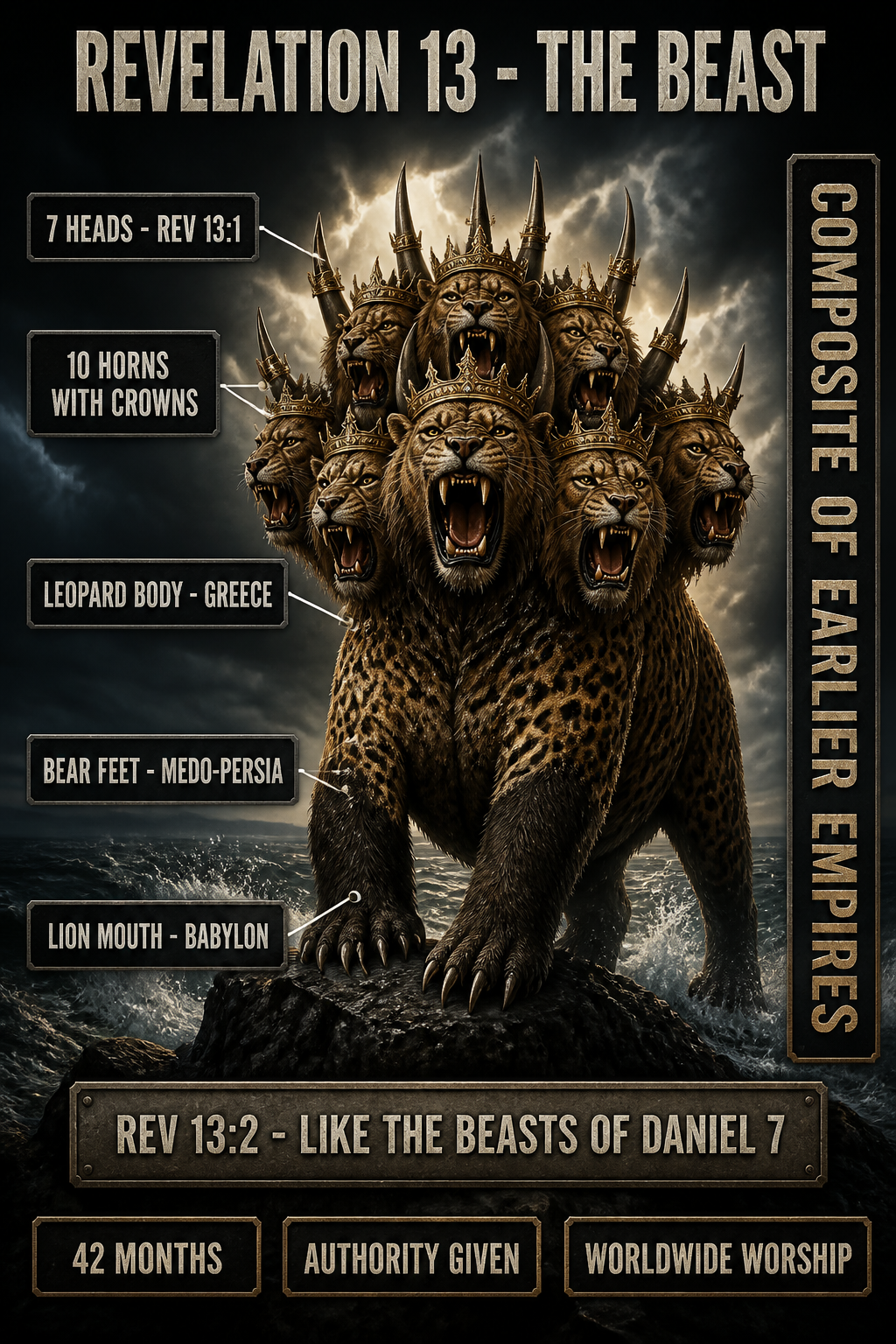
YOUTH ET Beast Rev13
- Morning
- Lollards
- 100 (or 102)
- Scripture
True/False: 1. False (English, not German), 2. False (he was betrayed and killed)
Lesson 2: The Reformation Explodes
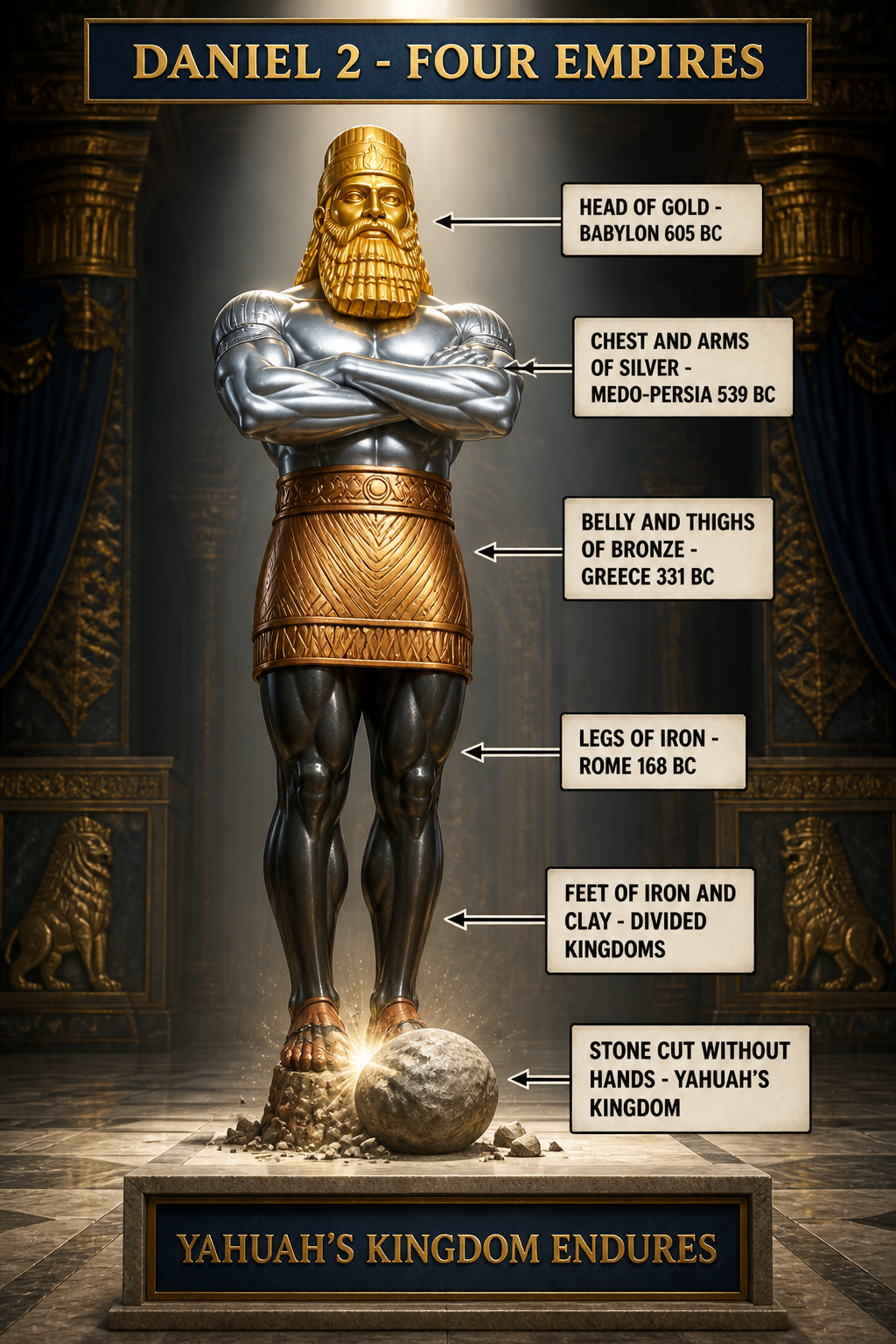
YOUTH ET Daniel2 Statue
- 31
- faith
- England's
- prayers
Multiple Choice: B (The sale of indulgences)
Lesson 3: The Waldenses
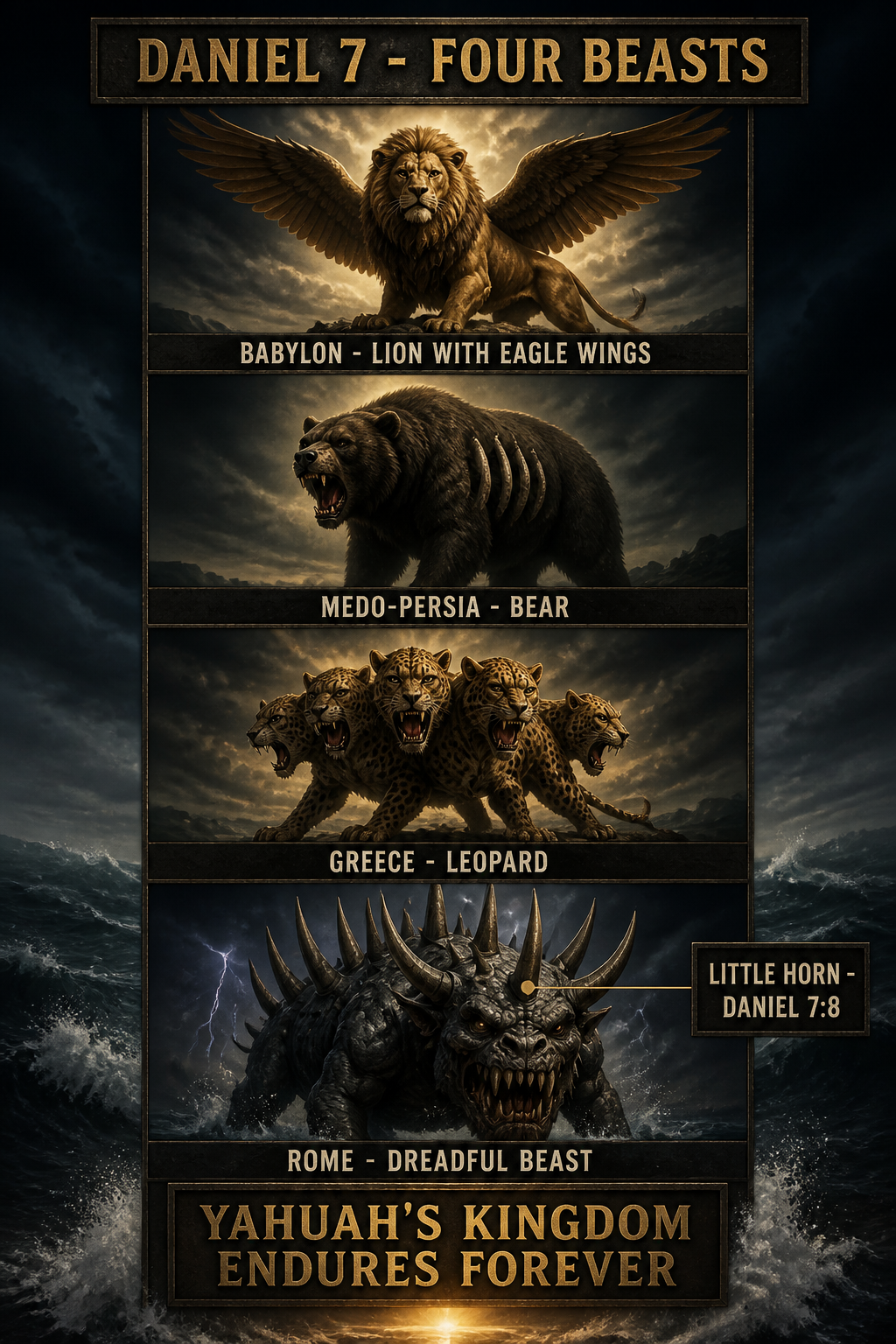
YOUTH ET Daniel7 Beasts
- Alps
- 1,000
- books
- wilderness
True/False: 1. False, 2. True
Lesson 4: How the Sabbath Was Changed
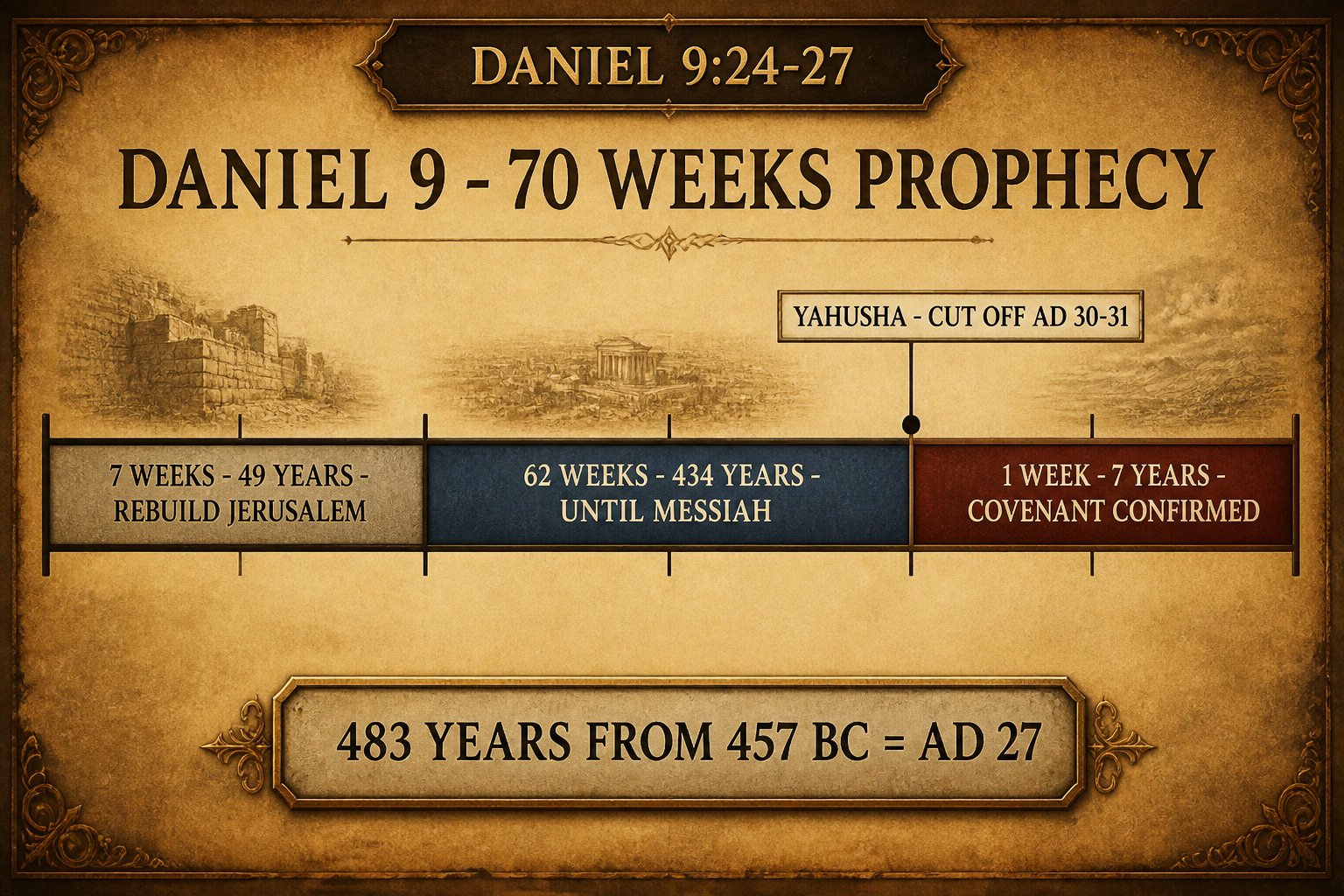
YOUTH ET 70 Weeks
- 321
- Sun
- times
- seventh
Multiple Choice: B (Constantine)
Lesson 5: Paganism Enters the Church
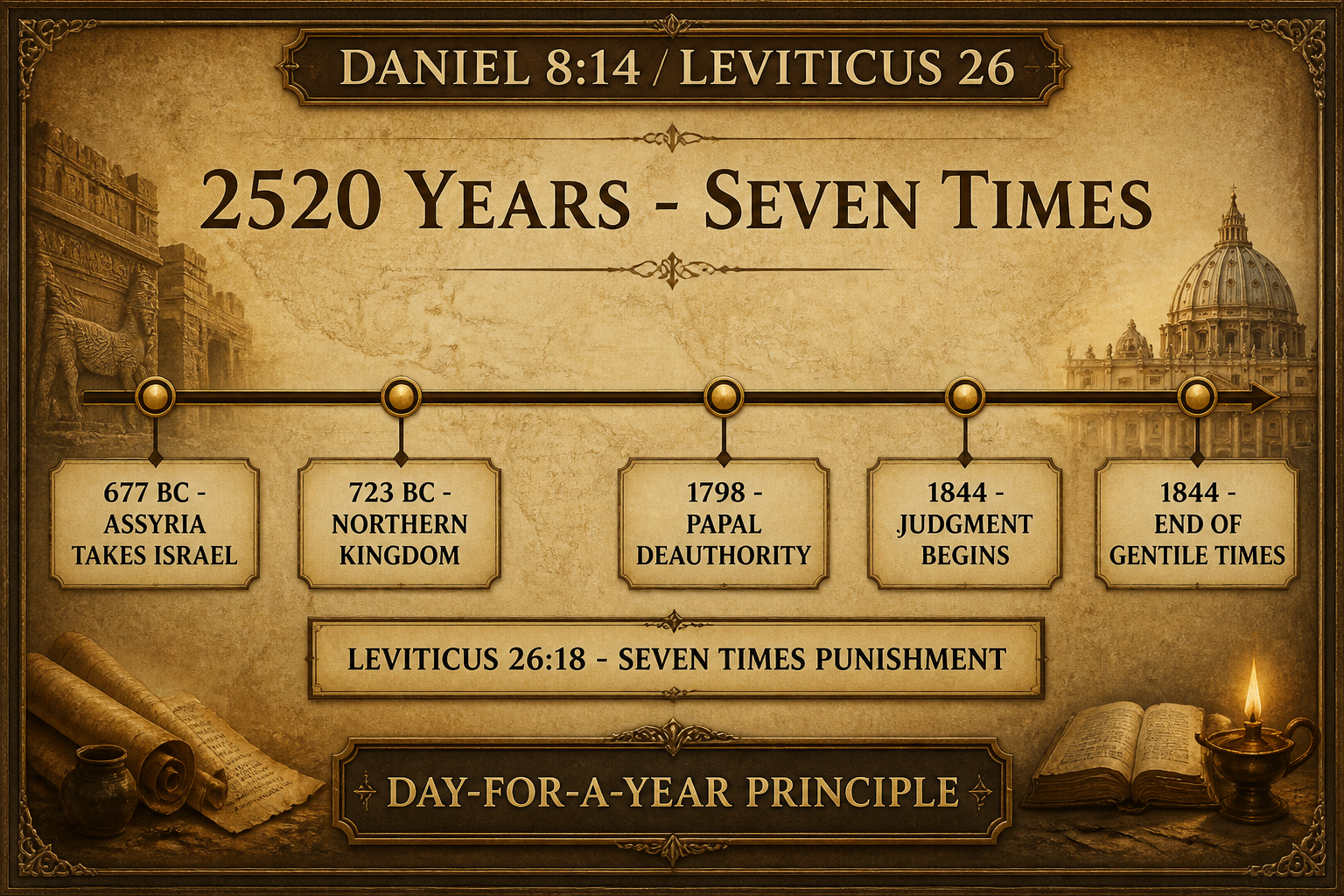
YOUTH ET 2520
- syncretism
- Saturnalia
- Solis
- pagan
True/False: False
Lesson 6: The 1260-Year Prophecy
- 3.5 (or three and a half)
- 1,260
- 538
- 1798
Multiple Choice: B (Napoleon's general captured the Pope)
Lesson 7: Religious Liberty
- religion
- wall
- lamb
- dragon
True/False: True
Lesson 8: What This Means for You
- Scripture
- commandments
- Yahusha
- ongoing
Checkboxes: A and C (Keeping Elohim's commandments; Having the faith of Yahusha)