1 Thessalonians 5:21
"Prove all things; hold fast that which is good."
Important Notice
This workbook is NOT about telling you what to believe. It's about learning how to think critically and ask good questions. We'll look at documented facts - things that are officially recorded - and learn to distinguish between facts, questions, and speculation.
What You'll Learn
How to evaluate claims using documented evidence
Historical facts about NASA's origins
What the Van Allen radiation belts are
Questions raised by technology differences
What Scripture says about the heavens
How to think critically like a Christian
8 lessons - about 25-35 minutes each
How to Use This Workbook
Use the 6Rs Learning Method to really learn this material:
1. RECEIVE Read the documented facts carefully
2. REFLECT Think about the questions raised
3. RECALL Write what you remember without looking
4. RECITE Discuss findings with others wisely
5. REVIEW Come back Day 1, 3, 7, 21, 60
6. RESPOND Research more and form your own conclusions
LESSON 1: NASA'S BEGINNINGS
To understand something, it helps to know its history. Let's look at some documented facts about how NASA began.
Operation Paperclip - Documented History
After World War II ended in 1945, the United States recruited German scientists through a program called Operation .
Documented Fact
Details
Number of scientists
About German scientists
Time period
1945-1959
Purpose
Use German expertise for Cold War advantage
Source
Declassified U.S. government documents
Key Person: Wernher von Braun
The most famous scientist recruited was Wernher von Braun:
In Nazi Germany: Built the V-2 rocket (a missile used in war)
At NASA: Became director of rocket development; designed the V rocket that took astronauts to the moon
NASA began: October 1,
The word "NASA" stands for National Aeronautics and Space Administration. Before NASA, there was NACA (National Advisory Committee for Aeronautics), which focused on airplane research.
Critical Thinking Point: We're not saying these facts prove anything specific. We're just documenting history. Facts are facts - what matters is learning to find them and think about them honestly.
Multiple Choice
1. Operation Paperclip recruited approximately:
○ A) 100 scientists ○ B) 1,600 scientists ○ C) 5,000 scientists
2. NASA began operations in:
○ A) 1945 ○ B) 1958 ○ C) 1969
RECALL - Close Your Book!
What was Operation Paperclip? Who was Wernher von Braun? When did NASA start?
THIS WEEK I WILL:
LESSON 2: THE VAN ALLEN RADIATION BELTS
Space has radiation. Around Earth, there are zones of intense radiation called the Van Allen belts. Let's learn what they are!
Basic Facts
The Van Allen belts are zones of trapped radiation held by Earth's field.
Belt
Altitude (km above Earth)
What's There
Inner Belt
~640-6,000 km
High-energy protons
Outer Belt
~13,000-58,000 km
Electrons
Discovered: 1958 by James Van using the Explorer 1 satellite.
The International Space Station (ISS) orbits at about 400 km - BELOW the Van Allen belts. That's why astronauts can stay there for months without serious radiation problems.
The Apollo Question
According to NASA, Apollo astronauts passed through the Van Allen belts on their way to the Moon. NASA says:
They went through the less intense edges of the belts
Total time in the belts: about hours
Protection: Aluminum spacecraft walls
NASA on Artemis program (2022):
Radiation "remains a challenge" requiring "better protection" than Apollo had.
Question to Think About
If Apollo successfully got through the belts with basic protection in the 1960s, why does NASA say they need "better protection" today?
Possible Answers (think about these):
Safety standards are higher today
Mission plans are different
We have better measuring tools now
Technology expectations have changed
True or False
○ True ○ False - 1. The ISS orbits inside the Van Allen belts.
○ True ○ False - 2. The Van Allen belts were discovered in 1958.
○ True ○ False - 3. Radiation in space is a real challenge for astronauts.
RECALL - Close Your Book!
What are the Van Allen belts? Where are they located? What question is raised about Apollo?
THIS WEEK I WILL:
LESSON 3: TECHNOLOGY THEN AND NOW
One interesting area to explore is how different technology was in the 1960s compared to today.
Apollo Computer vs. Your Phone
Feature
Apollo Computer (1969)
Modern Smartphone
Processor Speed
2 MHz
~2,000+ MHz
RAM
4 KB
~8,000,000 KB (8 GB)
Storage
72 KB
~128,000,000 KB
Your smartphone is literally MILLIONS of times more powerful than the computer that guided Apollo to the Moon! A basic calculator watch from the 1980s had more computing power than the Apollo guidance computer.
What Happened to the Tapes?
Documented Fact: The original Apollo 11 telemetry tapes (the recordings of data from the mission) were erased and reused in the early 1980s because NASA had a tape shortage. NASA announced this in 2006.
Retroreflectors on the Moon
Scientists today CAN bounce lasers off mirrors (retroreflectors) on the Moon's surface. This proves was placed on the Moon.
However: Both manned Apollo missions AND unmanned Soviet robots placed retroreflectors. So they prove hardware got there - but not necessarily HOW.
Multiple Choice
1. The Apollo guidance computer had how much RAM?
○ A) 4 KB ○ B) 4 MB ○ C) 4 GB
2. What happened to the original Apollo 11 tapes?
○ A) Stored safely ○ B) Erased and reused ○ C) Given to museums
3. Retroreflectors on the Moon prove that:
○ A) Humans definitely walked there ○ B) Hardware reached the Moon ○ C) Nothing
RECALL - Close Your Book!
How did Apollo's computer compare to your phone? What happened to the original tapes? What do retroreflectors prove?
TEACH-BACK
Explain to a parent or friend how 1960s computers compared to today's phones.
Person taught: Date:
THIS WEEK I WILL:
LESSON 4: OPERATION FISHBOWL (1962)
Before the Moon missions, the U.S. conducted nuclear tests in space. Let's look at the facts.
What Was It?
Operation Fishbowl was a series of high-altitude tests in 1962.
Test Name
Size
Altitude
Effects
Starfish Prime
1.4 megatons
400 km
EMP, artificial radiation belt
Bluegill
0.4 megatons
50 km
Aurora, radiation
What Happened During Starfish Prime?
Created an artificial radiation belt around Earth
Caused an EMP (electromagnetic pulse) that blacked out power in - 900 miles away!
Damaged multiple satellites
An EMP (electromagnetic pulse) is a burst of energy that can knock out electrical systems. The Starfish Prime test in 1962 knocked out streetlights and phone service in Hawaii from 900 miles away!
The Timeline
Van Allen belts discovered:
Operation Fishbowl: 1962
Apollo 11: 1969
Genesis 1:6-7
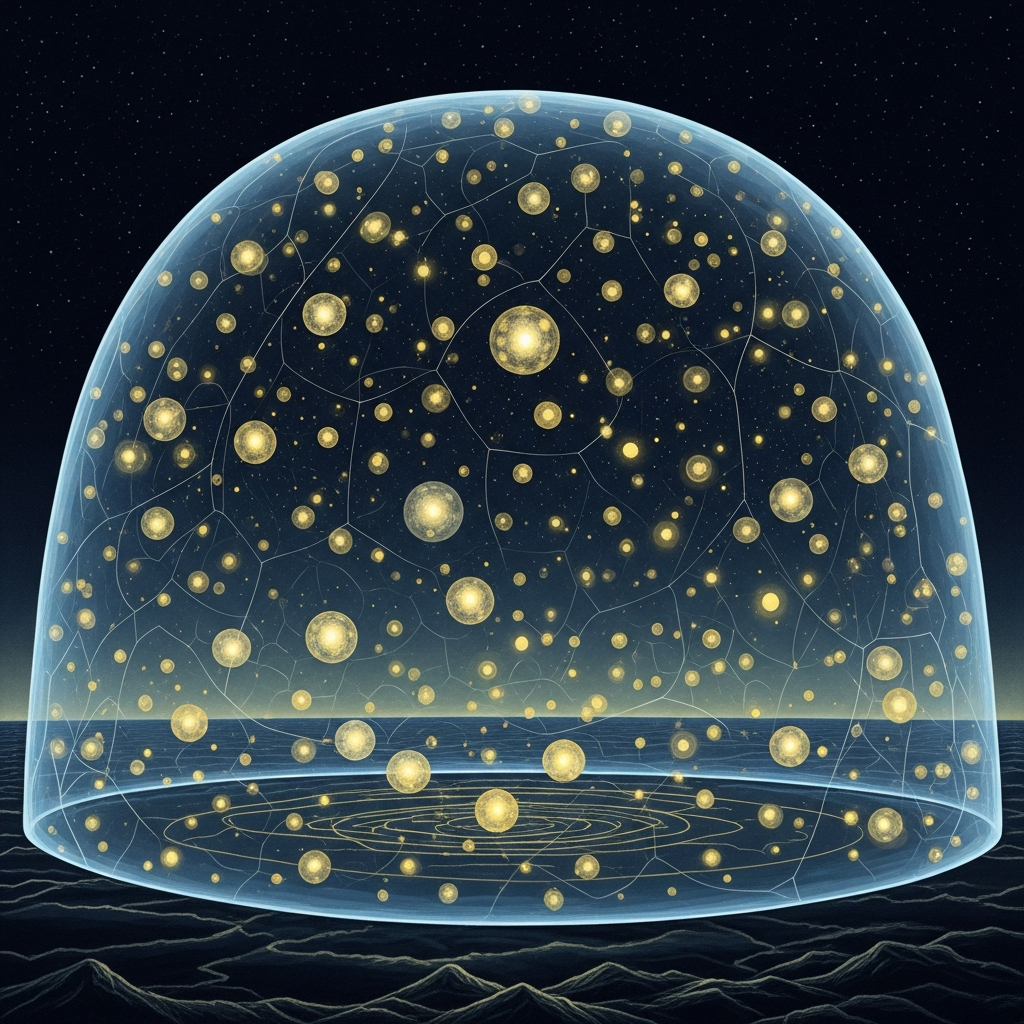
"And Elohim said, Let there be a firmament in the midst of the waters, and let it divide the waters from the waters. And Elohim made the firmament..."
Interesting Name: Why do you think this space nuclear test was named "Fishbowl"?
Multiple Choice
1. Operation Fishbowl happened in:
○ A) 1958 ○ B) 1962 ○ C) 1969
2. Starfish Prime caused:
○ A) Nothing ○ B) Power blackouts in Hawaii ○ C) A hurricane
RECALL - Close Your Book!
What was Operation Fishbowl? What did Starfish Prime do? What's the timeline before Apollo?
THIS WEEK I WILL:
LESSON 5: THE ANTARCTIC TREATY
Antarctica is unique - it's the only place on Earth with an international treaty restricting access. Let's learn the facts.
Basic Facts
Signed: December 1,
Original countries: 12 nations
Today: 54 nations are part of it
What the Treaty Does
Prohibits military activities
Prohibits nuclear explosions
Prohibits waste disposal
Freezes (but doesn't end) territorial claims
Can Anyone Go?
Technically yes, but with strict and permits. In practice, independent exploration is heavily regulated. No one can just sail there and explore freely.
Antarctica is the only continent where no one lives permanently. Research stations are there, but no one owns land or builds cities. The treaty keeps it that way.
Admiral Richard Byrd
U.S. Navy officer who led five major Antarctic expeditions (1928-1957).
Operation High Jump (1946-47): Took 4,700 personnel - official purpose was training and mapping.
Questions to Think About:
Why is Antarctica the only place with international restrictions on travel?
Why was Operation High Jump so large for a "mapping" mission?
True or False
○ True ○ False - 1. The Antarctic Treaty was signed in 1959.
○ True ○ False - 2. Anyone can freely explore Antarctica without permits.
○ True ○ False - 3. Operation High Jump had over 4,000 personnel.
RECALL - Close Your Book!
When was the Antarctic Treaty signed? What does it prohibit? What was Operation High Jump?
THIS WEEK I WILL:
LESSON 6: WHAT SCRIPTURE SAYS ABOUT THE HEAVENS
As believers, we should always compare what we hear with what Scripture says. Let's look at what the Bible teaches about the sky and heavens.
Genesis 1:6-8
"And Elohim said, Let there be a firmament in the midst of the waters, and let it divide the waters from the waters. And Elohim made the firmament, and divided the waters which were under the firmament from the waters which were above the firmament... And Elohim called the firmament Heaven."
The Hebrew word for "firmament" is raqia (). It comes from a root meaning "to beat out" or "spread out" - like hammering metal into a sheet.
Job 37:18
"Have you with him spread out the sky, which is strong, and as a molten looking glass?"
Job describes the sky as and like a molten (melted and hardened) mirror.
Isaiah 40:22
"It is he that sits upon the circle of the earth... that stretches out the heavens as a curtain, and spreads them out as a tent to dwell in."
Questions to Consider
What did the biblical writers understand about how the heavens work?
Does modern science match or differ from what Scripture describes?
Should believers question teachings that seem to contradict Scripture?
Important: Whatever conclusions you reach, let Scripture be your foundation. We're not telling you what to believe - we're encouraging you to study Scripture and think for yourself.
Multiple Choice
1. The Hebrew word "raqia" literally means:
○ A) Empty space ○ B) Something beaten/spread out ○ C) Clouds
2. Job 37:18 describes the sky as:
○ A) Soft and airy ○ B) Strong, like a molten mirror ○ C) Invisible
Scripture Memory: Job 37:18
"Have you with him spread out the sky, which is strong, and as a molten looking glass?"
RECALL - Close Your Book!
What does "raqia" mean? How does Job describe the sky? What does Isaiah say about the heavens?
TEACH-BACK
Discuss with someone what Scripture says about the heavens and firmament.
Person discussed with: Date:
THIS WEEK I WILL:
LESSON 7: CRITICAL THINKING PRINCIPLES
One of the most important skills you can learn is HOW to think - not just WHAT to think. Let's learn some principles!
How to Evaluate Any Claim
Identify the source: Is it official, third-party, or speculation?
Verify documentation: Can it be confirmed from primary sources?
Consider motives: What interests might influence the information?
Test against Scripture: Does it align with biblical truth?
Avoid extremes: Neither blind trust nor paranoid rejection
Apollo telemetry tapes were erased (NASA admitted this)
Operation Fishbowl happened (documented history)
Antarctic Treaty exists (international law)
What Remains Uncertain
Exact details of various space missions
Full capabilities of current technology
Information that hasn't been released
Christian Approach:
Focus on documented facts
Ask questions with humility
Trust Scripture above all
Avoid both gullibility and paranoia
Remember: our citizenship is in heaven!
Proverbs 25:2
"It is the glory of Elohim to conceal a thing: but the honour of kings is to search out a matter."
RECALL - Close Your Book!
What are the 5 principles for evaluating claims? What can we verify from this workbook?
Scripture Memory: 1 Thessalonians 5:21
"Prove all things; hold fast that which is good."
THIS WEEK I WILL:
LESSON 8: SUMMARY AND YOUR CONCLUSIONS
You've learned a lot of documented facts. Now it's time to think through what YOU believe - and why.
Documented Facts Summary
Topic
Key Documented Fact
NASA Origins
Operation Paperclip recruited 1,600 German scientists
Van Allen Belts
Radiation zones at 640+ km altitude
Apollo Technology
Original telemetry tapes were erased
Operation Fishbowl
Nuclear tests in space, 1962
Antarctic Treaty
Restricts access, 54 nations involved
Scripture
Describes a "firmament" (raqia) as strong/solid
Questions Worth Researching More
Why were some technologies "lost" rather than preserved?
Why is Antarctica uniquely restricted?
What does Scripture really teach about the cosmos?
How should Christians approach these questions?
YOUR Conclusions
Based on what you learned, what do you believe about...
The space program?
How to evaluate claims in general?
What Scripture teaches about the heavens?
Romans 12:2
"And be not conformed to this world: but be ye transformed by the renewing of your mind, that ye may prove what is that good, and acceptable, and perfect, will of Elohim."
Remember: The goal isn't to believe what someone tells you to believe. The goal is to:
Learn to think critically
Evaluate evidence honestly
Let Scripture be your foundation
Form your OWN conclusions based on research
FINAL RECALL
List the 6 key documented facts from this workbook. What is the Christian approach to uncertain topics?
TEACH-BACK
Share with someone how to think critically about claims you hear.
Person taught: Date:
THIS WEEK I WILL:
Spaced Review Tracker
Review this workbook at these intervals for lasting retention: