"Your word is a lamp to my feet and a light to my path." – Psalm 119:105
Many people think "Torah" just means "law" – like rules you have to follow or else! But that's not the full picture.
Torah comes from the Hebrew root "yarah" which means "to teach" or "to aim" (like an arrow at a target). Torah is Yahuah's instruction – it shows us where to aim our lives!
Think of it this way:
Torah = Instruction (teaching us how to live)
Sin (chatta) = Missing the mark (like an arrow that misses the target)
Moreh = Teacher (from the same root as Torah!)
Torah isn't just a list of "do's and don'ts" – it's Yahuah's loving guidance showing us how to live in a way that pleases Him and keeps us on target!
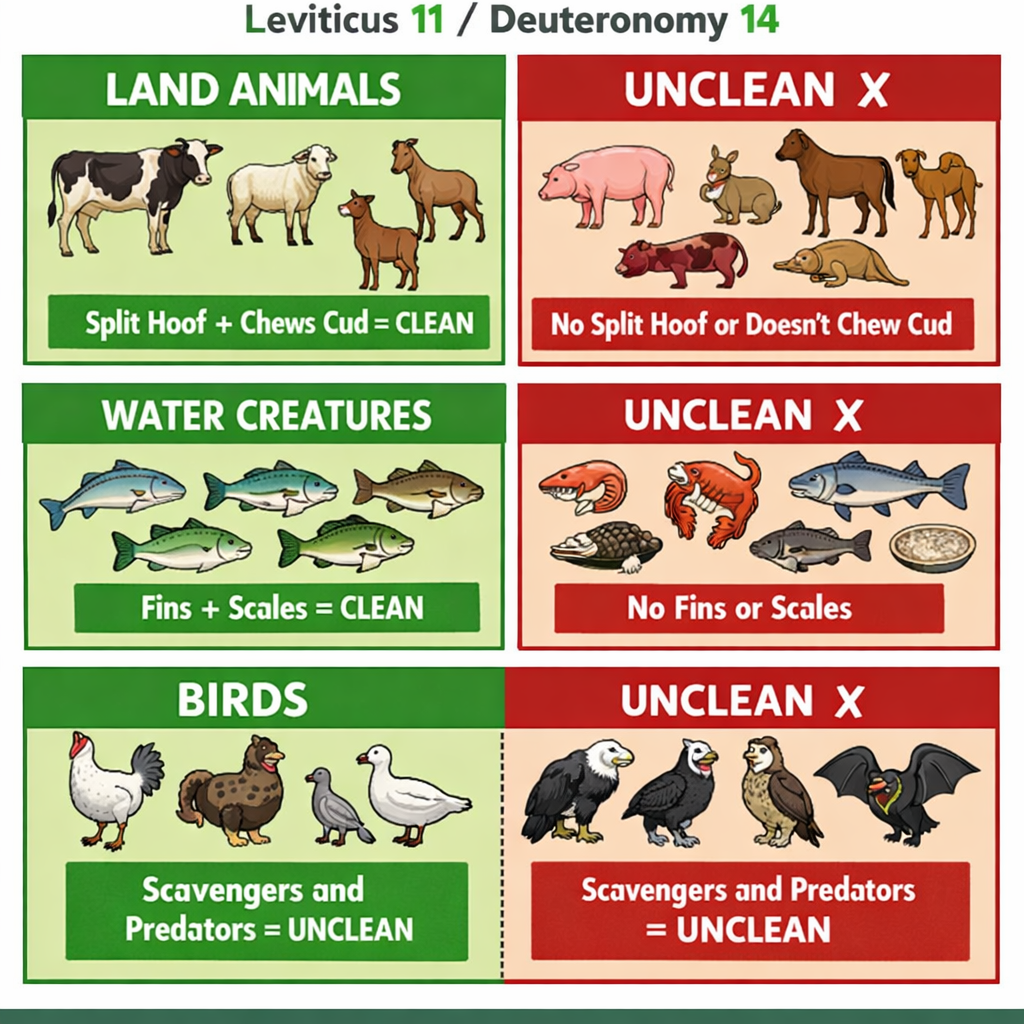
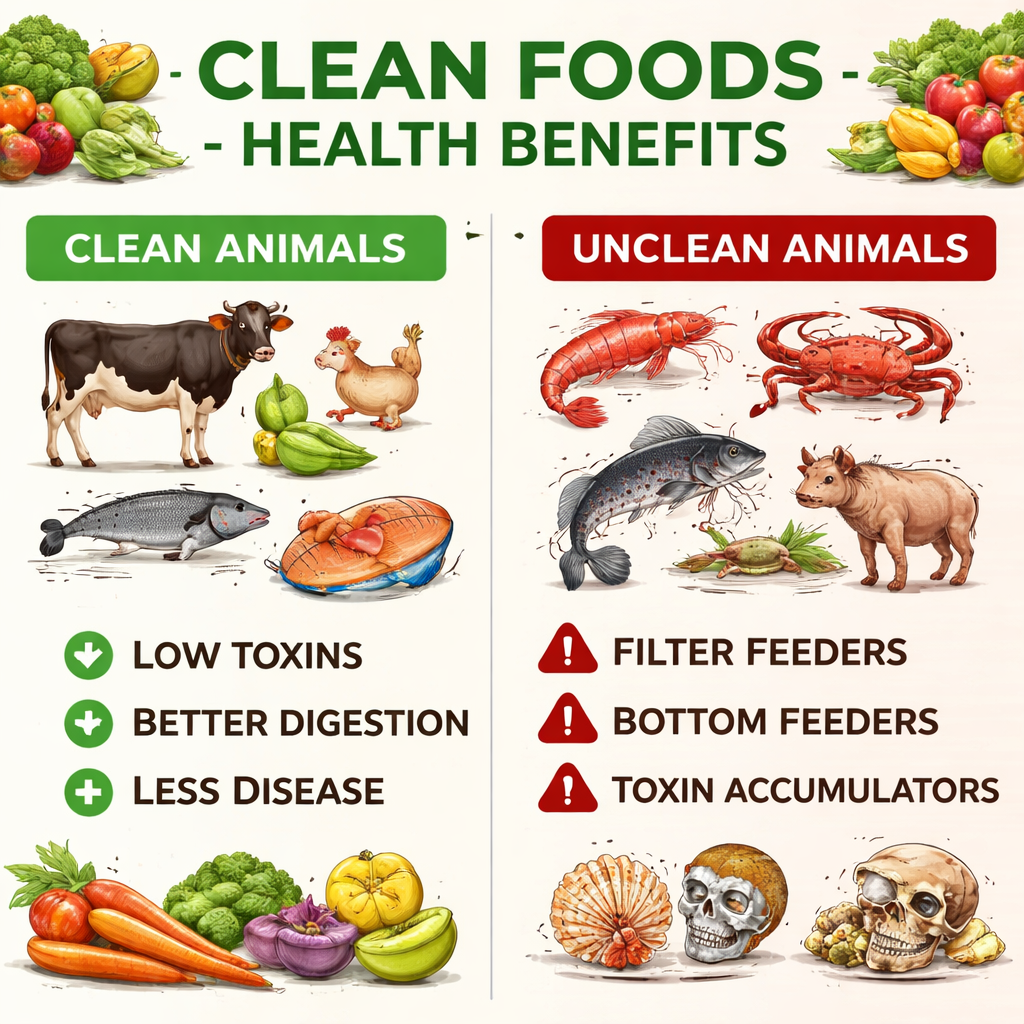
Clean Foods Fish
💭 REFLECT
Multiple Choice:
The Hebrew root of "Torah" (yarah) means:
a) To punish b) To teach/aim c) To condemn d) To forget
"Sin" (chatta) in Hebrew literally means:
a) Being evil b) Breaking rules c) Missing the mark d) Going to jail
Torah is best understood as:
a) Harsh rules b) Old Testament only c) Yahuah's instruction d) Just for Jews
Fill in the Blanks:
Torah means _____________, not just "law."
The Hebrew word for sin means "missing the _____________."
Psalm 119:105 calls Yahuah's Word a _____________ to our feet.
Torah shows us where to _____________ our lives.
True or False:
T / F — Torah is only a list of harsh rules to follow.
T / F — The root of "Torah" means to teach or instruct.
T / F — Loving Torah is optional for believers.
Explain the connection between Torah (teaching), sin (missing the mark), and moreh (teacher).
🗣️ RECITE
Explain to a friend why "law" is not the best translation of "Torah."
🔄 REVIEW
Mark when you review this lesson: Day 1 ☐ | Day 3 ☐ | Day 7 ☐ | Day 21 ☐
✅ RESPOND
Write one area of your life where you need Yahuah's instruction to help you "aim" better:
Clean Foods Cow
2 Did Yahusha End the Torah?
📖 RECEIVE
"Do not think that I came to abolish (destroy) the Torah or the Prophets. I did not come to abolish but to fulfill." – Matthew 5:17
This is one of the most important verses to understand! Yahusha Himself said He did NOT come to destroy the Torah. Let's look at the Greek words:
Kataluo = Abolish, tear down, destroy
Pleroo = Fulfill, fill up, bring to fullness
Yahusha didn't come to tear down the Torah – He came to show us its full meaning! When a glass is "filled" with water, the glass isn't destroyed – it's completed!
He went on to say: "Until heaven and earth pass away, not one yod (smallest Hebrew letter) or one tittle (tiny mark) will pass from the Torah until all is accomplished" (verse 18).
Some people say "fulfill" means "end" or "finish so we don't need it anymore." But that's not what the Greek word means! A prophecy is "fulfilled" when it comes true – that doesn't mean it stops being true!
💭 REFLECT
Multiple Choice:
"Kataluo" (abolish) means:
a) Build up b) Tear down/destroy c) Teach d) Ignore
"Pleroo" (fulfill) means:
a) End permanently b) Fill up/bring to fullness c) Cancel d) Forget
What's the smallest Hebrew letter mentioned?
a) Aleph b) Yod c) Lamed d) Shin
Fill in the Blanks:
Yahusha said "I did not come to _____________ but to fulfill."
The Greek word for "abolish" is _____________.
The Greek word for "fulfill" is _____________.
Not one _____________ or tittle will pass until heaven and earth pass.
True or False:
T / F — Yahusha said He came to end the Torah's authority.
T / F — "Fulfill" and "abolish" mean the same thing.
T / F — Even small details in Torah still matter according to Yahusha.
Quote or summarize Matthew 5:17 from memory.
Clean Foods Chart
🗣️ RECITE
Teach someone the difference between "abolish" and "fulfill."
🔄 REVIEW
Mark when you review: Day 1 ☐ | Day 3 ☐ | Day 7 ☐ | Day 21 ☐
✅ RESPOND
Why do you think Yahusha started with "Do not think..."? What wrong idea was He correcting?
3 Faith Makes Torah Stronger
📖 RECEIVE
"Do we then make void the Torah through faith? Certainly not! On the contrary, we establish the Torah." – Romans 3:31
Some people say, "Now that we have faith, we don't need Torah anymore." But Paul said the exact opposite!
The Greek word "histemi" (establish) means "to make stand firm." Faith doesn't kick Torah out – faith makes Torah stand even stronger!
Later in Romans 7:12, Paul says: "The Torah is holy, and the commandment holy and just and good."
If Torah was bad, why would Paul call it holy and good?
The problem isn't the Torah – the Torah is perfect! The problem is our sinful nature that rebels against it. That's why we need grace and the Spirit to help us obey!
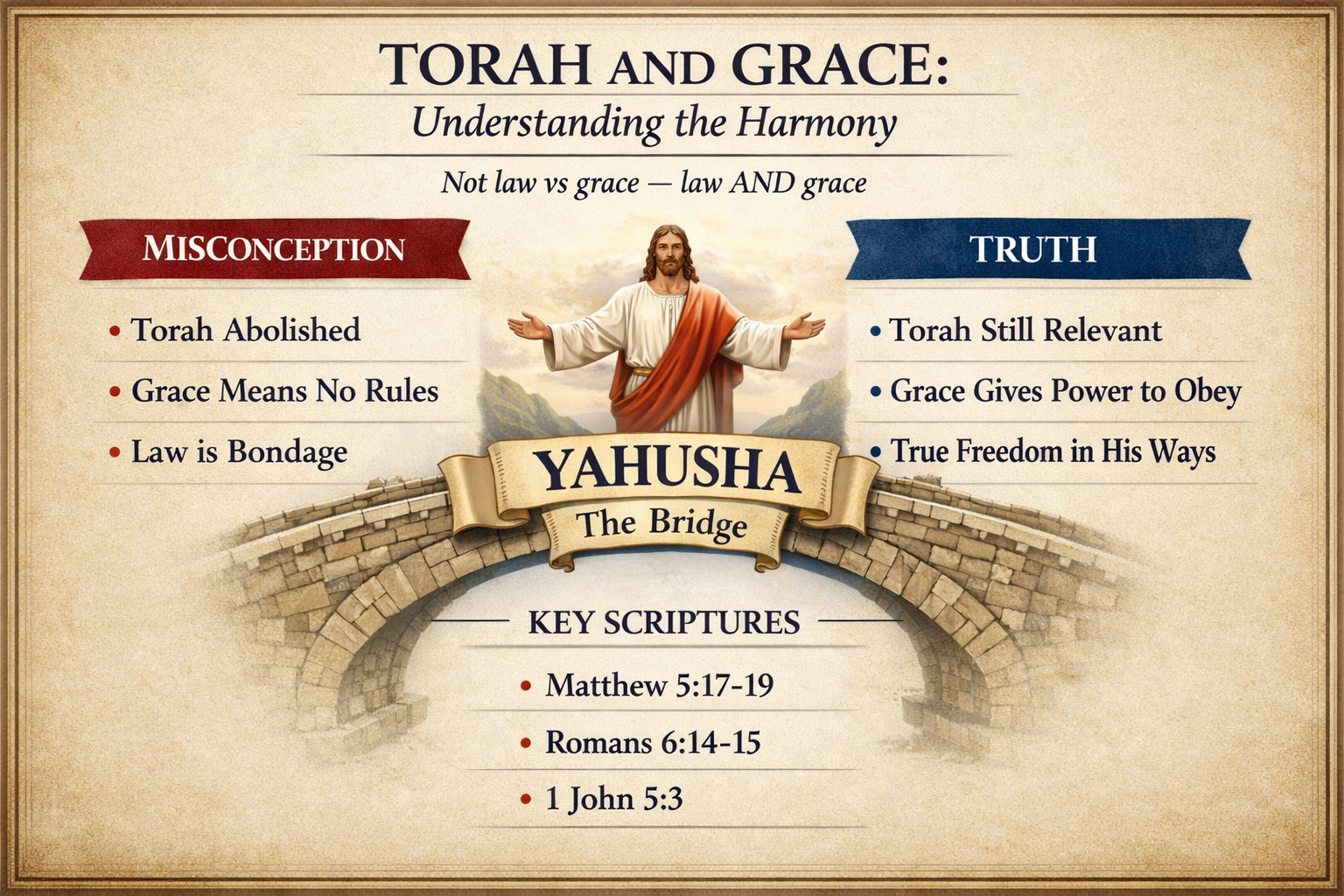
Torah vs Grace Comparison
💭 REFLECT
Multiple Choice:
"Histemi" (establish) means:
a) Tear down b) Make stand firm c) Ignore d) Question
Paul's strongest denial is the phrase:
a) "Maybe" b) "Certainly not!" (me genoito) c) "Probably" d) "Perhaps"
In Romans 7:12, Paul calls the Torah:
a) Sinful and weak b) Holy, just, and good c) Outdated d) Optional
Fill in the Blanks:
Faith does not _____________ (void) Torah.
Instead, faith _____________ (establishes) Torah.
The Torah is holy, just, and _____________.
The problem is not Torah but our sinful _____________.
True or False:
T / F — Faith cancels the need for Torah.
T / F — Paul contradicts himself about Torah in Romans.
T / F — Torah is holy according to Paul.
State Romans 3:31 from memory.
🗣️ RECITE
Explain how Romans 7 actually defends Torah.
🔄 REVIEW
Mark when you review: Day 1 ☐ | Day 3 ☐ | Day 7 ☐ | Day 21 ☐
✅ RESPOND
Name one Torah command you want to "establish" in your life through faith:
4 What Does "Under the Law" Mean?
📖 RECEIVE
"For sin shall not have dominion over you, for you are not under law but under grace." – Romans 6:14
This verse confuses a lot of people! But look at what Paul says right after:
"What then? Shall we sin because we are not under law but under grace? Certainly not!" (Romans 6:15)
So "not under law" doesn't mean "free to sin"! What does it mean?
"Under Law"
"Under Grace"
Under the condemnation/penalty of the law
Under Yahuah's favor and forgiveness
Trying to earn salvation by works
Saved by grace through faith
Slave to sin's power
Free from sin's dominion
Grace removes the condemnation of breaking the law – it doesn't remove the law itself! Grace actually empowers us to obey!
💭 REFLECT
Multiple Choice:
"Under law" in Romans 6 means:
a) Required to obey b) Under condemnation/penalty c) Free to do anything d) Without rules
Paul's response to "Should we sin because we're under grace?" is:
a) "Sure!" b) "Maybe" c) "Certainly not!" d) "Sometimes"
Grace delivers us from sin's:
a) Definition b) Dominion/power c) Existence d) Meaning
Fill in the Blanks:
Grace delivers from sin's _____________ over us.
Being under law means under its _____________ power.
Grace empowers us to _____________, not to sin.
Romans 6 contrasts slavery to sin vs slavery to _____________.
True or False:
T / F — "Under grace" means lawlessness is allowed.
T / F — Condemnation is removed, but moral standards remain.
T / F — Grace replaces the need for obedience.
Summarize Romans 6:14-15 in your own words.
🗣️ RECITE
Explain to a friend what "under law" really means.
🔄 REVIEW
Mark when you review: Day 1 ☐ | Day 3 ☐ | Day 7 ☐ | Day 21 ☐
✅ RESPOND
Write a short statement rejecting sin's control because you're under grace:
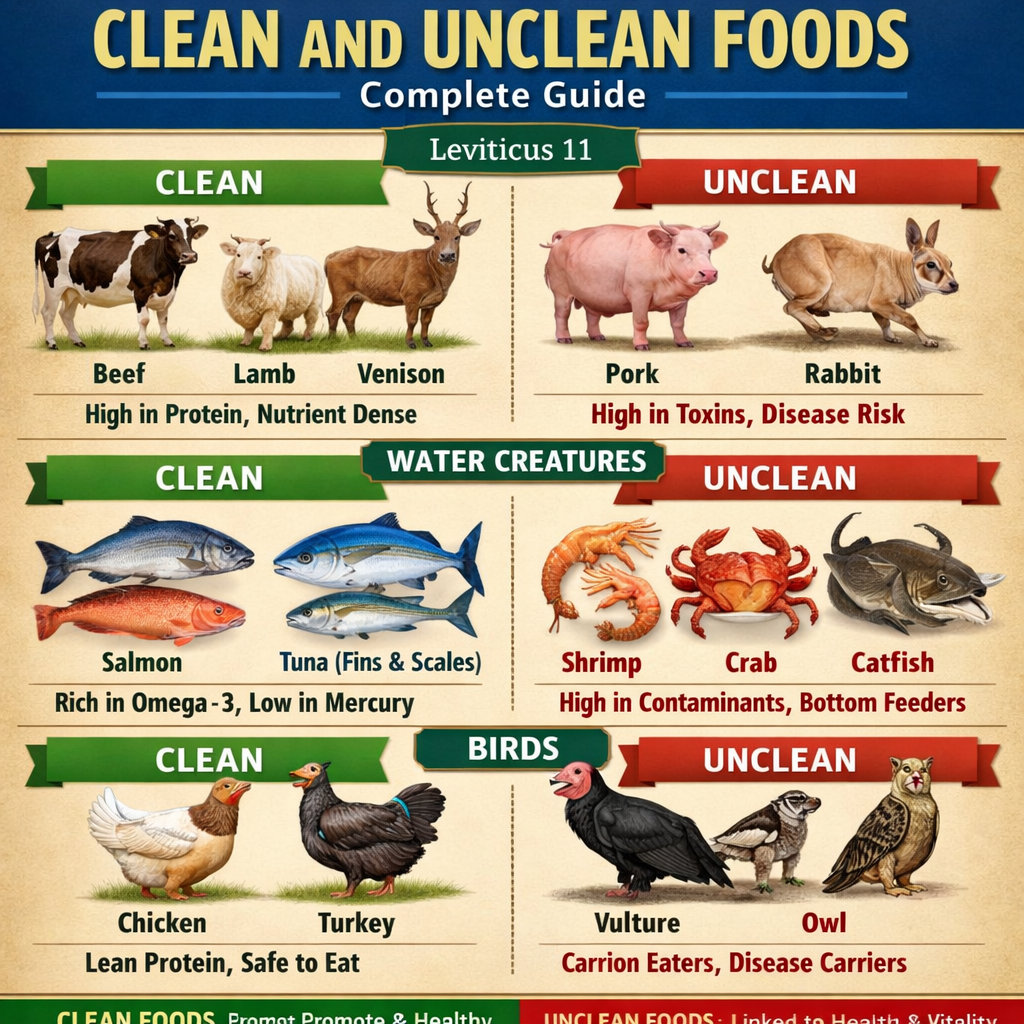
Clean Unclean Foods Detailed
5 Faith That Works
📖 RECEIVE
"For as the body without the spirit is dead, so faith without works is dead also." – James 2:26
James asks a powerful question: What good is it if someone claims to have faith but has no actions to show it?
Think of it like a tree:
Roots = Faith (the foundation, what's inside)
Fruit = Works (what grows from the faith)
A tree with no fruit isn't much of a tree! And faith with no works isn't living faith!
James calls Torah the "law of liberty" (James 1:25) – obeying it sets us free, not chains us down!
We're NOT saved BY our works – but real faith PRODUCES works! Works are the fruit, not the root, of salvation.
💭 REFLECT
Multiple Choice:
James calls the Torah:
a) Law of bondage b) Law of liberty c) Law of punishment d) Outdated law
Faith without works is:
a) Strong b) Growing c) Dead d) Optional
Works are like what part of a tree?
a) Roots b) Fruit c) Trunk d) Bark
Fill in the Blanks:
Works _____________ (complete/perfect) faith.
James calls Torah the "law of _____________."
Faith + works = _____________ faith.
Works are the _____________, not the root, of salvation.
True or False:
T / F — Works save us.
T / F — True faith produces action.
T / F — The "law of liberty" chains us down.
State James' conclusion about faith without works.
🗣️ RECITE
Explain "law of liberty" in your own words.
🔄 REVIEW
Mark when you review: Day 1 ☐ | Day 3 ☐ | Day 7 ☐ | Day 21 ☐
✅ RESPOND
Name one act of obedience you'll do this week that flows from love for Yahuah:
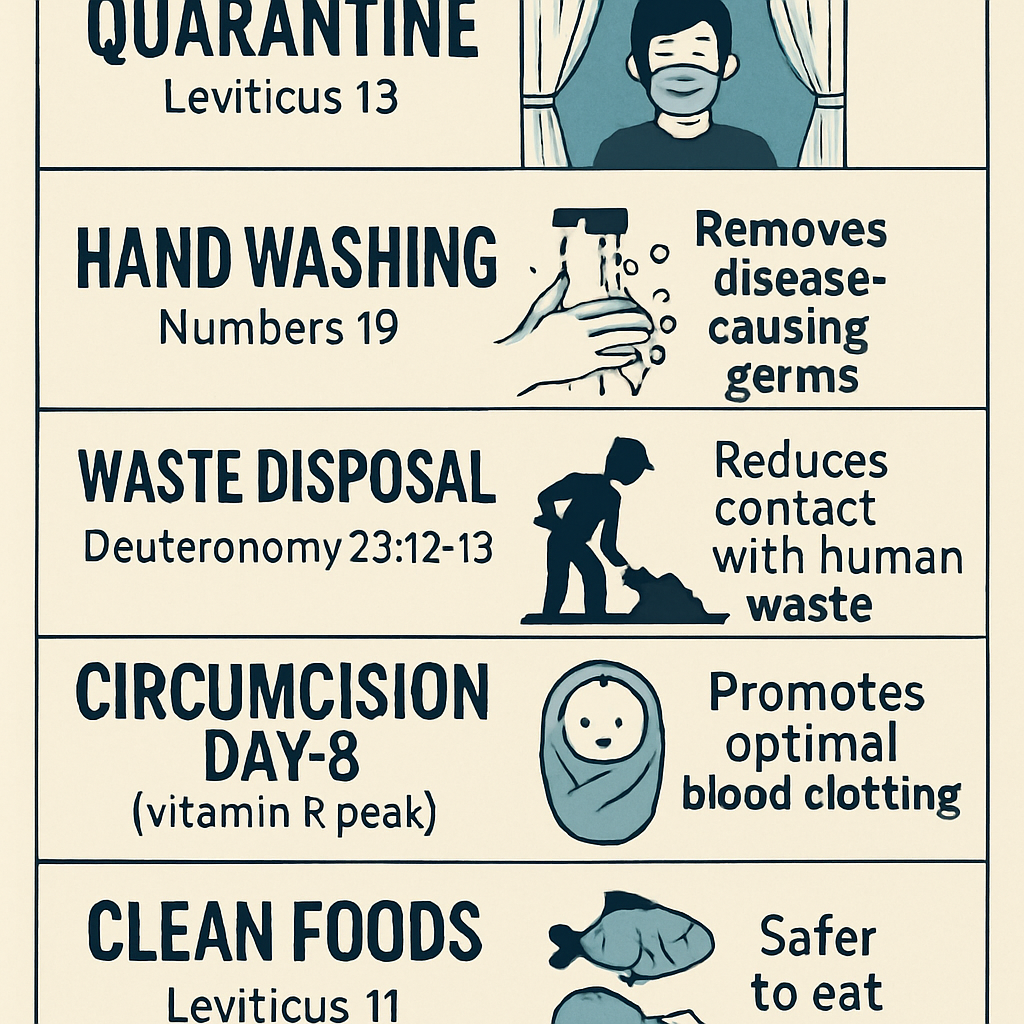
Clean Foods Health Science
6 Torah Written on Our Hearts
📖 RECEIVE
"I will put My laws in their mind and write them on their hearts; and I will be their Elohim, and they shall be My people." – Hebrews 8:10 (quoting Jeremiah 31:33)
The New Covenant doesn't get rid of Torah – it puts Torah in a new place!
Old Covenant
New Covenant
Torah on stone tablets
Torah on hearts
External rules
Internal desire to obey
Human effort
Spirit's power
Levitical priesthood
Yahusha as High Priest
Animal sacrifices
Yahusha's once-for-all sacrifice
The SAME Torah, but now written inside us, and the Spirit gives us the power to obey!
The New Covenant changes the location (heart instead of stone) and the power (Spirit instead of self-effort), but NOT the moral content of Torah!
💭 REFLECT
Multiple Choice:
The New Covenant puts Torah:
a) In the trash b) On hearts c) Only in museums d) In a different book
The power to obey in the New Covenant comes from:
a) Human effort b) The Spirit c) Willpower d) Good intentions
What becomes "obsolete" according to Hebrews?
a) Torah's morality b) The Levitical/sacrificial system c) Love d) All commandments
Fill in the Blanks:
Same Torah content, new _____________ location.
The priesthood changed from Levi to _____________ order.
Animal sacrifices were replaced by Yahusha's _____________.
The Spirit causes us to _____________ and keep His statutes.
True or False:
T / F — The New Covenant erases Torah's commands.
T / F — The Spirit writes Torah on our hearts.
T / F — In the New Covenant, obedience is impossible.
Explain the two big changes: location and power.
Biblical Health Laws
🗣️ RECITE
Teach someone about Hebrews 8:10 and what "Torah on hearts" means.
🔄 REVIEW
Mark when you review: Day 1 ☐ | Day 3 ☐ | Day 7 ☐ | Day 21 ☐
✅ RESPOND
Pray Ezekiel 36:26-27 personally and write any thoughts:
7 What Was Nailed to the Cross?
📖 RECEIVE
"Having wiped out the handwriting of requirements that was against us, which was contrary to us. And He has taken it out of the way, having nailed it to the cross." – Colossians 2:14
Some people say "the law was nailed to the cross" – but look carefully at what Paul actually wrote!
The Greek word here is cheirographon – which means "handwritten note of debt" (like an IOU). This was the record of our sins, our "guilty verdict," NOT the Torah itself!
Think of it like this:
Torah = The speed limit sign (telling you the rules)
Cheirographon = The ticket you got for speeding (the record of your violation)
Yahusha didn't tear down the speed limit sign – He paid your ticket!
What was nailed to the cross was the record of our debt (our sins), not Torah itself. The curse came from BREAKING the law, and that curse was removed!
💭 REFLECT
Multiple Choice:
"Cheirographon" means:
a) Law code b) Handwritten debt note c) Torah scroll d) New rules
What was nailed to the cross?
a) Torah b) The record of our sins c) All commandments d) Nothing
Col 2:16-17 calls feasts a "shadow" of:
a) Nothing b) Things to come (Messiah) c) Old things d) Bad things
Fill in the Blanks:
What was nailed? The record of our _____________.
Cheirographon = handwritten _____________ note.
The curse came from _____________ the law.
Yahusha took away condemnation, not _____________ standards.
True or False:
T / F — Paul says Torah itself was nailed to the cross.
T / F — The IOU/debt of our sin was removed.
T / F — "Shadow" means the feasts are bad.
Explain in one sentence what was actually nailed to the cross.
Mark when you review: Day 1 ☐ | Day 3 ☐ | Day 7 ☐ | Day 21 ☐
✅ RESPOND
Write a thank-you prayer for your sin debt being paid:
8 Walking by the Spirit
📖 RECEIVE
"That the righteous requirement of the law might be fulfilled in us who do not walk according to the flesh but according to the Spirit." – Romans 8:4
Here's the beautiful conclusion: The Spirit helps us actually LIVE OUT what Torah requires!
The "fruit of the Spirit" (Galatians 5:22-23) – love, joy, peace, patience, kindness, goodness, faithfulness, gentleness, self-control – these perfectly align with Torah's heart!
And 1 John 3:4 defines sin clearly: "Sin is lawlessness (anomia = without law)"
If sin is "being without law," then living righteously means living WITH the law – by the Spirit's power!
"For this is the love of Elohim, that we keep His commandments. And His commandments are not burdensome." – 1 John 5:3
True freedom is NOT freedom to sin – it's freedom FROM sin's power! The Spirit empowers us to walk in Torah's righteousness with JOY, not burden!
💭 REFLECT
Multiple Choice:
"Anomia" (lawlessness) means:
a) With law b) Without law c) Perfect law d) Old law
According to 1 John 5:3, Yahuah's commands are:
a) Heavy burdens b) Not burdensome c) Impossible d) Optional
The righteous requirement of the law is fulfilled by:
a) Human effort b) Ignoring it c) Walking in the Spirit d) Luck
Fill in the Blanks:
Sin = _____________ (anomia, without law).
Love is shown by keeping _____________.
Spirit-led life produces the _____________ of the Spirit.
True liberty = freedom from sin's _____________.
True or False:
T / F — Liberty means no standards at all.
T / F — Commands are heavy burdens for believers.
T / F — The Spirit empowers us to obey.
Quote or paraphrase 1 John 3:4 from memory.
🗣️ RECITE
Explain why love and obedience cannot be separated.
🔄 REVIEW
Mark when you review: Day 1 ☐ | Day 3 ☐ | Day 7 ☐ | Day 21 ☐
✅ RESPOND
Choose one fruit of the Spirit to practice intentionally this week: