2 Timothy 2:15
"Study to show yourself approved unto Elohim, a workman that needs not to be ashamed, rightly dividing the word of truth."
ABOUT THIS WORKBOOK
Did you know that the Bible wasn't written in English? The Old Testament was written in Hebrew and the New Testament in Greek. Sometimes when we translate words into English, we lose important meanings!
In this workbook, you'll discover:
The original Hebrew names for Elohim (God)
Why "Jesus" and "Joshua" are the same name
What "Torah" really means (hint: it's NOT just "law"!)
The difference between "grace" and "mercy" in Hebrew
How to use Strong's Concordance numbers
HOW TO USE THIS WORKBOOK
The 6 Rs Learning Method
1. RECEIVE Read the Hebrew/Greek word studies carefully.
2. REFLECT Answer the questions to think deeply about what you learned.
3. RECALL Close the book and write key words from memory.
4. RECITE Teach someone else what you learned!
5. REVIEW Come back on Day 1, 3, 7, 21 to review.
6. RESPOND Apply what you learned to your Bible reading.
LESSON 1: ELOHIM - The Mighty Ones
YOUTH Word Yahuah
אֱלֹהִים (Elohim)Strong's H430
Greek Equivalent: TheosG2316
What Does Elohim Mean?
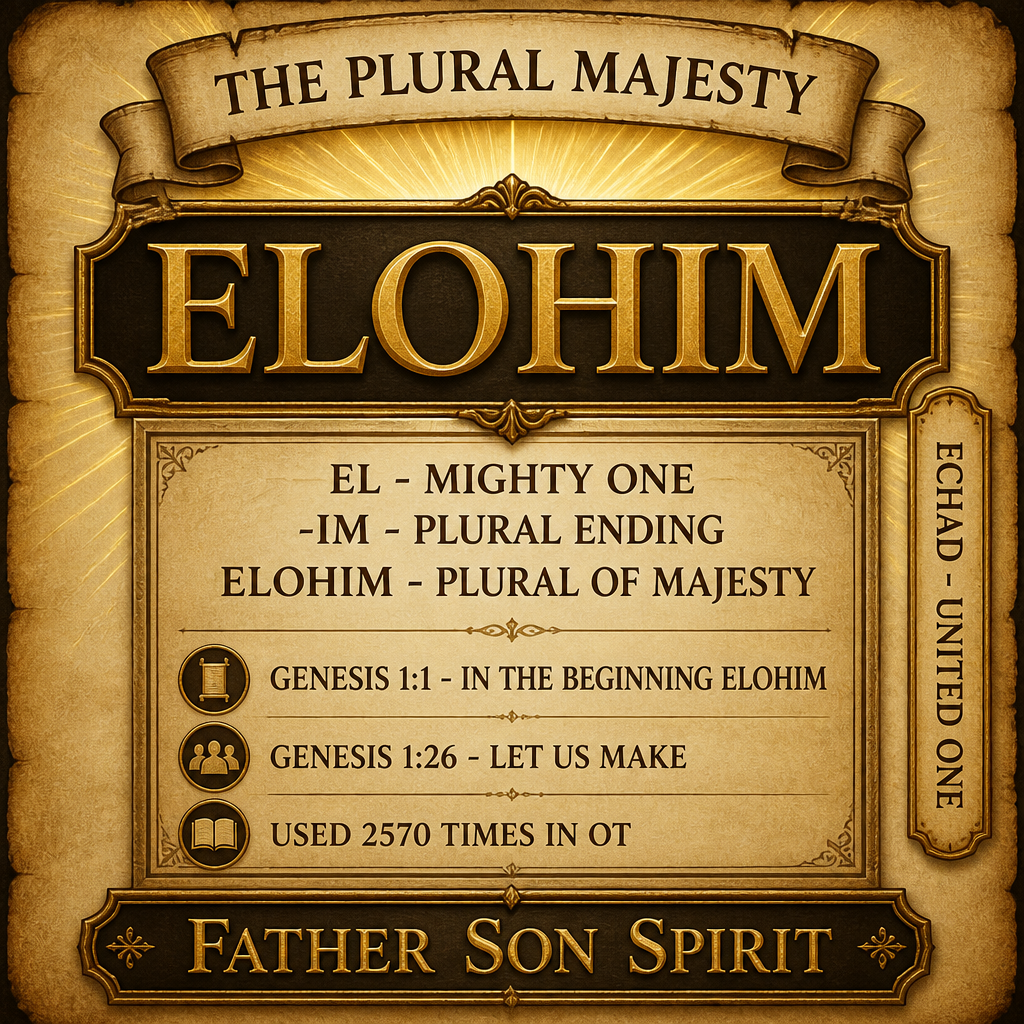
"Elohim" literally means "" or "Powers." It's the very first name used for the Creator in the Bible!
Genesis 1:1
"In the beginning Elohim created the heavens and the earth."
Interesting Fact: A Plural Word!
In Hebrew, "Elohim" is a plural word (like saying "dogs" instead of "dog"). But when it refers to the one true Creator, the verbs stay (singular)!
This is called the "plural of majesty" - it shows His greatness and power.
Why Not Just Say "God"?
The word "God" is actually a word, not Hebrew. "Elohim" is the original word Scripture uses. When we use "Elohim," we connect with what the Bible actually says!
Multiple Choice
1. "Elohim" literally means:
○ A) Lord ○ B) Mighty Ones/Powers ○ C) Holy Spirit ○ D) King
2. When Elohim refers to the Creator, the verbs are:
○ A) Plural ○ B) Singular ○ C) Neither ○ D) Both
True or False
1. Elohim is always a singular word in Hebrew. ○ True ○ False
2. Genesis 1:1 uses "Elohim" as the first name for the Creator. ○ True ○ False
RECALL EXERCISE
Close this workbook. Write from memory:
The Hebrew word for "Mighty Ones"
Its Strong's number
What verse first uses this name?
TEACH-BACK CHALLENGE
Explain to a family member why "Elohim" is more accurate than "God."
Person taught: Date:
SCRIPTURE MEMORY: Genesis 1:1
"In the beginning Elohim created the heavens and the earth."
LESSON 2: EL - The Mighty One (And His Compound Names)
YOUTH Word Yahusha
אֵל (El)Strong's H410
Meaning: "Mighty One," "Strength," or "Power"
El vs. Elohim
Think of it this way:
El = Singular (one Mighty One)
Elohim = Plural form (shows fullness of power)
Compound Names of El
The Hebrew Scriptures combine "El" with other words to reveal more about our Creator:
Name
Meaning
Where Found
El Shaddai
Elohim Almighty / All-Sufficient One
Genesis 17:1
El Elyon
Elohim Most High
Genesis 14:18
El Olam
The Everlasting Elohim
Genesis 21:33
Fill in the Blanks
1. El Shaddai means "Elohim " or "The All-Sufficient One."
2. El Elyon means "Elohim Most ."
3. El Olam means "The Elohim."
Multiple Choice
1. El Shaddai is first found in:
○ A) Exodus 3 ○ B) Genesis 17:1 ○ C) Psalm 91 ○ D) Isaiah 40
2. The difference between El and Elohim is:
○ A) Different gods ○ B) Singular vs. plural forms ○ C) Old vs. New Testament ○ D) Hebrew vs. Greek
RECALL
Write the three compound names of El and their meanings without looking.
APPLICATION
LESSON 3: ADONAI - Lord and Master
YOUTH Word Elohim
אֲדֹנָי (Adonai)Strong's H136
Greek Equivalent: KyriosG2962
What Does Adonai Mean?
"Adonai" means "," "Master," or "Sovereign." It shows that Yahuah has authority over us like a king over his subjects.
Why Two Different "Lords" in Your Bible?
Look carefully in most English Bibles. You'll see:
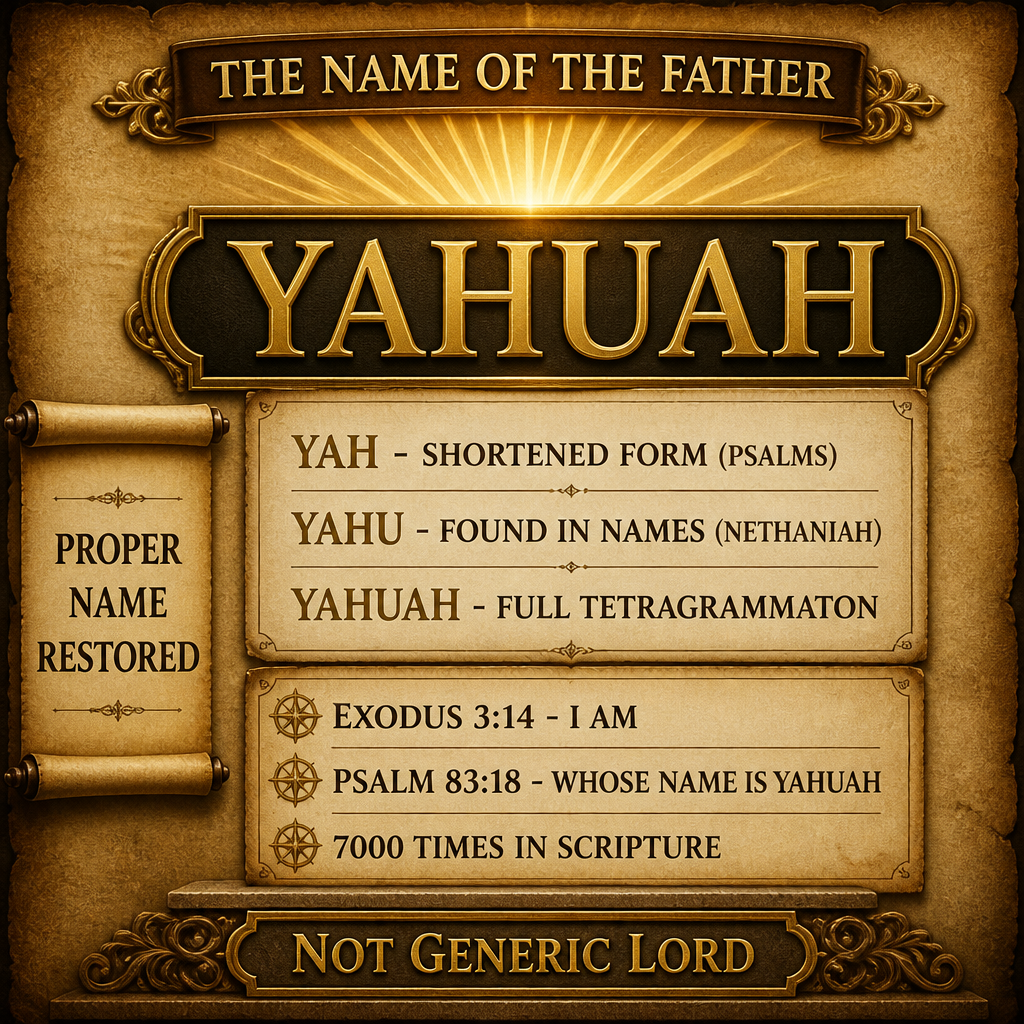
LORD (all capitals) = The Hebrew name YHWH (Yahuah)
Lord (regular letters) = Adonai
Long ago, Jewish people were afraid of saying Yahuah's name wrong. So whenever they saw YHWH in Scripture, they would say "" instead. English Bibles continued this tradition by writing "LORD."
Multiple Choice
1. Adonai emphasizes:
○ A) Creation ○ B) Master/servant relationship ○ C) Judgment ○ D) Holiness
2. "LORD" in all capitals in English Bibles represents:
○ A) Adonai ○ B) YHWH (Yahuah) ○ C) Elohim ○ D) El
RECALL
Write: What does "LORD" (all caps) mean vs. "Lord" (mixed case) in English Bibles?
TEACH-BACK
Explain to someone why English Bibles have "LORD" vs. "Lord" - what's the difference?
Person taught: Date:
LESSON 4: YAHUSHA - "Yah Saves"
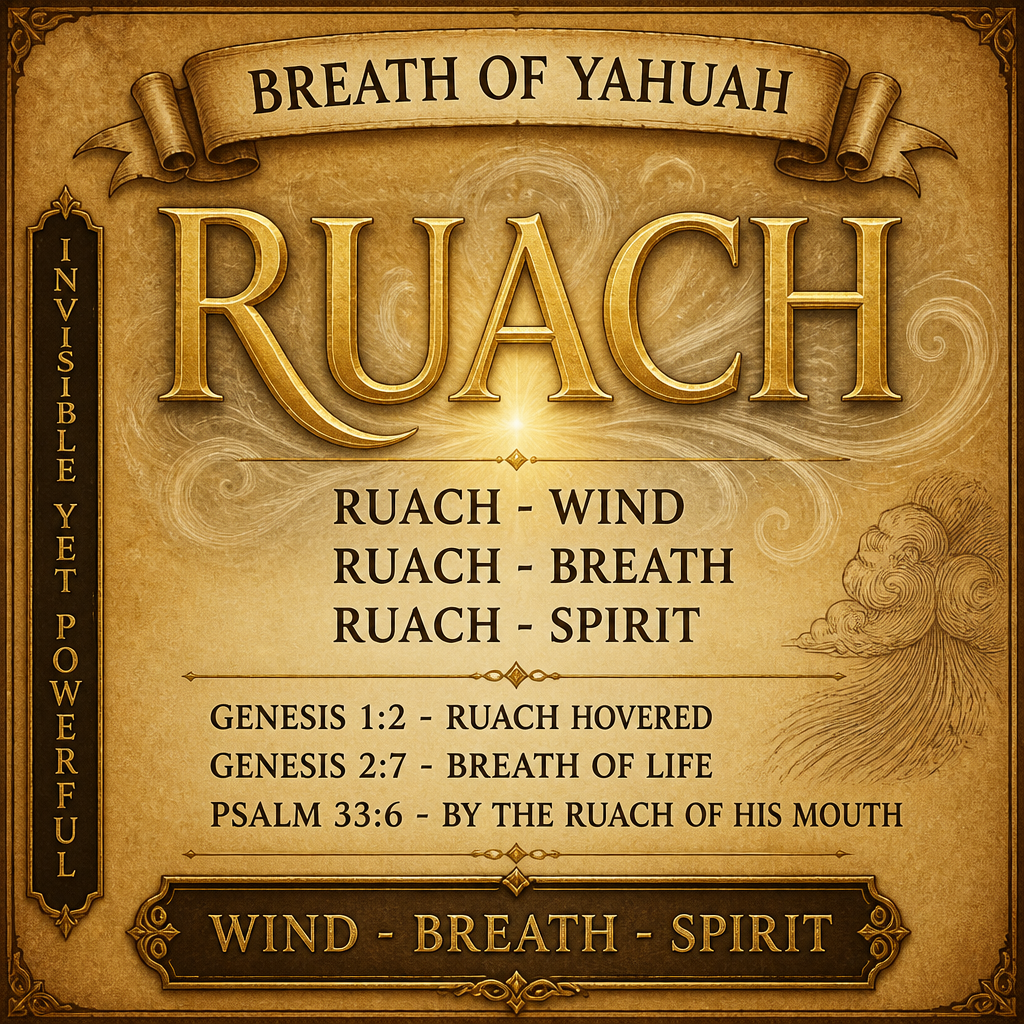
YOUTH Word Ruach
יָהוּשֻׁעַ (Yahusha/Yeshua)
Strong's: H3442 (Yeshua) / H3091 (Yehoshua)
Greek: IesousG2424
The Name That Means "Salvation"
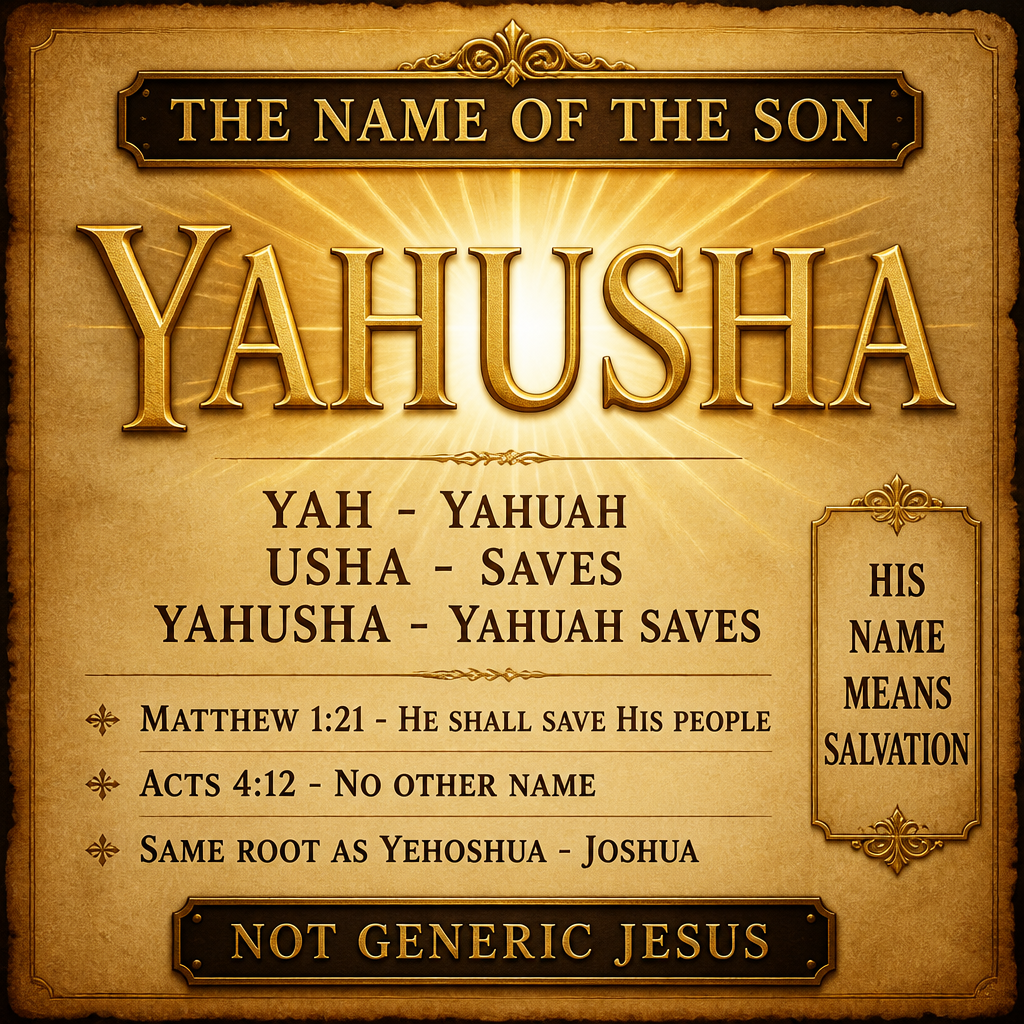
The name "Yahusha" means " Saves" or "Yahuah is Salvation." It combines:
Yah = Short form of Yahuah (the Creator's name)
Sha/Shua = From the word "to save"
Jesus = Joshua?
Here's something amazing: The name "Jesus" in the New Testament is the exact same name as "Joshua" in the Old Testament!
Matthew 1:21
"And she shall bring forth a son, and you shall call his name YAHUSHA: for he shall save his people from their sins."
Think About It!
Joshua led Israel into the Promised Land. Yahusha (Jesus) leads us into the ultimate "promised land" - eternal life! Same name, same mission: SALVATION!
Multiple Choice
1. Yahusha/Yeshua means:
○ A) King of Kings ○ B) Yah Saves ○ C) Holy One ○ D) Lamb of Elohim
2. Jesus and Joshua are:
○ A) Completely different names ○ B) The same Hebrew name ○ C) Greek inventions ○ D) Unrelated
RECALL
Write: What does Yahusha mean? Why is it the same name as Joshua?
SCRIPTURE MEMORY: Matthew 1:21
"...you shall call his name YAHUSHA: for he shall save his people from their sins."
LESSON 5: TORAH - Instruction, NOT Just "Law"
YOUTH Word Shalom
תּוֹרָה (Torah)Strong's H8451
Greek: NomosG3551
Root word: yarah = "to point, teach, instruct"
A Big Mistranslation!
Most Bibles translate "Torah" as "Law." But that's not quite right!
"Torah" actually means "" or "Direction" - like a father teaching his children which way to walk.
Proverbs 1:8
"...do not forsake the Torah (teaching/instruction) of your mother."
Your mom doesn't give you "laws" - she gives you instructions because she loves you!
Think of it Like an Archery Target
The root word yarah means "to shoot an arrow" or "to point in the right direction."
Torah = Instructions that help us hit the (live righteously)!
Sin (Hebrew: chata) = Missing the mark!
Multiple Choice
1. Torah literally means:
○ A) Strict legal code ○ B) Instruction/Direction ○ C) Punishment ○ D) Religion
2. The root word yarah means:
○ A) To judge ○ B) To point/teach/instruct ○ C) To condemn ○ D) To destroy
RECALL
Write: Why is "Torah" better translated as "instruction" instead of "law"?
TEACH-BACK
Explain to someone why "Torah" means instruction, not harsh legalistic law.
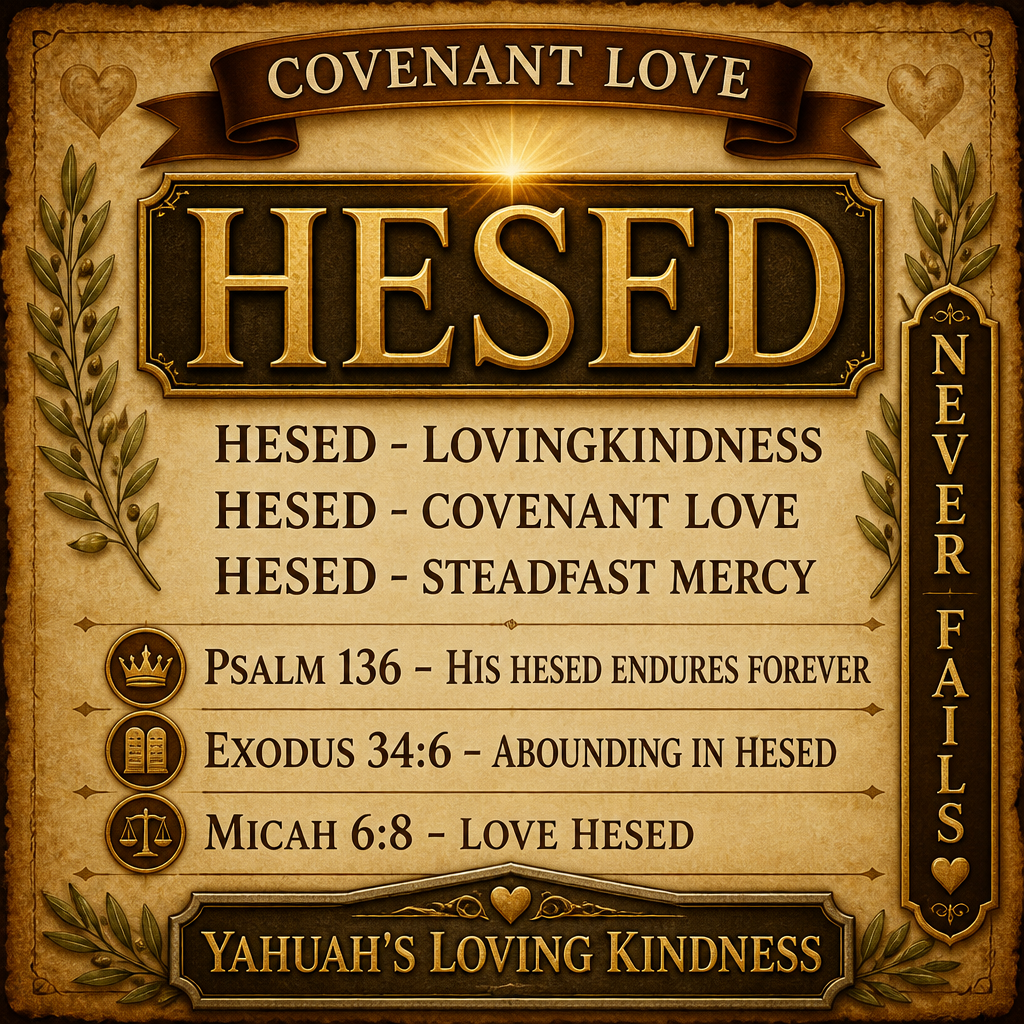
In English, we have one word: "grace." But Hebrew has TWO:
Chen - Finding Favor
This is when someone shows you you didn't earn.
Genesis 6:8
"But Noah found chen (grace/favor) in the eyes of Yahuah."
Chesed - Covenant Loyalty
This is steadfast, loyal love that sticks with someone no matter what. It's Yahuah keeping His even when we mess up!
Key Difference
Chen = Getting what you DON'T deserve (unearned favor)
Chesed = Yahuah staying faithful to His promises
Multiple Choice
1. Noah found chen, which means:
○ A) Punishment ○ B) Favor/grace ○ C) Law ○ D) Judgment
2. Chesed emphasizes:
○ A) Strict justice ○ B) Covenant loyalty and steadfast love ○ C) Fear ○ D) Wrath
RECALL
Write the difference between Chen and Chesed.
LESSON 7: SHABBAT - The Sabbath Rest
שַׁבָּת (Shabbat)Strong's H7676
Root: Shabath (H7673) = to cease, stop, rest
What Does Shabbat Mean?
"Shabbat" literally means "" or "Cessation." It's not just about sleeping - it's about intentionally stopping our work to honor the Creator.
Hebrews 4:9
"There remains therefore a sabbatismos (Sabbath-keeping) for the people of Elohim."
A Special Greek Word
In Hebrews 4:9, the word "rest" is sabbatismos (G4520) - it specifically means "Sabbath-observance"! The writer of Hebrews used this unique word on purpose!
Multiple Choice
1. Shabbat literally means:
○ A) Holy day ○ B) Cessation/Stopping ○ C) Worship ○ D) Prayer
2. The Greek word in Hebrews 4:9 specifically means:
○ A) General rest ○ B) Sabbath-observance ○ C) Sleeping ○ D) Relaxing
RECALL
Write: What does Shabbat mean and why is Hebrews 4:9 significant?
SCRIPTURE MEMORY: Hebrews 4:9
"There remains therefore a sabbatismos (Sabbath-keeping) for the people of Elohim."
Remember the archery picture from Lesson 5? The Hebrew word for sin (chata) literally means "to miss the ."
Torah shows us where to aim. Sin is when we miss!
Repentance = Turning Around!
The Hebrew word for repentance (teshuvah) means "to " or "turn around."
In Greek, repentance (metanoia) means "change of mind." But Hebrew is more ACTION-oriented - you don't just think differently, you actually turn around and walk the other way!
Real Repentance
Greek: Change your mind
Hebrew: Change your direction (180 degrees!)
Multiple Choice
1. Chata (sin) literally means:
○ A) Evil thoughts ○ B) Missing the mark ○ C) Breaking covenant ○ D) Idolatry
2. Teshuvah (repentance) emphasizes:
○ A) Feeling sorry ○ B) Action - turning around ○ C) Mental change only ○ D) Rituals
RECALL
Write: What do "chata" and "teshuvah" literally mean?